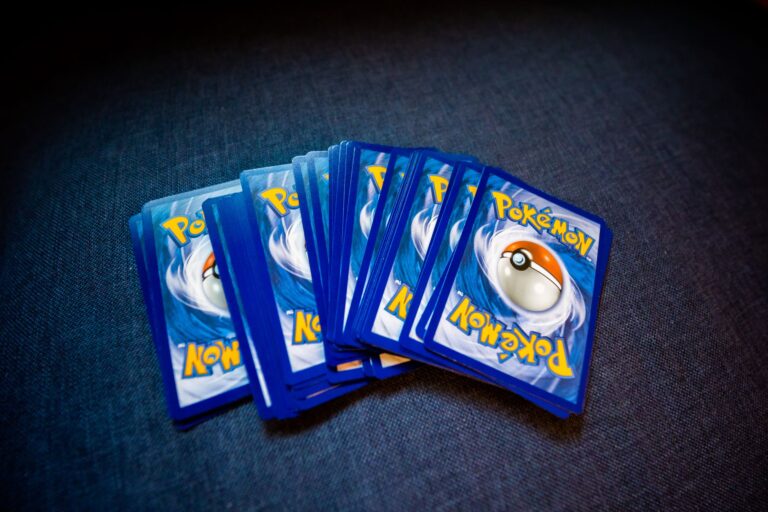
The Pokémon TCG market exploded this week with the May 22 launch of the Mega Evolution—Chaos Rising expansion, and one card is dominating collector demand and secondary market prices: Mega Greninja ex. With its Special Illustration Rare variant commanding approximately $300 per copy and an eye-watering pull rate that requires roughly six booster boxes to secure a single copy, Mega Greninja ex has established itself as the week’s undisputed top chase card. The entire Chaos Rising set is already showing a 33.5% value increase compared to previous trading prices, with the average card in the set now valued at $12.85, a sign of broad collector enthusiasm across the entire expansion.
Beyond the new set, the broader market continued its usual churn this week, with several established cards posting significant gains. Milotic ex surged nearly 47% in value, climbing into the $125 range, while Rayquaza V from Evolving Skies is now trading near $325 in near-mint condition. These movements reflect a market that rewards both fresh product and the artistic qualities that collectors increasingly value when determining which cards deserve premium prices.
Table of Contents
- What Makes Mega Greninja ex the New Market King?
- Understanding the Chaos Rising Expansion Impact on Card Values
- Weekly Movers: How Other Cards Are Climbing the Market
- Comparing Mega Greninja ex to Historical Chase Cards
- The Rarity Problem: Why Pull Rates Matter for Collectors
- Aesthetic Appeal Drives Market Trends
- Looking Ahead: What’s Next for the Pokémon TCG Market
- Conclusion
- Frequently Asked Questions
What Makes Mega Greninja ex the New Market King?
Mega Greninja ex’s dominance comes down to a combination of competitive stats and collector appeal. The card features 330 HP with a zero-energy retreat cost, making it functionally one of the most efficient offensive pokémon released in recent memory. That combination of power and playability has made it an instant favorite for competitive players and collectors alike, driving demand far beyond what typical new releases experience. The Special Illustration Rare version amplifies this appeal with premium artwork that collectors specifically pursue, creating a two-tier demand structure where non-SIR copies sit at more accessible price points while the SIR version commands premium pricing.
What separates Mega Greninja ex from other recent chase cards is the severity of its scarcity. Pull rates suggest that a collector opening six full booster boxes—at $100-120 per box—should expect to find roughly one copy of the Hyper Rare version. This is not a typo; the rarity is genuinely punishing. When you account for the cost of opening those six boxes and the luck involved in actually hitting the card within that window, you begin to understand why secondary market prices have jumped so aggressively. Collectors who miss the initial pull rush have little choice but to pay the premium on the secondary market or move on to other pursuits.

Understanding the Chaos Rising Expansion Impact on Card Values
The Chaos Rising expansion’s overall 33.5% value increase represents one of the stronger opening weeks for a Pokémon set in recent history. This isn’t driven solely by Mega Greninja ex; rather, the expansion appears to have struck a balance between rare chase cards and solid mid-tier cards that collectors find genuinely collectible. When an entire set increases in value rather than just the top three cards, it signals healthy collector demand and fewer bulk commons clogging up the secondary market. The fact that the average card value reached $12.85 is particularly telling, because it suggests that even non-chase cards have found interested buyers at meaningful prices.
There is, however, a risk to watching this trend: expansions with this kind of opening momentum often experience significant cooling within 2-3 months as supply catches up to demand. Players who pay premium prices for Chaos Rising cards right now are betting that the cards will maintain or increase in value, but history shows that newly released sets often retreat 20-40% from their initial peaks once booster supply stabilizes. Collectors should not assume that Monday’s $300 Mega Greninja ex will command the same price next month. The market is frothy, and timing matters considerably when trading newly released cards.
Weekly Movers: How Other Cards Are Climbing the Market
The week of May 18 saw several established cards post impressive gains independent of the new Chaos rising release. Milotic ex’s 47% surge from approximately $85 to the $125 range is particularly noteworthy, as it suggests growing recognition of the card’s artwork as a collecting achievement. This type of movement often precedes larger secondary market rallies, as early movers establish a new floor price and word-of-mouth drives additional demand. Mega Gallade ex—the Psychic-type Special Illustration Rare from Chaos Rising—opened at estimates closer to $14 but has already climbed into the $20 range, suggesting it may have substantial upside as more sealed product enters circulation.
Rayquaza V from Evolving Skies continues to perform strongly, with near-mint copies trading near $325. This card has benefited from accumulated demand and consistent visibility in competitive play, making it one of the safer longer-term holds in the $300+ price category. The contrast between Rayquaza V’s steady appreciation and the more volatile movements in newly released cards illustrates an important principle: established cards with a track record of playability and artwork recognition tend to appreciate more predictably than speculative new chase cards. A collector buying Rayquaza V at $325 is taking on less risk than one paying $300 for a fresh Mega Greninja ex.

Comparing Mega Greninja ex to Historical Chase Cards
To put Mega Greninja ex’s current dominance in perspective, consider Mega Gengar ex’s Special Illustration Rare from Ascendant Heroes, which is currently the most expensive chase card in the entire modern TCG market at approximately $960. That card held its premium for months because of a combination of extreme rarity, powerful competitive stats, and genuinely exceptional artwork. Mega Greninja ex is heading in that direction, though whether it will ultimately command four-digit prices remains uncertain. The comparison matters because it illustrates that the absolute rarest cards in the TCG market command prices that dwarf even recent releases—unless Mega Greninja ex’s pull rates turn out to be even more severe than current estimates, it will likely settle somewhere between $300-600 rather than approaching the Mega Gengar ex price ceiling.
The historical pattern also suggests that cards trending upward shortly after release face a crucial test in their third month of availability. Mega Greninja ex needs to maintain collector interest even as Chaos Rising product becomes more widely available. If the market decides that other Pokémon are comparably valuable or if the next expansion offers an equivalently powerful chase card, demand can collapse quickly. Collectors considering Mega Greninja ex at current prices should ask themselves whether they believe in the card’s staying power or whether they are simply riding a short-term hype cycle.
The Rarity Problem: Why Pull Rates Matter for Collectors
Understanding pull rates is essential for any collector evaluating whether to pursue a card on the secondary market. The six-booster-box estimate for Mega Greninja ex’s Hyper Rare version translates to a roughly 16% pull rate per booster box—dramatically lower than typical chase cards from previous expansions. This level of rarity is not unprecedented, but it is becoming more common as the Pokémon Company continues to incentivize booster opening through increasingly scarce top-tier cards.
The consequence is that collectors face a genuine dilemma: open booster boxes at a cost of $100-120 each with a low probability of hitting the target, or pay the secondary market premium and avoid the gamble entirely. The warning here is that buying sealed booster boxes to chase a specific card is rarely mathematically favorable once the secondary market price has stabilized. If Mega Greninja ex reaches $300 on the secondary market and a booster box costs $110, you would need to hit the card in roughly every third box to break even—an outcome that is not likely given the reported pull rates. Collectors who cannot afford the secondary market premium and still want the card should either wait for prices to stabilize in 2-3 months or focus on non-SIR versions, which are exponentially more common and significantly cheaper.

Aesthetic Appeal Drives Market Trends
One of the most important patterns emerging in 2026’s Pokémon TCG market is that aesthetic quality now rivals or exceeds competitive playability as a driver of card values. The market’s demonstrated preference for nature-inspired and visually striking Illustration Rares over legendary-themed chase cards suggests that collector taste has shifted toward celebrating artwork and artisanal quality rather than pure power. Mega Greninja ex’s success is partly rooted in its Special Illustration Rare artwork, which features the Pokémon in a dynamic and beautifully rendered environment. Similarly, Milotic ex’s recent 47% surge reflects growing appreciation for its artistic presentation compared to other Pokémon in the meta.
This trend has practical implications for collectors deciding which cards to pursue. Cards with exceptional artwork tend to hold value longer and appreciate more steadily than cards valued primarily for competitive utility. If you are purchasing Pokémon TCG cards primarily as collectibles rather than as game components, focusing on cards with artwork that resonates personally with you is likely a more sustainable approach than chasing the latest meta staple. Mega Gengar ex’s $960 price tag is partly attributable to exceptional artwork; Mega Greninja ex’s trajectory suggests that serious artwork appreciation can drive premium pricing even in newly released sets.
Looking Ahead: What’s Next for the Pokémon TCG Market
The success of Chaos Rising and the continued strength of cards like Rayquaza V and Mega Gengar ex suggest that the Pokémon TCG market will remain highly competitive and volatile through the summer of 2026. The next expansion announcement will be critical—if it features an equally rare and visually striking chase card, demand for Mega Greninja ex may cool as collectors redirect funds toward the next release.
Alternatively, if the next expansion offers less compelling artwork or higher pull rates for chase cards, Mega Greninja ex could consolidate its gains and potentially appreciate further as collectors recognize it as a standout release. Collectors with Chaos Rising product in hand should monitor the secondary market closely over the next 4-6 weeks, as that period will determine whether the current pricing reflects sustained demand or temporary hype. For those still deciding whether to enter the market, waiting for the next major announcement may reveal broader trends about where collector enthusiasm is genuinely shifting.
Conclusion
The Pokémon TCG’s hottest cards this week are led unquestionably by Mega Greninja ex, a newly released chase card that combines excellent competitive stats with premium artwork and punishing pull rates to command approximately $300 for its Special Illustration Rare version. The broader Chaos Rising expansion has posted a 33.5% value increase overall, signaling healthy collector demand across the entire set. Beyond the new release, established cards like Milotic ex, Rayquaza V, and Mega Gengar ex continue to command premium prices, with the latter approaching the $1,000 mark and establishing itself as the undisputed anchor of the current market.
For collectors considering entry into the 2026 market, the key lesson is that newer does not necessarily mean better. While Mega Greninja ex offers excitement and recent buzz, cards like Rayquaza V with proven track records and stable appreciation curves may offer more reliable long-term value. The Pokémon TCG market rewards both patience and aesthetic discernment—collecting the cards you genuinely find beautiful while allowing time for secondary market prices to stabilize typically outperforms reactive buying driven by weekly hype cycles.
Frequently Asked Questions
Is Mega Greninja ex worth $300 right now?
Mega Greninja ex is trading at $300 on the secondary market, but that price reflects peak demand for a newly released card. Historically, prices for new chase cards decline 20-40% within 2-3 months as supply stabilizes. The question of “worth” depends on whether you believe the card will maintain or increase in value, which is uncertain.
How many booster boxes do I need to open to pull Mega Greninja ex?
Based on reported pull rates, expect to need approximately six booster boxes to secure one copy of the Hyper Rare version. At $110 per booster box, this represents a $660 investment for a card currently trading at $300 on the secondary market—a mathematically unfavorable proposition in most cases.
Why is Milotic ex gaining value so rapidly?
Milotic ex’s 47% surge reflects growing collector appreciation for its artwork quality. The 2026 market increasingly rewards aesthetic presentation and artistic achievement alongside competitive utility, benefiting cards with exceptional Special Illustration Rare versions.
Should I buy Chaos Rising booster boxes as an investment?
Booster boxes are an investment only if you enjoy opening product and the chase is part of your hobby. Financially, sealed boxes have historically depreciated once the secondary market stabilizes. If investment returns are your goal, purchasing individual cards on the secondary market is typically more efficient.
What is the difference between a Hyper Rare and a Special Illustration Rare?
A Hyper Rare is an extremely rare card from a booster set, while a Special Illustration Rare is a premium artwork version that combines rarity with artistic quality. Both terms are often used interchangeably in the modern TCG market, though the distinction matters for grading and categorization.
Will Mega Greninja ex continue to appreciate in value?
No one can predict with certainty, but history suggests newly released chase cards experience cooling as supply becomes available. Mega Greninja ex’s long-term appreciation depends on sustained demand, the competitiveness of future releases, and whether collectors continue to value the card’s aesthetic and playability.