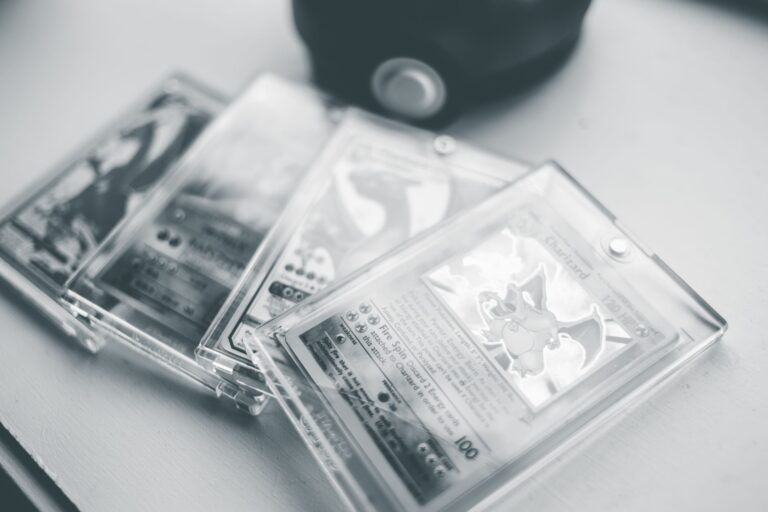
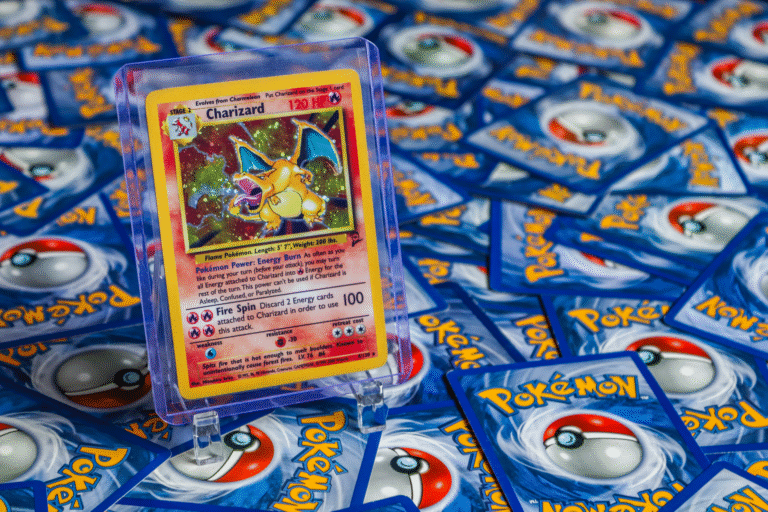
Some collectors pursue a single chase card from every Pokemon TCG set released, rather than attempting to complete full sets. This strategy simplifies focus, reduces spending, and creates a meaningful collection tied to a specific card’s identity across the hobby’s history. A collector might decide to hunt the first edition holographic Charizard equivalent from each set—for example, collecting one premium card from Base Set, Jungle, Fossil, all the way through modern releases.
This creates a vertical collection spanning decades, with each card representing a snapshot of what the set designer elevated as the flagship item. The appeal lies partly in attainability and partly in storytelling. A person chasing one Dragonite card per set faces a dramatically different financial and time commitment than someone attempting to pull or acquire all 102 cards from a set. The single-card chase creates natural stopping points and prevents the psychological trap of endless hunting for the remaining three or four missing cards that never seem to surface.
Table of Contents
- What Makes One Card the Chase Card Worth Collecting?
- The Financial Reality of Pursuing One Card Per Set
- Psychological Advantages of Focused Collection
- Comparing Single Chase Cards to Set Completion Strategies
- The Grading and Condition Question in Vertical Collections
- Variant Cards and the Chase Complexity Problem
- The Future of Chase Card Collection as the Hobby Evolves
- Conclusion
- Frequently Asked Questions
What Makes One Card the Chase Card Worth Collecting?
Not every set has an obvious candidate. In early base sets like Base Set 2, the holographic Charizard became the default chase card through a combination of scarcity, visual appeal, and competitive prominence. In more recent sets, set designers sometimes intentionally create chase rares—secret rares, special illustrations, or limited releases—that collectors instinctively gravitate toward. The Erika’s Venusaur from Gym Heroes or a modern special art Pikachu variant can serve this role depending on personal preference.
Collectors often choose based on nostalgia, favorite Pokemon, or aesthetic preference rather than market value. Someone who loved Blastoise as a kid might chase the holographic Blastoise from each set instead of the “objectively” most valuable card. This personal connection matters more over time than trying to optimize for resale value. The inconsistency of “best” cards across sets means your chosen chase card in one era might feel weak compared to another year’s obvious standout.

The Financial Reality of Pursuing One Card Per Set
The cost structure of this approach depends entirely on which card you chase and which era you focus on. Hunting vintage first edition cards like the Machamp from Base set or the Raichu from Jungle means you’re competing with serious investors and dealers, where a pristine copy can exceed the cost of completing entire modern sets. This creates a natural limitation: many collectors shift their chase strategy when they hit vintage sets because the barrier becomes prohibitive.
Modern chase cards within the last five to ten years offer relative accessibility, though recent release scarcity has changed the equation. A special illustration rare from a 2023 set might cost $30 to $150 depending on condition and print run, while a Base Set holographic Blastoise in decent condition starts at $500 and climbs steeply from there. The warning here is obvious: if you decide to chase, understand the set’s market before committing emotionally. Some vintage sets have chase cards that have become so expensive that only a handful of copies trade hands yearly, making your collection incomplete forever.
Psychological Advantages of Focused Collection
The hunt becomes more rewarding when stakes feel real. Chasing a single card from each set means you actually reach your goal regularly—potentially every few months when new sets release—rather than perpetually falling short of 100% completion on a set of 102. This creates a rhythm of accomplishment that sustains long-term interest in the hobby. The collector sees their vertical collection grow methodically rather than endlessly buying booster boxes and only reaching 85% set completion.
Many long-time collectors report that this approach reignited their interest after years of burnout. Instead of the sunk-cost pressure of having 94 cards in a set and needing that final chase holofoil, they reset to a more manageable frame. A collector might have thirty vintage set chase cards and twenty modern ones, representing years of selective hunting, all housed in a binder with logical progression. That collection tells a story in a way that three abandoned 90%-complete sets in boxes never could.

Comparing Single Chase Cards to Set Completion Strategies
Set completion demands breadth—acquiring all 102 cards or at minimum all holos and reverse holos. This approach maximizes your sampling of the set’s card design and pop culture references. Chase card collection demands depth—learning that specific card’s history, variants, printings, and condition tiers. A Charizard chase across sets teaches you about shadowless printings, 1st edition markings, holographic patterns, and the specific censorship differences between releases, while set completion gives you broader exposure to the era’s design philosophy.
The tradeoff is stark: finish one set completely, or accumulate thoughtfully across many sets. Set completion can be completed in months or years depending on investment level. Chase card collection is inherently long-term—you’re looking at a 20+ year commitment to accumulate one card per set if you want reasonable coverage of the TCG’s history. Neither approach is wrong, but they reward different collector psychology. Chase collectors tend toward patience; set completionists tend toward urgency.
The Grading and Condition Question in Vertical Collections
Once you’re committed to a single-card-per-set collection, condition standards become a personal decision point that shapes the entire project. Do you accept any printable copy, or do you hunt for NM (near mint) copies? Do you grade with PSA, BGS, or keep cards raw? This decision compounds across 30+ purchases, creating either a premium collection with substantial investment or a casual assemblage with modest spend. Many chase-card collectors run into a frustrating limbo: they find their card, but the available copy is played condition.
Do they accept it and move forward, or hunt for better? Unlike set completion where you have 102 other cards providing satisfaction, a substandard chase card sits poorly in a vertical collection. The warning is that condition obsession can trap you—you skip good opportunities waiting for the perfect copy that might never appear at a price you’re willing to pay. Some collectors set a time limit (six months of hunting) before accepting the next-best option available.

Variant Cards and the Chase Complexity Problem
Modern sets have multiplied the definition of “the” card worth chasing. A set might include a regular holographic rare, a secret rare, a special art, and an alternate art—all featuring the same Pokemon. Does your chase extend to all variants, or just the main one? This decision fractures the concept. A purist might only count the set number holo, while an enthusiast collects all printings.
A Pikachu special illustration rare from a modern set can cost 3-5x the regular holo, but feels like the “true” chase in that set. Many collectors solve this by adopting a rule: the most visually striking or rare version becomes the target. For some, that’s the alternate art; for others, it’s the first edition shadowless if hunting vintage. Setting this boundary early prevents decision fatigue and keeps the collection coherent.
The Future of Chase Card Collection as the Hobby Evolves
Pokemon continues releasing sets at accelerating pace, with special sets, anniversary releases, and regional variants creating a fragmented ecosystem. A collector starting a chase-card project today faces more choices than someone who started in 2005. The number of releases per year has tripled in a decade, which either excites completionists or exhausts them.
The long-term question for a new chase collector: can you sustain interest across 100+ sets over your lifetime, or does the novelty wear off after 20? Secondarily, the market continues consolidating around graded cards and population reports. Building a vertical collection of raw cards feels increasingly countercultural, which some collectors embrace as authentic and others find isolating. The future of this collecting strategy likely depends on whether you’re building for personal meaning or eventual sale—and that choice should clarify your entire approach upfront.
Conclusion
Chasing one card per set works because it reframes the impossible goal of set completion into a series of achievable milestones. You get the satisfaction of frequent collection growth, deeper engagement with specific cards’ histories, and a narrative arc that spans decades.
The strategy suits patient collectors, those with budget constraints, and anyone burned out by the pressure of set completion. Before starting, decide which card will be your target across sets, set a realistic budget per acquisition, and accept that some years will disappoint while others will surprise you. The collection you build through this approach will be smaller than a comprehensive set hunter’s but likely more meaningful—each card a deliberate choice rather than a lucky pull.
Frequently Asked Questions
Should I chase the most expensive card from each set or my favorite Pokemon?
Chase your favorite Pokemon if this is personal collection, or the most iconic/visually striking card if you want strong resale value later. Mixing motivations creates inconsistency that dampens long-term satisfaction.
How do I handle modern sets with multiple rare variants of the same card?
Set a rule early—for example, “only the main holo” or “always the rarest version available.” Consistency matters more than perfection.
Is it better to hunt raw cards or buy graded ones for a vertical collection?
Raw cards are cheaper and feel more authentic; graded cards offer certification and clearer condition benchmarking. Neither is wrong, but graded cards simplify comparing across decades of cards.
What if my chase card isn’t profitable—will my collection lose value?
If you’re building for personal enjoyment, value matters less. If eventual sale is the goal, choose cards with demonstrated demand like first-era holographics or modern special arts rather than obscure rares.
How many sets should I target for a realistic project?
20-30 sets (roughly 15-20 years of releases) is manageable for most collectors. Going back to 1999 Base Set becomes significantly more expensive and time-consuming.
Can I switch my chase card mid-collection if I lose interest?
Yes, but your existing cards won’t cohere visually or thematically. Most collectors who switch start a new vertical collection rather than retrofit an old one.