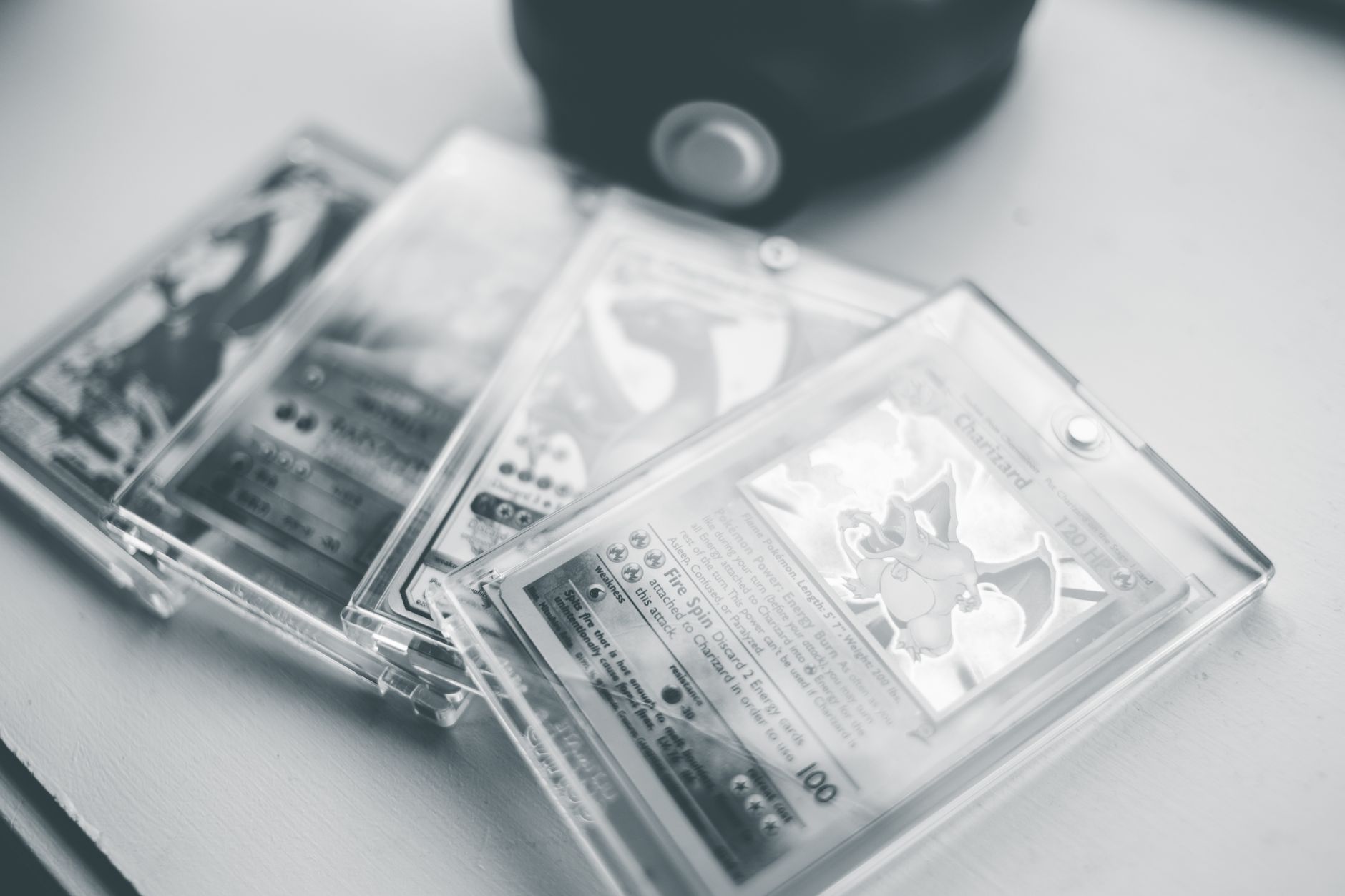
Collectible Pokémon trading cards from the classic 1990s era represent some of the most valuable and sought-after items in the trading card market today. These cards, produced during Pokémon’s initial global launch between 1996 and 1999, command premium prices when they meet specific condition and rarity standards.
A 1st Edition Base Set Charizard in PSA Grade 10 (Gem Mint condition) sold for $954,800 in February 2026, exemplifying how the rarest examples from this era continue to set records. The 1990s Pokémon cards that command the highest prices share common characteristics: they are typically first printings from the original Base Set, carry the “1st Edition” stamp, feature iconic characters like Charizard or rare promotional versions like Pikachu Illustrator, and have been professionally graded by services like PSA or Beckett. The market for these cards has matured considerably since the initial collectibles boom, with pricing now driven by verifiable condition assessments and documented provenance rather than speculation alone.
Table of Contents
- What Makes 1990s Pokémon Cards Worth Premium Prices?
- Understanding Condition Grading and Its Impact on Value
- First Edition Status and Its Market Significance
- How Professional Grading Impacts Buying and Selling Decisions
- Common Pitfalls in Sourcing and Authentication
- Promotional Cards and Their Premium Status
- Evaluating a 1990s Pokémon Collection for Value
- Frequently Asked Questions
What Makes 1990s Pokémon Cards Worth Premium Prices?
The defining factor separating premium 1990s pokémon cards from common examples is the combination of scarcity and condition. First Edition printings are inherently rarer than unlimited printings because they were produced in smaller quantities before demand exploded. The “1st Edition” stamp on the left side of the card—a small black stamp—is the easiest way to identify these higher-value versions. Not all 1990s cards carry this mark; many cards were printed without the 1st Edition designation, making those with it significantly more valuable in the market.
Beyond first editions, the specific card itself matters enormously. Charizard, for instance, has always been the most expensive Base Set card because it was the rarest in the original set and has remained culturally iconic. A standard unlimited Charizard still commands thousands of dollars in high condition, but a 1st Edition version sells for exponentially more. Promotional cards like the Pikachu Illustrator—distributed only to tournament winners in Japan—operate in an entirely different tier, with the sole documented recent sale reaching $16 million in 2026.
Understanding Condition Grading and Its Impact on Value
Professional grading by services like PSA (Professional Sports Authenticator) and Beckett Grading Services has become the industry standard for any 1990s card worth more than a few hundred dollars. These companies assign a grade on a scale of 1 to 10, with 10 being Gem mint condition—essentially flawless. The difference between a Grade 9 and a Grade 10 can represent a price jump of 50% or more, and sometimes far greater. This means that a card graded 9.5 instead of 10 might sell for half or less than half the price of the 10, despite appearing nearly identical to the naked eye.
Mint condition for 1990s cards means no visible scratches on the surface, no creases or bends, perfect centering (the image centered evenly within the card borders), and no edge wear from handling or storage. Even slight wear to the corners, which is nearly impossible to avoid with cards that are 25+ years old, can drop a card from a 10 to a 9. A Torchic Gold Star card recently sold for $43,200 at auction specifically because it achieved a Gem Mint 10 rating—condition that preserves nearly perfect visibility and structural integrity across decades. The cost of grading itself runs $20 to $500+ per card depending on the service and urgency, so authentication should only be pursued if the card is genuinely valuable. Submitting a $100 card for professional grading that costs $100 to authenticate is economically illogical, but for rare first editions or promotional cards, grading provides both protection and authentication that justifies the expense.
First Edition Status and Its Market Significance
The 1st Edition stamp on Base Set cards was only applied to the initial print run, after which the stamp was removed. This means that after a certain point in production, all new Pokémon Base Set cards came without the 1st Edition marking. The exact cutoff point varied by card, but roughly the first 2-3 months of production carried the stamp. For common cards like Energy or Trainer cards, the difference in value between 1st Edition and unlimited is minimal—perhaps $10 versus $2.
For rare Pokémon like charizard, the difference is staggering: a 1st Edition Charizard in PSA 10 can exceed $900,000, while even a perfect unlimited Charizard might sell for $100,000 to $200,000. The market has seen a 1st Edition Base Set Charizard sell for $550,000 as recently as December 2025, confirming that strong demand persists even at prices that exceed the cost of many homes. This consistent pricing at the top end reflects institutional collectors, hedge funds, and museums competing for the rarest examples. The presence of the 1st Edition stamp is something that can be verified immediately by visual inspection, making it one of the most straightforward ways to assess whether a card from this era has potential premium value.
How Professional Grading Impacts Buying and Selling Decisions
When purchasing 1990s Pokémon cards, ungraded cards should only be considered if they are priced significantly below graded examples—typically 40% to 60% less—to account for the unknown condition risk. An ungraded card claiming to be a 10 might actually be a 7 or 8 once professionally evaluated, which represents substantial loss if you paid near-10 prices. Conversely, if you find an ungraded 1990s Charizard or similar rare card in your old collection, professional grading is almost certainly worth the expense because the upside in value far exceeds the authentication cost. Grading services create slabs—protective cases with a label showing the grade—that make cards easier to display, trade, and sell.
The slab itself becomes the standard way high-value 1990s cards change hands, as it provides third-party authentication that both buyer and seller can trust. Some collectors prefer raw (ungraded) cards because they prefer to hold the physical card without the plastic enclosure, but this preference comes with a major tradeoff: they cannot command premium prices at auction because buyers cannot verify condition claims without independent grading. The turnaround time for grading ranges from a few weeks to several months depending on the service and backlog. Expedited services cost extra but are useful if you need a card authenticated quickly for sale or insurance purposes. Standard grading, which takes 6-8 weeks or longer, is economical for cards where the wait time is acceptable.
Common Pitfalls in Sourcing and Authentication
Counterfeit 1990s Pokémon cards exist and have become increasingly sophisticated. Cards from the earliest print runs sometimes show slight printing variations that are normal, but inexperienced collectors sometimes mistake these for signs of counterfeiting. Real authentication requires comparison against known legitimate examples and, for high-value cards, submission to a professional grading service. Buying from unknown sources on secondary marketplaces without professional grading is inherently risky; a card that appears authentic to the eye might not withstand professional scrutiny.
Storage and handling of 1990s cards over the past 25+ years frequently causes condition degradation. Cards kept in attics or basements may suffer from humidity damage, foxing (brown spots from acid deterioration), or warping. Even cards stored in binders can develop indentations or discoloration from the pages. These are permanent flaws that cannot be reversed and will prevent a card from achieving high grades no matter how pristine it might look at first glance. A card stored carelessly for 25 years in a shoebox is extremely unlikely to grade as high as one stored in ideal conditions from the moment it was pulled from a booster pack.
Promotional Cards and Their Premium Status
Beyond the standard Base Set, promotional cards from the 1990s command prices in entirely different brackets. The Pikachu Illustrator card, distributed only to tournament winners in a limited Japanese promotion, has become the holy grail of Pokémon collecting—the single documented recent sale in 2026 reached $16 million.
Even much more common promotional cards, such as those distributed at Pokémon League tournaments or included with special products, regularly sell for $100,000 to $300,000+ when graded in high condition. Promotional cards are identifiable by printed text on the card indicating they were given away rather than sold in booster packs, and they were typically produced in much smaller quantities than even the rarest Base Set cards. High-grade examples are so scarce that each sale becomes a market event, with prices fluctuating based on demand from the few collectors actively pursuing them.
Evaluating a 1990s Pokémon Collection for Value
If you have accumulated 1990s Pokémon cards over the years, the first step is to identify any cards with the 1st Edition stamp and separate them from unlimited printings. Next, look for rare Pokémon like Charizard, Blastoise, Venusaur, or promotional versions—these are the cards most likely to have meaningful value. Common cards and energy cards, even if in perfect condition and first edition, are unlikely to exceed $50 unless they are extremely early printings with documented scarcity.
The most efficient way to establish approximate value is to search recent sold listings on auction sites and graded card marketplaces, filtering by card name, edition, and grade. A 1st Edition Charizard that sold for $954,800 in February 2026 represents the absolute top tier; most first edition rares sell for thousands rather than hundreds of thousands. Even modest first editions from the Base Set can sell for $500 to $5,000 in grades 8-9, which is meaningful value if you have multiple examples. High-grade vintage Pokémon cards regularly fetch £250,000 or more for the rarest specimens, but this top-tier pricing applies only to perhaps a few thousand cards worldwide.
Frequently Asked Questions
How do I know if my 1990s Pokémon card is a 1st Edition?
Look for a small black “1st Edition” stamp on the left side of the card, below the card image. If there is no stamp, it is an unlimited printing. The stamp presence dramatically increases value for rare cards.
Is professional grading always necessary?
For cards worth under $500, grading is rarely economical because authentication costs exceed potential value gains. For rare cards like first edition Charizard or promotional cards, grading is essential to command premium prices and verify authenticity.
Why did a Charizard sell for nearly $1 million?
It was a 1st Edition Base Set Charizard graded PSA 10 (Gem Mint), making it among the rarest and most condition-perfect examples in existence. The combination of first edition status, perfect grading, and iconic card rarity creates prices that rival fine art.
Can common 1990s cards ever be valuable?
Rarely. Common cards like Energy or basic Trainer cards have minimal value even in first edition and perfect condition. Only rare Pokémon and promotional cards have substantial market demand.
Should I store my 1990s cards in binders or sleeves?
Modern archival sleeves or slabs from professional grading services are safest. Vintage binders can cause fading and indentations over time. Keep cards in a climate-controlled environment away from humidity and direct sunlight.
What is the difference between PSA and Beckett grading?
Both are major professional services that assign grades 1-10. PSA is currently more common for Pokémon cards and generally commands slightly higher prices, but both provide legitimate third-party authentication.
You Might Also Like
- Pokemon Trading Card Game Expands With Storm Emerald And New Card Type
- Last Chance Pokemon Trading Card Games Merchandise Prime Day Final Hours
- Pokemon Card Game Booster Pack Deals Prime Day 2026 Sealed Products