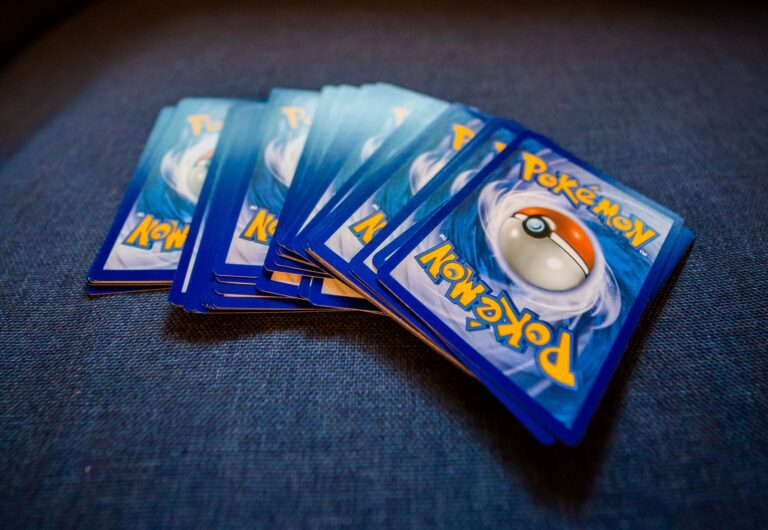
Some vintage Pokémon holos feel cheap in 2026 because condition and rarity are priced separately in the modern market. A Base Set Unlimited Charizard in good condition might cost $300–$500, while the same card in 1st Edition can command $3,000–$6,000. The difference isn’t just scarcity—it’s that Unlimited printings were produced in vastly higher quantities, flooding the market with millions of accessible vintage cards. For collectors entering the hobby, this creates a misleading perception: they see a genuine 1990s Pokémon holo selling for under $500 and assume it should feel more valuable, without realizing they’re holding a card that was printed 25 years ago alongside tens of millions of others.
The real story is that the market has stratified vintage holos into clear tiers. A Base Set Unlimited holo in near-mint condition might cost $50–$500 depending on which character, while the same card with visible creasing or fading can drop 30–60% in value. Meanwhile, 1st Edition versions in the same condition jump to 5–20 times higher pricing. This isn’t a market dysfunction—it’s the natural result of supply meeting demand at different quality levels. New collectors often confuse abundance with worthlessness, not realizing that vintage cards under $500 are actually priced reasonably for what they are: mass-produced pieces of cardboard that survived three decades.
Table of Contents
- Why Unlimited Base Set Holos Cost a Fraction of 1st Edition Prints
- The Danger of Confusing Cheap Pricing with Poor Investment Potential
- The 30th Anniversary Effect and Vintage Card Momentum
- Building a Collection Without Overpaying for Unlimited Commons
- Grading, Authentication, and the Hidden Costs of Vintage Cards
- Comparing Vintage Holos to Modern Alternatives
- The Outlook for Vintage Holos in 2026 and Beyond
- Conclusion
Why Unlimited Base Set Holos Cost a Fraction of 1st Edition Prints
The core reason some vintage holos feel undervalued is simple math: print run volume. pokémon Company printed Unlimited Base Set cards in quantities that dwarf modern set releases. First Edition versions, limited by design, entered the market in 1999 with intentional scarcity. Today, Unlimited cards remain so common that graded PSA 8 or 9 Blastoise or Venusaur copies regularly sell for $150–$300, while the same cards in 1st Edition fetch 10–15 times that amount. The gap isn’t arbitrary—it reflects fundamentals of supply economics.
this creates a perception problem for newcomers. They find a 1st Edition Charizard priced at $5,000 and conclude the card market is inflated. Then they discover an Unlimited Charizard at $400 and think, “That can’t be the same card.” Both assumptions are incomplete. The 1st Edition represents one of the most valuable trading cards ever printed because the print run was deliberately constrained. The Unlimited version is expensive relative to modern cards but affordable compared to everything else in the vintage category. Understanding this distinction separates informed collectors from those perpetually disappointed by reasonable pricing.
The Danger of Confusing Cheap Pricing with Poor Investment Potential
Here’s where collectors often make mistakes: they assume low prices mean low investment floors. An Unlimited Base Set holo at $200 feels like a bargain compared to modern chase cards, so new collectors fill carts with them expecting appreciation. What they don’t account for is that Unlimited cards have had 25 years to depreciate and stabilize. They’ve already lost the majority of their downside risk because the market has already priced them. There’s little room for further drops on cards already trading at $50–$300—they’re already at equilibrium.
The warning here is critical: condition is as important as rarity when assessing vintage holos. A card with visible creases, fading, or edge wear can lose 40–60% of its value compared to a near-mint copy. Many sellers list “vintage” cards without explicit condition assessments, and buyers assume they’re getting deals when they’re actually buying damaged inventory. Before treating a $75 Base Set holo as an investment, inspect the corners, centering, and surface condition under magnification. A card that looks acceptable at arm’s length might be graded PSA 5 or 6, which carries significantly lower price floors than PSA 8 or above.
The 30th Anniversary Effect and Vintage Card Momentum
In the 12 months leading up to Pokémon’s 30th anniversary in February 2026, vintage holos experienced a wave of renewed interest. High-end vintage cards—especially Charizards and other iconic holos—saw 30–50% price increases as collectors and investors rotated capital into cards with proven 25-year track records. This momentum contrasts sharply with the modern card market, where depreciation is the norm. A M Gardevoir-EX that cost $300 in January 2026 dropped nearly 25% in value by February, while a comparable Base Set 1st Edition Charizard appreciated.
The distinction matters for anyone trying to understand why vintage holos don’t feel cheap when you examine year-over-year trends. Moonbreon, a modern card that exceeded $2,000 in early September 2025, entered a sustained depreciation cycle through early 2026, ultimately retracing 30–40% from peak. By contrast, vintage cards that cost $500 in early 2025 often traded for $650–$750 by February 2026. The market is clearly bifurcating: modern cards are speculative and volatile, while vintage holos are proving to be more stable stores of value. A Base Set Unlimited holo at $200 isn’t cheap—it’s appropriately priced for an asset with genuine scarcity and proven liquidity.

Building a Collection Without Overpaying for Unlimited Commons
The practical challenge for new collectors is knowing which vintage holos represent genuine value and which are overpriced. Unlimited Base Set holos fall into distinct value brackets. Common holos like Pikachu, Raichu, or Rapidash trade for $50–$100 in good condition. Popular cards like Machamp or Zapdos cost $150–$250. Top-tier holos like Charizard, Blastoise, or Venusaur—the pillars of the set—command $300–$600 for Unlimited copies in solid condition.
The tradeoff is straightforward: buy Unlimited holos for accessibility and liquidity, or wait for 1st Edition copies if you’re building a long-term collection. An Unlimited Charizard is a real 1999 Pokémon card you can own and enjoy for under $500. A 1st Edition version costs $4,000–$6,000 and carries additional storage and insurance considerations. For most collectors, building a complete Unlimited Base Set of holos (26 cards) costs $3,000–$5,000 and represents a legitimate achievement. The same set in 1st Edition would cost $50,000–$100,000. Neither is cheap—both are appropriately priced for what they represent.
Grading, Authentication, and the Hidden Costs of Vintage Cards
One reason vintage holos feel cheap is that their price tags don’t always include grading and authentication costs. A raw (ungraded) Unlimited Base Set Charizard might cost $300, but slabbing it through PSA or BGS adds $75–$150 in grading fees, plus shipping and wait times measured in months during peak season. Buyers who buy raw vintage cards often face a dilemma: sell ungraded (where buyer confidence drops), grade the card (where fees eat into margins), or hold raw (where authenticity concerns linger). The warning is especially important for high-value purchases.
Counterfeit Pokémon cards existed as early as 2001 and have only become more sophisticated. A bargain-priced Base Set 1st Edition holo should trigger skepticism—authentication by a professional grading company (PSA, BGS, or CGC) is the only reliable way to verify authenticity. The cost of grading is easily justified for cards over $500, but for common Unlimited holos in the $100–$300 range, many buyers accept the authenticity risk and purchase raw. This creates a two-tier market: graded cards trade at 10–20% premiums, while raw cards can languish even if genuine, because buyers are uncertain.

Comparing Vintage Holos to Modern Alternatives
Modern Pokémon cards rarely feel “cheap” because they’re fresh releases with active hype cycles. A modern chase holo from a new set can cost $200–$400 immediately after release, then depreciate 30–50% over 12 months. A Base Set Unlimited holo at $300 has already completed this depreciation cycle—it’s been on the market for 25 years and stabilized. In terms of pure value perception, a 25-year-old card at $300 feels cheaper than a brand-new card at the same price because the modern card is expected to drop further. This comparison highlights why vintage holos don’t feel overpriced to informed collectors.
Modern booster boxes cost $120–$180 and yield approximately 36–40 packs, with roughly 2–3 holo rares per box. The expected value of a modern booster box is often below its retail cost. By contrast, a Base Set Unlimited holo at $200 is a definite product—you know exactly what you’re buying and what it costs. There’s no uncertainty, no hidden value, no speculation. The “cheap” feeling often comes from contrasting that with the $400 Base Set 1st Edition of the same card, not from any fundamental overvaluation.
The Outlook for Vintage Holos in 2026 and Beyond
The 30th anniversary has established momentum for vintage cards that should persist through 2026. High-end vintage holos—particularly Charizards, Blastoise, Venusaur, and the Japanese-exclusive holos—are proving more resilient than modern cards during market corrections. This is because vintage holos have reached maturity in the market. They’ve been graded, authenticated, and priced thousands of times. New information is unlikely to shift their valuations dramatically.
By contrast, modern cards still face discovery of counterfeits, fluctuating demand, and speculative bubbles that pop unpredictably. Looking forward, Base Set Unlimited holos under $300 will likely remain stable or appreciate modestly as new collectors enter the hobby and existing collectors complete their vintage collections. The “cheap” feeling may actually persist, which is healthy for the market. A Unlimited Base Set holo that costs $250 in 2026 and $280 in 2027 doesn’t create headlines, but it delivers the slow, reliable appreciation that seasoned investors prefer over the hype cycles that trap modern card collectors. For anyone holding vintage holos right now, the question isn’t whether they feel cheap—it’s whether you’re willing to hold them long enough to realize their genuine value as artifacts of Pokémon’s cultural moment.
Conclusion
Some vintage Pokémon holos feel cheap in 2026 because they are genuinely more abundant than their 1st Edition counterparts and because they’ve been on the market long enough to reach stable equilibrium pricing. A Base Set Unlimited Charizard at $400 isn’t cheap in absolute terms—it’s appropriately priced for a 25-year-old card that was manufactured by the millions. What makes it feel cheap is the cognitive contrast between that price and the $5,000 price of a 1st Edition copy, or the $300 price of a modern chase holo that will drop to $150 within months.
Understanding this distinction is the first step toward collecting vintage cards with intention rather than disappointment. The key takeaway is that vintage holos under $500 represent some of the most accessible entry points into serious Pokémon collecting, not a market failure. They come with lower storage risks than ultra-high-end cards, proven liquidity, and the psychological satisfaction of owning genuine pieces of the game’s history. For collectors building long-term positions, Base Set Unlimited holos at current prices represent fair value—not because they’re cheap, but because they’re accurately priced for what they are: common vintage cards with 25 years of depreciation history already baked in.