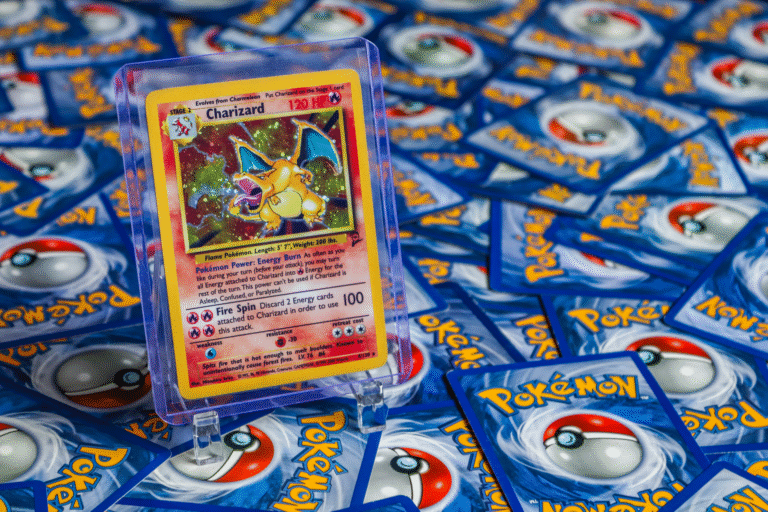
Collectors increasingly view vintage Pokémon cards as safer investments than the modern secondary market, and for concrete reasons. A 1999 Base Set Charizard has maintained relatively stable collector demand and auction price patterns for two decades, whereas modern chase cards released in 2023 or 2024 have experienced dramatic price collapses as speculative buying dried up. The fundamental difference comes down to established scarcity, proven long-term demand, and decades of transparent market history that removed much of the guesswork.
The vintage market has stabilized because the supply is finite and unchanging. The Pokemon Company cannot reprint the original Base Set in 2026, so collectors know exactly what they’re working with. Modern products, by contrast, continue to be released in massive quantities, and future reprints are always possible. This ongoing uncertainty, combined with the recent crash in speculative prices, has pushed serious collectors back toward vintage cards as a more predictable alternative to the volatility they’ve witnessed in contemporary releases.
Table of Contents
- What Makes Vintage Cards Feel More Stable Than Modern Market Speculation?
- Why Did Modern Card Speculation Cool Down So Dramatically?
- How Does Grading and Authentication Affect Safety?
- The Long-Term Hold Versus Quick Flip Strategy
- Supply Chains and Market Liquidity Concerns
- True Rarity and Print Run Numbers
- Where Are Serious Collectors Moving Their Money?
- Conclusion
What Makes Vintage Cards Feel More Stable Than Modern Market Speculation?
The vintage card market gained its credibility through time and transparency. Collectors have 25+ years of price history and auction data for cards from 1999 to 2005, which creates patterns that are relatively easy to understand. A near-mint 1st Edition Blastoise from Base Set might fluctuate 10 to 15 percent year-over-year, but it rarely experiences the 70 percent price drops that have hit modern special releases. this stability reflects genuine collector interest rather than speculative fever. Modern cards, by contrast, are treated like financial instruments by a subset of the market. When pokémon released special sets with artificial scarcity tactics in 2021-2023, prices spiked dramatically.
A copy of a hyped modern card might sell for $300 one month and $40 the next, depending entirely on how many new investors entered or exited the market. Vintage cards don’t experience these swings because the collector base is more stable and less motivated by quick profit. The psychological difference also matters. Vintage buyers are often collecting cards they actually value and want to keep or display. Modern speculators are often trying to resell within weeks or months. When those speculators leave a market, prices collapse. When a vintage collector holds a card for a decade, the market stays intact.

Why Did Modern Card Speculation Cool Down So Dramatically?
The modern Pokémon card boom of 2020-2022 was driven by a perfect storm of factors: pandemic isolation, celebrities and athletes entering the market, YouTube content glorifying pulls, and new collectors with disposable income. Supply, however, eventually caught up. The Pokémon Company dramatically increased production, and secondary prices adjusted downward by 50 to 80 percent on most modern products. What was marketed as “limited” turned out to be abundant once you waited a few months. A critical limitation of modern cards is that their rarity is entirely under the control of the Pokémon Company.
A card that was “chase” in 2023 could be reprinted in a different set in 2024, destroying its value. vintage cards never face this threat. Collectors also learned that modern grading, while more standardized than ever, still carries risk. PSA grading turnaround times created backlogs, leading to thousands of modern cards sitting in ungraded inventory while their market values tanked, trapping sellers. The warning here is simple: modern card speculation requires perfect timing and an exit strategy. Vintage collectors don’t need those things.
How Does Grading and Authentication Affect Safety?
Vintage cards benefit from decades of grading standardization. PSA has been slabbing cards since 1998, and the company’s standards for Base Set and Jungle cards are consistent and understood. A PSA 8 Base Set Charizard means the same thing today as it did in 2010. Buyers know what they’re getting because the standards are locked in by history.
Modern cards, while graded under the same technical standards, carry more uncertainty because the market keeps changing. A modern card graded PSA 9 might have been worth $150 six months ago and $30 today. The grading itself is legitimate, but the value assigned to that grade is still unstable. Additionally, modern counterfeiting has become sophisticated enough to concern collectors, though less so than with vintage cards. The irony is that this forces modern buyers to spend extra on professional grading just to confirm authenticity, whereas many vintage collectors trust the market’s collective assessment of real versus fake cards.

The Long-Term Hold Versus Quick Flip Strategy
The investment approach differs dramatically between vintage and modern collectors. A vintage card buyer typically plans to hold for 3+ years or indefinitely, absorbing modest annual fluctuations. A modern card speculator was often hoping to flip within 30 to 90 days. This difference in time horizon fundamentally changes risk tolerance.
A Base Set Charizard purchased for $5,000 in 2015 is likely worth $6,000 to $8,000 today, even accounting for the card’s age. The return is modest but reliable. A modern special release card purchased for $500 in 2023 is now worthless or worth $20 to $50. The cost of entry is lower for modern cards, but the risk is far higher. For collectors with limited capital, vintage cards force you to choose carefully and commit, whereas modern cards encourage rapid trading that most collectors lose money on.
Supply Chains and Market Liquidity Concerns
Modern cards have a serious liquidity problem. While they’re easy to sell when prices are rising, secondary market buyers disappear once prices crash. You can list 50 copies of a modern card online and still struggle to find buyers at your ask price. Vintage cards, even the most expensive ones, have consistent demand. Someone is always willing to buy a real Base Set Charizard at a reasonable price.
The warning here is about market saturation. The Pokémon Company released more cards in 2022 alone than they did in the entire 1999-2005 era. This oversupply created a situation where modern collectors have to worry about inventory sitting forever. Vintage cards don’t face this problem because supply is fixed and finite. If you need to sell a vintage card quickly, you can typically do so at a price close to market value. Try that with modern cards.

True Rarity and Print Run Numbers
Vintage cards benefit from accidental scarcity. The Pokémon Company didn’t expect some cards to become rare, and they didn’t reprint them. A 1st Edition Base Set Charizard exists in a fixed quantity because only one print run was made. Modern cards, even labeled “First Edition,” can be reprinted in the same set or in future reprints of older sets.
Collectors learned this painfully when the Pokémon Company reprinted scarce vintage sets in 2020-2021, and the reprints themselves became scarce and expensive, confusing the market. The difference in scarcity perception is crucial. A modern card labeled “limited” means the company is controlling supply for that moment. A vintage card that’s rare is rare because it wasn’t protected when it was new. This makes vintage rarity feel more real to collectors because it wasn’t manufactured as a marketing tactic.
Where Are Serious Collectors Moving Their Money?
The shift back to vintage cards reflects a broader maturation in the collecting community. Experienced collectors are separating collectors (who buy to keep and display) from speculators (who buy to resell). The speculation phase for modern cards appears to be cooling, and the market is settling into its natural level based on genuine player and collector interest.
Looking forward, expect the modern card market to stabilize at lower prices but to remain stable, while vintage cards continue their slow, steady appreciation. The market is likely bifurcating: casual modern collectors will continue buying packs and boxes for fun, but serious investors are moving back to vintage. This suggests that in five years, a vintage collection will feel like a safer store of value than modern cards ever did.
Conclusion
Collectors choose vintage cards over modern speculation because they offer established markets, stable demand, proven scarcity, and transparent price history. Modern cards, while exciting in the moment, have demonstrated extreme volatility, ongoing supply risk, and a speculative buyer base that evaporates when trends shift. The 2020-2023 boom taught the market an expensive lesson: manufactured scarcity isn’t the same as real rarity.
If you’re considering where to allocate collecting resources, vintage cards require more upfront research and higher entry costs, but they offer the safety of a market built on decades of genuine collector demand. Modern cards are better suited to casual collecting and players who enjoy the game. For long-term confidence in your collection’s value, vintage has the track record that modern cards simply haven’t had time to build.