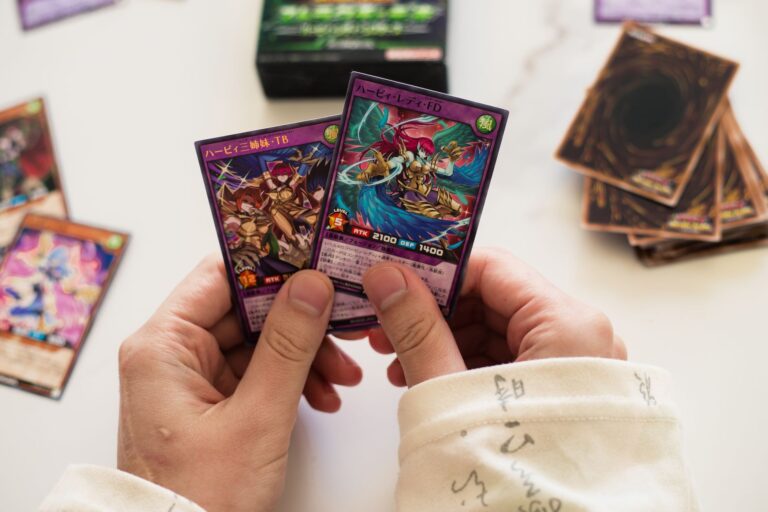
Pokémon cards have weathered multiple market cycles with remarkable resilience, while sports cards have experienced dramatic peaks followed by sharp valleys in collector enthusiasm and pricing. The fundamental difference lies in Pokémon’s dual appeal—it functions simultaneously as a collectible, a game, and a cultural touchstone that spans multiple generations and geographies without relying on the performance of individual athletes or seasonal sports rotations. When the sports card boom of 2020-2021 collapsed under the weight of speculation and supply flooding, Pokémon card prices remained substantially elevated, with desirable vintage cards and modern chase cards maintaining value floors that sports cards simply couldn’t sustain.
This staying power isn’t accidental. Pokémon cards benefit from a game mechanic that keeps older cards competitive, a content pipeline from The Pokémon Company that generates sustained interest, and a collecting population that views cards as lifestyle products rather than pure investment vehicles. Sports cards, by contrast, are inherently tied to athlete performance, career trajectories, and team success—factors completely outside a collector’s control that can evaporate the moment a player retires, underperforms, or faces controversy. The difference explains why a PSA 9 Charizard from 1999 remains a six-figure asset, while countless sports cards from 2021 that were purchased for $500-$1,000 are now worth $20-$50.
Table of Contents
- How Pokémon’s Game Mechanics Create Sustainable Demand Unlike Sports Card Bubbles
- Cross-Generational Appeal Versus the Limited Window of Sports Card Collecting
- Scarcity Mechanics and Supply Management in Pokémon Cards Create Stability
- Investor Behavior and Speculation: Why Pokémon Held Value While Sports Cards Collapsed
- Supply Chain Pressures and the Problem of Modern Pokémon Overproduction
- The Role of Active Game Play in Maintaining Collector Bases
- Future Outlook and Why Pokémon Cards Will Likely Avoid Sports Card-Style Collapses
- Conclusion
- Frequently Asked Questions
How Pokémon’s Game Mechanics Create Sustainable Demand Unlike Sports Card Bubbles
Sports cards function almost entirely as retrospective collectibles—you buy a Mike Tyson rookie card because Mike Tyson was a legendary boxer, not because you’ll ever use it in competition. Once a sports card is in circulation, its only purpose is nostalgic or speculative ownership. pokémon cards, however, remain functionally useful. A first-edition Venusaur from 1999 is still a legal, playable card in Pokémon Trading Card Game tournaments. This dual function—asset and game piece—creates multiple demand vectors that sports cards cannot access. The Pokémon Trading Card Game’s ongoing competitive meta ensures that older cards stay relevant.
When The Pokémon Company rotates its Standard format annually, it creates demand spikes for cards from older sets that suddenly become legal again. In 2023-2024, several cards from the Sword & Shield era saw price increases specifically because they rotated back into the competitive environment. Sports cards have no equivalent mechanism. A rookie card of a retired athlete has no functional utility beyond speculation. This practical demand floor prevents the catastrophic price collapses that plague sports cards. Even if Pokémon’s speculative bubble burst tomorrow—a scenario that nearly happened in 2022—collectors would still play the game, use the cards in casual formats, and maintain a functional market. Sports card investors have no such fallback. The moment social media hype and FOMO dry up, there’s nothing left to drive demand except nostalgia, which is far narrower and more volatile.

Cross-Generational Appeal Versus the Limited Window of Sports Card Collecting
Sports card collecting historically peaks during the early career phases of star athletes and crashes when those athletes retire or disappoint. A player drafted in 2018 might see peak card values in 2020-2022 if he performs exceptionally, but by 2028 when he’s traded, injured, or past his prime, those cards are afterthoughts. The window is narrow—typically 5-10 years of genuine demand. New collectors always want the current stars, not the legends from 15 years ago, except for true HOF-tier figures. This creates a pyramid scheme dynamic where older cards from non-legendary players become nearly worthless. Pokémon transcends this limitation because the franchise itself, not individual athletes, is the draw. A collector who loved Pokémon at age eight in 1999 still loves Pokémon at age 39 in 2025. their interest in the franchise hasn’t been invalidated by time or athletic performance.
Meanwhile, their children and grandchildren discover Pokémon through the games, anime, and card game, creating overlapping generational cohorts all interested in the same collectibles. Sports cards cannot generate this kind of intergenerational appeal. Nobody plays the Mike Tyson video game anymore. Nobody watches new Mike Tyson anime episodes. The franchise doesn’t produce new content that keeps teenagers engaged. A critical limitation exists here: Pokémon’s cross-generational appeal can still falter if The Pokémon Company makes catastrophic creative decisions or if the franchise enters a genuine decline. The success of Pokémon Scarlet & Violet, the Pokémon Go resurgence, and the continued profitability of the TCG suggest this risk is currently low, but it’s not zero. A poorly received generation of games combined with a weak card set could shake collector confidence. Sports cards don’t have this vulnerability because they’re not dependent on an active creative operation—they’re purely retrospective.
Scarcity Mechanics and Supply Management in Pokémon Cards Create Stability
Sports card manufacturers—Topps, Panini, Upper Deck—operate on an essentially unlimited supply model. Once a player is licensed, factories produce millions of cards in that player’s image. The only scarcity is first editions or low-print-run special sets. For modern sports cards, supply is theoretically infinite, which means any spike in demand is quickly met by increased production, flooding the market and crashing prices. This is exactly what happened in 2021 when sports card mania led manufacturers to print unprecedented volumes. Prices peaked in early 2021 and collapsed by late 2021 as supply overwhelmed demand. Pokémon operates differently. Each set has a finite production window. Once a set is no longer in print, no new cards from that set are manufactured—period.
This is a hard stop, not a negotiation. A first-edition Shadowless Charizard cannot be reprinted because it’s from a specific set, a specific print run, in a specific condition window. The card’s scarcity is mathematically guaranteed. The Pokémon Company does release new cards constantly, but they don’t reprint old sets at industrial scale to capitalize on nostalgia spikes. This restraint is notable and directly contrasts with how sports card manufacturers respond to demand. However, Pokémon’s official card prices and availability can create different problems. In 2021-2022, Pokémon released so much product to meet demand that modern set cards flooded the market. A Charizard VMAX from Vivid Voltage, highly sought in 2020, became nearly worthless by 2023 as supply overwhelmed demand. The difference is that older Pokémon cards—because they’re not being reprinted—recovered their value more reliably than equivalent modern sports cards would have. A 2020 modern Pokémon card in poor condition might be cheaper now than in 2021, but a 1999 Charizard in poor condition is still worth thousands, whereas a 2020 sports card is worth almost nothing.

Investor Behavior and Speculation: Why Pokémon Held Value While Sports Cards Collapsed
The 2020-2021 sports card bubble was driven almost entirely by retail investors and YouTube unboxing channels promoting pull rates and “hit” probabilities. Mainstream sports card buyers didn’t care about the sport or the athletes—they were gambling on the statistical likelihood of finding valuable cards in packs. When that gambling appeal wore off and manufactured scarcity didn’t materialize (because supply was unlimited), the entire speculative foundation collapsed. Investors who bought PSA 10 rookie cards for $500 in 2021 were left holding assets worth $30 in 2024. Pokémon collectors, while certainly capable of speculation, are more anchored to functional demand. Even a speculator who bought a Charizard for investment still lives in a world where thousands of other people play the Pokémon card game, collect Pokémon for nostalgia, and bid competitively for cards.
The functional demand floor prevents the kind of total price collapse that sports cards experience. Additionally, Pokémon’s price growth has been more gradual and less explosive, which actually correlates with stability. Charizards appreciated roughly 50-300% annually from 1999-2020, which sounds extreme until you compare it to sports cards appreciating 1,000-5,000% in 2020 alone—a growth rate that was obviously unsustainable. The comparison is instructive: in 2024, asking a random Pokémon collector why they own cards and they’ll give you multiple reasons (nostalgia, game utility, investment, social community). Ask a random person holding a sports card from 2021 and they’ll likely tell you they wish they’d sold it in 2021. The psychological relationship between collector and asset is fundamentally different. One is driven by genuine interest; the other is driven by FOMO and hope that someone else will pay more.
Supply Chain Pressures and the Problem of Modern Pokémon Overproduction
Pokémon’s recent challenges stem from the opposite problem of sports cards: the franchise has oversupplied the market with product, particularly from 2020-2023. During the pandemic boom, The Pokémon Company faced unprecedented demand and chose to print aggressively to capture revenue. Modern set cards from this era are essentially worthless in most cases. The trap here is that new collectors might assume this means Pokémon cards are “like sports cards now”—constantly mass-produced and disposable. That’s partially true for modern product, but false for vintage cards and cards from limited print runs. The critical distinction: vintage Pokémon cards (Base Set through Aquapolis) cannot be reprinted in the same form. Modern overproduction affects 2020-2023 sets, but those sets have already cycled out of print.
The supply is now fixed. A pack of Vivid Voltage printed in 2021 will never be reprinted, so future scarcity is guaranteed. The same cannot be said of sports cards, where manufacturers can always choose to release a new “nostalgia” set or “heritage” set featuring vintage-style designs of retired athletes. This potential for unlimited reprinting is the fundamental difference. Warning: collectors should be aware that not all modern Pokémon cards are doomed to worthlessness, but most common cards from 2020-2023 will remain cheap indefinitely. However, chase cards—limited print variations, secret rares, and cards from early in the modern era before production ramped up—have maintained value floors. A PSA 9 Evolving Skies Umbreon VMAX is still worth $100-200, while equivalent sports cards from the same period are worth $5-10. The investment-grade tier of modern Pokémon product is narrower than vintage, but it exists.

The Role of Active Game Play in Maintaining Collector Bases
The Pokémon Trading Card Game has experienced a genuine competitive resurgence since 2019, with sanctioned tournaments, organized play programs, and a professional circuit that generates real prize pools and recognition. This competitive scene drives constant demand for new cards and keeps older cards competitively relevant. Players aren’t buying cards to speculate—they’re buying cards to win tournaments. This creates a baseline demand that persists regardless of collector sentiment or investment fashion. Sports cards have no equivalent ecosystem. There are no organized, sanctioned tournaments where a collector brings their 1990 rookie cards to compete. The closest analog would be fantasy sports, which is a completely different market and doesn’t drive demand for physical cards.
A sports card collector’s only option is to hold the card and hope someone else values it higher. A Pokémon card collector can buy a card and immediately use it competitively, enjoy it functionally, and then sell it later if prices appreciate. The utility provides psychological satisfaction beyond pure speculative returns. This active gameplay is particularly valuable for retention during downturns. When the sports card market crashed in 2023-2024, millions of cards sat in storage with no functional purpose. When the Pokémon card game experienced a slight boom in 2023-2024 (driven by competitive rotation bringing older cards back into the meta), players actively pursued cards, creating bottom-up demand that wasn’t speculation-driven. A single pro player competing at a major tournament might purchase $2,000-5,000 in cards, and that purchase is justified by tournament success, not hope that prices will rise. This functional demand is the floor.
Future Outlook and Why Pokémon Cards Will Likely Avoid Sports Card-Style Collapses
The trajectory of both markets suggests that Pokémon cards will continue to maintain value stability as long as The Pokémon Company continues to operate the trading card game competently. The franchise has shown no signs of decline—Scarlet & Violet remain commercially successful, the competitive scene is growing, and new generations of children discover Pokémon constantly. As long as the game remains playable and desirable, there’s a functional demand floor that prevents catastrophic collapse. Sports cards, conversely, face a structural headwind: the speculative bubble of 2021 has discredited the category in the eyes of casual investors and retailers. The mainstream media narrative shifted from “sports cards are booming” to “sports cards are a scam,” which is mostly accurate for the period of 2020-2022. Even if the market recovers, it will take years to rebuild mainstream credibility.
Pokémon doesn’t face this credibility crisis because the Pokémon Company controlled its narrative more carefully and didn’t oversupply to the extent that Topps and Panini did. The forward-looking risk for Pokémon is not market collapse but complacency. If The Pokémon Company stops innovating, if the competitive scene becomes stagnant, or if new competitors emerge and fragment the collector base, then Pokémon cards could experience the kind of cyclical decline that sports cards face. However, The Pokémon Company’s track record suggests this risk is low. The company has invested heavily in organized play, digital integration, and product diversity. It’s not betting everything on a single revenue stream the way sports card manufacturers did.
Conclusion
Pokémon cards have survived multiple market cycles with higher price retention than sports cards because they serve multiple functions—collectible, game piece, and cultural touchstone—rather than relying exclusively on speculative demand. The franchise’s control over supply, its active competitive ecosystem, and its cross-generational appeal create demand that doesn’t evaporate when investment fashions shift. Sports cards, by contrast, are purely retrospective and entirely vulnerable to boom-bust cycles when speculative interest dries up.
The practical takeaway is that vintage Pokémon cards and modern chase cards represent more stable long-term value stores than sports cards, particularly for collectors who prioritize downside protection over explosive appreciation. If you’re collecting for utility, nostalgia, or long-term appreciation, Pokémon cards offer better structural support than sports cards. If you’re pure speculating on short-term price movements, both categories are gambling—but at least with Pokémon, you can play the game while you wait.
Frequently Asked Questions
Are modern Pokémon cards like sports cards now that they’ve been overprinted?
Partially, yes. Most common cards from 2020-2023 are cheap. However, modern chase cards and limited variations maintain value floors that sports card equivalents don’t. The key difference is that modern Pokémon sets have now cycled out of print, creating future scarcity. Sports cards face the risk of unlimited reprinting.
Will Pokémon cards crash like sports cards did?
A significant correction is possible if The Pokémon Company stops supporting the competitive game or if the franchise declines substantially. However, the structural drivers of demand are strong enough that a total collapse is unlikely. Sports cards lacked these structural supports and crashed accordingly.
Which Pokémon cards should I avoid buying right now?
Avoid bulk purchases of common and uncommon cards from 2020-2023 full sets. These are printed in millions and will likely remain cheap indefinitely. Focus on chase cards, limited print variants, or vintage cards if you want value retention.
How do I know if a modern Pokémon card is worth keeping?
Cards that see competitive play, secret rares, first editions, and low-print-run variants are more likely to retain value. Check recent tournament decklists and competitive meta shifts. If a card is actively used in winning decks, it has functional demand beyond speculation.
Can I use Pokémon cards as an investment like I would with stocks?
No. Pokémon cards are illiquid assets with wide bid-ask spreads and unpredictable future value. Treat them as a hobby collectible first and a speculative investment second. Never allocate capital you can’t afford to lose for an extended period.
Why do sports card prices keep dropping when Pokémon prices stay relatively stable?
Sports cards have no functional utility after an athlete retires or underperforms. Pokémon cards remain playable in tournaments, have ongoing competitive relevance, and benefit from cross-generational nostalgia. These demand drivers prevent catastrophic collapse.