
Pokémon cards have surged roughly 3,200% in value over the past two decades because a perfect storm of millennial nostalgia, influencer-driven hype, and the emergence of trading cards as a legitimate alternative investment class has transformed what were once pocket-money collectibles into serious financial assets. According to analytics firm Card Ladder, the Pokémon card market has grown 3,821% in value since 2004, a figure that dwarfs the S&P 500’s 483% gain over the same window. To put a face on that kind of appreciation: a PSA 10 1st Edition Shadowless Charizard sold for $420,000 in 2022, a card that would have cost a few dollars to pull from a booster pack in 1999.
But the headline number only tells part of the story. The growth has not been evenly distributed across all cards, and the market carries real risks that anyone treating Pokémon cards as an investment needs to understand. This article breaks down the forces behind two decades of price escalation, examines record-breaking sales that have redefined what a trading card can be worth, explores the scale of today’s market, and offers a clear-eyed look at the volatility, counterfeiting threats, and oversupply concerns that could trip up collectors who buy in at the wrong time.
Table of Contents
- What Has Driven Pokémon Card Values Up More Than 3,000% in Twenty Years?
- Record-Breaking Pokémon Card Sales That Rewrote the Price Ceiling
- How Big Is the Pokémon Card Market in 2026?
- Which Pokémon Cards Are Actually Worth Investing In?
- The Risks Every Pokémon Card Collector Should Understand
- How Digital Pokémon Products Are Feeding Physical Card Demand
- Where Pokémon Card Prices Go From Here
- Conclusion
- Frequently Asked Questions
What Has Driven Pokémon Card Values Up More Than 3,000% in Twenty Years?
The simplest explanation is generational wealth meeting childhood obsession. The kids who traded Pokémon cards on the playground in the late 1990s are now adults in their late twenties to early forties, many with disposable income and a desire to recapture something from their youth. That demand alone would push prices up, but the COVID-19 pandemic turbocharged it. Stuck at home, millions of people rediscovered their old collections or started buying sealed product, and influencers like Logan Paul brought mainstream attention to the hobby by opening vintage packs on YouTube to audiences of millions. The resulting demand spike sent prices parabolic between 2020 and 2021, and while there has been some correction since, overall values remain dramatically higher than pre-pandemic levels. Beyond nostalgia, Pokémon cards have increasingly been treated as an alternative asset class, sitting alongside sneakers, comics, vintage watches, and cryptocurrency in diversified portfolios. The PWCC Top 500 Pokémon card index posted a 10-year return that was 94% higher than the S&P 500 over the same period. Long-term vintage Pokémon card investments have delivered a compound annual growth rate of 20 to 40 percent for rare cards between 1999 and 2023.
PSA 10 rookie cards specifically returned 18.3% over one year, beating major equity benchmarks. When numbers like those circulate in financial media, they attract buyers who have never played the game and never will. A third factor is institutional infrastructure. Professional grading has exploded. Over 20 million cards were professionally graded in 2024 alone, a 16% increase from 2023, with PSA processing 15.34 million submissions. PSA now grades more Pokémon cards than baseball cards or any other sport. Grading standardizes condition, which makes pricing more transparent, which makes the market more attractive to investors, which drives more demand. It is a self-reinforcing cycle.

Record-Breaking Pokémon Card Sales That Rewrote the Price Ceiling
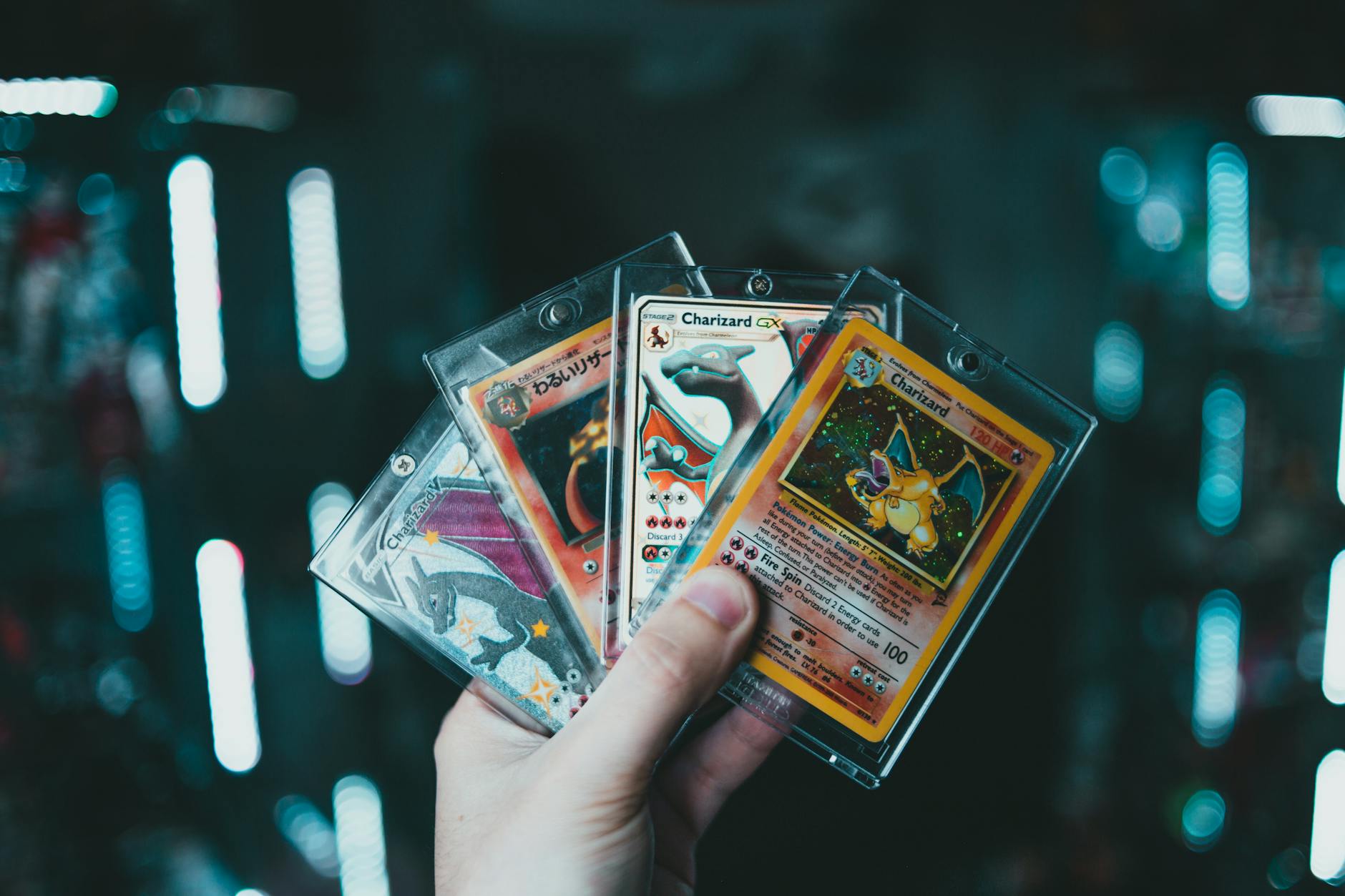
The most dramatic illustration of this market’s trajectory is the Pikachu Illustrator card graded PSA 10, which sold from logan Paul to AJ Scaramucci for $16,492,000 in February 2026. That transaction made it the most expensive trading card ever sold at auction, surpassing records previously held by baseball cards with decades more history. Fewer than 40 copies of the Pikachu Illustrator were produced in 1998 as prizes for a Japanese illustration contest, and only one known copy exists in PSA 10 condition. The scarcity is absolute, which is what makes the price defensible in a way that many other collectibles are not. Other landmark sales reinforce the pattern. A 1st Edition Shadowless Charizard in PSA 10 sold for $420,000 in 2022, though the most recent PSA 10 sale came in at $45,322 in February 2025, showing how dramatically even high-profile cards can fluctuate once initial hype cools.
A Pikachu Silver Trophy No. 2 Trainer card in PSA 10, of which only about 14 copies exist, sold for $444,000 in 2023. A Pre-Release Blastoise test print graded CGC 8.5, one of only two copies ever produced, went for $360,000 at Heritage Auctions in 2021. However, if you look at the Charizard price swing from $420,000 to $45,322 in three years, the lesson is clear: even elite cards are not immune to correction. The difference between a $400,000 sale and a $45,000 sale is often the difference between peak hype and normalized demand. Anyone entering this market expecting a straight line up is setting themselves up for disappointment. Trophy cards with single-digit populations hold value better than cards with hundreds or thousands of graded copies, but nothing in this space is guaranteed.
How Big Is the Pokémon Card Market in 2026?
The overall trading card game market is valued at $8.06 billion in 2026 and is projected to grow at a 7.3% compound annual rate to reach $11.47 billion by 2031. Pokémon commands a dominant share of that market. The Pokémon Company produced 10.2 billion cards between March 2024 and March 2025, and more than 75 billion pokémon cards have been produced in total through March 2025. Those are staggering numbers, and they matter because supply is one of the key variables that determines whether prices hold. On the demand side, the appetite is real and measurable.
eBay recorded approximately 14,000 searches for “Pokémon” every hour in 2024. GameStop reported that collectibles, including trading cards, made up 29% of total sales, surpassing video game software. The Pokémon TCG Pocket mobile game generated $90.4 million in February 2025 alone, demonstrating that digital engagement continues to funnel attention back toward the physical card market. The 30th anniversary of Pokémon in 2026 has added another layer of demand. Media coverage, anniversary product releases, and celebrations are driving renewed interest from both collectors and casual fans. Anniversary years have historically been strong for Pokémon card prices, and 2026 appears to be following that pattern.

Which Pokémon Cards Are Actually Worth Investing In?
Not all Pokémon cards appreciate equally, and the distinction matters enormously. The cards driving the 3,200% headline are overwhelmingly vintage, rare, and in high grade. A common card from a modern set printed in the billions is unlikely to appreciate meaningfully. The cards that have performed best as investments share a few characteristics: limited print runs, iconic Pokémon like Charizard or Pikachu, first edition or promotional status, and high grades from reputable services like PSA or CGC. Recent price data from 2024 and 2025 shows that specific cards can spike dramatically in short windows.
The “Stamp Pika” promo rose 156%, “Latias & Latios” climbed 169%, and the “151” booster box jumped 437%. These are impressive returns, but they also reflect the speculative, hype-driven nature of the market. Buying after a spike often means buying at the top. The tradeoff for collectors is between vintage cards, which have longer track records and more stable demand but higher entry costs, and modern cards, which are cheaper to acquire but face oversupply risk from massive print runs. A PSA 10 Base Set Charizard has decades of proven demand behind it. A sealed booster box from a set printed in the billions is a bet that future nostalgia will create scarcity from consumption, which is a reasonable thesis but far from certain.
The Risks Every Pokémon Card Collector Should Understand
The Beanie Baby bust of the 1990s is the cautionary tale most frequently cited in discussions of Pokémon card investing, and the comparison is not entirely unfair. Beanie Babies crashed because supply eventually overwhelmed demand, speculative buyers exited simultaneously, and the underlying product had no utility or cultural staying power beyond the mania. Pokémon has far deeper cultural roots and a continuously refreshed franchise, but the supply problem is real. The Pokémon Company produced 9.7 billion cards in a single fiscal year, and that volume creates meaningful downward price pressure on modern product.
Counterfeiting is another growing threat. Advanced counterfeits now replicate holographic foils, micro-text, and card stock with enough fidelity to fool casual buyers. This erodes confidence in the market and makes professional grading more important than ever, but it also means that ungraded cards traded between individuals carry increasing risk. Financial advisors broadly caution against over-reliance on collectibles in portfolios because prices are volatile and hype-driven, there is no dividend or yield, storage and insurance costs eat into returns, and liquidity can disappear quickly during downturns. Pokémon cards should be a complement to a diversified portfolio, not its foundation.
How Digital Pokémon Products Are Feeding Physical Card Demand
The relationship between digital and physical Pokémon products is more symbiotic than competitive. Pokémon TCG Pocket pulled in $90.4 million in a single month, and rather than cannibalizing physical card sales, it appears to be introducing new players to the collecting ecosystem.
Players who start with the free-to-play mobile game often develop an interest in owning physical cards, especially chase cards and vintage items that carry a tangible weight the digital versions cannot replicate. eBay’s 14,000 hourly Pokémon searches and GameStop’s collectibles-heavy revenue split both suggest that digital engagement is feeding, not replacing, physical demand. This dynamic is worth watching because if it holds, the Pokémon card market has a built-in pipeline of new collectors that most other collectible categories lack.
Where Pokémon Card Prices Go From Here
The near-term outlook for Pokémon card values is cautiously bullish. The 30th anniversary in 2026 is generating media coverage and product releases that sustain demand. The trading card game market as a whole is projected to grow to $11.47 billion by 2031. Professional grading volume continues to rise, bringing more transparency and liquidity to the secondary market.
And Pokémon as a franchise shows no signs of cultural decline, with new games, anime, and merchandise keeping the brand relevant to younger generations who will eventually become the next wave of nostalgic adult collectors. The longer-term question is whether the market can absorb 10 billion new cards per year without drowning in supply. Vintage cards are insulated from this because their supply is fixed and shrinking as cards are lost, damaged, or locked into long-term collections. Modern cards face a harder road. The collectors who do best over the next decade will likely be those who focus on scarcity, condition, and cultural significance rather than chasing whatever set is trending on social media this month.
Conclusion
Pokémon cards have delivered returns over the past two decades that most traditional investments cannot match, with growth figures ranging from 3,261% to 3,821% depending on the index. That appreciation has been driven by millennial nostalgia colliding with disposable income, the professionalization of grading and trading infrastructure, influencer-driven mainstream attention, and the gradual acceptance of trading cards as an alternative asset class. Record sales like the $16.5 million Pikachu Illustrator have cemented Pokémon’s place at the top of the collectibles hierarchy.
But the market is not a one-way bet. Oversupply from billions of new cards printed annually, sophisticated counterfeits, and the inherent volatility of hype-driven assets all pose real risks. The collectors who have done best over two decades are those who bought cards they genuinely valued, held through corrections, and focused on rarity and condition rather than short-term speculation. Whether you are a lifelong fan or a newcomer drawn in by the numbers, the same principles apply: know what you are buying, understand the risks, and never invest more than you can afford to see lose half its value overnight.
Frequently Asked Questions
Are Pokémon cards a good investment in 2026?
Certain rare, high-grade vintage Pokémon cards have historically outperformed the S&P 500, with the PWCC Top 500 Pokémon index delivering 94% higher returns over ten years. However, financial advisors caution that collectibles are volatile and should not make up a large portion of any portfolio. Modern mass-produced cards carry significant oversupply risk.
What is the most expensive Pokémon card ever sold?
The Pikachu Illustrator card graded PSA 10 sold for $16,492,000 in February 2026, making it the most expensive trading card of any kind ever sold at auction. Fewer than 40 copies were originally produced in 1998, and only one known PSA 10 exists.
How much has a 1st Edition Charizard gone up in value?
A PSA 10 1st Edition Shadowless Charizard sold for $420,000 in 2022, though the most recent PSA 10 sale was $45,322 in February 2025. This price swing illustrates the volatility in even the most iconic cards, as values can fluctuate significantly depending on market conditions.
How many Pokémon cards are graded each year?
Over 20 million cards were professionally graded in 2024, a 16% increase from 2023. PSA alone processed 15.34 million submissions and now grades more Pokémon cards than baseball cards or any other sport category.
Is Pokémon card counterfeiting a real problem?
Yes. Advanced counterfeits now replicate holographic foils and micro-text with enough accuracy to fool casual buyers. This is one reason professional grading from services like PSA and CGC has become increasingly important for verifying authenticity before making significant purchases.
Will Pokémon cards hold their value long term?
Vintage cards with limited supply and high grades have the strongest long-term track record, with compound annual growth rates of 20 to 40 percent for rare cards from 1999 to 2023. Modern cards face more uncertainty due to massive print volumes, with over 10 billion cards produced in a single year. The franchise’s cultural staying power is a positive factor, but no collectible market offers guarantees.
You Might Also Like
- Why Pokémon Cards Have Increased 3,200% Over Two Decades
- Top 10 Most Valuable Pokémon Cards Ever Sold
- Should You Buy Pokémon Cards as an Investment