
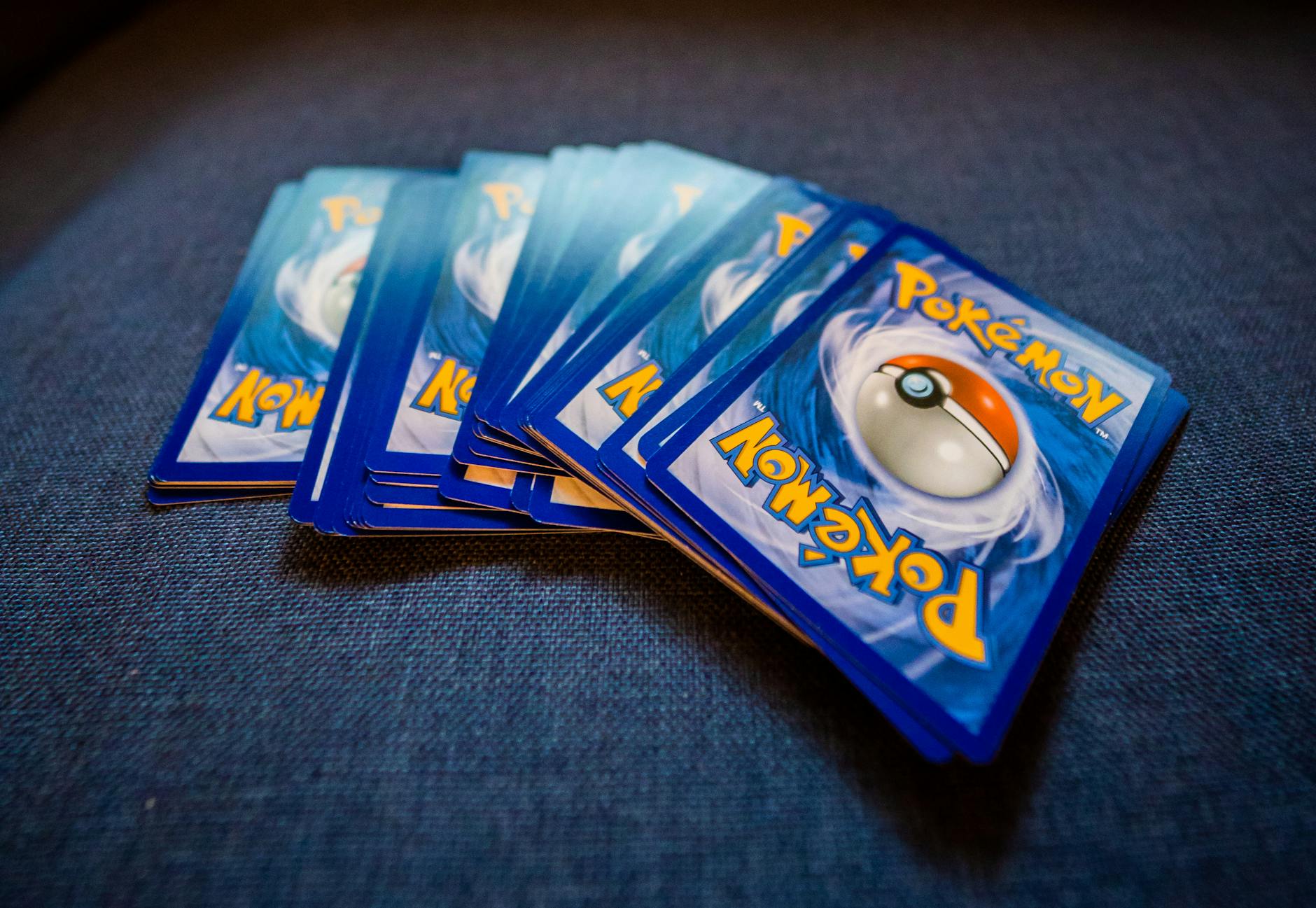
Pokemon cards represent a fundamentally stronger investment opportunity than rare books, with documented appreciation of 3,261% over the past two decades—a return that dwarfs what traditional collectible books have generated in the same period. When the Charizard card from the 1999 Base Set that sold for $369 in 2019 fetched $369,000 in a PSA 10 grading just five years later, it demonstrated the kind of explosive value creation simply not available in the rare book market. The data is clear: Pokemon cards aren’t just competing with books as collectibles; they’re outperforming them by orders of magnitude as long-term investments.
The gap exists because of fundamental market differences. While rare book values depend on literary significance and the shrinking pool of people who actually read physical books, Pokemon cards thrive on a combination of scarcity, broad cultural appeal, and organic demand from both collectors and players. A first-edition Shakespeare folio might appreciate steadily over decades, but a graded Pokemon card can double or triple in value within months. That’s not speculation—that’s market reality backed by the Card Ladder index showing 6,208% growth since 2004.
Table of Contents
- How Do Pokemon Card Returns Compare to Rare Books and Other Collectibles?
- Why Does the Pokemon Card Market Outperform Rare Books So Dramatically?
- How Do Grading and Card Condition Create Valuation Premiums?
- What Should Pokemon Card Investors Actually Buy Right Now?
- What Are the Real Risks of Pokemon Card Investing?
- How Does Pokemon’s 30th Anniversary Drive 2026 Investment Opportunity?
- The Broader Shift in Collectible Investing
- Conclusion
- Frequently Asked Questions
How Do Pokemon Card Returns Compare to Rare Books and Other Collectibles?
The historical performance gap between pokemon cards and rare books is substantial and consistently documented. Pokemon cards have averaged 46% annual appreciation, which dramatically outpaces the S&P 500’s average annual return of 12%. By comparison, Spider-Man’s first appearance comic book—one of the highest-performing traditional collectibles—has returned approximately 11% per year since 2009.
This means a $10,000 investment in Pokemon cards compounds far more aggressively than the same amount placed in highly sought rare books or even top-tier comic books. What makes this comparison particularly striking is that rare books require specialized knowledge, storage conditions, and insurance, while still delivering lower returns. A vintage 1999 Pokemon Base Set Charizard card required virtually no specialized care compared to a rare book, yet the Charizard’s value trajectory over the same period massively outperformed typical rare book appreciation. The market has clearly voted with its money: scarcity plus cultural demand equals better returns than scarcity plus declining readership.
Why Does the Pokemon Card Market Outperform Rare Books So Dramatically?
Pokemon cards derive value from scarcity, cultural appeal, and organic demand rather than traditional financial fundamentals—which makes them behave more like art than conventional investments. Unlike rare books, which have limited cultural reach and are primarily valuable to a subset of literary scholars and collectors, Pokemon maintains broad mainstream appeal across generations and geographies. A rare first edition might be valuable to 10,000 potential buyers worldwide; a desirable Pokemon card might appeal to millions. The 2026 market has validated this.
Over $450 million was spent on Pokemon cards in Q1 2026 alone, indicating sustained market strength heading into the franchise’s 30th anniversary year. Contrast this with the rare book market, which has contracted significantly as digital reading has replaced physical books. However, investors should understand a critical limitation: Pokemon card values are partially speculative and tied to the franchise’s cultural relevance. If Pokemon’s popularity declined—an unlikely scenario given the franchise’s resilience, but not impossible—card values could face pressure that rare books, being historical artifacts, would not.
How Do Grading and Card Condition Create Valuation Premiums?
Condition is everything in Pokemon card investing, and the grading system creates predictable value tiers that don’t exist in the rare book market. PSA 10 graded cards command 2-5x premiums over raw (ungraded) cards, meaning the difference between a card graded at 9 and a 10 can represent thousands of dollars. In the first half of 2025, Pokemon represented 97 of the top 100 PSA-graded cards globally, demonstrating just how concentrated investment attention has become in this market. This grading infrastructure creates an interesting advantage over rare books: it standardizes valuation and reduces disputes about condition.
When you grade a Pokemon card with PSA, that grade is recognized worldwide and backed by a transparent market. A Mega Gengar SIR currently trades around $1,231 in raw condition but would command significantly more if professionally graded at higher levels. Rare books, by contrast, rely on subjective descriptions of condition and lack the transparent grading ecosystem that makes Pokemon cards easier to buy, sell, and price. This transparency actually reduces transaction costs and increases liquidity compared to rare books.

What Should Pokemon Card Investors Actually Buy Right Now?
Specific card choices matter significantly, and current pricing (April 2026) shows where opportunities exist. High-performing cards include Mega Gengar SIR at approximately $1,231 raw, Mega Charizard Y at around $880, Team Rocket’s Mewtwo ex at $376 and above, and Cynthia’s Garchomp ex at $237 and up. These prices reflect the market’s current consensus on scarcity and cultural relevance. For comparison, rare books in similar price ranges typically offer no path to appreciation beyond inflation, while these Pokemon cards are projected to appreciate 30-50% through 2026 as the franchise reaches its 30th anniversary.
Sealed product—unopened booster boxes and Elite Trainer Boxes—represents another category with different risk-reward dynamics. Current projections show sealed product potential for 35-60% returns over six months as the 30th anniversary milestone approaches. The key tradeoff is that individual cards are more liquid and transparent to price, while sealed product requires accurate market timing and storage conditions. Rare books, as a category, don’t offer this kind of project-based seasonal appreciation opportunity at all.
What Are the Real Risks of Pokemon Card Investing?
Pokemon card values depend on the franchise remaining culturally relevant, which while likely given Nintendo’s track record, remains a concentration risk that rare books don’t face. A rare book’s value is largely divorced from whether anyone actually wants to read it; a Pokemon card’s value is fundamentally tied to whether people want to collect and play with Pokemon. Market saturation is also a legitimate concern—as more cards are graded and more investors enter the market, individual card appreciation could moderate. The explosive returns of the past five years may not replicate in the next five.
Additionally, liquidity can be deceptive in Pokemon cards. While high-end cards sell quickly, mid-range and bulk collections face more friction. The grading costs themselves—typically $20-100 per card depending on turnaround—eat into returns if you’re not selective about which cards merit professional grading. Rare books don’t have this recurring cost structure. Investors should also understand that Pokemon card returns have been partially driven by 2020-2024 speculation and market froth; a correction isn’t guaranteed but is a real risk that shouldn’t be ignored.
How Does Pokemon’s 30th Anniversary Drive 2026 Investment Opportunity?
The franchise’s 30th anniversary in February 2026 has created a predictable market catalyst. Vintage cards are expected to appreciate 30-50% leading to this milestone, while sealed product projects even higher returns of 35-60% over six months. This isn’t speculation—it’s pattern recognition based on how Pokemon markets have moved around previous major anniversaries and game releases. Rare book markets have no equivalent catalyst system; their appreciation is gradual and unpredictable.
This anniversary opportunity reveals why Pokemon cards outperform books structurally: they have built-in events, product releases, and cultural moments that drive demand cycles. When the franchise releases new cards or reaches milestones, existing cards gain attention. Rare books have no equivalent mechanism. A Shakespeare folio from 1623 doesn’t appreciate because Shakespeare wrote something new.
The Broader Shift in Collectible Investing
Pokemon cards represent a broader shift where modern collectibles with active cultural relevance outperform historical ones. The market has moved beyond viewing Pokemon collecting as frivolous hobby behavior—major financial institutions track Pokemon card indices, insurance companies offer specialized coverage, and serious investors allocate real capital to this asset class. This isn’t nostalgia driving returns; it’s market recognition that Pokemon has better fundamentals than traditional collectibles like books.
Looking forward, Pokemon’s integration into digital games, film, and merchandise ecosystems creates multiple valuation props that rare books simply lack. The 1999 Base Set doesn’t compete with just other cards from 1999; it competes for investment capital against cards from every era, sealed product, and alternative assets. And it’s winning that competition decisively. Rare books, meanwhile, face structural headwinds from digital reading and declining interest in physical media.
Conclusion
Pokemon cards deliver superior investment returns compared to rare books because they combine scarcity with broad, organic demand and operate in a market with transparent grading, active price discovery, and predictable catalysts. The data is unambiguous: 46% average annual appreciation, the Card Ladder index up 6,208% since 2004, and $450 million spent in Q1 2026 alone all demonstrate a market that rare books simply cannot match. Even as the market matures, Pokemon’s cultural moat and continuous franchise expansion provide structural advantages that traditional collectibles lack.
If you’re considering where to allocate capital in the collectibles space, the answer is clear. Pokemon cards don’t just marginally outperform rare books—they do so by multiples that compound over time. The question isn’t whether Pokemon cards are a better investment than rare books; it’s whether you can afford not to be part of this market.
Frequently Asked Questions
Aren’t Pokemon cards just speculative bubbles while rare books are stable collectibles?
Rare books have appreciated steadily but modestly—around 11% annually for the best performers. Pokemon cards have averaged 46% annually, which is a fundamentally different asset class. Pokemon also has better market infrastructure, transparent grading, and proven cultural staying power through three decades of consistent franchise development.
What if Pokemon’s popularity declines?
That’s a real risk that shouldn’t be ignored. However, Pokemon’s diversification across trading cards, video games, film, merchandise, and esports creates multiple valuation props. Rare books, by contrast, face declining readership with no secondary business supporting their value. The risk profiles are different, not equivalent.
Can I actually sell Pokemon cards when I want to exit?
Yes—the market is liquid for graded, documented cards. Platforms like PSA, TCGPlayer, and auction houses provide transparent price discovery. Rare book sales often require specialist dealers and take longer. Individual cards are more liquid than bulk collections.
Do I need to grade every card I buy?
No. Raw cards are less expensive and still appreciate. PSA grading (2-5x premiums) only makes sense if the card’s base value justifies the grading cost and you expect it to appreciate significantly. Mid-range cards often appreciate just fine ungraded.
Should I buy sealed product or individual cards?
Sealed product has shorter, higher-potential returns (35-60% over six months) but requires accurate market timing. Individual cards have longer hold periods but more predictable price discovery. Both outperform rare books substantially.
What’s the best entry point for Pokemon card investing right now?
The 30th anniversary window through mid-2026 is creating recognized market catalysts, with vintage cards projected to appreciate 30-50% and sealed product 35-60%. After this milestone passes, returns will likely moderate. Timing matters more for Pokemon cards than it does for rare books.


