
Pokemon cards have emerged as a superior investment vehicle compared to sealed video games, delivering 3,800% returns from 2004 to 2025—far exceeding both the stock market and the sealed gaming market. While a sealed Super Mario Bros. cartridge graded 9.6 fetched $2 million at auction, such extreme outliers mask a troubling reality: sealed video game markets are dominated by a handful of ultra-rare titles with minimal liquidity for average collectors. Pokemon cards, by contrast, have generated consistent 46% annual gains in 2025 alone, with thousands of cards experiencing real wealth creation across multiple tiers of rarity and price points.
For investors seeking both superior returns and genuine accessibility, Pokemon cards represent the clearer path to building substantial value. The fundamental difference comes down to market structure and opportunity. The sealed video game market relies on scarcity so extreme that it borders on impractical for most investors—the most valuable games number in the dozens or low hundreds worldwide. Pokemon cards, meanwhile, have created a market where competition, demand, and limited print runs work together to drive appreciation across a much wider spectrum of products. Whether you’re holding a 1990s booster box or a recent special illustration rare card, you’re participating in a market with real depth, regular trading, and proven long-term growth.
Table of Contents
- Investment Returns: Pokemon Cards vs. Sealed Video Games Performance
- Market Size and Liquidity: Why Pokemon Cards Offer Superior Accessibility
- Specific Price Appreciation Examples: Recent Sales Data
- Sealed Products vs. Singles: Understanding the Stability Factor
- The Reprint Risk: Pokemon’s Critical Investment Challenge
- Market Depth Beyond the Headlines
- Long-Term Trajectory and Market Evolution
- Conclusion
Investment Returns: Pokemon Cards vs. Sealed Video Games Performance
The performance metrics tell a stark story. From 2004 to 2025, pokemon cards gained 3,800% in value—a compound return that crushes the S&P 500’s 10-12% average annual return. This wasn’t a single year of anomalous behavior; 2025 saw Pokemon cards average 46% annual gains, outpacing nvidia stock and the broader market during the same period. Sealed video games, despite their headlines, have not maintained this consistency. While Heritage Auctions recorded a $144,000 sale for a sealed Nintendo game in April 2021, the market hasn’t demonstrated systematic, broad-based appreciation at Pokemon’s scale. High-profile outliers—like the Trophy Pikachu card selling for $550,000 in 2025—get attention, but the real difference is that Pokemon’s gains extend across thousands of cards at multiple price tiers.
Consider the practical investor’s position. If you invest $5,000 in Pokemon cards today, you’re entering a market with documented, repeatable growth patterns and the ability to diversify across grading levels, card types, and release eras. The same $5,000 in sealed video games would likely sit untraded; the market simply doesn’t have sufficient depth below the ultra-rare tiers. The video game market’s growth, when it occurs, is driven by extreme rarity and nostalgia for specific titles. The Pokemon market’s growth is driven by a combination of collector demand, investment awareness, brand recognition, and measurable scarcity. One is predictable; the other is speculative.

Market Size and Liquidity: Why Pokemon Cards Offer Superior Accessibility
The Pokemon Trading Card Game market reached $2.2 billion in revenue in 2024, up 25% year-over-year, with the total Pokemon card market valued at $21.4 billion. These figures represent not just a large market, but an active, growing one with constant inventory movement. Sealed video games operate in a market fragmented across dozens of titles, with total trading volumes a fraction of the card space. This size difference translates directly into liquidity—the ability to buy and sell without waiting years or months for the right buyer to emerge. Liquidity is the investment advantage that rarely gets mentioned until you need to sell.
A special illustration rare Mew ex card might be worth over $500, and you can move it within weeks through established channels like TCGPlayer. A sealed Nintendo game in that price range could sit for years without finding a buyer; the market simply doesn’t have the daily transaction volume to absorb inventory at intermediate price points. For actual investors (as opposed to collectors buying for personal enjoyment), this difference in liquidity is critical. It means you can adjust your portfolio, take profits, or respond to market opportunities. The video game market forces you to play a long-term hold or bet on finding a specialized collector.
Specific Price Appreciation Examples: Recent Sales Data
The recent market data demonstrates how diverse Pokemon card appreciation has become. The Trophy Pikachu sold for $550,000 in 2025, but beneath the headlines, cards like the 2010 World Championships No. 1 Trainer card fetched $60,000 plus $15,000 in buyer’s premium in June 2025. More tellingly, common-sense investments like a Gengar-EX 114 recently hit a $600 all-time high. These examples span from ultra-rare promotional cards to graded versions of competitive cards, showing that appreciation isn’t isolated to a handful of outliers.
Even relatively recent special illustration rares—cards from the current era—are commanding $500+ as demand consistently outpaces supply. Compare this to sealed video games, where the pricing structure is binary: either you own an extremely rare game that commands six figures, or you own something worth under $1,000. There’s no middle ground. A sealed copy of a mid-tier Nintendo game might appreciate modestly, but it won’t capture the rapid gains that Pokemon cards demonstrate across price brackets. The video game market rewards a lucky few who already own the rarest titles; the Pokemon market rewards anyone who can identify solid investment targets within an actively trading, transparent marketplace.

Sealed Products vs. Singles: Understanding the Stability Factor
Within the Pokemon card market, sealed booster boxes from discontinued sets have proven remarkably stable and profitable. Older sealed boxes—XY Evolutions, Hidden Fates, Sun & Moon Team Up—have doubled or tripled in price after going out of print, creating what collectors describe as investment products that are “immune to price drops.” This stability emerges from a simple reality: once a set goes out of print, the supply is fixed, but demand from both new and experienced collectors continues to grow. You can’t print more 2010 World Championships boxes, which means scarcity is guaranteed. However, sealed boxes present a different consideration than individual cards. While boxes are stable, they’re also illiquid in a different way—you’re selling an entire sealed product, not just a card or two.
For investors with deep pockets, sealed boxes make sense as a warehouse for Pokemon value. For investors starting smaller, graded individual cards offer better entry points and more granular diversification. The practical advantage of sealed boxes is simplicity: you buy it, you store it carefully, and you wait. Individual cards require more knowledge to select wisely, but they offer greater flexibility and lower barrier to entry. Neither approach is wrong; both work within the Pokemon market because both have documented appreciation.
The Reprint Risk: Pokemon’s Critical Investment Challenge
Despite Pokemon cards’ superior historical performance, one massive risk separates them from sealed video games: reprint vulnerability. The Pokemon Company can, and does, reprint sets. When this happens—or when rumors circulate that it might—card values can drop significantly. Sealed boxes and individual cards face this same threat. According to industry analysis, reprint risk is “the single biggest factor most newcomers ignore” when entering the Pokemon investment space. If the company decides to reprint XY Evolutions or Hidden Fates, the sealed boxes you’re holding as investments could lose 30-50% of their value overnight.
Sealed video games don’t face this risk because the games themselves can’t be re-manufactured to the original specifications. A sealed Super Mario Bros. cartridge is a museum piece; it can’t be reproduced legitimately. Pokemon cards, while graded and authenticated, exist in a universe where the company that created them has the power to flood the market. This is why experienced investors focus on discontinued sets and first editions, where reprint risk is lower (though not zero). If you’re considering Pokemon cards as an investment, you need to understand and accept that the Pokemon Company’s business decisions can affect your portfolio. It’s the trade-off for participating in a market with better overall returns.
Market Depth Beyond the Headlines
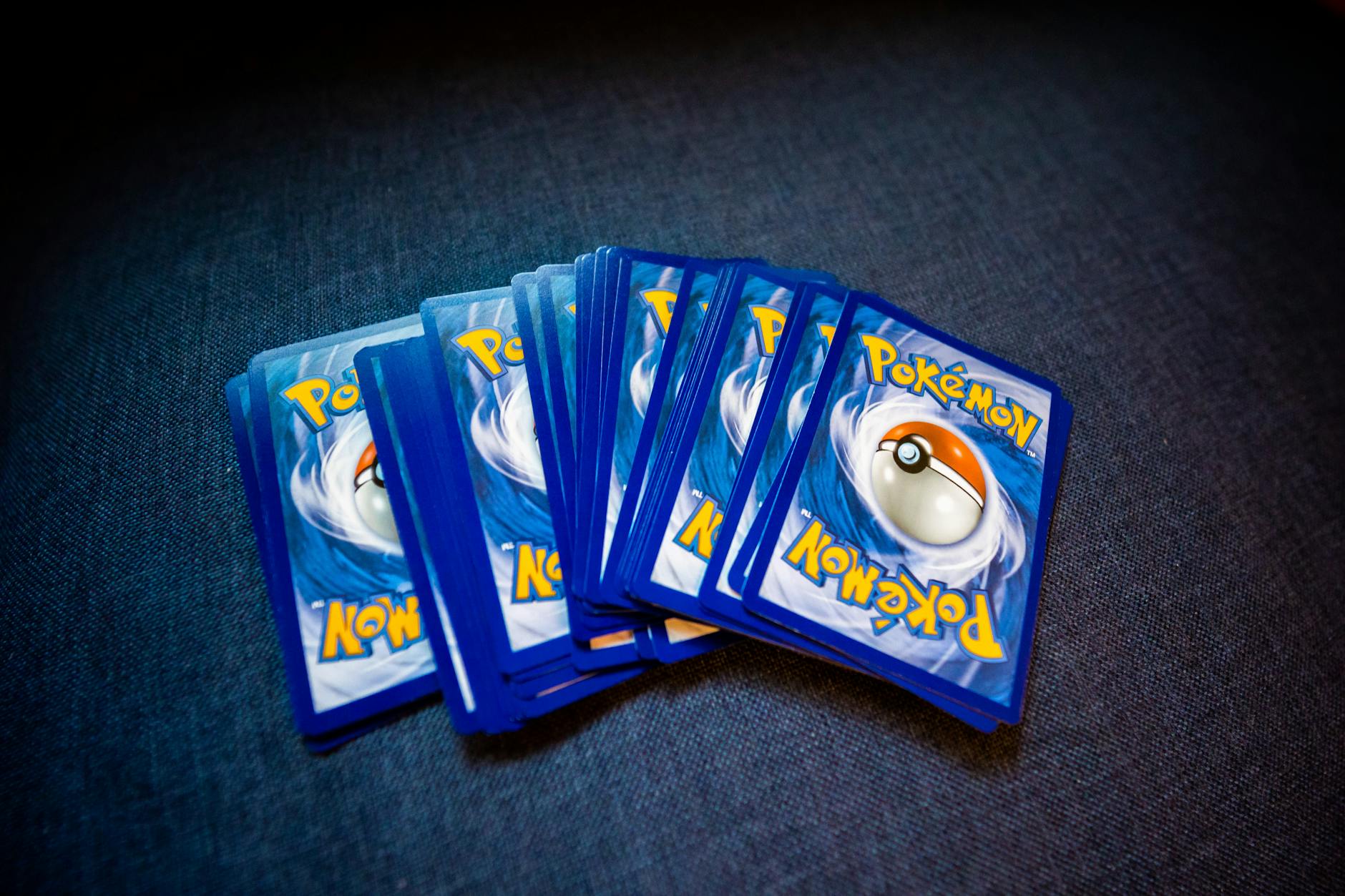
While $550,000 Trophy Pikachus and $2 million sealed Nintendo games grab headlines, the real investment value in Pokemon cards exists in the five-figure, four-figure, and even three-figure realm where most collectors actually operate. A graded Pokemon card worth $5,000 has a realistic buyer within months. A sealed booster box worth $10,000 moves on the secondary market with regularity. This depth—this ability to actually execute an investment thesis at reasonable price points—is what the sealed video game market lacks.
The video game market has been built almost entirely around nostalgia and ultra-rarity. Pokemon cards have been built around a combination of playability, collecting culture, and investment awareness, which creates far more transaction volume. The Pokemon TCG’s $2.2 billion 2024 revenue and $21.4 billion total market valuation are real economic figures that reflect constant trading, new set releases, and consistent collector participation. Every time a new Pokemon set launches, investment demand follows, creating a cycle that sustains and grows the market. Sealed video games experience spikes when documentaries air or celebrity collectors appear on the news, but there’s no underlying engine of ongoing demand the way Pokemon has with regular new releases and competitive play.
Long-Term Trajectory and Market Evolution
The Pokemon card market is entering a phase where investment sophistication is growing. Early investors in 2020-2021 experienced explosive gains; the market has matured and prices have rationalized in some areas, but consistent year-over-year appreciation continues. The 46% average gains in 2025 suggest that despite the market’s maturation, demand is still outpacing supply for quality cards. As more institutional investors and serious money enter the space, liquidity should improve further—bad news for speculators timing entry points perfectly, but good news for long-term investors looking to build positions and exit them when life circumstances require.
The sealed video game market, by contrast, appears structurally limited. Without new games entering the graded, sealed collectible market (modern games simply aren’t played sealed in the way retro games are), growth depends entirely on nostalgia cycles and the depletion of existing supply. Pokemon’s market has an advantage here: new cards are created constantly, but old cards become scarcer, creating natural appreciation pressure on back-catalog inventory. This cyclical engine of new supply meeting scarcity of the old drives the market in a way sealed video games cannot replicate.
Conclusion
Pokemon cards represent a fundamentally superior investment compared to sealed video games because they combine superior historical returns, genuine market liquidity, accessibility for average investors, and an underlying ecosystem that continuously generates new demand. The 3,800% appreciation from 2004 to 2025, the 46% average annual gains in 2025, and the $2.2 billion annual market revenue reflect a market that works—not as a speculative lottery, but as a functioning investment category with depth, transparency, and consistent trading activity.
The sealed video game market will continue to produce spectacular outlier sales that dominate news cycles. Those headlines shouldn’t distract from the fundamental reality: if you want investment returns with real liquidity, accessibility, and the ability to actually build and manage a portfolio, Pokemon cards deliver on all counts. Start with an understanding of reprint risk, invest in discontinued sets and first editions, monitor your holdings, and participate in a market that has proven it can deliver wealth creation across multiple price tiers and investor experience levels.
You Might Also Like
- Why Pokemon Cards Are a Better Investment Than Video Games
- Why Pokemon Cards Are a Better Investment Than YouTube Channels
- Why Pokemon Cards Are a Better Investment Than Websites