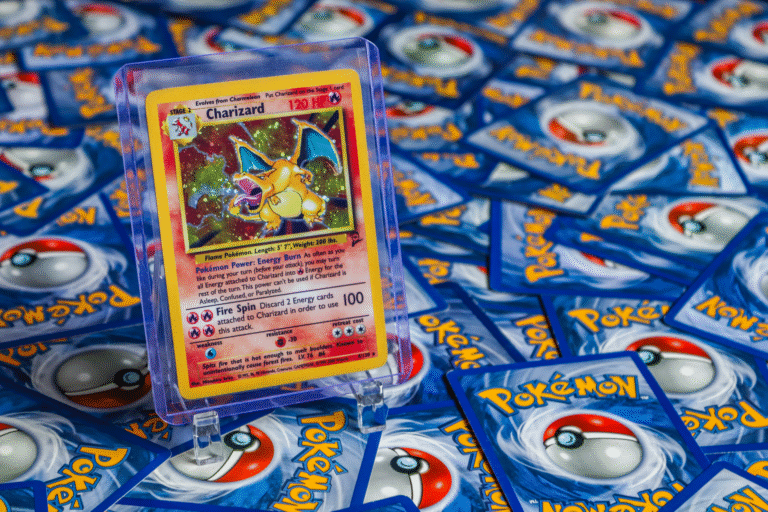
Expensive Pokémon cards generate consistent search traffic because they serve as investment assets, authentication challenges, and status symbols all at once. When a card like a first-edition Charizard sells for over $300,000 or a PSA 10 Blastoise Base Set reaches six figures, that headline creates a cascade of searches from collectors trying to understand the market, authenticate their own cards, and track prices. The search volume isn’t random—it follows the money, driven by people who need to know whether their childhood cards are worth protecting, whether they should buy or sell, and whether the prices they’re seeing are real or inflated.
The phenomenon accelerated dramatically after 2020, when mainstream media coverage of Pokémon card investments brought a new audience into the hobby. People searching for “expensive Pokémon cards” or “how much is my Charizard worth” aren’t necessarily looking for inspiration—they’re looking for reassurance or opportunity. Every spike in the collector market creates a corresponding spike in searches because the stakes are high enough that people want data before making decisions.
Table of Contents
- Why Collectors and Investors Search for High-Value Cards
- The Authentication and Grading Quest Driving Search Volume
- Investment Interest and Market Speculation Fueling Searches
- Viral Moments and Major Sales Creating Search Peaks
- The Counterfeit Problem and Authentication Searches
- Price Tracking and Market Data as Search Drivers
- Market Evolution and Future Search Patterns
- Conclusion
- Frequently Asked Questions
Why Collectors and Investors Search for High-Value Cards
The primary driver of search traffic around expensive cards is the basic human need to understand an unfamiliar market. When someone inherits a collection or discovers cards in an attic, their first instinct is to search for comparable sales and current valuations. Unlike common cards that consistently sell for a few dollars, expensive cards have volatile pricing that shifts with demand, condition, and rarity perception. A PSA 9 Shadowless Charizard might sell for $50,000 one month and command $75,000 six months later—those price movements are newsworthy enough to generate new searches. Investors specifically drive searches around the rarest and most expensive cards because they’re tracking assets the way others track stocks. Someone considering a $10,000 investment in a high-grade vintage card will search for market trends, comparable sales, and expert opinions.
This creates a self-reinforcing cycle: the more expensive a card becomes, the more searches it attracts, which increases visibility, which can drive further price increases. A collector researching whether to hold or sell a card worth $20,000 generates searches that another collector stumbles across while researching their own holdings. The grading companies themselves amplify this effect. When PSA, BGS, or CGC grades a particularly expensive card, that transaction is documented, priced, and searchable. Someone who owns an ungraded card in the same series will search for “PSA 10 [card name] sold” to understand what grading might add to their card’s value. That’s a direct conversion from card rarity into search volume.

The Authentication and Grading Quest Driving Search Volume
expensive cards create a parallel search economy around authentication and condition assessment. As card values climb past $1,000, $10,000, and beyond, the risk of counterfeiting becomes real enough that buyers and sellers treat grading and authentication as mandatory steps. Someone purchasing a $50,000 card online will search extensively for authentication guides, fake detection methods, and grading service comparisons. This creates high-intent search traffic that doesn’t exist around cheaper cards. The limitation here is that grading itself is a bottleneck that generates additional searches. When BGS or PSA has a submission backlog—which happens frequently during market surges—collectors search for alternatives: CGC Cards, PSA turnaround times, whether DIY grading is reliable.
During the 2021 boom, searches for “PSA turnaround time” spiked dramatically as the backlog reached months. Even the infrastructure around expensive cards becomes a source of search demand. There’s also a darker side to authentication-related searches. Collectors search for counterfeit detection because it’s a genuine problem. High-end cards are counterfeited with increasing sophistication, especially rare shadowless and first-edition Base Set cards. Someone selling a card worth $40,000 needs to convince the buyer it’s real; someone buying one needs to avoid being defrauded. That genuine risk creates searches around print line detection, paper stock analysis, and card feel comparisons that wouldn’t happen in lower-value categories.
Investment Interest and Market Speculation Fueling Searches
The financialization of Pokémon cards introduced an entirely new category of searchers: people treating cards as alternative assets. After PSA 10 graded cards started appearing on investment platforms and wealth management discussions, searches for “Pokémon cards as investment” and “should I invest in vintage cards” began trending. This audience searches differently than collectors—they’re looking for ROI data, market trends, and risk assessment rather than nostalgia or gameplay enjoyment. During bull markets in card collecting, searches peak because new money is entering and asking the basic questions: which cards appreciate fastest, what’s the entry point for expensive cards, how do I liquidate if I want to sell.
During bear markets, searches around expensive cards can actually increase as people try to understand why their holdings are declining and whether they should hold or exit. A collector who paid $8,000 for a card that’s now listed at $5,500 will generate multiple searches trying to understand the market correction. The investment angle also creates searches around specific market signals. When a particularly rare card breaks a price record—like the PSA 8.5 Illustrator Pikachu that sold for over $900,000—that becomes an event that drives searches from casual observers to serious collectors reassessing their strategies. The expensive card acts as a market indicator, and the search volume reflects people trying to understand what the new benchmark means for their own holdings.
Viral Moments and Major Sales Creating Search Peaks
High-profile card sales generate massive search spikes because they become news events. When Logan Paul purchased a box of vintage Pokémon cards for $150,000 and pulled expensive holos, that coverage across mainstream media created hundreds of thousands of searches from people who’d never thought about card collecting before. The search volume wasn’t limited to card collectors—it included curious people, skeptics, and journalists covering the story. The PSA 10 Blastoise Base Set sale for $151,200 generated a similar pattern: the headline spread across investment blogs, finance media, and social platforms, and each story drove new searches from people asking “why is this card worth so much?” Real-world auctions create spike patterns in search data that correlate almost perfectly with media coverage.
A card selling at Heritage Auctions gets reported by specialist outlets and sometimes mainstream media, each report reaches a new audience, and each audience member searches for the card’s details or comparison prices. This creates a tradeoff that’s important to understand: the most expensive card sales are also the most visible, which means they skew search results and public perception. Someone searching “most expensive Pokémon card” will find consistent coverage of the same 5-10 cards, which creates an illusion that these cards are more common or more achievable than they actually are. That misconception drives additional searches as people hunt for similar cards or try to replicate others’ returns.
The Counterfeit Problem and Authentication Searches
The higher a card’s price, the more sophisticated its counterfeits become. This reality creates a constant stream of searches from people trying to protect themselves or verify purchases. Someone buying a $30,000 card will search obsessively for authentication methods, expert opinions, and red flags. The counterfeit market for expensive cards has become sophisticated enough that sellers can charge premium prices by claiming authentic status, and buyers have to verify extensively. A significant limitation here is that DIY authentication is unreliable, which forces expensive card transactions toward grading services.
But that dependency creates its own search problem: if a card is ungraded but worth $10,000, the owner searches for grading decisions, turnaround time, and risk. If they find that grading could cost $50-100 and take months, they might search for alternative verification methods or expert appraisals. The counterfeit risk creates search demand that wouldn’t exist if cards were worthless. There’s also a warning worth emphasizing: the counterfeit problem for expensive cards means that buying ungraded high-value cards online carries real risk. Searches for “how to avoid buying counterfeit Pokémon cards” and “authentication services” spike whenever a particularly high-end card goes viral or becomes available for sale. This drives searches from people trying to do due diligence, but it also reflects a genuine market failure: if you can’t easily verify authenticity, you can’t efficiently price cards, and if you can’t price efficiently, you generate more searches as people try to understand what’s actually available.

Price Tracking and Market Data as Search Drivers
Collectors and investors search constantly for pricing data on expensive cards because that information has tangible financial value. Platforms that track sold comps for high-end cards generate significant traffic because people need to know what PSA 9 and PSA 10 versions of a given card have actually sold for, not just what they’re listed for. Someone considering selling a valuable card will search multiple times for recent sales data, comparison prices, and market trends.
A specific example illustrates this: searches for “PSA 10 Base Set Charizard price” don’t represent new buyers entering the market—they represent existing card holders checking value, deciding whether to grade an ungraded copy, or timing a potential sale. The search frequency correlates with market volatility; when prices are stable, search volume for specific expensive cards drops. When prices spike or crash, searches increase as people try to understand what’s happening. This makes expensive cards a reliable indicator of market sentiment, since you can track searches as a proxy for collector concern or opportunity-seeking.
Market Evolution and Future Search Patterns
The search behavior around expensive cards is shifting as the market matures. Early-stage Pokémon card investing was driven by nostalgia and novelty; current search patterns reflect more sophisticated analysis around rarity tiers, print run differences, and condition premiums.
New collectors searching for expensive cards now are often trying to understand what differentiates a $50,000 card from a $5,000 version of the “same” card, which drives more specific searches around shadowless variants, print lines, and grading standards. The market will likely continue generating search traffic around expensive cards because the prices themselves remain newsworthy and the barrier to entry creates ongoing education demand. As new generations of collectors enter the hobby, they’ll generate the same basic searches their predecessors did: “how much is my card worth,” “what’s the most expensive card,” and “how do I authenticate this.” The expensive cards will remain the market leaders, both literally in price and figuratively in search visibility.
Conclusion
Expensive Pokémon cards generate consistent search traffic because they represent several things simultaneously: investment opportunities, authentication challenges, status symbols, and data points for market analysis. Every price spike or notable sale creates ripple effects across search platforms as new audiences discover the market, existing collectors reassess their holdings, and investors track asset performance. The search volume isn’t accidental—it follows the money and the uncertainty that comes with high-value transactions.
The practical reality for sellers and collectors is that expensive cards are transparent in ways cheaper cards aren’t. Your searches for valuation, authentication, and market trends are shared by thousands of others asking identical questions. Understanding why expensive cards generate search traffic helps explain why pricing is public, why authentication matters, and why staying informed requires more than casual research. The market rewards knowledge, and knowledge requires searching.
Frequently Asked Questions
Do expensive Pokémon cards actually hold their value?
High-grade vintage cards have appreciated significantly over the past five years, but that performance isn’t guaranteed to continue. Market corrections happen, especially in speculative assets. Search data shows that during downturns, collectors search more intensely for valuation information because they’re concerned about holding declining assets.
How do I know if my expensive card is real?
Submit to a professional grading service (PSA, BGS, CGC) for definitive authentication. Don’t rely on online guides or seller claims. If a card is worth more than $1,000, the grading fee (typically $50-100) is a reasonable insurance cost.
What makes one expensive card different from another at the same price point?
Condition, rarity tier (shadowless vs. unlimited, first edition vs. unlimited), print line clarity, and current market demand all factor in. Two cards that appear identical might have $10,000+ price differences based on these subtle factors.
Is now a good time to sell expensive cards?
That depends on your specific cards and current market conditions. Search for recent sales of your exact card type and grade, then decide based on whether current prices meet your goals. Market timing is difficult in any asset class.
How often do expensive card prices change?
High-end cards can shift $1,000-5,000 in price over weeks as demand and available inventory change. Using price-tracking sites and setting search alerts helps you monitor your holdings without constant manual research.