Buyers are paying more attention to Pokemon card nostalgia in 2026 because the 30th anniversary milestone, combined with astronomical price records and a demonstrable 46% year-over-year increase in card values, has transformed collecting from a casual hobby into a serious investment vehicle. The psychological pull of revisiting childhood through original-era cards—amplified by media coverage of record-breaking sales like Logan Paul’s $16.492 million Pikachu Illustrator in February 2026—has created a cultural moment where owning Pokemon cards signals both personal nostalgia and financial acumen. This convergence of emotional attachment and tangible returns has drawn millions of new buyers into the hobby who may have grown up with the game but stopped collecting decades ago. The numbers tell the story: spending on Pokemon and non-sports trading cards jumped 350% between 2020 and 2025, according to market research firm Circana.
This isn’t just inflation or casual purchasing. Millennials now represent 68% of U.S. collectibles buyers, and Gen Z is following suit with 35% of the generation purchasing collectibles in the past year. For these demographics, Pokemon cards aren’t nostalgic artifacts—they’re the assets they wish they’d held onto when their parents threw them away.
Table of Contents
- How Nostalgia Became the Engine Driving Buyer Attention in 2026
- The Role of Record-Breaking Prices in Capturing Mainstream Attention
- Celebrity Influence and Social Media’s Role in Driving 2026’s Nostalgia Wave
- Investment Returns and the Shift From Hobby to Portfolio Asset
- Grading, Authentication, and Market Manipulation Concerns
- Demographic Patterns—Why Millennials Are Leading the Resurgence
- Market Sustainability and the Road Beyond 2026
- Conclusion
How Nostalgia Became the Engine Driving Buyer Attention in 2026
Nostalgia is a powerful economic force, but it rarely translates into mass market behavior without a catalyst. pokemon‘s 30th anniversary, celebrated on February 27, 2026, provided exactly that catalyst. Older collectors who abandoned the hobby after the late 1990s and early 2000s suddenly had a culturally sanctioned reason to re-engage. The anniversary wasn’t just a commemorative date—it sparked a wave of interest in older sets that had been dormant, with prices climbing more than 100% year-over-year partly driven by 30th anniversary enthusiasm.
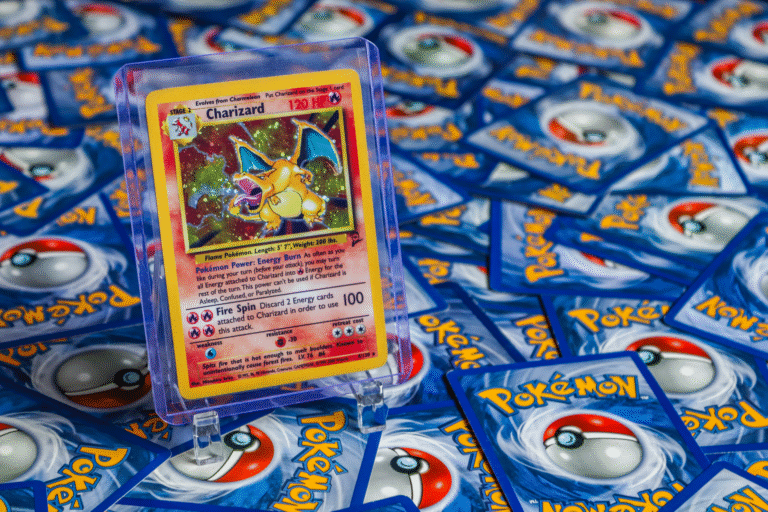
What distinguishes 2026 from previous nostalgia-driven buying cycles is the legitimacy afforded by investment performance. Pokemon and sports trading cards are outperforming the S&P 500 with upwards of 46% annual returns. This isn’t speculative talk—it’s a measurable fact that has converted skeptics into believers. A millennial who remembers trading Base Set Charizards at recess now sees those same cards selling for over $550,000 at Heritage Auctions when graded in pristine condition. The childhood game they underestimated became the investment they regret not keeping.

The Role of Record-Breaking Prices in Capturing Mainstream Attention
High-profile sales have always existed in the trading card world, but the sheer scale of recent records has pushed Pokemon cards into mainstream financial discussions. Logan Paul’s purchase of a PSA 10 Pikachu Illustrator for $16.492 million in February 2026—recognized by Guinness World Records as the most expensive trading card ever sold at auction—didn’t just set a new benchmark. It signaled that Pokemon cards belonged in the same conversation as fine art, rare stamps, and vintage coins. The limitation of using headline sales as a market indicator, however, is real. A $16 million card does not represent the market that most collectors operate in. The gap between ultra-rare 1st Edition Charizards and typical sealed products is enormous.
Yet the psychological impact is undeniable. When mainstream media covers a $16 million trading card sale, it legitimizes the entire hobby in the eyes of buyers who had dismissed it as niche. Suddenly, holding Pokemon cards isn’t embarrassing or childish—it’s potentially shrewd. Beneath the headline numbers, price growth has been broad-based. The celebrations Elite Trainer Box climbed back to $20-$23 after a period of softness, driven by anniversary nostalgia. In the Destined Rivals set, chase cards like Team Rocket’s Mewtwo ex trade at $376+ and Cynthia’s Garchomp ex at $237+. These aren’t legendary 1st Edition cards; they’re contemporary releases showing sustained value retention.
Celebrity Influence and Social Media’s Role in Driving 2026’s Nostalgia Wave
The impact of digital celebrities on Pokemon card valuations is now documented and measurable. Figures like Logan Paul, MrBeast, Randolph, and Leonhart have demonstrably driven new buyers into the market through booster opening videos and high-profile purchases. When a content creator with millions of followers opens a $500+ booster box and films the experience, the ripple effects are immediate—product sells out, secondary market prices spike, and curious viewers research how to get started. This creates a feedback loop that reinforces nostalgia. A 25-year-old discovers Pokemon card collecting through a YouTube video, buys their first booster box in 2026, and suddenly remembers why they loved the game as a child.
The celebrity influence isn’t manipulative in most cases; it simply provides the spark that overcomes inertia. For someone with disposable income and fading childhood memories, that spark is enough to justify a purchase. The warning here is that celebrity-driven booms can reverse as quickly as they arrive. Booster pack sales volatility illustrates this risk: average sales reached a high of 410.5 booster packs and sealed sets in January 2026, then declined to 270.77 by March 2026. If celebrity interest wanes or if content creators shift focus to another hobby, the rush of new collectors could dry up, affecting prices for newly sealed product.

Investment Returns and the Shift From Hobby to Portfolio Asset
The 46% average year-over-year price growth as of January 2026 has fundamentally changed how serious buyers approach Pokemon cards. They’re no longer purchasing cards to play the game or display them on a shelf. They’re buying with the same mindset as equity investors—seeking undervalued assets, building positions in high-demand cards, and monitoring secondary markets for exit opportunities. This investment perspective attracts a demographic that traditional card shops never reached. Finance professionals, real estate investors, and stock traders who had never collected Pokemon are now placing competitive bids on PSA-graded vintage cards.
The global trading card market is forecast to reach USD 90.2 billion by 2034, growing at 7.1% CAGR from USD 52.1 billion in 2026. That growth trajectory attracts institutional and individual capital alike. The tradeoff is that treating Pokemon cards as portfolio assets requires capital lockup and carries illiquidity risk. Unlike stocks traded on major exchanges, selling a $50,000 vintage card requires finding a specific buyer willing to pay that price. The January-to-March sales decline mentioned earlier shows how quickly market sentiment can shift, leaving sellers unable to exit positions at desired valuations.
Grading, Authentication, and Market Manipulation Concerns
As prices have climbed, the importance of third-party grading through PSA (Professional Sports Authenticators) and similar services has become critical. A Base Set Charizard’s value swings dramatically based on whether it’s PSA 8, PSA 9, or PSA 10—the difference between $50,000 and $550,000 is a single point on a 10-point grading scale. This creates vulnerability to grading inconsistency and potential manipulation. The Pokemon card market has largely avoided the severe authentication crises that plague other collectibles, but the risk exists.
Counterfeit high-value cards do enter circulation, and grading standards can shift over time. Buyers paying tens of thousands of dollars for 30-year-old cardstock are betting heavily on the integrity of third-party graders. If grading standards loosen or if major authentication firms experience significant scandals, confidence in the market could fracture. A practical limitation for new buyers is that the best-performing assets—1st Edition Base Set cards—are nearly impossible to acquire under $10,000. Most collectors entering the market in 2026 due to nostalgia are actually purchasing contemporary releases or lower-grade vintage cards, which offer different risk-return profiles than the record-breaking outliers that capture media attention.
Demographic Patterns—Why Millennials Are Leading the Resurgence
The 68% of U.S. collectibles buyers who are millennials aren’t purchasing Pokemon cards out of pure nostalgia. They’re members of the last generation that experienced Pokemon as a cultural phenomenon during childhood and adolescence. Gen X largely missed it; Gen Z was born into a world where Pokemon had already peaked.
Millennials occupy a unique position: old enough to remember the original card craze, young enough to have accumulated significant disposable income. Gen Z participation at 35% of those purchasing collectibles in the past year suggests the nostalgia wave isn’t purely generational. Younger buyers are discovering Pokemon cards through different channels—social media, celebrity influence, and peer networks—rather than personal memory. This cross-generational interest broadens the market’s foundation and suggests the 2026 resurgence may have staying power beyond a nostalgia cycle.
Market Sustainability and the Road Beyond 2026
The question driving forward-looking collectors is whether the 2026 surge represents a sustainable market expansion or a temporary spike fueled by celebrity attention and the 30th anniversary milestone. The fundamentals suggest staying power. The global trading card market forecast of 90.2 billion by 2034 assumes continued growth well into the next decade, not a crash followed by recovery.
What matters for buyers paying close attention in 2026 is recognizing the difference between vintage cards with genuine scarcity and contemporary releases trading on hype. The Charizard that sold for $550,000 will likely hold value for decades. A Celebrations Elite Trainer Box purchased at $22 faces uncertainty beyond 12 months.
Conclusion
Buyers are paying more attention to Pokemon card nostalgia in 2026 because the convergence of the 30th anniversary, documented investment returns outpacing the S&P 500, celebrity-driven mainstream media coverage, and record-breaking auction sales has transformed the hobby from a niche pursuit into a culturally legitimized asset class. For millennials in particular, it represents a second chance to own pieces of their childhood that they either lost or sold for pocket change. The opportunity is real but requires discernment.
The market’s 46% year-over-year growth and 350% spending increase since 2020 show genuine expansion, not speculation. However, new buyers should distinguish between assets with 30-year track records of value retention and contemporary products riding the nostalgia wave. Understanding which cards appreciate and which depreciate will determine whether 2026’s renewed attention to Pokemon nostalgia transforms into long-term wealth building or becomes another cautionary tale of buying at market peaks.