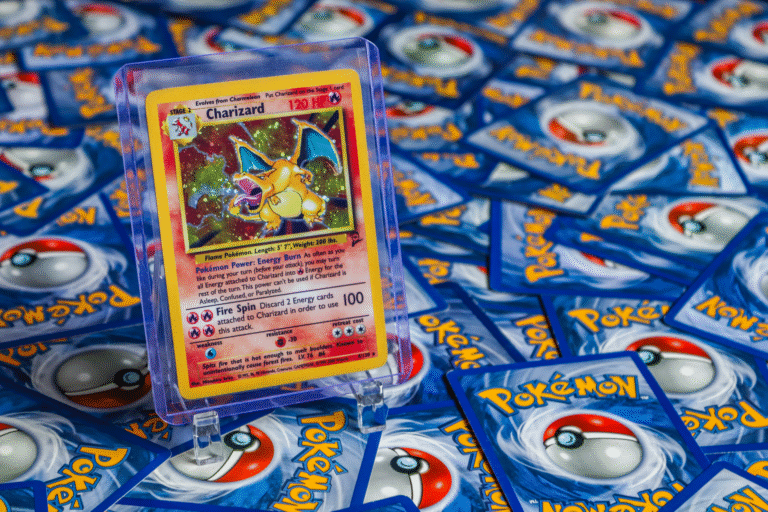
Buyers are paying more attention to Pokemon card convention deals in 2026 because the market has fundamentally changed. The average Pokémon card price has risen 46 percent year-over-year, with the Card Ladder Pokémon Index climbing 116 percent over the past year, making strategic sourcing critical for both collectors and resellers. Conventions have become essential venues where price discovery happens in real time, inventory selection is dramatically wider than online retailers, and early access to products like the upcoming 30th Celebration TCG set launching in September can make the difference between capturing a trend and missing it entirely.
The Pokemon 30th anniversary milestone in 2026 has amplified this shift. A Super Bowl commercial aired in February signaled major brand momentum heading into the second half of the year, and with exclusive new products launching nationwide simultaneously in September, convention attendance has become part of a serious collector’s annual buying calendar. For example, a buyer attending the Dallas Card Party convention in September can potentially acquire 30th Celebration packs at retail pricing before secondary market premiums establish themselves, something that rarely happens with highly anticipated TCG releases.
Table of Contents
- What’s Changed in the Pokemon Card Market to Make Convention Deals Essential?
- Understanding the Limited Liquidity in High-Grade Cards
- How the 30th Anniversary Milestone Shapes Convention Strategy
- Major Convention Events and How They Differ Strategically
- Avoiding the Convention Pricing Trap
- Seasonal Demand Peaks and Convention Timing Strategy
- The Shifting Role of Physical Convention Venues in a Digital Market
- Conclusion
- Frequently Asked Questions
What’s Changed in the Pokemon Card Market to Make Convention Deals Essential?
The 2026 pokemon card market has undergone a significant bifurcation that creates both opportunity and risk at conventions. High-grade and rare cards now command intense competition and maintain strong liquidity, meaning dealers at conventions can charge premium prices confidently for PSA 9s and above. Meanwhile, common cards and low-grade inventory face reduced trading volume and declining prices, making them poor investments even when available at convention discounts. This two-tier market means convention shoppers must understand which products represent actual deals and which are simply inventory liquidation dressed as bargains.
The price growth of 46 percent year-over-year has also concentrated wealth in specific cards and product categories. Booster packs consistently show the highest search interest and demand peaks aligned with set releases, while playmats and storage accessories hit their sales apex in January 2026, then flattened. A buyer at a convention in June faces a different product landscape than one shopping in September, when the 30th Celebration set launches and demand patterns reset entirely. Timing your convention attendance around these product cycles directly impacts both selection and pricing power.

Understanding the Limited Liquidity in High-Grade Cards
The concentration of liquidity in high-grade, rare cards has created a gatekeeping effect in the 2026 market. While PSA-graded first-edition holos and tournament-grade rare cards move efficiently and hold value, the volume of transactions in these tiers remains constrained. This means a convention dealer with limited inventory of premium cards can exercise significant pricing control, particularly if they’re one of the few vendors with specific cards on a given day.
A buyer hunting for a particular high-grade card may have no alternative to paying the dealer’s asking price if that’s the only copy present. Common cards and bulk inventory present the opposite problem: available in volume at most conventions, but with minimal resale value. If a dealer is offering common cards at what appears to be a 30 percent discount versus online pricing, the reason is often that online pricing itself has already collapsed due to oversupply. This is a critical limitation to understand before committing capital at a convention—low prices on commodity cards reflect depressed demand, not exceptional deals.
How the 30th Anniversary Milestone Shapes Convention Strategy
pokemon‘s 30th anniversary and the simultaneous global launch of the 30th Celebration TCG set in September 2026 have made convention attendance a calculation for serious buyers. This set will feature Mew and Mewtwo cards in new rarity formats with all-foil packs, and the worldwide simultaneous release means no single region gets first-mover advantage. However, conventions preceding September will still be dominated by earlier sets, and dealers will be pricing inventory with knowledge of the anniversary demand surge ahead. A convention in June offers products at pre-anniversary pricing; a convention in September will reflect full anniversary momentum.
The Super Bowl commercial in February served as a market inflection point, signaling that Pokemon was committing major marketing spend to the TCG in 2026. This kind of brand-level support historically precedes price rallies in collected products and increased retail distribution friction. Buyers who attended conventions in March and April likely saw different dealer positioning and pricing than those who shop in May and June. The lesson is that major brand announcements create predictable convention dynamics several months out, and early convention shopping around major milestones captures pre-surge pricing.

Major Convention Events and How They Differ Strategically
The 2026 convention calendar offers distinct opportunities depending on buyer priorities. Card Party conventions, held in San Diego (June), Fort Lauderdale (July 24-26 at Broward County Convention Center), and Dallas (September 4-6 at Gaylord Texan Resort), emphasize community engagement and tend to feature broader inventory selection from multiple vendors. The 2026 Pokémon North America International Championships in New Orleans (June 12-14 at Ernest N. Morial Convention Center) attracts serious competitors and collectors, typically with higher-priced inventory. Collectors Expo (Anaheim, August 22-23) and SA Collectors Expo (San Antonio, June 27-28, offering 50 free Pokemon card packs to the first 50 paying customers daily) fill specific regional gaps.
The timing difference between these events matters significantly. A buyer in San Diego can attend Card Party in June before inventory has been heavily picked over by earlier convention shoppers. The Dallas venue in September provides access to newly released 30th Celebration product. SA Collectors Expo’s incentive structure—50 free packs daily—signals vendor confidence in foot traffic volume and suggests an opportunity to evaluate dealer pricing across the widest possible vendor pool on a single day. A practical tradeoff: larger conventions like the International Championships offer more vendors but also attract dealers pricing for peak demand; smaller regional shows like Card Party may offer less-competitive pricing but narrower selection.
Avoiding the Convention Pricing Trap
Many buyers assume that convention prices are universally lower than online pricing, and this assumption costs them money. In reality, dealers at conventions price based on what they believe the market will bear at that moment and location, which is often identical to or higher than established secondary market prices on platforms like TCGPlayer. If a booster box is listed at $85 on TCGPlayer with zero shipping, a dealer asking $80 in person is offering marginal savings—before factoring in travel costs and time spent at the convention.
The danger escalates with higher-value cards. A dealer with a first-edition Charizard graded PSA 8 will price it based on recent sales data, and that price may exceed what you’d pay online because the dealer has immediate cash flow, no shipping risk, and no payment processing delays. The convention doesn’t inherently make deals better; it makes comparison harder because you can’t instantly check online pricing while standing at a booth. Serious buyers attend conventions with phone apps and price tracking tools already loaded, comparing every meaningful purchase against current market data before committing capital.

Seasonal Demand Peaks and Convention Timing Strategy
The data from the 2026 market shows clear seasonal peaks that should inform convention attendance decisions. Booster packs peak in search interest during December 2025 and February 2026, meaning conventions held during these months offered the widest selection from dealers capitalizing on seasonal demand. Playmats and storage accessories hit their average sales peak in January 2026, then declined through the spring.
By June, when multiple major conventions occur, these product categories had already moved through their peak demand windows. A buyer attending conventions in June and July should expect inventory positioned for summer hobby maintenance and pre-anniversary accumulation rather than peak-season buying. Dealers will have already sold through their December holiday inventory and will be restocking based on what they predict will sell through September. This creates a window where buyers can find previous set inventory at discounted rates if they’re willing to buy cards that won’t spike in value immediately, but makes it harder to source products positioned for imminent demand surges.
The Shifting Role of Physical Convention Venues in a Digital Market
Convention deals in 2026 represent something different than they did five or ten years ago. They’re no longer primarily about arbitraging the information gap between local inventory and national pricing—that gap has largely closed thanks to real-time price tracking and nationwide shipping from online retailers. Instead, conventions function as verification venues where you can physically inspect card condition before buying, access inventory that’s geographically concentrated without shipping delays, and gather market intelligence by comparing how multiple dealers position identical products.
The future role of Pokemon card conventions through 2026 and beyond will likely depend on how successfully they balance this informational function with the experience of community gathering. Card Party’s explicit emphasis on community over pure commerce suggests an industry recognition that pure price arbitrage isn’t sustainable as a convention value proposition. Buyers will continue attending, but they’ll be increasingly data-driven about which events offer genuine opportunities versus which ones are primarily experiential costs justified by entertainment value rather than financial return.
Conclusion
Buyers are paying more attention to Pokemon card convention deals in 2026 because market conditions have changed the stakes. With prices up 46 percent year-over-year and liquidity concentrated in high-grade cards, strategic sourcing matters more than it did when inventory was cheaper and more widely distributed. The 30th anniversary milestone and September launch of the 30th Celebration set have created predictable demand waves that savvy buyers can navigate by understanding convention timing, regional inventory patterns, and the real difference between convention pricing and secondary market pricing. Your approach to convention shopping should prioritize data collection and price verification over impulse buying.
Attend conventions aligned with your target product categories and demand cycles. Compare prices against established online markets before committing. Focus on high-grade and rare cards if seeking long-term value, and acknowledge that common cards at conventions often reflect genuine market decline rather than exceptional deals. The buyers paying the most attention to convention deals in 2026 are the ones treating them as intelligence-gathering venues and price-verification stops, not as discount stores with guaranteed arbitrage opportunities.
Frequently Asked Questions
Is it always cheaper to buy Pokemon cards at conventions than online?
No. Dealers price based on market demand, which often equals or exceeds online secondary market pricing. Conventions offer advantages in inventory selection, immediate possession, and condition verification, not guaranteed discounts. Always check TCGPlayer or equivalent before assuming a convention price is a deal.
When should I attend a convention to get the best selection of the new 30th Celebration set?
The set launches globally in September 2026. Conventions held in September and early October will have the highest inventory of this set. Earlier conventions in June and July will have limited or zero stock of the new set, though you may find pre-order opportunities or dealer allocations.
Are booster packs or graded cards better investments at 2026 conventions?
Booster packs offer lower individual cost and liquidity tied to set cycles and upcoming releases. Graded high-grade cards offer rarity and long-term value concentration but require significantly more capital and present individual pricing negotiation challenges. New buyers typically gain more advantage from booster pack acquisition at conventions due to the broader dealer pool and more transparent pricing.
How much should I budget for travel to make a convention worthwhile financially?
If attending for serious buying (more than $500 in purchases), keep travel costs under 15 percent of your intended spending to break even on price advantages. For regional conventions within driving distance, the math works. For flights, focus on the largest multi-day events where inventory justifies the cost.
What products should I avoid buying at conventions in 2026?
Common cards and bulk inventory almost always cost less because demand has collapsed, not because of convention deals. Playmats and accessories past their January peak demand window are declining in value. Focus on high-grade rares, sealed booster boxes from sets with sustained demand, and products positioned to benefit from upcoming brand momentum like the 30th Celebration set.
Should I buy 30th Celebration packs at a June convention if they’re available for pre-order?
Pre-orders at conventions in June are typically priced at manufacturer’s suggested retail price or slightly above. If you can secure packs at MSRP, that’s equivalent to online retail pricing. The advantage is immediate possession when the set launches in September rather than waiting for shipping. Only pay above MSRP if you believe convention retail scarcity will exceed online availability.