Collectors get wrong about local shop pricing because they confuse what cards are listed for with what they actually sell for. The gap between asking price and real market value is the first trap: a card listed at $200 on TCGPlayer doesn’t mean your local card shop will buy it for $200. In fact, most local card shops (LCS) buy raw cards at 50-60% of current market value and graded cards at 65-75%—a markup that catches many collectors by surprise when they walk in expecting near-retail payouts.
This isn’t a recent development. The 2026 market has only made this truth more pronounced. With grading costs eating into smaller card values, with sealed product no longer guaranteed to appreciate, and with condition increasingly determinative of price, the old assumptions about what your cards are worth simply don’t hold up. The collector who thinks their vintage holo is worth list price, or worse, the seller who prices by nostalgia rather than actual sales data, will leave money on the table every time.
Table of Contents
- Why Asking Prices Aren’t Actual Prices
- The Emotion Problem in Card Pricing
- The Buyback Reality Local Shops Won’t Hide
- The Condition and Grading Cost Equation
- Age Does Not Equal Value
- The Sealed Product Myth in a Falling Market
- Market Realities for 2026 and Beyond
- Conclusion
Why Asking Prices Aren’t Actual Prices
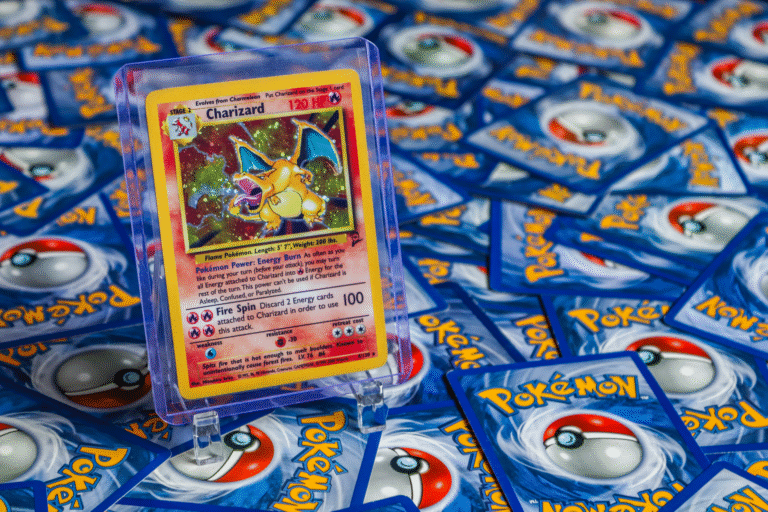
The most fundamental mistake collectors make is treating active listings as proof of value. When you see a Charizard listed for $500 on multiple platforms, your instinct is to think your copy is worth $500. But here’s what those listings don’t tell you: how long that card has been sitting unsold, whether the seller is even serious about that price, or whether anyone has actually paid it recently. Active listings are offers; they’re not sales data. Sold comparables—cards that actually left a seller’s hands—are what reveal true market value. This distinction matters enormously at local shops.
When you walk in with a card and the shopkeeper offers 50-60% of the “current price,” they’re not making up a number. They’re accounting for the fact that they need to be able to sell it. If they buy your card at market price and the card sits in their display case for six months because no one’s willing to pay that price, they’ve lost money to time and opportunity cost. The 40-50% discount they take is their buffer against dead inventory. The warning here is clear: if you’re using pricing apps that simply scrape active listings without filtering for actual sales, you’re overvaluing your cards. Services like TCGPlayer do try to weight sold listings more heavily, but even those can lag market reality by weeks. In a falling market like 2026, relying on old pricing data is especially dangerous—what a card sold for in March might be 20-30% higher than what it’ll fetch in June.

The Emotion Problem in Card Pricing
Beyond the mechanics of asking versus selling prices, collectors often price cards by feeling rather than data. You grade your childhood Blastoise as a 9 because you remember taking good care of it, not because you’ve examined it under a light and checked for edge wear, print lines, and centering. You list a card at $150 because you paid $120 for it three years ago and need to justify the hold, not because anyone’s actually bought a comparable copy for that price recently. You follow social media hype around a particular set or card and price upward, ignoring that hype doesn’t always translate to buyer interest. This emotional pricing is especially damaging when you’re dealing with condition assessment. Overgrading is rampant in the collector market: people routinely misgrade their own cards as near mint or mint when they’re actually light play or heavy play.
The result is a listing that looks good until the buyer receives it, compares it to the grading standard, and either returns it or leaves negative feedback. In a market as interconnected as 2026’s, reputation damage spreads fast. Here’s the practical limitation: unless you’re grading through a professional service like PSA or CGC, no one will trust your grade. If you’re selling to a dealer or local shop, they’ll re-grade your card themselves and offer based on what they see, not what you claimed. Your emotional assessment is worthless to them. The only grade that matters for pricing is either a third-party certification or what the buyer is willing to pay based on their own inspection.
The Buyback Reality Local Shops Won’t Hide
When you sell to a local card shop, you’re not selling to a collector. You’re selling to a business that has overhead: rent, staff, insurance, and the cost of unsold inventory. That 50-60% buyback rate for raw cards and 65-75% for graded cards isn’t arbitrary. It’s the math of staying open. Consider a concrete example: you have a raw copy of a Shadowless Charizard that TCGPlayer shows at $800. You walk into your local shop expecting $400-480 (50-60% of list). The shop appraises it at $450 because they’ve seen these move slowly and they want room to profit when they resell. They’re not trying to cheat you; they’re protecting their margin.
When they resell it, they might mark it at $650-700, and it might take them two months to move it. That’s the real value they’re trading on. Graded cards do better: if your card is already slabbed PSA 8, the shop might offer 65-75% of market value because they can resell it with certainty. A graded card has third-party authentication, so they don’t have to grade it themselves, and buyers trust the grade. The buyback premium for graded cards reflects that certainty. The limitation you need to accept: if you’re selling to a shop, you will not get market price. You’ll get a percentage of it. If that’s not acceptable, you have other options—sell online yourself, use marketplace platforms, or hold for a better market—but don’t expect a shop to bridge the gap between wholesale and retail.

The Condition and Grading Cost Equation
Here’s a 2026 reality that catches many collectors off guard: grading costs now represent a much larger percentage of card value than they did five years ago. When high-value cards are grading upward, a $50 grading fee is a rounding error on a $5,000 card. But in a softer market, grading a $300 card costs you $50-100, leaving you with a shrinking return on investment. This is where the math of grading gets brutal. If you have a card that you think grades PSA 8 and you expect it to be worth $400, grading costs you $75-100 depending on turnaround. If the card comes back as a 7 instead—and less than 1% of vintage Pokemon cards grade PSA 10, so most cards grade somewhere between 6-8—you’re now sitting on a $250-300 card with a $100 grading fee already spent. Your net is $150-200 instead of $300.
The grading gamble didn’t pay off. Even worse is overgrading yourself. If you submit what you think is an 8 and it comes back a 7, you’ve lost money twice: on the grading fee and on the lower final value. The collector who’s honest about condition—who grades conservatively and only submits cards they’re confident about—comes out ahead. The collector who’s optimistic about every card’s potential ends up feeding grading companies’ revenue while watching their own margin disappear. The practical comparison: getting a card graded makes sense if you’re moving a high-value piece and need third-party authentication to reach that price. It makes much less sense for mid-range cards in a 2026 market where buyers are already price-conscious. Before you submit anything, ask yourself: will this card sell for more as a graded card than it would raw, minus the grading cost? If the answer is no, you’ve already lost money.
Age Does Not Equal Value
One of the most persistent misconceptions about Pokemon cards is that older cards are always more valuable. A first edition Charizard from Base Set is genuinely valuable, so collectors extrapolate: therefore, older cards are more valuable. But this logic fails immediately when you look at actual pricing. A holographic Pidgeot from Base Set—also from 1999, also rare for its time—is worth a fraction of what a Charizard costs. A modern secret rare from an underprinted set might be worth more than a common card from 1995. Value depends on three factors, not age: rarity, condition, and demand. Rarity means how many of that exact card entered circulation. Condition means how well it’s been preserved.
Demand means how many collectors actively want it right now. Age affects rarity to some degree—older cards are harder to find in good condition—but it doesn’t automatically confer value. The warning: if you’re holding cards because they’re “old,” you might be holding worthless inventory. Check actual sales prices for the specific card, grade, and set. Compare what collectors are paying, not what sellers are asking. An old common is still common, and no amount of age changes that. Similarly, don’t sleep on newer cards just because they’re recent. A limited-edition release with real scarcity can outpace cards from decades ago. The market in 2026 rewards specificity and data, not assumption.

The Sealed Product Myth in a Falling Market
For years, Pokemon collectors operated on a simple belief: buy sealed product, hold it, watch it appreciate. That strategy worked in the pandemic-era market when demand exceeded supply and prices climbed year over year. It does not work in 2026, and many collectors still haven’t adjusted. Sealed booster boxes from modern sets are not appreciating. Some are actively depreciating. A box that cost $120 at retail in 2024 might be worth $80-100 now.
The oversupply of recent sets has collapsed prices for most modern sealed product. The only sealed products that hold or gain value are those with genuine scarcity—early printings, discontinued sets, or releases with limited production. The collector sitting on 2023-era booster boxes is not in a position of strength; they’re holding speculative inventory in a declining market. The practical takeaway: sealed product is not a guaranteed investment vehicle in 2026. If you’re buying sealed boxes, you’re betting on scarcity or collector sentiment shifting upward. Those are real bets, but they’re bets—not sure things. Price your expectations accordingly.
Market Realities for 2026 and Beyond
The Pokemon card market in 2026 is consolidating. Casual buyers and speculators who entered during the pandemic boom have exited or sharply reduced spending. Grading services are processing more volume at higher costs with longer turnarounds. Competition from other collectibles is fiercer than ever. The net effect is a market that rewards precision and punishes guessing. Moving forward, collectors who win are those who price data, not hype. They check actual sold prices weekly.
They grade conservatively or not at all. They buy local shops at the margin where they can get real deals, and they know not to expect shop buyback prices to match market value. They understand that a card’s age is irrelevant; rarity, condition, and demand are everything. The market will keep evolving—new releases will hype, sealed product will fluctuate, grading costs will shift—but the fundamentals won’t change. Know your data. Price from evidence. And don’t expect your local card shop to be a buyer of last resort at anything near retail.
Conclusion
The collector who gets local shop pricing right starts by accepting a hard truth: buying prices will never match selling prices. Shops operate on margin. The 50-60% buyback for raw cards and 65-75% for graded cards isn’t a rip-off; it’s how shops survive.
Understanding that frame—seeing the shop as a wholesale buyer, not a retail competitor—changes how you price your own cards and where you choose to sell. Beyond the shop itself, the bigger lesson is this: in 2026, data beats emotion, asking prices are worthless without sold comparables, condition is determinative, age is irrelevant without rarity, and sealed product is not a default investment. If you can learn to price from evidence and accept the real market value of your cards—not the price you hope for or the price someone listed—you’ll make better selling decisions and stop leaving money on the table.