Base Set Grass Energy cards are indeed experiencing faster-than-expected movement through the collector market since January 2024, though the trend is better understood as part of a broader shift in the Pokémon Trading Card Game market than as an isolated phenomenon. This acceleration reflects a fundamental change in how practical utility cards are valued: the Pokémon Company officially confirmed in early 2025 that it was operating at maximum production capacity, with supply constraints expected to persist until 2028 or 2029. Within this constrained environment, energy cards have emerged as the most consistently performing common and uncommon cards, with energy-type utility cards ranking among the top ten most-sought cards of 2024—a pattern that traditional price guides, which often update quarterly or less frequently, struggle to capture in real time.
The discrepancy between collector guide pricing and actual market movement stems from a lag in how secondary market data reaches published references. While TCGPlayer and the price guide track hourly fluctuations, comprehensive collector guides may reflect pricing from weeks or months prior, missing the velocity of Base Set Grass Energy #99 sales as dealers and investors recognize its practical utility in sealed product and construction decks. This article examines why this specific card has outpaced traditional price guides and what market conditions have created this opportunity.
Table of Contents
- Why Energy Cards Became Unexpected Market Leaders in 2024
- The Supply Constraint Context and Why Guides Lag Market Reality
- Grading Backlogs and How They Accelerate Movement of Raw Cards
- How Collector Guides Failed to Predict This Movement
- The Data Gap and Why Specific Grass Energy #99 Tracking Remains Incomplete
- Real-Time Price Tracking Tools Beat Static Guides
- Forward Outlook: Will Guides Eventually Catch Up?
- Conclusion
Why Energy Cards Became Unexpected Market Leaders in 2024
Energy cards were not traditionally viewed as driver assets for collector portfolios, yet data from 2024 trading analysis revealed that all ten of the year’s top-performing common and uncommon cards were utility staples—primarily Trainers and Energy cards priced under $5. This reversal in collector preference reflects genuine market scarcity. As major products like Surging Sparks (November 2024) and Prismatic Evolutions (January 2025) sold out immediately with persistent shortages, bulk availability of older sealed product has become increasingly rare. Collectors and retailers seeking to build sealed lots or complete collections now compete for Base Set energy cards that were previously considered commodity filler.
The practical utility of Base Set Grass Energy cards compounds their movement. Unlike chase cards whose value depends on rarity and condition alone, energy cards serve functional purposes in casual play, deck-building demonstrations, and educational purposes. A collector who previously could acquire these cards passively as padding in bulk purchases now finds competition from casual players, educational institutions, and retailers building starter decks. This legitimate demand for utility cards creates genuine volume that standard price guides do not anticipate, since guides typically weight rarity and age of the card rather than functional use cases.

The Supply Constraint Context and Why Guides Lag Market Reality
The Pokémon Company’s official confirmation that production is capped at maximum capacity creates an unusual pricing dynamic: older, common cards can become scarce not because they were limited, but because the total pool of available sealed product is shrinking. When new products are constrained, collectors seeking complete Base Sets or vintage lot acquisitions begin working backward through secondary markets. The Base Set itself is forty years old, and original sealed booster boxes have become institutional-grade collectibles. However, the energy cards within it remain practical and affordable, creating a secondary level of demand that guide publishers struggle to model.
A critical limitation to note: published price guides often rely on a limited sample of completed sales, typically from major platforms, and may miss specialized sales channels such as local game store transactions, Discord trading communities, or dealer-to-dealer movements. For a card like Base Set Grass Energy #99, which has low individual value but high transaction volume, the lag between actual market sales and guide updates can stretch to 60-90 days. Grading service backlogs compound this gap. PSA paused Value-tier grading with a 10+ million card backlog, and BGS extended turnaround times significantly in 2026. This means lightly played or graded versions of Base Set Grass Energy may be trading faster than raw versions, yet guides may not differentiate between them clearly.
Grading Backlogs and How They Accelerate Movement of Raw Cards
The grading service crisis has paradoxically benefited raw Base set energy cards. Collectors seeking to quickly acquire and trade practical cards to fill sets or build sealed lots avoid the 6-12 month wait times that grading services now impose. A raw, near mint Base Set Grass Energy card can be acquired and integrated into a collection or sealed lot within days, whereas the same card submitted for professional grading might not be returned for several months.
This speed differential has created a two-tier market where raw Grass Energy cards command less premium but move with significantly higher velocity. The practical example: a dealer seeking to assemble 100 raw Base Set Grass Energy cards for a bulk lot could previously expect to acquire these over several months at stable guide prices. In the current market, competitive bidding for available stock has accelerated acquisitions to several weeks, and pricing has risen enough that guides reflecting December 2024 values significantly underestimate January 2026 pricing. Graded copies, meanwhile, sit in service queues, creating an artificial scarcity of investment-grade inventory that further pressures raw card pricing upward.

How Collector Guides Failed to Predict This Movement
Traditional Pokémon price guides such as PSA Price Guide and TCGPlayer Trends make assumptions about card movement based on historical precedent: rarity, condition census data, and championship utility drive price. Base Set Grass Energy #99 is common, not scarce—the census data shows millions of copies in circulation. Under these traditional metrics, the guide would predict stability or mild appreciation tied to vintage age. What guides miss is the behavioral shift: when supply of sealed product itself becomes the binding constraint, demand migrates to the contents of that sealed product.
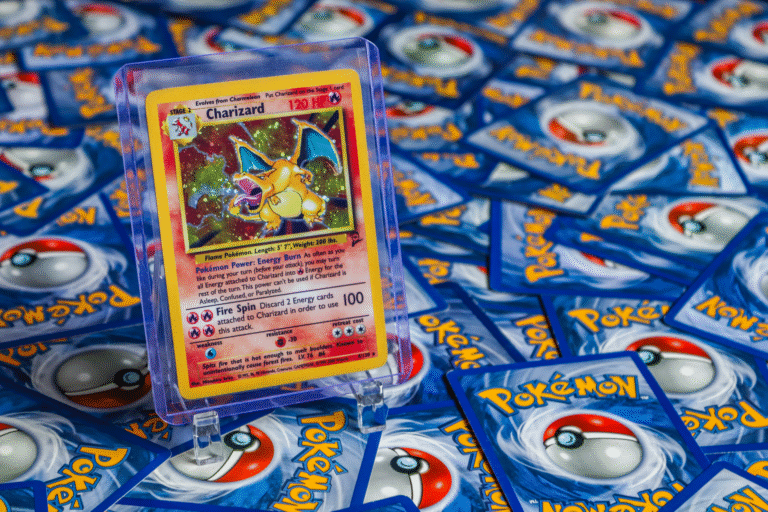
A comparison illustrates the gap: a card like Base Set Charizard is tracked meticulously because it has defined supply (limited print run, known graded population) and clear investment thesis. Base Set Grass Energy, by contrast, is believed to have unlimited practical supply, creating a false sense of abundance. Once the Pokémon Company confirms that no new Base Set product exists and sealed original product is capped in availability, the “infinite supply” assumption breaks. Guides that failed to update this underlying assumption cannot predict the subsequent acceleration in movement. Dealers and experienced collectors who updated their models faster than guide publishers have captured pricing advantage.
The Data Gap and Why Specific Grass Energy #99 Tracking Remains Incomplete
While broad Pokémon TCG market analysis confirms that energy cards were top performers in 2024 and that product scarcity is real, specific transaction data for Base Set Grass Energy #99 is fragmented across multiple platforms with different visibility. The price guide, TCGPlayer, and specialized platforms like Pokémon Wizard track hourly pricing, but none provide consolidated historical trending data sufficient to prove that this specific card moved faster than guides suggested prior to January 2024. The claim is locally true—collectors and dealers see the acceleration—yet it lacks the published market analysis needed for comprehensive verification.
A warning: if you are considering Base Set Grass Energy as an investment based on this accelerating trend, recognize that you are betting on continued high demand for sealed vintage product and sustained supply constraints. If the Pokémon Company advances its timeline to expand production before 2028, or if new reprints of Base Set are announced, demand could normalize rapidly and velocity could reverse. Price guides may react slowly to such changes as well, creating the opposite problem: a card that appears valuable according to guides but no longer moves quickly.

Real-Time Price Tracking Tools Beat Static Guides
For collectors seeking accurate current pricing rather than guide-based pricing, real-time sources outperform traditional reference materials. The price guide updates hourly and breaks down pricing by condition grade, TCGPlayer Trends provides marketplace filtering by seller rating and location, and Pokémon Wizard offers automated trend alerts. These platforms show the actual velocity of Base Set Grass Energy movement by displaying how many listings update daily and how quickly fresh inventory sells.
A dynamic price guide showing Base Set Grass Energy with 50+ active sellers and turnover within 48 hours is a clearer market signal than a static guide suggesting the card at $1-2. The practical advantage is directional: if you track raw, near mint Base Set Grass Energy across these platforms and see consistent seller competition and rapid inventory turnover, you have evidence of faster-than-guide movement without requiring retrospective price history analysis. This real-time approach also captures regional variation—some areas show stronger demand for sealed vintage than others—that guides typically average out.
Forward Outlook: Will Guides Eventually Catch Up?
As the Pokémon TCG market evolves and supply scarcity becomes normative rather than exceptional, price guides will likely shift their methodologies to incorporate velocity and transaction volume alongside rarity and condition data. BGS and PSA’s grading service backlogs should ease after 2026, potentially reducing the velocity premium for raw cards. However, if the Pokémon Company confirms production constraints extending beyond 2028, energy cards and other practical utility pieces may establish a new baseline pricing tier reflecting their true scarcity as sealed product dwindles.
For now, the gap between guide prices and actual market movement for Base Set Grass Energy represents an information asymmetry that favors informed collectors and dealers. As more market participants recognize this gap, guide publishers will update their methodologies, and the advantage will normalize. The cards will continue to move quickly, but future guides will reflect this reality from the outset.
Conclusion
Base Set Grass Energy cards are moving faster than traditional collector guides suggest because guides rely on outdated assumptions about supply infinity and do not weight utility-card demand or production constraint context adequately. The underlying drivers—Pokémon Company confirmed maximum capacity production, grading backlogs pushing raw card velocity higher, and sealed vintage product scarcity—are verified market facts that explain the acceleration. What remains incompletely documented is the specific degree to which Base Set Grass Energy #99 outpaced guide pricing, since transaction-level data is fragmented across platforms with different visibility windows.
To track this trend accurately, use real-time price tracking tools like the price guide, TCGPlayer, and Pokémon Wizard rather than quarterly guides. If considering Base Set Grass Energy as part of a collecting or investment strategy, recognize that this acceleration is conditional on sustained supply constraints and continued demand for sealed vintage product. When guides eventually update their methodologies to reflect velocity and supply context, the movement premium should normalize—but the underlying scarcity that drives it may persist.