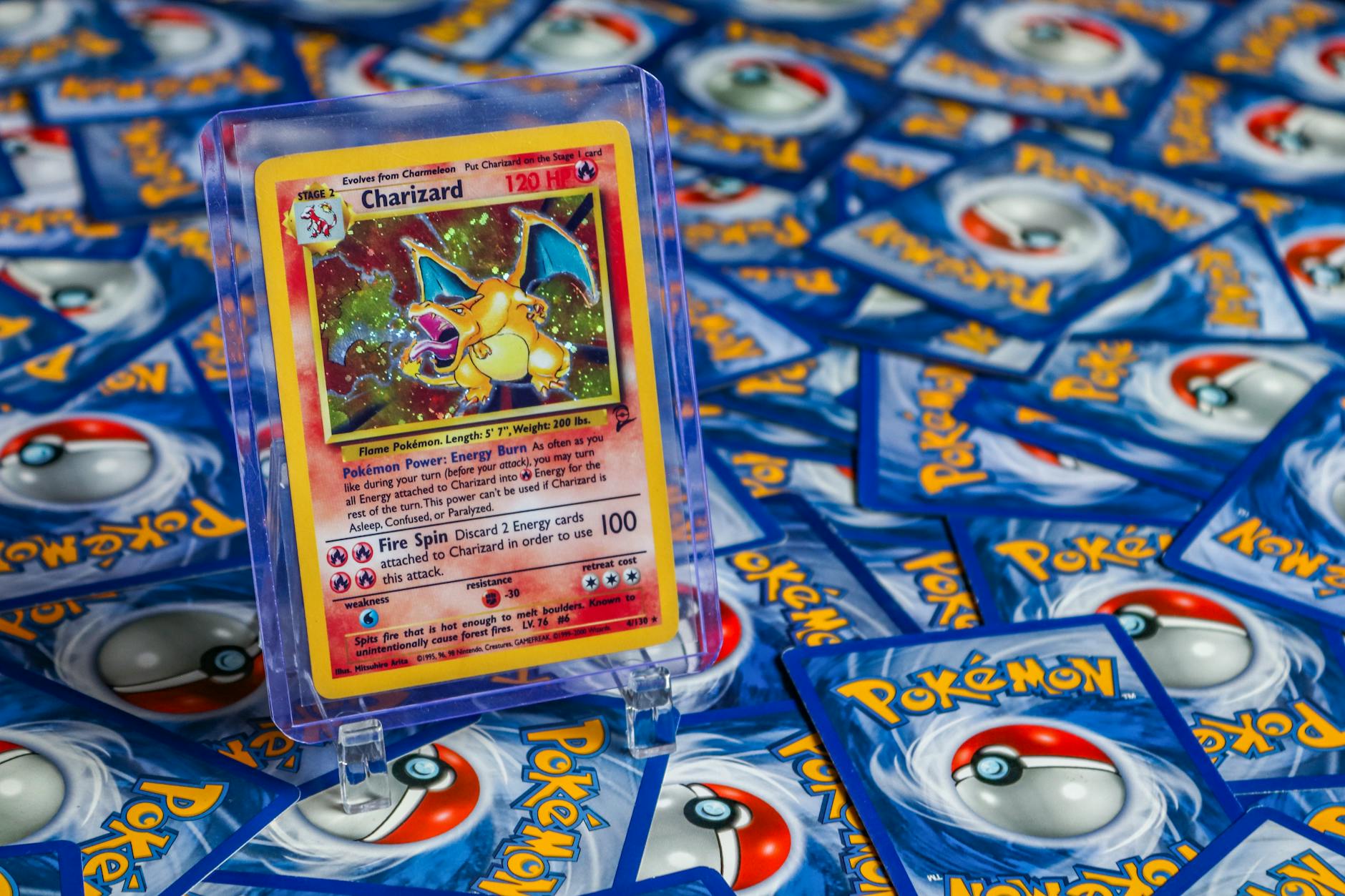
The LEGO Pokémon Card Challenge represents a significant crossover moment for the collecting community—merging two distinct product ecosystems in a way that changes how collectors think about value, rarity, and what makes a Pokémon acquisition worthwhile. Unlike traditional set releases or promotional cards, the LEGO collaboration introduces physical building components alongside card elements, creating new collection dynamics that extend beyond the standard trading card game framework. For many collectors, this means reconsidering their acquisition strategy: a collector who previously focused solely on Base Set holographics might now need to evaluate whether limited-edition LEGO bundle cards or promotional variants hold comparable or greater value to their existing portfolio.
The challenge element—whether tied to completing specific LEGO set combinations, collecting promotional cards distributed through LEGO channels, or participating in themed collection events—fundamentally shifts how fans engage with Pokémon products. Rather than a purely card-based chase, the challenge incentivizes crossover participation, meaning a casual LEGO enthusiast might suddenly find themselves buying Pokémon products, while serious TCG collectors face new pressure to acquire outside their traditional retail channels. This creates both opportunity and friction in the market, as supply chains, price points, and availability differ dramatically between LEGO distribution and traditional card shop networks.
Table of Contents
- How Does a LEGO Pokémon Crossover Change Card Values?
- The Crossover Appeal Problem—Who Actually Buys These?
- Rarity and Authentication Challenges in Mixed-Media Releases
- Strategic Acquisition—Should Collectors Buy These Products?
- Market Saturation and Secondary Market Traps
- Integration with Existing Collections—Sorting Variants and Variants-of-Variants
- Future Outlook—Consolidation vs. Expansion of Crossover Products
- Conclusion
- Frequently Asked Questions
How Does a LEGO Pokémon Crossover Change Card Values?
The introduction of lego-exclusive Pokémon cards or variants typically creates immediate market fragmentation. Cards obtained through LEGO sets carry different provenance than their traditional equivalents, which can affect both perceived and actual value. A promotional Pokémon card bundled with a LEGO set may command a premium because it’s harder to obtain through standard channels, or it may trade at a discount if collectors view it as less “legitimate” than tournament-legal alternatives. This mirrors what happened with McDonald’s promotional cards in various markets—some cards became valuable precisely because they were harder to grade or authenticate, while others remained dealer bulk. The rarity structure matters significantly here.
If LEGO produces millions of sets containing the same promotional card, that card’s value depends entirely on how many collectors actively seek it versus how many come on the secondary market. A LEGO Pokémon set distributed worldwide through major retailers creates very different scarcity conditions than a limited regional promotion. Collectors who bought in expecting exclusivity often find themselves holding common cards once the market saturates; conversely, earlier adopters who recognized the crossover appeal can see meaningful appreciation if LEGO discontinues specific set variants. Pricing pressure extends to associated traditional cards as well. If a LEGO set features artwork or characters that parallel existing high-value cards, the comparison draws collector attention to both products simultaneously, potentially inflating secondary market prices for the “original” card as fans seek the most authentic version of that Pokémon or scene.

The Crossover Appeal Problem—Who Actually Buys These?
The LEGO Pokémon Card Challenge assumes overlap between two historically distinct collector communities: LEGO enthusiasts and Pokémon TCG players. However, this overlap is narrower and more fragmented than it might appear. A serious LEGO builder may have zero interest in Pokémon cards and see the promotional cards as packaging waste. Similarly, a competitive TCG player may view LEGO merchandise as tangential to their core collecting objectives. This creates a mismatch where inventory sits in one community’s hands while demand remains concentrated in the other. The built-in limitation here is accessibility and motivation differentiation.
LEGO sets are expensive—$50 to $200+ for most licensed products—which makes buying purely for bundled cards a poor economic decision for budget-conscious collectors. A player willing to spend $30 on a Pokémon booster box gets far more cards per dollar than one buying a $100 LEGO set for a single promotional variant. This economic reality keeps LEGO Pokémon products from becoming the primary chase vehicle for serious collectors, instead positioning them as supplementary additions for those who genuinely enjoy building the sets. Retail channel distribution compounds this problem. LEGO sets sell primarily through LEGO stores, major retailers like Target and Walmart, and online marketplaces—not traditional card shops where Pokémon collectors typically congregate. A collector hunting for chase cards won’t naturally encounter these products through their usual acquisition pathways, meaning LEGO-exclusive variants remain invisible to significant portions of the collecting audience unless they actively seek them out.
Rarity and Authentication Challenges in Mixed-Media Releases
When cards come bundled with physical products rather than sold separately, authentication becomes more complex. A promotional card in a sealed LEGO box carries implicit authentication—you can verify the box itself. But once separated, the card lacks the provenance that sealed sets provide, creating buyer uncertainty in the secondary market. Grading companies must determine whether they accept these cards identically to standard releases, and their decisions directly impact resale value. A specific example: special edition promotional cards from LEGO sets sometimes show minor printing variations compared to standard releases—different font weights, slightly offset centering, or unique holo patterns.
These variations rarely add value; instead, they create confusion about whether a card is “correct” or a defect. Collectors new to the LEGO variants often struggle to identify which version is legitimate, leading to misgraded submissions or disputes with sellers about condition and authenticity. This friction reduces secondary market liquidity because potential buyers question whether they’re getting a variant or simply a substandard card. The limitation extends to grading costs. Submitting a $15 promotional card to a grading company costs $20-50 depending on turnaround time, which eliminates any profit opportunity on common variants and creates a disincentive for collectors to formalize authentication. Ungraded LEGO promotional cards trade at significant discounts to their graded equivalents, fragmenting the market further.
Strategic Acquisition—Should Collectors Buy These Products?
For collectors deciding whether to purchase LEGO Pokémon sets, the calculation depends entirely on your primary objective. If you’re building a comprehensive Pokémon collection and want to own every version and variant of a particular card or character, LEGO exclusives become mandatory purchases—you simply have no other option. But if you’re chasing price appreciation or high-rarity pulls, LEGO sets rarely deliver the value that traditional TCG products offer. A $80 LEGO set guarantees one promotional card; an $80 booster box allocation gives you multiple packs with potential for graded high-value pulls. The tradeoff cuts the other direction for casual collectors and completionists. LEGO sets provide guaranteed cards with no pull variance—you always know exactly what you’re getting. Booster boxes carry the lottery element: some boxes yield valuable hits while others contain bulk commons.
From a certainty standpoint, LEGO products reduce speculation risk; from a value standpoint, they eliminate upside potential. Collectors with limited budgets should weight these differently than those purchasing for enjoyment rather than return expectations. A practical comparison: imagine you have $150 to spend on Pokémon products. Option A: two LEGO sets ($100) plus two booster boxes ($50) gives you two guaranteed promotional variants plus six packs of random cards. Option B: four booster boxes ($150) focuses entirely on chase potential. Option A improves your promotional card diversity; Option B maximizes pull variance and upside exposure. Neither is objectively correct—it depends whether you prioritize variant completeness or potential big hits.
Market Saturation and Secondary Market Traps
LEGO Pokémon products often oversupply the secondary market within weeks of release as initial buyers list their pulls or unopened sets. Promotional cards from widely distributed LEGO sets frequently trade below the effective cost-per-card of the set itself, meaning a collector could have simply bought the loose card for less money than the entire product. This creates a market trap: early buyers hoping to flip sets for profit or resell promotional cards discover that supply vastly exceeds demand. The warning here is acute for speculative buyers. LEGO production runs are measured in the millions of units for major retailers, which automatically suppresses secondary market prices.
Unless a specific LEGO Pokémon variant becomes genuinely scarce due to early discontinuation or regional exclusivity, treat any price appreciation as windfall rather than expectation. Collectors who buy these products hoping to resell at profit typically lose money when accounting for shipping, fees, and storage costs. One grader who listed a LEGO promotional variant at $40 last year is now selling the same card graded at $12—not because the card declined in actual desirability, but because initial scarcity disappeared once the secondary market absorbed production supply. A second limitation: LEGO set prices themselves often drop 20-40% after the initial release window, meaning a collector paying full retail price immediately enjoys worse value than one who waits. This creates timing pressure that tempts buyers into poor decisions, particularly if LEGO products become hard to find briefly due to seasonal demand.
Integration with Existing Collections—Sorting Variants and Variants-of-Variants
For collectors maintaining organized collections, LEGO Pokémon variants introduce sorting headaches. How do you categorize a promotional card that’s mechanically identical to a standard release but carries different card stock or holo pattern? Some collectors maintain separate “promotional” sections; others integrate LEGO variants into existing card listings but mark them as special editions. Database tools like TCGPlayer or Bulbapedia sometimes struggle to list LEGO variants accurately, creating confusion about what’s actually in circulation.
A practical example: you own three copies of a Pikachu card—one first edition, one unlimited, one from a LEGO set. Are all three worth the same price? They’re legally identical for gameplay purposes, but their supply conditions, provenance, and market depth differ substantially. The unlimited copy might be worth $8; the first edition $40; the LEGO variant $6. Calculating total portfolio value becomes more complex, and comparison-shopping for the “best deal” version becomes necessary every time you encounter one of these cards.
Future Outlook—Consolidation vs. Expansion of Crossover Products
The LEGO Pokémon Card Challenge represents a pilot for broader merchandising integration within Pokémon’s ecosystem. If the collaboration proves commercially successful, expect similar crossovers with other brands—potentially trading card variants in video game bundles, streaming platform exclusives, or regional partnerships that fragment the collecting landscape further. Alternatively, if the market response is lukewarm, Pokémon may tighten future crossovers to avoid the market fragmentation that frustrates collectors managing dozens of variant SKUs.
For collectors, the emerging question isn’t whether to collect LEGO variants, but whether the total ecosystem of Pokémon products is becoming too fragmented to collect comprehensively. A dedicated collector two decades ago could realistically own every English Pokémon card in existence; today’s environment makes that objective impractical without institutional-level resources. The LEGO partnership is one data point in a larger trend toward specialization, where collectors must choose specific focus areas rather than pursuing universal completeness.
Conclusion
The LEGO Pokémon Card Challenge ultimately means different things depending on your role in the collecting ecosystem. For casual buyers, it’s an opportunity to own Pokémon merchandise in a new format with guaranteed cards and no pull risk. For serious collectors, it’s an obligation to address new variants if you maintain comprehensive collections of particular Pokémon or card versions.
For speculators, it’s frequently a value trap where supply exceeds demand within weeks of release. The broader implication is that Pokémon collecting continues fragmenting across distribution channels, price points, and product categories. Rather than resisting this trend, collectors should embrace selective participation—identifying which crossover products align with your specific collecting goals rather than attempting to pursue every variant. The LEGO collaboration demonstrates that Pokémon’s appeal transcends the traditional TCG community, which creates both opportunity for diversification and real risk of oversaturation if you’re not deliberate about acquisition strategy.
Frequently Asked Questions
Are LEGO Pokémon promotional cards legal to play in tournaments?
Yes, mechanically identical promotional cards are tournament-legal regardless of their source. LEGO variants must pass the same physical card inspection as standard releases. However, some tournament organizers have specific rules about promotional card sleeves and presentation, so verify local competition rules before playing.
Will LEGO Pokémon promotional cards increase in value?
Unlikely unless specific variants become genuinely scarce due to early discontinuation. Widely distributed LEGO sets produce millions of promotional cards, which typically saturates secondary markets within weeks and suppresses prices. Treat any appreciation as windfall rather than investment expectation.
Should I buy LEGO Pokémon sets for the promotional cards alone?
Only if the promotional card is essential to your collection and unavailable elsewhere, or if you genuinely want the LEGO set itself. Cost-per-card economics almost always favor buying loose promotional cards on the secondary market after initial release hype subsides.
How do LEGO Pokémon cards grade compared to standard releases?
Grading companies treat them identically if mechanically identical. However, different card stock or holo patterns may affect grades slightly. Always submit examples to confirm their specific characteristics before purchasing multiple copies.
Are LEGO-exclusive variants rarer than standard releases?
Not necessarily. Limited availability during production is the primary factor, not the LEGO partnership itself. A LEGO variant distributed through Walmart in 50 million units is far less rare than a regional promotional card produced in 100,000 copies.
How do I identify counterfeit LEGO Pokémon sets?
Purchase only from authorized retailers—LEGO stores, major chains like Target and Walmart, and official online marketplaces. Counterfeit LEGO sets are extremely rare because LEGO actively protects its brand. Secondary market sellers should provide proof of purchase and unopened box photos before transactions.
You Might Also Like
- Why Pokémon GO Community Day Voting Is Back in the Spotlight
- Why Pokémon GO Fans Are Already Planning Trips Around the New Events
- Why Pokémon Fans May Need a Game Plan Before the Next Target Drop