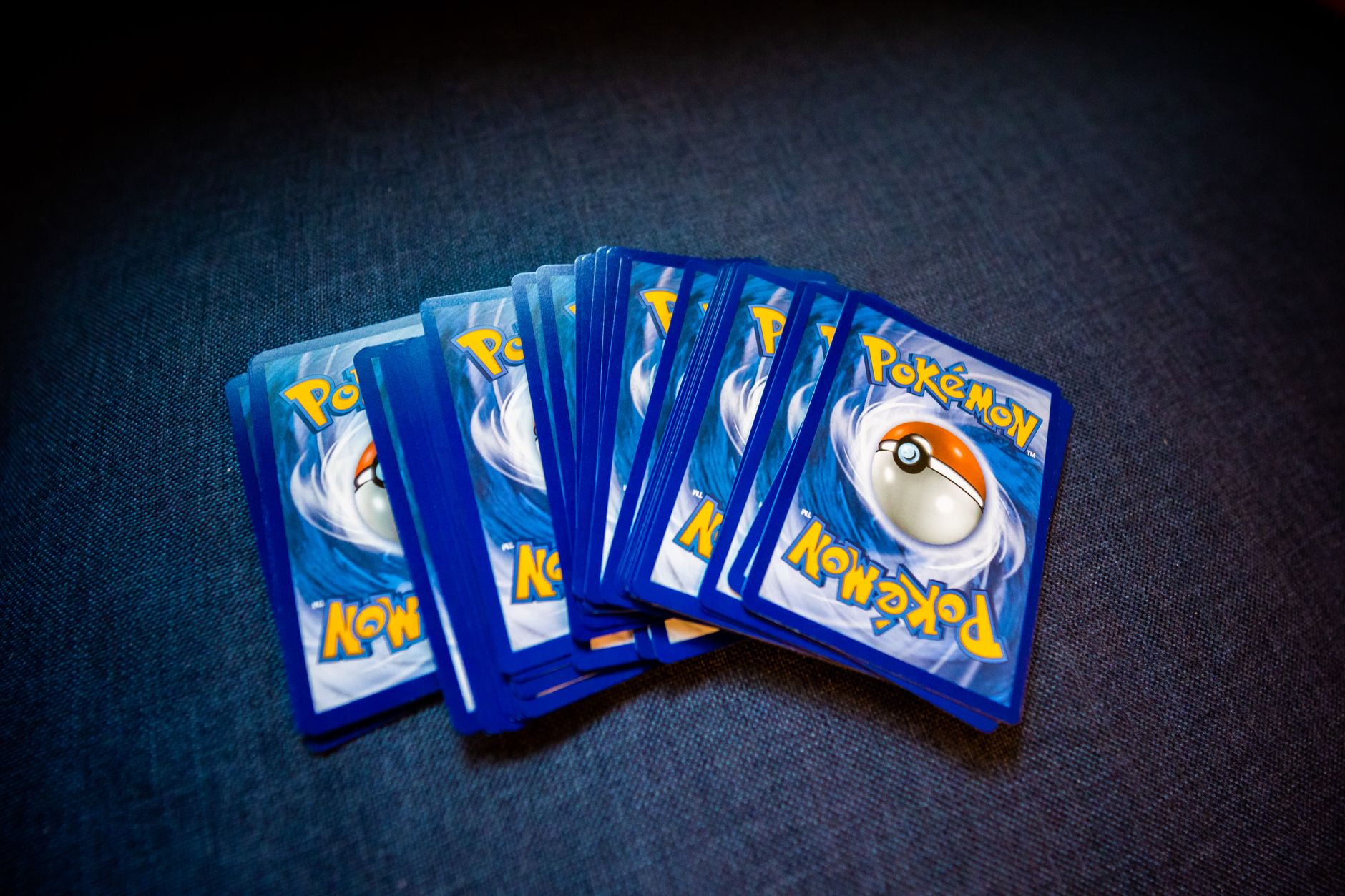
Hold the cards whose demand does not depend on a single season: sealed modern product you bought below retail, graded or gradeable copies of iconic chase cards, and vintage holos in honest condition. Sell, or at least consider selling, the things winter temporarily inflates — loose bulk singles riding a hype wave, raw cards you were going to grade "eventually," and anything facing a known reprint. Winter is the one stretch of the year when the collecting market and the gift market overlap, and that overlap moves prices in opposite directions depending on what you own. The useful question is not "will this go up," but "does winter demand reach this card at all, and what happens to it in January?".
Table of Contents
- Why winter behaves differently from the rest of the year
- What is worth holding
- What tends to be worth moving before spring
- Grading timing, and why it matters in November
- Storing cards through a cold, dry season
- A short decision routine
- Frequently Asked Questions
Why winter behaves differently from the rest of the year
Pokémon TCG demand has a strong gift component. Sealed product — booster boxes, elite trainer boxes, tins, and collection boxes — competes for the same shelf space and the same shopping list as any other toy in November and December. That pushes attention and retail scarcity toward sealed items, not toward individual cards. Singles move on a different clock.
A specific card's price tracks collector demand, tournament relevance, and supply from recent openings, and none of those three spike because of the holidays. If anything, heavy holiday opening increases the supply of singles from current sets in the weeks after boxes are torn into. The practical consequence: a current-set chase card can soften in late December and January even while the sealed box it came from is hard to find. Holding through winter makes sense when your card's demand comes from collectors who buy year-round, and less sense when you are hoping gift season will lift a card gift buyers never shop for.
What is worth holding
These categories have held attention across many market cycles, and winter rarely gives you a reason to dump them:.
- **Sealed product bought at or below retail.** Factory-sealed boxes from sets that are out of print are the clearest long-term hold. Keep the shrink intact; a reseal or a cracked-and-taped box loses most of the premium.
- **Iconic chase cards in genuinely high grade.** Base Set Charizard, first-edition WOTC-era holos, and modern alternate arts like the Umbreon VMAX from Evolving Skies draw buyers who are shopping a want list, not a sale.
- **Vintage holos with no edge wear or surface scratching.** Condition is most of the value here. An unplayed-looking 1999–2003 holo is a different asset from the same card with white edges.
- **Cards tied to a character with durable fandom.** Charizard, Pikachu, Eevee and its evolutions, Mew, and Lugia sustain demand independent of any one set's popularity.
- **Anything you would be unhappy to re-buy.** This is not a financial test, but it is the one that prevents most regret.
What tends to be worth moving before spring
Some holdings are better converted to cash or to a card you actually want. Raw copies of current-set hits are the first candidate. Supply from holiday openings arrives in January, and a card sitting in a toploader is competing with thousands of fresh copies. Reprint exposure is the other big one.
When a card is announced for a future special set, a promotional distribution, or an anniversary reprint, the original's price often weakens on the announcement rather than on the release. If you are holding a card specifically because it is hard to get, a reprint is the event that ends the thesis. Bulk and near-bulk are also worth clearing in winter rather than holding. Commons, uncommons, and low-end holos cost storage and attention, and buylist demand is generally better when stores are restocking for holiday traffic than in a quiet February.
Grading timing, and why it matters in November
Professional grading — sending a card to a company like PSA, CGC, or Beckett to be authenticated, graded on a 1–10 scale, and sealed in a slab — is not an instant process. Turnaround is measured in weeks to months and varies by service tier and submission volume, which is highest in the run-up to the holidays. That timing changes the hold decision. A card you submit in November is usually not a card you can sell in December.
If you want a slab in hand for a holiday sale, that window has likely closed; if you are holding for next year, winter submission is fine and the wait costs you nothing. Grading also only pays on cards where the grade changes the buyer pool. A modern card worth a modest amount raw rarely covers submission and shipping fees unless it grades at the top of the scale, and centering, surface scratches on holo foil, and print lines are the three things that most often stop that. Inspect the card under a bright light at an angle before you commit money to a submission.
Storing cards through a cold, dry season
Winter storage risk is real and cheap to avoid. Cards warp and foils separate with swings in humidity and temperature, and the places people store collections — attics, basements, garages, a closet on an exterior wall — are exactly where those swings are worst.
Keep the collection in conditioned interior space. Sleeve valuable singles in a penny sleeve inside a semi-rigid holder or toploader, store sealed product upright and out of direct sun, and avoid stacking heavy boxes on top of sealed ones. Rubber bands, loose stacks, and soft-sided bags cause most of the avoidable damage.
A short decision routine
If you are unsure about a specific card, work through it in order: Track what you actually paid for each card and keep that number next to it in your inventory. Most holding mistakes are not bad calls about the market; they are forgetting the cost basis and arguing with a price you never paid.
- Name the demand source. Collectors, competitive players, or speculators? Only the first two buy consistently in January.
- Check for announced reprints of that exact card or set.
- Check whether the card's value depends on a grade you do not have and cannot get before you would want to sell.
- Decide whether you would re-buy it at today's price. If no, that is a sell signal regardless of season.
- Set a condition, not a date. "I will sell if a reprint is announced" beats "I will sell in March."
Frequently Asked Questions
Does sealed product always beat singles as a long-term hold?
No. Sealed product from out-of-print sets has a strong record, but it ties up more money per item, is bulky to store, and is vulnerable to resealing fraud when you eventually sell. A single iconic graded card can be easier to move at a fair price.
Should I open boxes I got as gifts or keep them sealed?
Keep them sealed if the set is already out of print or the box was hard to find. Open current, widely available product if you want cards to play with or trade — the expected value of opening a readily stocked box is usually below its sealed price.
Does Standard rotation affect what I should hold?
Only for cards whose value comes from tournament play. When a set leaves the Standard format, its competitive staples typically lose demand from players, while collector-driven cards from the same set are largely unaffected.
Is it worth grading bulk holos from older sets?
Rarely as a batch. Grading fees apply per card regardless of value, so submit selectively — the specific holos with real collector demand, in condition good enough to realistically reach the top of the scale.
You Might Also Like
- Should You Index Funds or Pokemon TCG Cards for Long-Term Gains?
- What Should First-Time Pokemon TCG Investors Avoid?
- What Pokemon TCG Sets Hold Value Best Over Time?