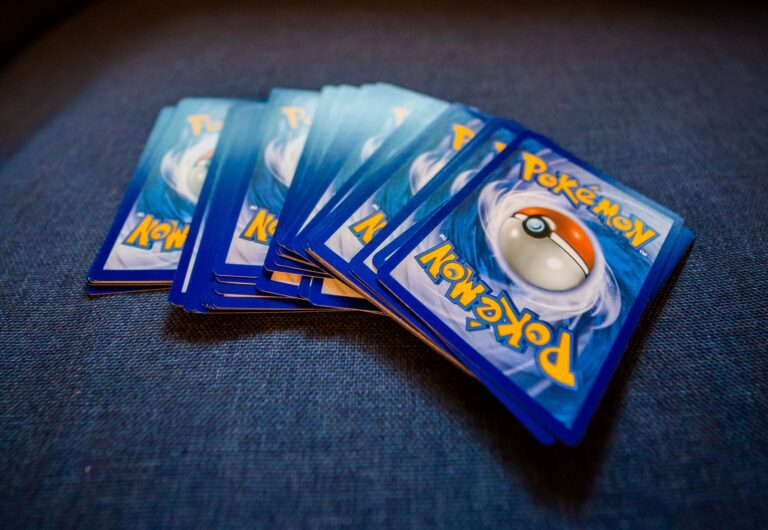
Niche vintage Pokémon cards command respect in the collecting community because they combine genuine scarcity with historical authenticity in ways that mass-produced modern cards cannot replicate. When a 1st Edition Base Set Charizard sold for $369,000 in 2021, or when Japanese Pikachu Illustrator cards routinely exceed $500,000, collectors weren’t just paying for cardboard—they were paying for cards that exist in severely limited quantities with documented provenance spanning decades. The respect these cards earn is rooted in the simple economic reality that true scarcity, verified authenticity, and legitimate age create a foundation that speculative hype cannot manufacture.
This respect persists because the niche vintage market operates on supply and demand principles that apply to fine art and collectible cars, not social media trends. A Near Mint copy of a 1999 Japanese Pocket Monsters card or a shadowless Base Set hologram represents a finite pool of surviving copies, and every example removed from circulation through collection or grading actually increases the scarcity of remaining specimens. The market recognizes this with consistent pricing that reflects real transaction history rather than wishful thinking.
Table of Contents
- What Makes Niche Vintage Pokémon Genuinely Scarce?
- Market Dynamics That Build Lasting Respect for Vintage Niche Cards
- Notable Examples of Niche Vintage Cards That Command Lasting Respect
- Authentication Challenges in the Niche Vintage Market
- Common Mistakes That Undermine Respect in Niche Vintage Collecting
- Investment Outlook for Niche Vintage Pokémon Cards
- The Evolution of Niche Respect in Modern Vintage Collecting
- Conclusion
- Frequently Asked Questions
What Makes Niche Vintage Pokémon Genuinely Scarce?
The definition of niche vintage pokémon includes several specific categories: early Japanese sets from 1996-1998 before widespread English release, shadowless and 1st Edition English Base Set cards, regional variants never distributed internationally, promotional cards with extremely limited print runs, and cards from sets that were produced in smaller quantities before the franchise became a global phenomenon. Each category carries its own scarcity narrative. A 1999 Japanese Hologram Blastoise might have 500-2,000 mint copies known to exist worldwide, while a shadowless Mewtwo hologram from 1999 might have fewer than 100 graded examples in top condition. This is scarcity with measurable evidence—not assumptions based on age alone.
The respect these cards earn stems from the fact that scarcity is verifiable through population data maintained by grading companies like PSA and CGC. When a card shows a population count of 12 graded copies in Gem Mint condition across all services combined, that’s a tangible constraint. You cannot print more of these cards. You cannot manufacture authenticity retroactively. Compare this to modern “limited” releases that print hundreds of thousands of units—the difference in scarcity is not a matter of opinion.
Market Dynamics That Build Lasting Respect for Vintage Niche Cards
The secondary market for niche vintage Pokémon operates differently from general vintage collecting because information asymmetries are gradually disappearing. Twenty years ago, a collector might purchase a 1st Edition Base Set card without knowing its true condition or market value. Today, grading services, price tracking databases, and transaction records create transparency. this shift paradoxically strengthens the respect niche vintage cards receive, because prices reflect genuine supply constraints rather than information gaps. When a Japanese Pikachu Illustrator card consistently trades in the $500K-$1M range, that price reflects thousands of data points from informed buyers, not a temporary bubble.
However, this market also carries real warnings. The premium for condition becomes exponentially steeper in the niche vintage segment. A shadowless Charizard at PSA 8 (Very Fine) might sell for $50,000 while a PSA 9 (Mint) copy of the same card could reach $200,000. The incremental improvement in condition requires either extraordinary luck or acquisition at much earlier stages. Additionally, certain niche categories can face sudden reassessment when authentication questions arise—Japanese counterfeit cards from the 1990s have become more sophisticated, making verification crucial before committing significant capital.
Notable Examples of Niche Vintage Cards That Command Lasting Respect
The Pikachu Illustrator card stands as the canonical example of niche vintage respect—only around 39 copies are known to exist in PSA-graded condition, all from Japan, created for a 1997 trading card competition. The card has never entered true commercial circulation and appears in private collections with minimal public visibility. Yet the card generates consistent respect because every verified example carries extraordinary documentation and extreme scarcity. The last public auction of a PSA 10 Illustrator reached $5.275 million in 2021, and subsequent sales have confirmed the card’s position in the stratosphere of collectible value.
Equally instructive is the Japanese 1999 Hologram Base Set, a set that was produced in smaller quantities than its English counterpart and experienced less deterioration due to climate conditions in Japanese collections. A mint Japanese Blastoise hologram from this set now trades for $30,000-$80,000 depending on the specific copy, while the English equivalent might reach $3,000-$8,000. The Japanese version commands respect because collectors recognize the structural rarity—fewer copies survived, fewer graded examples exist, and regional isolation preserved the population. This isn’t speculation; it’s observable through population reports and sales data spanning decades.

Authentication Challenges in the Niche Vintage Market
As prices for niche vintage cards have climbed, authentication has become the single most important factor determining whether a card retains its respect or becomes a liability. A shadowless 1st Edition Base Set Charizard that appears to be a genuine PSA 8 is worth $50,000; a card that is later revealed to be a counterfeit or altered copy is worth $0 and exposes the owner to potential fraud liability. The vintage market has seen increasingly sophisticated reproductions, particularly from Japanese counterfeits manufactured during the 1990s when the Pokémon Company had less rigorous production controls.
Grading companies use multiple authentication methods including paper stock analysis, ink examination, hologram authenticity verification, and statistical pattern matching against known genuine examples. However, the oldest cards pose unique challenges because production standards varied, quality control was inconsistent, and documentation from the original manufacture is often unavailable. A collector purchasing a niche vintage card outside the grading company system faces genuine risk. The respect these cards command actually creates perverse incentives—cards attractive enough to forge become targets, and buyers must develop expertise or rely on trusted intermediaries.
Common Mistakes That Undermine Respect in Niche Vintage Collecting
The most frequent error among collectors entering the niche vintage market is confusing age with value. A 1999 Japanese Base Set card is old, but if it exists in population counts exceeding 50,000 graded copies, condition is driving value far more than rarity. Conversely, a card that appears to be from 1996 but lacks grading and documentation is essentially worthless regardless of age, because authenticity cannot be verified. Respect in the niche vintage market flows from scarcity plus provenance, not merely from the calendar age of the cardboard.
Another critical mistake involves overpaying during speculative cycles. Between 2020-2022, niche vintage Pokémon prices inflated dramatically as mainstream media attention and stimulus-driven investment flooded the market. Cards that sold for $10,000 in 2019 reached $100,000 in 2021, then settled back to $25,000-$40,000 by 2024. Collectors who purchased at the peak inflated prices sustained losses because they were buying temporary hype rather than stable scarcity. The cards that maintained respect were those with documented scarcity, clear provenance, and proven transaction history, not the ones with the most dramatic percentage gains.

Investment Outlook for Niche Vintage Pokémon Cards
The investment case for niche vintage Pokémon rests on several empirical observations: the global population of high-condition vintage copies declines annually as cards deteriorate or are removed from circulation, the pool of potential buyers expands as wealth increases globally, and authentication mechanisms continue improving rather than degrading. A 1st Edition Base Set hologram in PSA 9 condition represents a genuinely finite asset with documented rarity and measurable demand. Historical data from 2015-2025 shows that genuinely scarce niche cards have appreciated at rates that outpace inflation and rival comparable collectible segments like vintage baseball cards or comic books. However, the investment risk is substantial.
Illiquidity is significant—selling a $200,000 niche vintage card requires finding a buyer at that price point, and you cannot execute a sale instantly. Market cycles affect sentiment, as demonstrated by the 2021-2023 correction. Additionally, the niche vintage market is relatively small compared to broader trading card markets, making it vulnerable to shifts in collector preferences. A collector should treat niche vintage purchases as long-term holdings (5+ years minimum) and allocate only a portion of their collection budget to the highest-risk, highest-reward segment.
The Evolution of Niche Respect in Modern Vintage Collecting
The definition of niche vintage is evolving as time progresses and older cards transition out of circulation. Cards from 2000-2005 are now entering the vintage category, and niche examples from this era—Japanese Language versions of specific sets, promotional cards with minimal distribution, or particular printings with reduced population counts—are beginning to accumulate respect based on emerging scarcity patterns. The respect these cards gain follows the same formula as their 1990s predecessors: supply constraints plus authentication plus transaction history.
Looking forward, the niche vintage Pokémon market will likely stabilize into patterns similar to vintage comic books and fine art, where authentic provenance, documented scarcity, and preserved condition create stable value floors. The speculative peaks and crashes of 2020-2023 may become less frequent as the market matures and pricing becomes more rational relative to actual supply constraints. Cards that command respect decades from now will be those with genuinely limited population reports, verified authenticity through grading, and multi-generational ownership histories that document preservation.
Conclusion
Niche vintage Pokémon cards maintain respect because they embody genuine scarcity, verifiable authenticity, and stable transaction history—qualities that cannot be manufactured through marketing or hype cycles. The distinction between a card that earns lasting respect and one that experiences temporary price inflation comes down to measurable constraints: how many copies actually exist in collectible condition, whether the card’s authenticity can be verified through expert examination, and whether transaction history demonstrates consistent demand over extended periods. These fundamentals apply regardless of market sentiment or media attention.
For collectors approaching this segment, respect is earned by developing expertise before deploying significant capital. Study population reports to understand actual scarcity, pursue graded examples from established companies, verify provenance documentation, and recognize that the highest-value cards often require multi-year holding periods to justify their acquisition costs. The cards that will retain respect over the next decade are not necessarily the ones with the most dramatic price appreciation, but those with structural scarcity, proven authentication, and clear supply constraints that will only tighten as time passes.
Frequently Asked Questions
What’s the difference between a niche vintage card and a regular old card?
Niche vintage cards have documented scarcity with measured population counts, while regular old cards may be abundant regardless of age. A 1999 card can be either category depending on whether only a few hundred or millions of copies exist in collectible condition.
How do I verify authenticity before buying a niche vintage card?
Purchase cards that have been graded by established companies like PSA or CGC, which provide authentication guarantees. For non-graded cards, consult expert appraisers or established dealers with reputation and transaction history to protect yourself.
Can niche vintage Pokémon cards be a reliable investment?
They can appreciate significantly over multi-year periods, but they require expertise to identify genuinely scarce examples and carry liquidity constraints. Treat them as long-term holdings and allocate conservatively rather than as core portfolio investments.
Why do some Japanese Pokémon cards cost more than English versions of the same card?
Japanese cards often have lower population counts in high condition because they experienced better preservation conditions and were produced in smaller quantities. Regional isolation increased scarcity relative to English versions distributed globally.
What happens if I discover my expensive vintage card is a counterfeit?
The card becomes essentially worthless, and you may face liability if you attempt to sell it as authentic. This is why grading from established services provides crucial protection and is worth the cost for high-value niche cards.
Are niche vintage prices stable or do they fluctuate significantly?
They fluctuate with market sentiment and investment cycles, but genuinely scarce cards show long-term appreciation when evaluated across 5+ year periods. Short-term volatility is substantial, requiring patience and realistic expectations about timing.