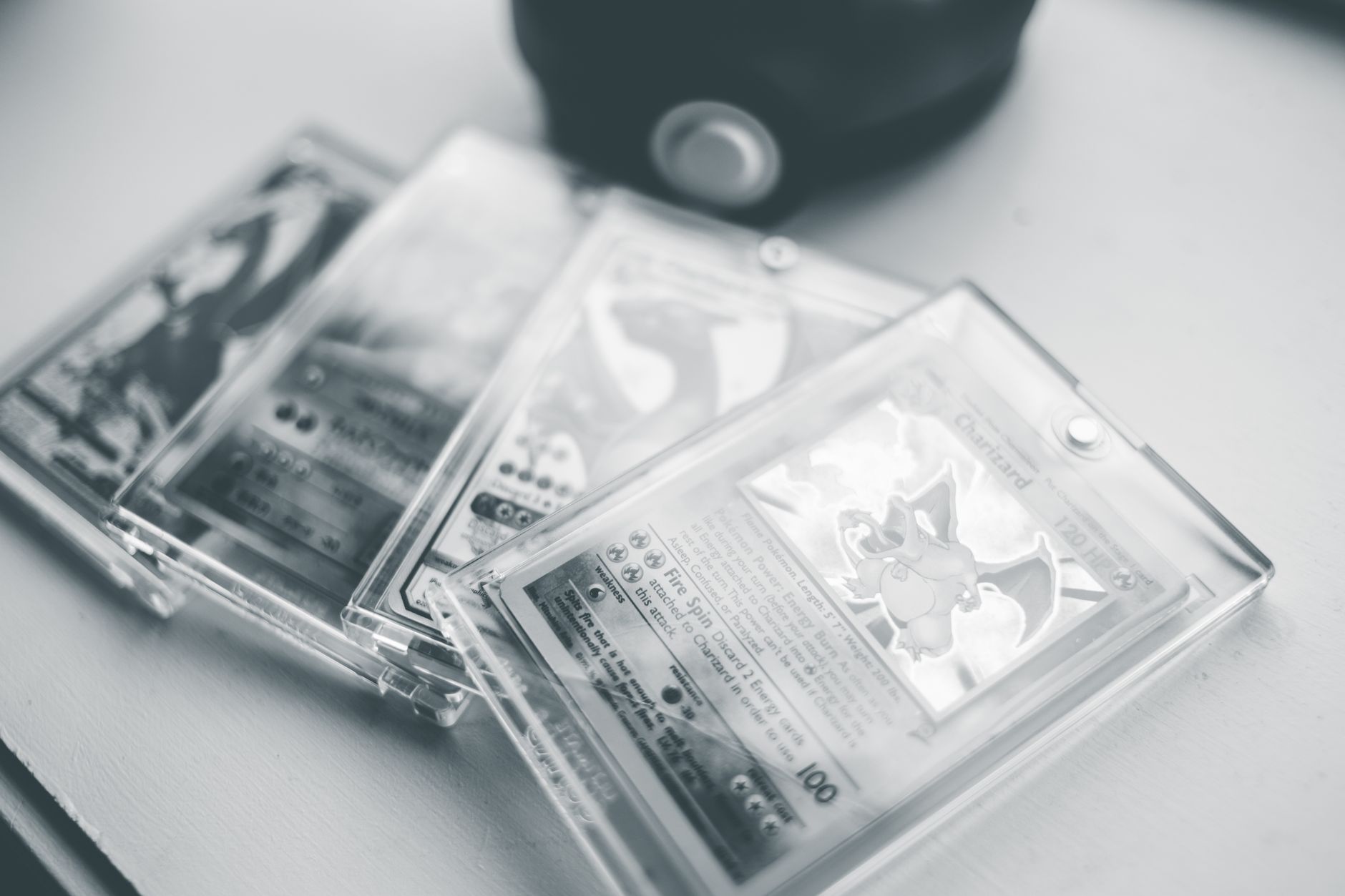
The EX Power Keepers Flygon Holo (card 94/108) currently trades in the $290.00–$969.22 range for near-mint holofoil copies, with significant price variation depending on condition grade and certification. A PSA 10 example from this 2007 set would command the higher end of that spectrum, while an ungraded near-mint copy might settle around $400–$600 on the secondary market. Heavily played or damaged copies can be acquired for as low as $37.99, but these typically show visible wear, edge whitening, or surface scratching that collectors can spot without professional grading.
Since its release in 2007, this card has appreciated 346.9% from its original pack value, making it one of the more valuable ex-era Holos from that generation. This appreciation reflects both the card’s power level during its competitive era and the scarcity of well-preserved copies nearly two decades later. The price you’ll encounter depends almost entirely on where you shop and what condition tier you’re willing to accept—the same card can cost $200 less at one retailer than another simply because one seller has received more wear-and-tear copies while another specializes in higher grades.
Table of Contents
- What Determines the Price of EX Power Keepers Flygon Holo?
- Condition Grades and Their Real-World Impact
- The EX Power Keepers Set Context
- Where to Buy and How Prices Differ Across Markets
- Common Pricing Mistakes and How to Avoid Overpaying
- Investment and Holding Period Considerations
- Tracking Price Trends Over Time
- Frequently Asked Questions
What Determines the Price of EX Power Keepers Flygon Holo?
Grading and condition are the primary price drivers for this card. A PSA 9 (mint condition) typically sells for $500–$750, while PSA 8 (near mint-mint) drops to $350–$500. The jump from PSA 9 to PSA 10 can add $300–$400 or more to the asking price, even though the difference in wear is often invisible to the naked eye. Ungraded copies are cheaper and riskier—you might find one listed at $280, but it could have subtle defects (light scratching on the holo, minor corner wear) that only emerge under close inspection or bright light. Market availability also affects pricing.
TCGplayer and CardTrader tend to have competitive pricing because multiple sellers compete on the same platform, keeping prices closer to market average. eBay listings often range wider—you’ll see both bargains from sellers moving inventory quickly and premium prices from dealers banking on buyer impulse or lack of price comparison. A single PSA 10 copy sold through an auction house can temporarily spike the perceived “market price,” even though such sales are outliers for this card’s typical transaction volume. The difference between raw (ungraded) and certified copies can be $200+ for the same perceived condition. A buyer paying $280 for a raw near-mint copy is gambling that it will grade PSA 8 or higher if ever sent to Beckett or PSA; if it comes back PSA 7, that buyer has lost $100–$150 in resale value. This is why many collectors prefer paying $450 for a PSA 8 over $280 for a raw copy with unknown grading potential.
Condition Grades and Their Real-World Impact
The difference between “near mint” and “mint” is not just cosmetic—it’s worth understanding because sellers sometimes misrepresent condition. A near-mint Flygon Holo with light holo scratches, barely visible to the casual eye, will grade psa 8. The same card with zero visible wear will grade PSA 9. Both look “perfect” when you’re scrolling through photos on your phone, but one is worth $300 more. Holo wear on this card is especially important because the Flygon illustration is large and spans much of the card’s surface. Light scratches on the holo appear as streaks under bright direct light, and PSA graders are trained to spot them.
A copy that has been stored loose in a binder without sleeves for 15 years will almost certainly have light holo scratching even if the edges look sharp. Conversely, a copy stored in a perfect deck box its entire life might still be PSA 9 or 10 at 20 years old. Back-side condition is often overlooked by newer collectors but factors heavily into grades. Flygon’s back is predominantly yellow, which shows print lines, spots, and wear more readily than darker cards. A card with pristine front holo but a yellowed or spotted back will grade 1–2 points lower overall. If you’re buying ungraded, request photos of both the front under light and the back under neutral light before committing to a purchase.
The EX Power Keepers Set Context
EX Power Keepers was released in 2007 during the height of the EX era, a period when Pokémon cards were designed with much higher attack power and colorful holos compared to modern cards. Flygon was one of the set’s more competitive stage-2 Pokémon, which meant higher demand during that format and greater likelihood of play wear on surviving copies. Many Power Keepers cards were opened and played, then stored poorly for the next 15+ years. This scarcity of well-preserved copies directly contributes to Flygon’s current $500+ average pricing. The set contains only 108 cards, making it smaller than many modern sets, and Rare Holos like Flygon are chase pulls.
Not every player who opened Power Keepers packs pulled a Flygon Holo, so the card’s print run was limited. Unlike commons or uncommons that were abundant, this card was never a bulk card, and collectors have had nearly two decades to lose, sell, or destroy their copies. This natural attrition has concentrated remaining copies into fewer hands, supporting higher prices. Comparable Rare Holos from Power Keepers generally trade at similar levels ($300–$900 for near-mint copies), confirming that Flygon’s price is not an outlier within its set context. A near-mint Metagross or Salamence from the same set will trade for roughly the same price as Flygon, while lower-demand Holos like Muk or Cacturne might sell for $150–$300.
Where to Buy and How Prices Differ Across Markets
TCGplayer’s marketplace has multiple Flygon Holos listed at any time, with prices typically ranging $400–$650 for near-mint raw copies and $500–$800 for graded PSA 8–9 examples. The platform’s feedback system and buyer protection make it a lower-risk option, though you’ll pay slightly higher prices for that security. Sellers know TCGplayer’s audience will pay a premium for assurance of authenticity and condition. CardTrader, popular in Europe and Asia, sometimes has lower asking prices than TCGplayer because the user base is broader and less focused on PSA grading. You might find a near-mint Flygon Holo listed at $380–$480 on CardTrader while the same card costs $500+ on TCGplayer. The tradeoff is longer shipping times, international transaction fees, and lower buyer protection if the card arrives damaged.
Currency conversion can also work for or against you depending on where you live. eBay auctions can be sources of deals or traps. A completed auction showing a PSA 10 Flygon selling for $1,200 doesn’t mean that’s the “fair price”—it means one buyer paid above market that one time. Fixed-price listings on eBay tend to cluster around $350–$700 for raw near-mint copies, but individual sellers sometimes underlist (hoping for quick sales) or overprice (hoping for an uninformed buyer). Always check the seller’s feedback and compare to active TCGplayer listings before bidding. Local card shops rarely stock copies of this card, so online marketplaces dominate pricing. If you encounter a local dealer with a Flygon Holo, expect to pay 10–20% over TCGplayer prices in exchange for immediate ownership and the ability to inspect the card in person.
Common Pricing Mistakes and How to Avoid Overpaying
One frequent error is confusing Flygon ex (the EX Power Keepers card) with Flygon ex from other sets or the newer Flygon ex released in 2025. These are completely different cards with different pricing. If you search “Flygon ex price” without specifying “Power Keepers,” you’ll get conflicting results. Always confirm the set symbol (EX Power Keepers shows as “EX” with that specific set icon) and card number (94/108) before committing to a purchase. Sellers sometimes list damaged copies as “played” or “lightly played” to justify pricing them higher. A Flygon Holo with visible creases or deep scratches might be listed at $200 when its actual market value is $80–$120.
The word “played” can mean anything from “stored in a sleeve for 15 years” to “used as a tournament deck card.” If the listing photos show any visible defects, reduce your expected value estimate by 50% or more. Request close-up photos before paying, especially for bulk or “as-is” purchases. Another mistake is buying ungraded copies at near-PSA-9 prices without understanding the grading risk. A seller might claim a raw copy is “gem mint” or “near perfect,” but those are marketing terms, not grading standards. A PSA 9 costs $500–$700; an ungraded copy claiming to be similar might sell for $400–$500. If it grades PSA 8 instead, you’ve overpaid by $200. Only accept that risk if the price discount is substantial (30%+) and you trust the seller’s track record.
Investment and Holding Period Considerations
The 346.9% appreciation since 2007 is impressive but shouldn’t be projected forward. That gain reflects 19 years of scarcity and demand from a specific player generation reaching their peak collecting years. Future appreciation depends on sustained demand from either collectors nostalgic for the EX era or new players seeking vintage ex-era cards. There’s no guarantee this card will continue appreciating at historical rates.
Holding this card as an investment requires understanding its specific audience. It appeals to competitive format players from 2005–2010, collectors of the EX era, and Flygon fans specifically. It does not appeal to modern Pokémon TCG players who focus on recent sets, casual players, or investors seeking Charizard or Pikachu. If you buy at $500 and the broader card market softens, you might struggle to resell at that price within a 1–2 year window.
Tracking Price Trends Over Time
Most serious card investors use TCGplayer’s price history feature, which tracks the 90-day and 6-month average for this card. For Flygon Holo, the 6-month average hovers around $450–$550 for near-mint raw copies, indicating relative price stability over that period. If you see a listing at $350, it’s below average; at $750, it’s above.
This simple comparison prevents panic buying or selling based on a single outlier listing. CardTrader and Sports Card Investor also maintain historical data, though they’re secondary to TCGplayer for EX-era cards. If you’re serious about long-term tracking, bookmarking TCGplayer’s Flygon Holo page and checking it monthly gives you real data to compare against future asking prices. Prices have remained broadly stable in the $400–$700 range for PSA 8–9 examples throughout 2025–2026, with occasional spikes when high-grade copies are certified and listed.
Frequently Asked Questions
Is the EX Power Keepers Flygon Holo more valuable than other ex-era Holos?
No, it’s roughly equivalent in value to comparable ex-era Rare Holos like Metagross or Salamence from the same set. Price varies more by individual condition and grading than by the specific Pokémon.
Should I buy an ungraded copy at $380 or a PSA 8 at $500?
That depends on your risk tolerance. If the ungraded copy is from a trusted seller with clear photos showing no visible defects, it might grade PSA 8 or 9. If you can’t verify condition yourself, the PSA 8 at $500 offers certainty that’s often worth the extra cost.
Has the price changed significantly in 2025–2026?
No, the price has remained stable in the $400–$700 range for near-mint graded copies. There’s no strong evidence of rapid appreciation or depreciation during this period.
Where is the cheapest place to buy this card?
CardTrader sometimes has lower prices than TCGplayer, and eBay fixed-price listings can be cheaper if you’re patient. Always compare 5–10 active listings across all three platforms before buying.
What’s the difference between Flygon ex and Flygon EX?
“EX” refers to older cards like this one from 2007; “ex” (lowercase) refers to the newer mechanic introduced in 2023. They are completely different cards with different pricing.
Will this card appreciate in value?
It has appreciated 346.9% since 2007, but future appreciation is not guaranteed. Demand depends on sustained interest in EX-era cards and Flygon specifically.
You Might Also Like
- Price Charting for EX Power Keepers Electrode Holo
- Price Charting for EX Power Keepers Claydol Holo
- Price Charting for EX Power Keepers Blaziken Holo