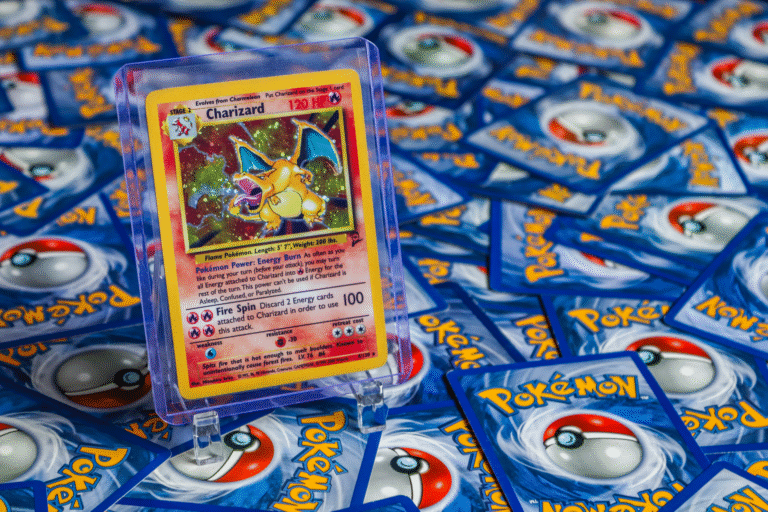
The price guide tracks Base Set Pikachu 1st Edition #58 pricing through a proprietary algorithm that aggregates completed sales data from eBay and other major marketplaces, updating the market value as new sales occur. This approach provides collectors with a near real-time window into what the card is actually selling for in the open market, rather than relying on asking prices or dealer estimates. For example, a raw Near Mint condition Pikachu 1st Edition #58 might show one price on the price guide, while a PSA 10 graded copy of the same card could command anywhere from 2 to 10 times that value depending on current demand and the specific grade assigned.
The appeal of using the price guide for Base Set Pikachu tracking comes down to transparency and accessibility. Unlike some other price guide services that rely on internal valuations or dealer submissions, the price guide’s data is rooted in actual completed transactions—cards that were listed, sold, and shipped. For collectors trying to understand what a Pikachu 1st Edition is genuinely worth, this market-based approach eliminates guesswork and provides a grounded reference point for trading or selling decisions.
Table of Contents
- What Makes Base Set Pikachu 1st Edition Valuable?
- How Grading and Condition Impact Pikachu 1st Edition Prices
- Multiple Platforms and How They Approach Price Tracking
- Using the price guide Data for Buying and Selling Decisions
- Common Pitfalls When Relying on Price Data
- The Role of Historic Sales Data in Market Confidence
- The Future of Pokémon Card Price Tracking
- Conclusion
What Makes Base Set Pikachu 1st Edition Valuable?
First Edition cards from the Pokémon Base Set command substantial premiums over their Unlimited print counterparts, and Pikachu #58 is no exception. The print run hierarchy in Base Set is straightforward: 1st Edition cards were produced in limited quantities before the printing plates were removed, while Unlimited copies came after and are vastly more common. This scarcity differential translates directly into market pricing, where a 1st Edition Pikachu might be worth three to five times more than an Unlimited version of the same card in comparable condition.
The specific variants tracked on priceCharting highlight another layer of value distinction within the 1st Edition category itself. Beyond the standard Pikachu [1st Edition] #58, the platform separately monitors the Red Cheeks variant and the Ghost Stamp variant, each of which carries different collector interest and pricing. The Red Cheeks variant, in particular, has attracted specialized collector attention in recent years. Understanding which variant you’re tracking is essential because a price check on the standard version won’t accurately reflect what a Red Cheeks copy might sell for—sometimes significantly more.

How Grading and Condition Impact Pikachu 1st Edition Prices
Condition is the single most influential factor in Pikachu 1st Edition pricing, with graded cards commanding the market premiums. A raw Near Mint copy and a PSA 10 graded example of the same card occupy completely different price tiers. The difference becomes even more dramatic when comparing a lightly played card to one in Mint condition—condition grades that might seem negligible at a glance can represent a 2 to 10 times swing in market value. The grading premium exists because collectors understand that a professional third-party certification—particularly from PSA (Professional Sports Authentication)—removes the uncertainty from condition assessment. When you’re purchasing a Pikachu 1st Edition for $500 or $5,000, the assurance that a neutral expert has examined and authenticated the card at a specific grade becomes worth paying for.
The price guide data reflects this reality clearly: prices for the same card diverge significantly once grading status is factored in. A collector browsing the platform will see that raw cards cluster in one price range while PSA 10 copies sit in an entirely separate, higher stratosphere. However, one important limitation is that the price guide’s algorithm isn’t always able to cleanly separate every condition variant in real-time. Depending on trading volume and data availability, you may occasionally see price ranges rather than single-point estimates for certain condition tiers. This is a feature, not a flaw—it reflects genuine market volatility and the fact that condition assessment, even by professionals, can be subjective at the margins.
Multiple Platforms and How They Approach Price Tracking
While the price guide dominates conversation among collectors, it operates within a broader ecosystem of price tracking platforms, each with different methodologies. TCGPlayer provides real-time market values based on active seller listings, giving you a sense of what cards are asking for right now. eBay, as the largest online marketplace for Pokémon cards, offers both raw data (seeing what cards are actually selling for) and increasingly, an Authenticity Guarantee on cards over $250, which has shifted buyer confidence toward the platform. CardScan AI maintains a 2026 price guide with variant breakdowns that competes directly with the price guide’s offerings.
The distinction between these platforms matters for collectors. The price guide uses completed sales data, which tells you what cards have genuinely sold for in the recent past. TCGPlayer, by contrast, shows active listings and can skew higher because sellers naturally ask for more than collectors are willing to pay. eBay sits somewhere in between, showing both asking prices and final sales, with the platform’s Authenticity Guarantee having boosted its credibility for high-value Base Set cards. A Pikachu 1st Edition #58 might show one price on the price guide (based on recent sales), a slightly higher ask on TCGPlayer (based on listing prices), and varied prices on eBay depending on auction timing and seller reputation.

Using the price guide Data for Buying and Selling Decisions
For collectors looking to buy a Pikachu 1st Edition, the price guide serves as a benchmark against which to evaluate asking prices from dealers, auction sites, or other collectors. If you see a card listed for $30% above the price guide’s tracked value, you now have concrete data to negotiate or decide whether the premium is justified by the seller’s specific condition assessment, provenance claims, or any unique factors. This informed approach prevents overpaying for cards in a market where emotion and nostalgia often override logic. Sellers benefit equally from the price guide data, though in reverse.
Before listing a Pikachu 1st Edition, checking the platform shows you the recent market range and helps you set a competitive price that aligns with actual demand. Pricing significantly above recent sales history often results in listings sitting inactive; pricing below can mean leaving money on the table. The tradeoff is that you need to be honest about your card’s condition. A seller claiming Near Mint when the price guide data shows similar cards in Lightly Played condition selling for $200 will face questions from serious buyers who use the same platform for research.
Common Pitfalls When Relying on Price Data
One frequent mistake collectors make is treating the price guide as a static reference rather than a dynamic market signal. Prices move, sometimes sharply, when major sales events occur or when a particular variant suddenly attracts collector attention. A Pikachu 1st Edition Ghost Stamp variant might see its tracked price spike 20% in a month if several high-grade copies sell close together. Conversely, prices can drift lower if market liquidity decreases and sales slow. Checking the price today and acting on it a week later without rechecking can lead to miscalibrated expectations.
Another pitfall is confusing the price guide’s aggregated average with the actual range of what you might encounter. The platform provides a single number, but real-world Pikachu 1st Edition sales scatter around that average. A card listed as $500 on the price guide doesn’t mean every copy sells for exactly $500; some Near Mint examples might sell for $400, others for $600. This variability increases at the high end—PSA 10 graded copies are rarer, trades are less frequent, and prices can swing more dramatically between sales. Treating the the price guide figure as gospel rather than a guide can lead to disappointment.

The Role of Historic Sales Data in Market Confidence
the price guide’s strength lies in its transparency about historical trends. The platform doesn’t just show you today’s price; it can show you how a Pikachu 1st Edition’s value has moved over weeks and months. This historical context helps distinguish between genuine market movement and temporary anomalies.
If a card’s price jumped 40% overnight, historical data lets you see whether that reflects a consistent uptrend or a single outlier sale that skewed the average. For serious collectors tracking long-term value, this historical record is invaluable. You can observe whether Pikachu 1st Edition #58 has appreciated steadily over the past two years or whether recent movements are part of normal volatility. A collector who bought a Pikachu 1st Edition Red Cheeks variant three years ago can look back at the price guide’s historical data to see whether their investment has grown, stagnated, or declined—real information for deciding whether to hold or sell.
The Future of Pokémon Card Price Tracking
As the Pokémon collectible card market matures, price tracking platforms like the price guide will likely become even more integral to collector decision-making. The standardization of grading (PSA, BGS, CGC) and the shift toward professional authentication and marketplaces with guarantees should theoretically make price data more reliable, not less. Variants like the Pikachu 1st Edition Red Cheeks will continue attracting specialist attention and potentially developing their own price trajectories independent of the standard 1st Edition version.
The broader trend suggests that transparency and data-driven valuation will increasingly replace older methods of card pricing based on dealer estimates or print guides. the price guide’s model of crowd-sourced, transaction-based pricing aligns with this future. For Pikachu 1st Edition collectors, this means having better tools than ever before to understand true market value—but also needing to develop the skill to interpret that data correctly and avoid the pitfalls of over-relying on averages or mistaking historical pricing for guarantees of future value.
Conclusion
The price guide provides Pokémon collectors with a transparent, transaction-based view of what Base Set Pikachu 1st Edition cards are actually selling for across the market. By tracking completed eBay sales and other marketplace data through a proprietary algorithm, the platform removes speculation and offers concrete reference points for the standard version, the Red Cheeks variant, and the Ghost Stamp variant.
Understanding how grading, condition, and print edition affect pricing is essential for using the price guide data effectively—a PSA 10 Pikachu will always occupy a different price tier than a raw card, and 1st Edition copies command premiums that dwarf their Unlimited equivalents. When buying or selling, use the price guide as a benchmark rather than gospel, cross-reference with other platforms like TCGPlayer and eBay for context, and remember that the platform’s value lies not just in showing today’s price but in providing historical data that reveals market trends. Whether you’re a collector evaluating a purchase, a seller setting a listing price, or someone simply interested in understanding Pokémon card market dynamics, the price guide’s approach to transparent, data-driven valuation represents the modern standard for card pricing—and Pikachu 1st Edition, as one of the most tracked Base Set cards, benefits from the depth of historical sales data available on the platform.
You Might Also Like
- verified sold listings across major TCG marketplaces for Base Set Zapdos 1st Edition
- verified sold listings across major TCG marketplaces for Base Set Venusaur 1st Edition
- verified sold listings across major TCG marketplaces for Base Set Snorlax 1st Edition
Frequently Asked Questions
How much is a PSA 10 Base Set Pikachu 1st Edition worth?
Base Set Pikachu 1st Edition PSA 10 value is tracked from verified sold listings across eBay, TCGplayer, Goldin, and Fanatics Collect. Recent sales determine the current market price, which shifts month to month based on supply, condition, and demand.
Is Base Set Pikachu 1st Edition a good investment?
Long-term trend data for Base Set Pikachu 1st Edition is on this page. Vintage Pokemon cards in PSA 10 condition have historically appreciated, but performance varies by set, popularity, and grading population. Compare the monthly trend on this chart to similar cards before deciding.
Where can I see Base Set Pikachu 1st Edition sold listings?
We aggregate verified sales from eBay, TCGplayer, Goldin Auctions, and Fanatics Collect. The recent-sales section on this page shows individual transactions with date and price.