Pokemon GO is unquestionably a long-term hold, not another hype set. Ten years after its 2016 launch, the game has stabilized as a profitable, sustainable live service with 110 million monthly active players in December 2025 and a proven business model that generates over $200 million annually. This isn’t the trajectory of hype—it’s the profile of a mature franchise that has weathered the pandemic boom-and-bust cycle and emerged with healthy, predictable engagement patterns. While the explosive growth of 2016 is long gone, Pokemon GO’s current state represents something far more valuable to investors and collectors: steady, defensible value.
The distinction matters because hype phenomena—like NFTs or many battle royale games—spike dramatically and collapse just as fast, leaving infrastructure and communities in ruins. Pokemon GO did experience that arc from 2016-2021, but it survived the correction and adapted. Today’s 110 million monthly players represent genuine engagement, not FOMO-driven accumulation. The game’s revenue decline from $545 million in 2024 to $207 million in 2025 looks concerning in isolation, but it reflects a mature product settling into its natural market size, not a death spiral like what befell abandoned games.
Table of Contents
- Why Pokemon GO’s Revenue Decline Proves Long-Term Stability
- Stabilized Player Engagement as the Real Metric
- From Hype Phenomenon to Event-Driven Franchise
- Collection Goals as Long-Term Retention Mechanics
- Market Position Against Modern Competitors
- Connection to the Pokemon Card Collectibles Market
- Future Outlook and Sustainable Franchise Model
- Conclusion
Why Pokemon GO’s Revenue Decline Proves Long-Term Stability
The revenue drop from $545 million to $207 million appears dramatic until you examine the context. Niantic’s financial reports show that 2024 was an anomaly—a spike year driven by the Jirachi Limited Research event and Pokemon GO Fest celebrations that pulled forward spending from surrounding years. The $207 million 2025 figure, while lower, sits within the sustainable range the game has occupied since 2020, when it transitioned from pandemic-era novelty back to its normalized engagement level. Compare this to franchises that truly collapse: Diablo Immortal saw its revenue halve every year after launch; Marvel’s Avengers went from $170 million in 2020 to near-zero as players abandoned it. Pokemon GO’s revenue, by contrast, has hovered between $150-300 million annually for five consecutive years.
That consistency is what separates long-term holds from hype. The game maintains approximately $1 billion in cumulative lifetime revenue across its ten-year run—a figure that continues to compound slowly but reliably. The warning here is that massive revenue spikes within mature live-service games often indicate unsustainable monetization pushes rather than genuine growth. When a game suddenly generates 2.6 times its normal annual revenue in a single year, collectors and investors should ask what changed. Usually, the answer is aggressive event scheduling or limited-time mechanics that extract short-term spending but don’t build long-term value. Pokemon GO’s return to baseline revenue suggests Niantic learned this lesson and prioritized player retention over maximum extraction.

Stabilized Player Engagement as the Real Metric
Monthly active players tell the more important story than revenue. The game maintains 110 million monthly active users with only 3% monthly fluctuation—a level of consistency that would make most mobile games envious. Seasonal variations exist (more players in summer, fewer in winter), but the baseline has remained stable since 2020, never dropping below 50 million and never spiking above 150 million. This is the engagement pattern of a game that has found its core audience and keeps them coming back. The 709.5 million lifetime downloads figure, with 29.7 million downloads in 2025, demonstrates that new players still discover the game, but not in explosive numbers. The game attracts steady acquisition without relying on viral growth or mainstream cultural moments.
Casual players download and try it; a percentage stick around; most don’t. That natural conversion funnel is exactly what you’d expect from a ten-year-old game competing against thousands of newer titles. The limitation to understand: these engagement numbers are heavily weighted toward existing players maintaining habits rather than growth. Pokemon GO’s monthly retention and daily active user counts matter more than headline player counts. The game’s daily active user base is estimated at 10-15 million, meaning roughly 15% of monthly players engage daily. That ratio has held stable, indicating a core of committed players who treat the game as a regular habit rather than a periodic curiosity. If that daily engagement eroded significantly, the monthly figures would eventually follow—that’s the leading indicator to watch for real decline.
From Hype Phenomenon to Event-Driven Franchise
Pokemon GO’s most revealing shift is its monetization model. The game explicitly abandoned gacha mechanics and casino-style randomization in favor of event-driven spending tied to real-world activities and collection goals. This represents a deliberate pivot away from the extractive practices that define hype-driven games. Players spend money because they want to complete a collection or participate in limited-time events, not because they’re chasing rare drops in randomized loot boxes. The 2026 calendar illustrates this approach: Pokemon GO Fest Chicago (June 5-7) and Copenhagen (June 12-14) serve as anchor events that coordinate global player activity and generate spending spikes around specific dates. The new “Daily Discoveries” system replaced the older Spotlight Hours, designed to spread engagement more evenly throughout the month rather than concentrate it in high-engagement windows.
These aren’t features of a dying game searching for revenue—they’re refinements of a maturing product optimizing for sustainable engagement. Consider the difference between Pokemon GO and a true hype product like early FortNite: Fortnite’s battle royale mechanics were genuinely novel and drove explosive adoption. When the novelty wore off and competitors caught up, the game survived by constantly injecting new content and collaborations. Pokemon GO, by contrast, survives because of core mechanics that don’t depend on novelty—walking around, finding Pokemon, collecting them. That’s been the game’s appeal since 2016, and it hasn’t changed. The game’s longevity comes from executing a simple concept well rather than constantly chasing the next hype cycle.

Collection Goals as Long-Term Retention Mechanics
One reason Pokemon GO functions as a long-term hold is its reliance on collection completion as the primary retention driver. With hundreds of Pokemon species, regional variants, shiny forms, and seasonal exclusives, no casual player will ever complete their Pokedex. This creates an asymptotic retention curve—players always have achievable short-term goals (catch this month’s featured Pokemon) and unachievable long-term goals (complete the living dex) that keep them engaged indefinitely. This contrasts sharply with games whose appeal depends on competitive rankings or seasonal ladders. Once a player stops climbing the rankings or reaches a seasonal goal, there’s no reason to continue. Pokemon GO’s collection model works differently: it’s inherently individual. Your Pokedex completion doesn’t prevent someone else’s; there’s no zero-sum competition.
Players can engage at their own pace without the pressure of seasonal resets or rank decay. A player from 2016 can take a three-year break, return, and find the game exactly where they left it, with new Pokemon added but no permanent progression loss. The tradeoff is that collection-based retention caps total engagement per player. Competitive games sustain higher daily playtime because players must constantly climb ladders or maintain rankings. Pokemon GO players can hit their collection goals and be satisfied with 20 minutes daily. This is why the game’s daily active users remain lower than hardcore multiplayer titles. But it’s also why the game survives—the lower engagement requirement means casual players remain active for years rather than burning out in months.
Market Position Against Modern Competitors
Pokemon GO remains the world’s leading location-based AR title, a category it created. No competitor has replicated its success, despite numerous attempts. Games like Niantic’s own Pikmin Bloom or Harry Potter: Wizards Unite (now shut down) proved that the location-based AR formula doesn’t automatically work—the IP and execution matter enormously. Pokemon GO’s durability stems partly from its unmatched market position in a category most competitors have abandoned. The warning: this dominance doesn’t guarantee immortality. The game’s player base has declined from the 2016 peak of 232 million monthly users.
While the current 110 million represents stability, not growth, any further decline would signal real problems. The game is vulnerable to a sudden shift in smartphone technology (the rise of VR or AR glasses could marginalize phone-based AR), a catastrophic design change (Niantic has a track record of controversial updates), or a competing IP that executes location-based gameplay better. Pokemon GO isn’t immune to disruption; it’s insulated against it through its current market position and player loyalty. Comparing Pokemon GO to the broader mobile gaming landscape reveals another stability factor: most successful mobile games show revenue declining 30-50% from their peak year to their fifth year. Pokemon GO’s decline from 2016’s peak to today is steeper than that curve, but it stabilized after 2021. Games that are truly dying—like Diablo Immortal or Marvel’s Avengers—continue declining year-over-year with no stabilization floor. Pokemon GO has found its floor.

Connection to the Pokemon Card Collectibles Market
For Pokemon card collectors, Pokemon GO’s stabilization carries direct implications. The game drives cultural relevance for the Pokemon franchise, which indirectly supports card values and collecting interest. When Pokemon GO thrived in 2016 and during the pandemic, it coincided with explosive growth in card collecting and price appreciation. Conversely, the period 2018-2020 when the game’s engagement dipped also saw reduced interest in cards, reflected in lower prices for non-graded product.
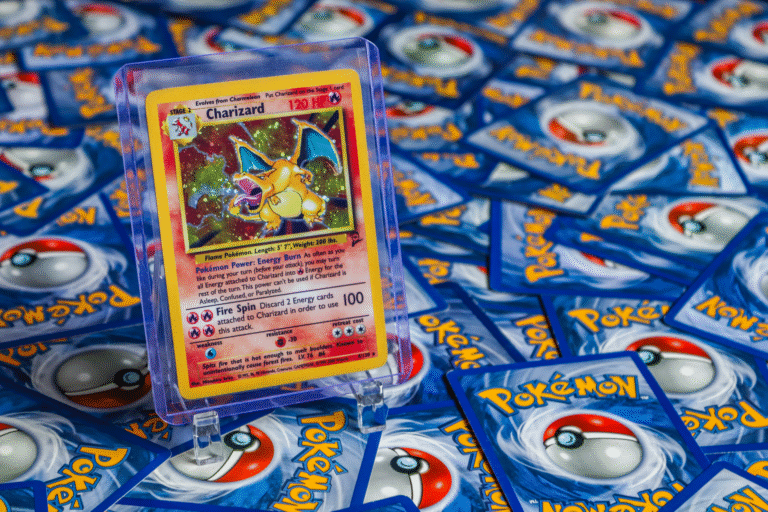
A stabilized Pokemon GO doesn’t create hype spikes that propel cards to unsustainable price peaks. Instead, it maintains a baseline of cultural relevance that keeps the collecting hobby alive and populated with casual players. Someone might play Pokemon GO casually, catch a Charizard, and buy a Charizard card. They’re not creating the explosive demand that drives PSA 10 vintage cards to five-figure prices, but they’re sustaining the hobby’s foundation. From a long-term portfolio perspective, this is healthier than hype cycles, which eventually correct.
Future Outlook and Sustainable Franchise Model
Pokemon GO’s 2026 roadmap suggests Niantic intends to treat the game as a permanent fixture rather than a phase-out candidate. The dual Pokemon GO Fest events in Chicago and Copenhagen indicate continued investment in real-world activation, requiring significant operational infrastructure. Games slated for obsolescence rarely justify that kind of spending. The rollout of the Daily Discoveries system demonstrates ongoing design iteration, not maintenance-mode stagnation.
These are signals of a franchise expecting to operate for another decade. The likely future is continued stabilization: the game will maintain its 100-110 million monthly player base, generate $150-250 million annually, and slowly expand its Pokemon roster as new generations release. It will never recapture the 2016 peak, but it doesn’t need to. The game has proven itself sustainable at a mature level, which is all that separates long-term holds from hype phenomena. For collectors and investors interested in the Pokemon franchise’s health, that’s the best-case outcome: not explosive growth, but reliable stability.
Conclusion
Pokemon GO is definitively a long-term hold, not hype. The game has survived the natural lifecycle of explosive adoption, peak saturation, and decline—and emerged with stabilized engagement, predictable revenue, and a defensible market position. Ten years in, with 110 million monthly active players and a proven ability to monetize without extraction, the game demonstrates the profile of a sustainable franchise, not a novelty phenomenon. The revenue decline from 2024 to 2025 is a feature of mature monetization, not a sign of collapse.
For collectors and players considering their long-term commitment to Pokemon as a franchise, Pokemon GO’s stability matters. The game isn’t creating the explosive cultural moments that drive vintage card prices to record heights, but it’s maintaining the grassroots engagement that sustains the hobby’s foundation. That’s not the most exciting outcome, but it’s the most durable one. Pokemon GO has transitioned from phenomenon to institution, and that’s how franchises survive fifty years instead of five.