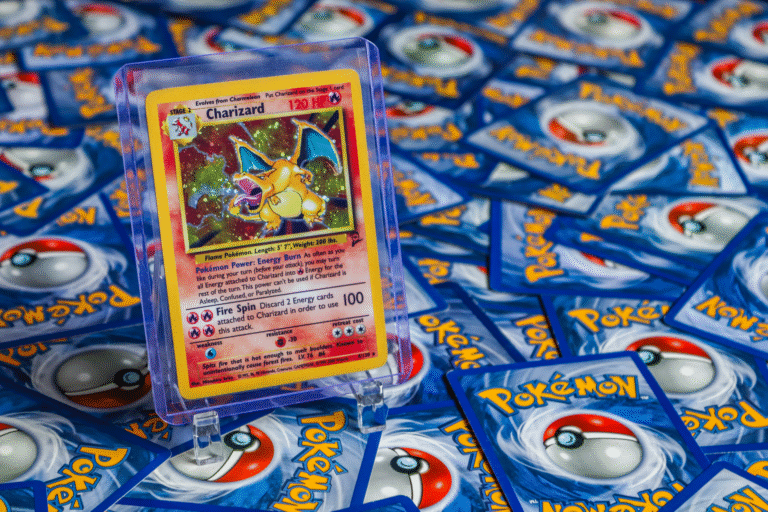
Look at the left side of the card’s artwork border. If you see a small stamp — roughly 5mm — showing a circle with a “1” inside it and the word “Edition” above, you’re holding a First Edition Charizard. That single stamp is the fastest way to confirm what you have, and checking for it takes about five seconds.
Combine it with one more visual cue — the absence of a shadow along the right and bottom edges of the illustration box — and you can confidently identify a First Edition Base Set Charizard in under thirty seconds, no magnifying glass required. Why does this matter? Because the difference between a First Edition and an Unlimited Charizard is the difference between a card worth a few hundred dollars and one worth six figures. A PSA 10 First Edition Charizard sold for $550,000 at Heritage Auctions in December 2025, while a PSA 10 Unlimited copy typically trades for $3,000 to $6,000. This article walks through every visual marker you need to check, explains how to distinguish First Edition from the commonly confused Shadowless variant, covers current market values heading into 2026, and flags the counterfeiting red flags that could save you from an expensive mistake.
Table of Contents
- What Does a First Edition Charizard Actually Look Like Compared to Unlimited?
- First Edition vs. Shadowless — The Distinction That Trips Up Most Collectors
- How Much Is a First Edition Charizard Worth Right Now?
- The 30-Second Authentication Checklist You Can Use Anywhere
- Spotting Fakes Before You Get Burned
- Why the First Edition Stamp Matters Beyond Charizard
- What 2026 Looks Like for First Edition Charizard Prices
- Conclusion
- Frequently Asked Questions
What Does a First Edition Charizard Actually Look Like Compared to Unlimited?
The Base Set charizard (card #4/102) exists in three distinct print variants, and they look nearly identical at first glance. The First Edition has that stamp on the left-center of the card art border and features no shadow behind the illustration window. The unlimited version — by far the most common — has a noticeable darker shadow running along the right side and bottom of the art box, giving the illustration a slightly recessed, 3D appearance. Hold a First Edition and an Unlimited side by side, and the shadow difference jumps out immediately.
There is also a difference in the copyright line printed at the bottom of the card. First Edition and Shadowless cards read “© 1995, 96, 98, 99 Nintendo, Creatures, GAMEFREAK,” with the year 99 included. Unlimited prints drop that 99 from the sequence. This is a useful secondary check if the card is in a sleeve or top loader and you cannot clearly see the art box edges. However, this copyright detail alone does not confirm First Edition status — it only narrows you down to either First Edition or Shadowless, since both share that copyright line.

First Edition vs. Shadowless — The Distinction That Trips Up Most Collectors
The Shadowless Charizard is the variant that causes the most confusion. Like the First Edition, it lacks the shadow border around the artwork. Like the First Edition, it carries the 1999 copyright date. The only difference is that it does not have the First Edition stamp. Shadowless cards were part of the second print run of the Base Set, produced after the initial First Edition run sold out but before Wizards of the Coast adjusted the printing plates to add the shadow effect. If your card has no shadow but also no stamp, you have a Shadowless copy — not a First Edition.
this matters significantly for pricing. A Shadowless Charizard in high grade is still a desirable card, but it trades at a fraction of First Edition prices. The mistake usually goes the other direction, though: sellers sometimes list Shadowless cards as First Edition, either out of ignorance or intent. If you are buying, always confirm the stamp is physically present on the card. Do not rely on photos alone, and do not accept “no shadow means First Edition” as sufficient proof. The stamp is non-negotiable.
How Much Is a First Edition Charizard Worth Right Now?
Market values for the First Edition Base Set Charizard have climbed substantially. As of early 2026, a PSA 10 (Gem Mint) copy commands between $200,000 and $550,000 or more. The highest price ever paid for a Charizard at public auction was Logan Paul’s PSA 10, which sold for $954,800. That remains an outlier, but it established a ceiling that continues to pull the broader market upward. In 2025, a First edition charizard sold on eBay for over $271,000, making it the most expensive Pokémon card sold on the platform that year.
Lower-graded copies are more accessible but still command serious money. PSA 9 First Editions trade in the $30,000 to $60,000 range. PSA 8 copies sit around $15,000 to $25,000. Even heavily played, ungraded First Edition Charizards start around $500 and go up from there. For context, only about 5,000 graded copies of the First Edition Charizard exist across all grades, and just 122 have ever achieved a PSA 10 designation. Scarcity at the top end is what drives those six-figure prices — there simply are not many perfect copies left.
The 30-Second Authentication Checklist You Can Use Anywhere
Here is a practical sequence you can run through in half a minute, whether you are at a card show, a garage sale, or evaluating a potential online purchase in person. First, check the left side of the art border for the First Edition stamp. No stamp, no First Edition — full stop. Second, examine the right and bottom edges of the illustration window for shadows. A genuine First Edition will have clean, even borders without a darker shadow line. Third, flip the card and look at the copyright text at the bottom: confirm the year 99 is present in the sequence.
If all three checks pass, you likely have an authentic First Edition. But “likely” is the key word. These visual markers confirm the card’s print variant, not its authenticity. A well-made counterfeit can replicate all three features. For cards valued in the thousands or higher, professional grading through PSA, CGC, or Beckett is the only way to get definitive authentication. The 30-second check is your filter for sorting real candidates from obvious misidentifications — it is not a substitute for professional verification when real money is on the line.
Spotting Fakes Before You Get Burned
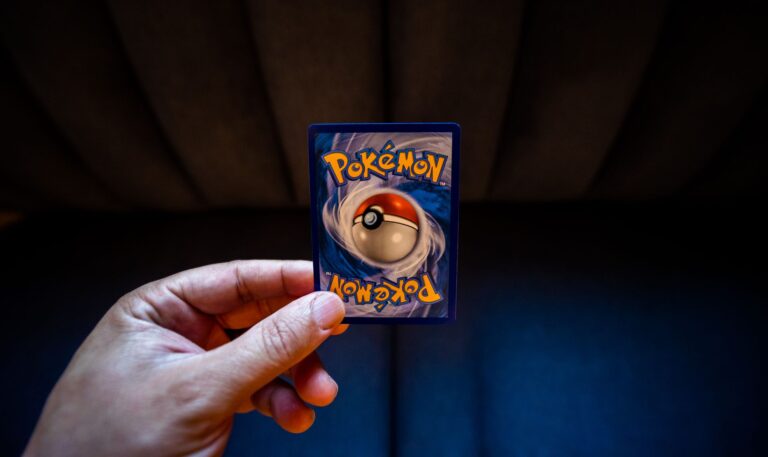
Counterfeiting has become more sophisticated as First Edition Charizard values have climbed into six-figure territory. The most reliable quick test you can perform is the black core test. Genuine Pokémon cards are printed on cardstock with a black layer sandwiched between the front and back surfaces. If you look at the edge of the card closely — tilting it at an angle under good lighting — you should see a thin dark line running through the middle of the card’s cross-section. Counterfeits typically lack this black core entirely, showing white or light gray all the way through.
Beyond the core test, pay attention to print tone. Authentic First Edition cards tend to appear slightly lighter in overall color compared to Unlimited prints, and the holographic pattern on the Charizard’s artwork should be crisp, evenly distributed, and consistent under shifting light. Fakes often have a holographic layer that looks blurry, uneven, or overly reflective. Be especially cautious with raw (ungraded) cards sold online at prices that seem like a deal. If someone is selling a card worth $15,000 or more without professional grading, ask yourself why. The answer is usually not in your favor.

Why the First Edition Stamp Matters Beyond Charizard
The First Edition designation was not unique to the Base Set. Wizards of the Coast used the First Edition stamp across approximately ten English-language Pokémon sets over a span of about three years, ending with the Neo Destiny expansion. No English Pokémon card has carried the First Edition stamp in the twenty-plus years since.
That discontinuation is part of what makes the stamp significant — it represents a finite, closed chapter in the game’s history that cannot be expanded or reprinted. For collectors focused specifically on Charizard, this means the First Edition Base Set version occupies a category of one. There will never be another First Edition Charizard produced. Other chase cards from the era carry similar premiums for similar reasons — the First Edition Blastoise and Venusaur, for instance — but none approach the Charizard’s cultural status or market value.
What 2026 Looks Like for First Edition Charizard Prices
Pokémon’s 30th anniversary falls in 2026, and it is already driving renewed interest in vintage cards across the hobby. Market analysts project 30 to 50 percent appreciation for high-grade specimens — PSA 9 and PSA 10 — throughout the year. For longer-term holders, estimates suggest 8 to 12 percent annual appreciation for PSA 9 and PSA 10 Base Set cards, with lower grades appreciating at a more modest 4 to 6 percent annually.
None of these projections are guarantees. The collectibles market is cyclical, and Pokémon cards experienced a correction after the pandemic-era surge. But the structural factors supporting First Edition Charizard values — extreme scarcity at high grades, cultural recognition that extends far beyond the hobby, and a fixed supply that can never increase — remain intact. For collectors sitting on authenticated copies, 2026 looks like a year to hold rather than sell.
Conclusion
Identifying a First Edition Charizard comes down to three visual markers: the First Edition stamp on the left art border, the absence of shadow along the illustration box, and the inclusion of 99 in the copyright line. You can check all three in under thirty seconds. The harder part is not identification — it is authentication.
For any card you believe to be a genuine First Edition, professional grading is essential before buying or selling at the prices these cards command. Whether you pulled a Charizard from a pack in 1999 and tucked it into a binder, or you are evaluating a purchase at current market rates, understanding these distinctions protects you from costly mistakes. The difference between First Edition, Shadowless, and Unlimited is not academic — it is tens of thousands of dollars, sometimes hundreds of thousands. Know what to look for, verify what you find, and get professional confirmation before making any financial decisions based on a thirty-second visual check.
Frequently Asked Questions
Can I identify a First Edition Charizard without removing it from a graded slab?
Yes. The First Edition stamp is visible through the slab’s clear window, and the grading label itself will specify “1ST EDITION” on the certification. If the label does not say First Edition, the card is not First Edition, regardless of what the seller claims.
Is a Shadowless Charizard worth grading?
Absolutely. While it does not reach First Edition prices, a PSA 10 Shadowless Charizard still commands a significant premium over Unlimited copies. The Shadowless variant is the second rarest of the three Base Set printings and is highly collectible in its own right.
What is the cheapest way to own a First Edition Base Set Charizard?
Lower-graded copies — PSA 4 and below, or raw ungraded cards in played condition — start around $500. These will show visible wear, but the First Edition stamp and authenticity are what matter to many collectors at this price point.
Does the First Edition stamp appear on Japanese Charizard cards?
No. The Japanese Base Set did not use a First Edition stamp. Japanese cards have their own print run distinctions, but the 1st Edition designation as it exists on English cards does not apply.
Should I get my card graded before selling?
For a First Edition Charizard, almost certainly yes. The price difference between a raw card and a graded card at the same condition level is substantial enough to justify the grading fee and wait time. Buyers pay a premium for the certainty that professional grading provides.