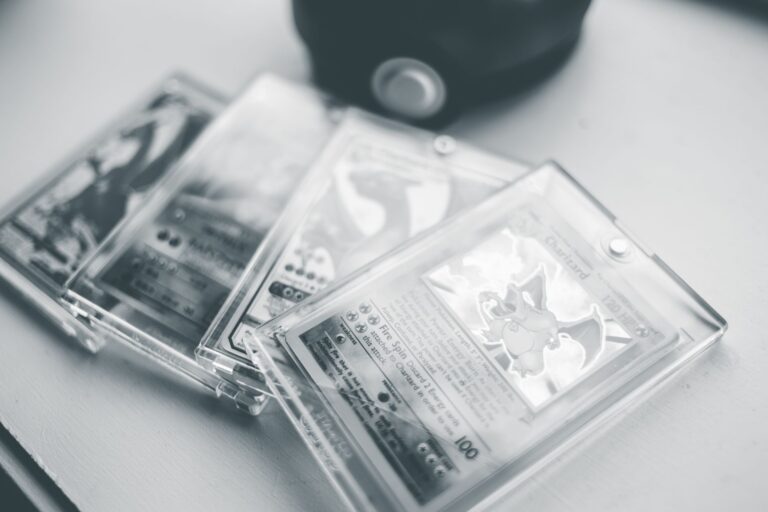
Demand for shadowless Base Set Blastoise cards has experienced significant growth since 2017, with sustained interest driven by the card’s iconic status and scarcity. While the market for vintage Pokémon cards remained relatively niche in 2017, the subsequent rise of PSA grading accessibility and social media-driven nostalgia created a compound effect. A near-mint shadowless Base Set Blastoise (PSA 8+) that might have sold for $500-$800 in 2017 regularly commands $2,000-$5,000 today, reflecting both increased collector demand and recognition of the card’s rarity. The shadowless versions represent only the first printings of the Base Set, making them inherently limited compared to unlimited reprints.
Demand has not been linear, however. The market experienced explosive growth between 2019 and 2021 as mainstream interest in Pokémon cards resurged, then moderated as supply increased and prices corrected. Still, demand remains substantially higher than pre-2017 levels, with consistent sales activity among serious collectors and investors. The shadowless Blastoise remains one of the most desirable cards from the entire Base Set era, competing primarily with shadowless Charizard and Alakazam in terms of collector pursuit.
Table of Contents
- What Factors Drove Increased Demand for Shadowless Blastoise Since 2017?
- How Has the Shadowless Blastoise Market Matured Since Its 2017 Baseline?
- What Role Does Condition Grading Play in Demand for Shadowless Blastoise?
- How Does Shadowless Blastoise Demand Compare to Other High-Value Base Set Cards?
- What Are the Key Risks in Buying Shadowless Blastoise Cards?
- What Condition Grade Represents the Best Value Entry Point for Shadowless Blastoise?
- What Does the Future Outlook Hold for Shadowless Blastoise Demand?
- Conclusion
What Factors Drove Increased Demand for Shadowless Blastoise Since 2017?
Several overlapping trends accelerated demand for shadowless Base Set Blastoise cards over the past eight years. The first was the democratization of professional grading—PSA’s expanding capacity and online sales platforms like eBay and specialized card marketplaces made it easier for collectors to find, value, and purchase specific cards. Before 2017, finding a shadowless Blastoise for sale required patience and connections within local collecting communities. By 2020, you could search for any specific graded example and find multiple listings within hours. The second driver was financial investment interest.
As Pokémon TCG vintage cards gained mainstream media attention around 2020-2021, new money entered the market from investors seeking tangible assets and collectibles. Shadowless cards benefited disproportionately because their scarcity story was easy to understand—earlier print run equals fewer copies equals higher intrinsic value. A collector who knew nothing about Pokémon cards could grasp why a shadowless Blastoise would be worth more than an unlimited Blastoise. The third factor was generational nostalgia. Millennials who opened Base Set packs as children in 1999-2001 accumulated wealth and disposable income, creating a demographic willing to pay premium prices to own cards they remembered. Many had sold their childhood collections for nothing in the early 2000s, making the later ability to purchase high-grade examples deeply satisfying.
How Has the Shadowless Blastoise Market Matured Since Its 2017 Baseline?
The shadowless Blastoise market has shifted from speculative enthusiasm to more mature, condition-stratified pricing. In 2017, the market was thin enough that grade variations (PSA 7 versus PSA 8) might not have corresponded to dramatic price differences. Today, the market is deeply segmented: a PSA 8 shadowless Blastoise can cost 2-3 times more than a PSA 6, and a PSA 9 can command another 100-150% premium above a PSA 8. This fragmentation reflects professional market development but also creates risk for buyers and sellers who misjudge condition.
A critical limitation of the current market is that shadowless Blastoise prices remain vulnerable to economic downturns and shifts in broader collectibles sentiment. The dramatic price run-up between 2020 and 2021 led to inventory oversupply and inevitable price corrections. A PSA 8 shadowless Blastoise that sold for $6,000 in early 2021 might have declined to $3,500 by mid-2022. While demand has stabilized, the card is not inflation-proof, and collectors who bought at the peak have experienced significant losses.
What Role Does Condition Grading Play in Demand for Shadowless Blastoise?
Condition grading has become the primary determinant of both demand and price for shadowless Blastoise cards. The difference between a PSA 5 (Good/Very Good) and a PSA 8 (Near Mint/Mint) is approximately $500 to $2,000 in raw price, but the demand curves diverge dramatically. A PSA 8 can sell quickly to serious collectors; a PSA 5, while cheaper, may languish on marketplace listings for months because lower-grade examples are abundant relative to demand.
The specific grading standards matter in real market transactions. A shadowless Blastoise with light creasing, faint surface wear, or centering issues might receive a PSA 6 rather than PSA 7, and that single-grade difference can mean $500-$1,000 in lost value. New collectors often underestimate how strictly graders assess centering (the position of the image within the card borders)—shadowless cards from the late 1990s frequently show minor centering issues that would reduce grades compared to later, more consistently manufactured printings.

How Does Shadowless Blastoise Demand Compare to Other High-Value Base Set Cards?
Shadowless Blastoise occupies a middle tier of desirability within the broader shadowless Base Set market. Shadowless Charizard commands dramatically higher prices and demand—a PSA 8 shadowless Charizard can sell for $8,000-$15,000 compared to Blastoise’s $2,000-$5,000 range. Shadowless Alakazam falls roughly in line with Blastoise’s demand profile, typically within a 10-20% price differential depending on specific grading and recent market activity. Shadowless starters as a category all attract strong demand, but the iconic status of Charizard creates a different market tier entirely.
The tradeoff for collectors is accessibility. Shadowless Blastoise offers a way to own a highly desirable, undeniably rare Base Set card without the financial commitment required for Charizard. Many collectors who cannot justify $10,000+ for a Charizard will pursue Blastoise as the next-best vintage starter card. This positioning has actually stabilized demand for Blastoise because it serves a broader collector base than Charizard does.
What Are the Key Risks in Buying Shadowless Blastoise Cards?
Authentication and counterfeit risk represents a real concern for high-value shadowless Blastoise purchases. While professional graders have become sophisticated at detecting counterfeits, ultra-high-value cards are attractive targets for forgery. Any shadowless Blastoise purchased outside of professionally graded slabs carries elevated authentication risk. Raw, ungraded cards require expert evaluation before purchase, and even then, the buyer assumes responsibility for any later revelation of authenticity issues.
A second risk is that the market for shadowless Base Set cards remains relatively illiquid compared to modern cards. If you purchase a shadowless Blastoise for $4,000, selling it might require patience—there isn’t a guaranteed daily buyer at any specific price point. Specialized auctions and marketplace listings can take weeks to move inventory, and seller urgency can force price reductions. This lack of liquidity means shadowless Blastoise cards are investments for patient collectors, not emergency-liquidation assets.
What Condition Grade Represents the Best Value Entry Point for Shadowless Blastoise?
PSA 6 and PSA 7 shadowless Blastoise cards often represent the pragmatic collector’s entry point, offering recognizable vintage appeal without the extreme price tags of PSA 8+ examples. A PSA 6 typically sells for $800-$1,500, a realistic purchase for dedicated collectors while still representing a meaningful rarity compared to unlimited versions.
The visual difference between a PSA 6 and PSA 7 might be subtle to the untrained eye but commands $200-$400 in price difference. Many collectors overlook PSA 7 shadowless Blastoise cards, which represent a strong middle ground—still playable-looking with minor visible wear, substantially cheaper than PSA 8, yet significantly scarcer and more desirable than anything graded PSA 6 or below. If building a collection, purchasing multiple lower-grade shadowless cards often provides more enjoyment than a single high-grade example at the same total budget.
What Does the Future Outlook Hold for Shadowless Blastoise Demand?
Looking forward, demand for shadowless Blastoise cards will likely remain stable but moderate compared to the speculative peak of 2020-2021. The broader vintage Pokémon card market has matured, with more realistic pricing and slower appreciation rates reflecting fundamental scarcity and collector utility rather than speculative momentum.
Generational wealth transfer may introduce new collector cohorts, but mainstream attention to Pokémon TCG will likely continue to normalize rather than accelerate. The most probable scenario is that shadowless Blastoise cards serve as reliable holdings for patient collectors and investors, with stable demand among serious enthusiasts but without the explosive growth seen in the prior decade. Economic conditions, shifts in collector interest toward modern cards or other vintage categories, and any regulatory changes around professional grading could all meaningfully affect demand trajectories.
Conclusion
Demand for shadowless Base Set Blastoise cards has fundamentally strengthened since 2017, driven by increased market accessibility, generational nostalgia, and recognition of genuine scarcity. The card has transitioned from a niche collector’s pursuit to a recognized investment asset, with pricing reflecting professional grading standards and stratified collector demand based on condition.
While prices have moderated from 2021 peaks, demand remains substantially higher than the baseline of eight years ago. For collectors considering a shadowless Blastoise purchase, the key factors are realistic condition expectations, understanding that professional grading determines practical value, and recognizing that patience is required both in purchasing and selling. The card remains one of the most desirable entries from the Base Set era, with demand likely to persist for decades, though at a more measured pace than the pandemic-era acceleration that defined recent years.