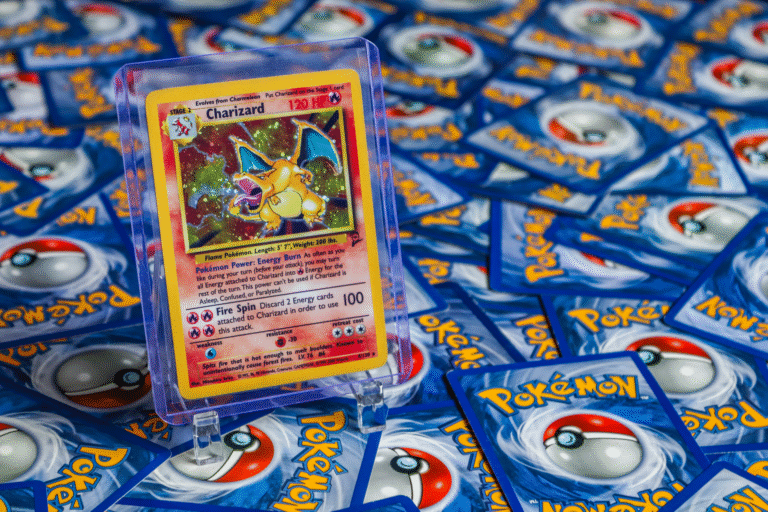
Recession fears are already affecting Pokemon card prices in 2026, but the picture is more nuanced than a simple market crash. Modern singles have corrected 20-30% from their launch peaks, reflecting investor concern about discretionary spending during economic uncertainty. However, this isn’t uniform across the entire market—vintage cards and sealed products have actually climbed 15-25% during the same period, suggesting that collector behavior is bifurcating based on card age, condition, and rarity.
The real answer to whether recession fears will further damage prices depends entirely on which segment of the market you’re examining. The most concrete example of this correction is the Prismatic Evolutions Umbreon Special Illustration Rare, which fell approximately 50% from its peak of $1,600 to $832 in late 2025. This dramatic drop illustrates how modern chase cards have been hit hardest by market pessimism, while simultaneously, the market’s most prestigious card—a Pikachu Illustrator—sold for $16.49 million at Goldin Auctions in February 2026, demonstrating that ultra-rare cards operate in an entirely different economic layer.
Table of Contents
- Is a Pokemon Card Market Crash Really Coming?
- Why Production Surge is Adding Pressure to Prices
- Different Economic Scenarios and Their Price Implications
- Which Cards Hold Value When Recession Hits
- The Bifurcated Market and Real Recession Risk
- The Ultra-Rare Market as Inflation Hedge
- Market Outlook for Pokemon Cards Through 2026 and Beyond
- Conclusion
Is a Pokemon Card Market Crash Really Coming?
Market analysts have mapped out three distinct scenarios for how Pokemon cards could perform over the next year. The bullish outlook projects 15-25% annual growth with a 30% probability, the neutral scenario anticipates 5-10% annual growth with 50% probability, and the bearish case projects 10-20% decline with 20% probability. These probabilities suggest the market is more likely to stabilize than to crash further. The collective consensus from pricing analysts is that we’re experiencing a market correction phase rather than a systemic collapse.
The difference matters significantly for how you should interpret current prices. During a correction, values stabilize after sharp drops—think of it as the market repricing cards to sustainable levels rather than clearing inventory in a panic. The 20-30% decline in modern singles represents this repricing, not ongoing depreciation. If the bearish scenario materializes and we enter a 10-20% decline, it would represent additional pressure from a full recession, but the market would still be adjusting downward from already-corrected prices rather than from the euphoric highs of 2023-2024.

Why Production Surge is Adding Pressure to Prices
The Pokémon Company printed 10 billion cards over the last 12 months alone—a figure that represents 11.7% of every Pokemon card ever produced since the game’s inception. This extraordinary production volume is the structural reason behind the modern card correction. When supply increases this dramatically, prices cannot remain elevated unless demand increases proportionally, which it hasn’t. Supply flooding is a mechanical force that no amount of collector enthusiasm can overcome. Understanding the scale of this production is crucial to gauging recession risk.
Under normal economic conditions, supply flooding this severe would trigger a 30-40% correction. The fact that we’re seeing 20-30% declines suggests that collector demand has been surprisingly resilient despite macroeconomic headwinds. However, this also means there’s limited room for prices to rise before hitting production ceiling again. If a recession dampens new collector acquisition and triggers some casual players to liquidate holdings, you could see those 20-30% corrections extend further, potentially adding another 15-20% decline in the worst-case bearish scenario. The warning here is clear: even though sentiment is cautiously optimistic about a 50% probability of neutral growth, the supply situation means prices are fundamentally constrained unless demand increases.
Different Economic Scenarios and Their Price Implications
Recession impacts different card categories in fundamentally different ways. Gameplay staples—cards that competitive and casual players actually need for constructed formats—show the strongest recession resistance. These cards have intrinsic value based on utility rather than speculation. Someone building a competitive deck needs that specific card regardless of economic conditions. By contrast, investment-grade modern singles with no gameplay utility are most vulnerable to recession pressure because they have no utility value to anchor prices when collector spending contracts.
The long-term market data suggests resilience despite short-term nervousness. The global trading card games market is projected to grow from $52.1 billion in 2026 to $90.2 billion by 2034 at a 7.1% compound annual growth rate. This projection encompasses all TCG categories, including Pokémon, Magic, Yugioh, and emerging competitors. For Pokémon specifically, the company generated $2.9 billion in revenue in FY2024-25, marking a 38% increase year-over-year. That growth rate seems disconnected from recession fears—and it is, because the Pokémon Company’s massive revenue includes merchandise, games, and IP licensing far beyond trading cards. However, it does suggest the Pokémon brand itself has resilience and remains a growth engine even during economic uncertainty.

Which Cards Hold Value When Recession Hits
If a recession materializes, vintage graded cards appear positioned to weather the downturn better than modern moderns. These cards have already appreciated significantly on their supply scarcity and historical significance—a 1st Edition Charizard in PSA 9 condition has a decades-long track record of appreciation that transcends economic cycles. Vintage graded cards are primarily owned by advanced collectors and institutions that aren’t forced sellers during recessions. Their smaller market size also means less liquidity, which paradoxically provides protection when volatility strikes because it’s harder to rapidly liquidate large positions, preventing panic selling.
Modern graded cards occupy a middle position. Cards like Umbreon SIR have already corrected significantly, but they’re still the products of cards that retain competitive or aspirational demand. The comparison is instructive: a modern card with a 50% correction has less downside risk remaining than a modern card still trading near launch prices. Raw modern singles are most vulnerable because they lack the condition premium of grading and the utility value of gameplay staples. If you’re concerned about recession timing, consolidating your collection toward vintage, graded, or gameplay-relevant modern singles makes more structural sense than holding raw modern non-staples.
The Bifurcated Market and Real Recession Risk
The Pokemon card market is no longer a single market—it’s become two distinct markets with different economic characteristics. The high-end vintage and graded segment operates on collector psychology and scarcity fundamentals. The modern and speculative segment operates on hype cycles and investor sentiment. Recession fears hit the second category hard because speculative buyers disappear first when economic uncertainty increases. Your limitation as a collector trying to navigate recession risk is that you need perfect timing to rotate from one segment to another, and perfect timing is impossible.
A warning worth emphasizing: vintage cards trading at record highs (up 15-25% amid modern corrections) are not recession-proof. They’re just on a different valuation curve. If a severe recession triggers forced liquidation among wealthy collectors, even vintage can correct sharply. The 15-25% appreciation of vintage doesn’t mean vintage is immune—it means vintage has been a beneficiary of capital rotation away from modern. If capital itself contracts, all asset classes can decline. The more defensive position is consolidation toward gameplay staples, which have utility value that survives economic cycles, but even this carries limitation: very few Pokemon cards are played at competitive levels, so “gameplay staple” is a smaller category than you might assume.

The Ultra-Rare Market as Inflation Hedge
The sale of a Pikachu Illustrator card for $16.49 million in February 2026 might seem disconnected from recession concerns, but it actually illustrates an important principle: ultra-rare cards operate in a different economic universe. This card sold at Goldin Auctions—one of the world’s premier auction houses for high-value collectibles—during a period of recession fears, suggesting that wealthy collectors view the rarest Pokemon cards as alternative assets similar to fine art or rare coins. Alternative asset markets have their own dynamics separate from mainstream economic cycles.
For most collectors, this ultra-high-end market seems irrelevant. But it matters for price floors on all rare cards because it establishes that true rarity commands price resilience. A Pikachu Illustrator selling for $16.49 million during recession fears suggests that if you own anything legitimately rare or historically significant, the downside risk is contained because the collector base for true scarcity is small, wealthy, and relatively insensitive to economic cycles. The limitation is determining what qualifies as “true scarcity”—first editions, promos, and cards with genuine historic significance, not modern chase rares from a set that sold millions of booster boxes.
Market Outlook for Pokemon Cards Through 2026 and Beyond
The trading card games market’s projected 7.1% compound annual growth rate through 2034 provides a macroeconomic tailwind even if recession fears materialize in 2026. This growth rate assumes typical recessions occur and recover within the forecast period, so it’s not predicated on avoiding economic downturns—it’s built assuming them. For Pokemon cards specifically, this means the long-term trend remains upward even if prices decline 10-20% in a recession scenario. The decline would be a temporary deviation, not a permanent repricing.
Looking specifically at 2026 and into early 2027, the most likely scenario (50% probability) is neutral 5-10% growth overall, which could mean continued pressure on modern singles while vintage appreciates. The bifurcated market is likely to continue deepening, which simplifies decision-making: decide whether you’re a vintage/graded collector, a modern player, or an investor in staples, then position accordingly. Recession fears are real and affecting pricing right now, but they’re being reflected in a market correction, not a collapse. The timeframe for your collecting horizon—whether you’re holding for months or years—matters far more than whether a recession actually arrives.
Conclusion
Recession fears are already affecting Pokemon card prices in 2026, primarily through a 20-30% correction in modern singles while vintage and sealed products have appreciated 15-25%. This isn’t a crash; it’s a market repricing driven by massive production surge (10 billion cards in 12 months) and legitimate uncertainty about discretionary spending. The real risk isn’t that prices collapse further—analysts give that scenario only 20% probability—but that the correction persists longer than expected if recession fears become reality. Your strategy should reflect which segment you’re actually collecting.
Vintage graded cards and gameplay staples have shown recession resistance and are positioned better than modern speculative singles. The Pokémon Company’s 38% revenue growth and the trading card games market’s 7.1% projected growth through 2034 suggest structural tailwinds will eventually overcome near-term recession concerns. If you’re holding modern cards that fell 20-30%, understand that you’ve already absorbed most of the recession correction. Rotating toward vintage, graded, or utility-based cards provides better downside protection without requiring perfect market timing.