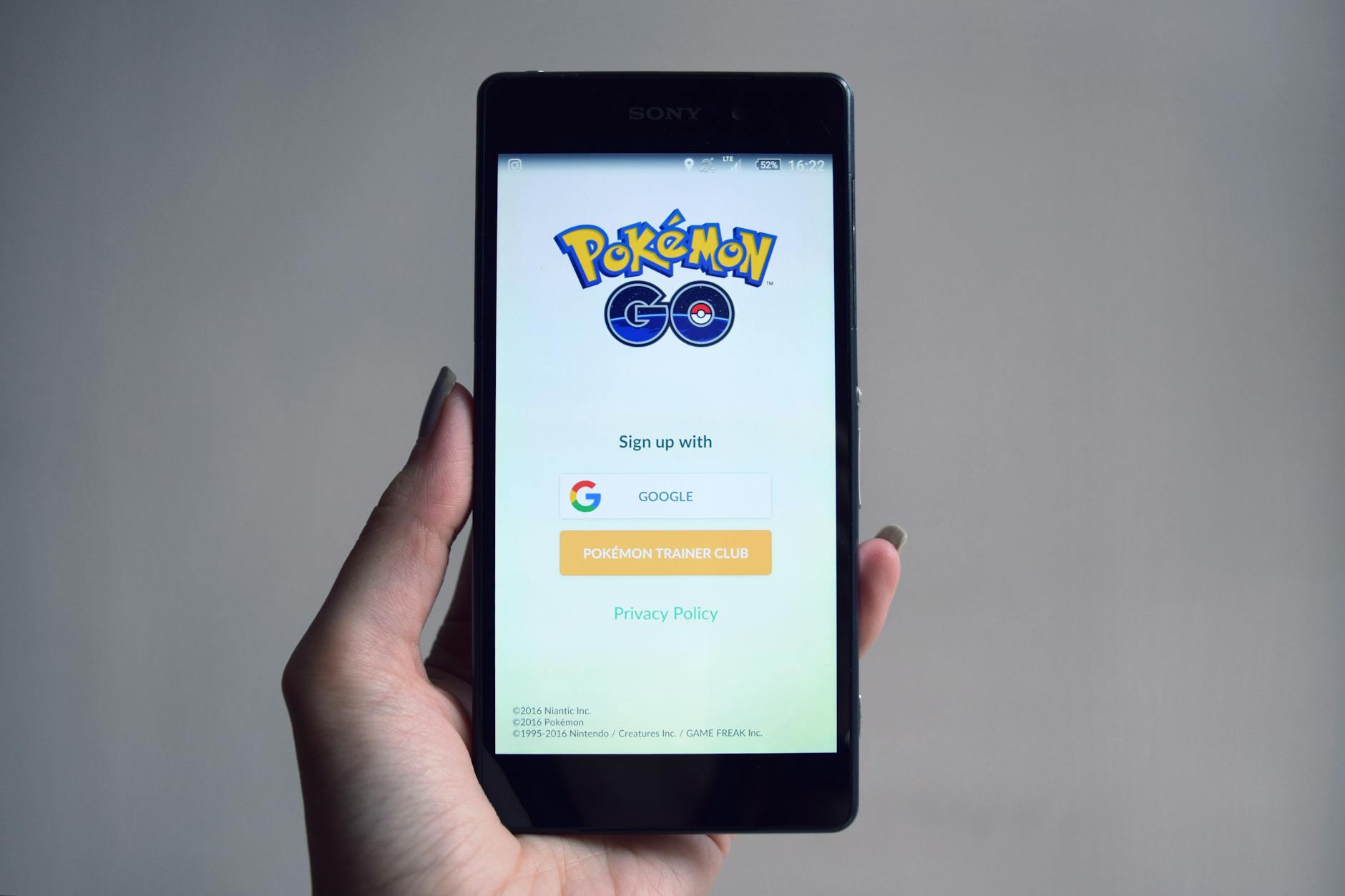
Pokémon became one of the best-selling game series ever through a combination of exceptional game design, strategic transmedia marketing, and timing that caught a cultural moment perfectly. When Game Freak and Nintendo released Pokémon Red and Green in Japan in 1996, they weren’t just releasing a game—they were launching a franchise ecosystem that would eventually gross over $100 billion across all categories, making it the highest-grossing media franchise in history. The key to its dominance was that the games didn’t exist in isolation; they were designed from the start to drive trading, collecting, and social interaction, with the Pokémon Trading Card Game launching in 1996 and the anime beginning in 1997, creating a self-reinforcing loop where each media format promoted the others. The games themselves sold over 500 million copies across all generations, far exceeding competitors.
Red and Blue alone reached 31 million copies sold—a staggering number for a Game Boy title in the late 1990s. But those numbers don’t explain the full story. Pokémon’s success wasn’t just about how many copies moved; it was about how the game design encouraged repeated purchasing, social engagement, and a persistent emotional connection to the franchise that lasted decades. Players needed to buy multiple versions to catch all Pokémon, needed to trade with friends, and needed to keep playing as new generations released with new creatures and mechanics.
Table of Contents
- What Made Pokémon’s Game Design Revolutionary?
- How the Trading Card Game Accelerated the Franchise’s Growth—And Created a Counterfeiting Problem
- Cross-Media Reinforcement: How the Anime and Trading Card Game Drove Game Sales
- Why Multi-Generational Releases Sustained Sales Rather Than Cannibalizing Them
- The Saturation Problem: When Too Many Pokémon Threatened to Overwhelm the Franchise
- Pokémon Cards as Investment Assets and Speculative Bubbles
- The Modern Era and Why Pokémon Still Dominates in 2026
- Conclusion
What Made Pokémon’s Game Design Revolutionary?
The core mechanic of collecting, training, and battling pokémon was not entirely new—turn-based RPGs and creature-collection games existed before 1996—but Game Freak executed it with exceptional clarity and accessibility. Each game shipped with roughly 150 unique creatures, each with distinct appearances, abilities, and evolutionary paths. A player could complete the story with just a handful of favorites, but completing the Pokédex (the in-game encyclopedia) required trading with other players, creating a forced social component that was revolutionary for handheld gaming. This wasn’t a bug; it was the design itself, and it meant that one copy of Pokémon Red was incomplete without access to Pokémon Blue or Green.
The battle system balanced depth with accessibility. New players could win through type advantages alone—Water beats Fire, Fire beats Grass, Grass beats Water—but competitive players discovered hidden stat mechanics, move accuracy, special attack power, and speed calculations that created a skill ceiling high enough to sustain competitive play for decades. This meant the game could appeal to eight-year-olds and twenty-five-year-olds simultaneously. Compare this to Magic: The Gathering, which launched in 1993; Magic was far more complex but required players to buy booster packs constantly, whereas pokémon games sold for a one-time $40 purchase and contained the full experience, making them more accessible while the card game provided an ongoing monetization layer.

How the Trading Card Game Accelerated the Franchise’s Growth—And Created a Counterfeiting Problem
The Pokémon Trading Card Game, designed by Richard Garfield (the creator of Magic: The Gathering), launched in October 1996 and became a cultural phenomenon almost immediately. By 1999, card sales had reached $2 billion in a single year in North America—more revenue than the video games themselves generated in that period. Unlike the video games, cards created a natural collectibility focus and scarcity; a first-edition Charizard card from the Base Set (1999) is now worth hundreds of dollars, and pristine examples have sold for over $300,000, making the cards themselves investment assets rather than just game pieces. This value created an enormous problem: the Pokémon Company discovered widespread counterfeiting operations producing fake cards throughout the early 2000s.
Counterfeiters operated everything from small print operations to sophisticated factories that mimicked official card stock and printing. The Pokémon Company spent years fighting counterfeit sales through legal action, supply-chain monitoring, and card grading services (like PSA and Beckett) that verified authenticity and condition. This problem persists today; anyone buying vintage Pokémon cards must be extremely cautious, as counterfeit Base Set cards flood online marketplaces. The lesson here is clear: the cards’ value created the market, but the market’s value created incentive for fraud, and authenticity verification has become as important as the game itself.
Cross-Media Reinforcement: How the Anime and Trading Card Game Drove Game Sales
The Pokémon anime series, which premiered in April 1997, was explicitly designed to promote the video games and trading cards. The show followed Ash Ketchum, a young trainer trying to catch all Pokémon and become a Pokémon Master—a narrative that directly mirrored what players were doing in the games. Every episode featured Pokémon creatures that appeared in the games and cards, and the show’s early popularity in Japan and North America created massive demand for the corresponding games and cards among children who had never played a video game before. When an episode featured a Pokémon like Charizard prominently, sales of the corresponding Pokémon Red or Blue cartridge spiked, as did demand for trading cards featuring that creature.
This cross-promotion was deliberate and strategic. The Pokémon Company understood that children would buy games to catch the Pokémon they saw on TV, then buy trading cards to have physical representations of those creatures, then watch the anime to see those creatures in action. The three formats created a content loop where each format promoted the others. Competitors like Yu-Gi-Oh! attempted similar strategies but never achieved the same synchronization; Yu-Gi-Oh! cards came first in Japan, then the anime, then the games, which meant the anime couldn’t leverage existing game popularity. Pokémon’s simultaneous launch of games and cards, followed quickly by the anime, created a perfect storm of consumer demand across multiple age groups and media preferences.

Why Multi-Generational Releases Sustained Sales Rather Than Cannibalizing Them
A common assumption about franchise sequels is that new releases cannibalize sales of previous versions. But the Pokémon franchise proved that releasing new games every three to four years, each containing new creatures and mechanics, actually sustained sales by encouraging players to purchase multiple titles and replay the series. Pokémon Gold and Silver (1999-2000) added 100 new creatures, bringing the total to 250. Pokémon Ruby and Sapphire (2002-2003) added 135 more. Every major release reset the “completion” goal for casual players—you couldn’t use your old team of creatures in the new game, so you had to restart and rebuild, essentially creating a new 40-60 hour experience even for veterans.
The tradeoff here is real: Game Freak had to balance innovation (adding new creatures and mechanics) with preservation (bringing back old favorites). If a new game removed too many classic creatures, fans felt alienated. If a new game recycled too much from the previous generation, it felt lazy and incomplete. Game Freak’s approach was to include most—but not all—previous creatures, forcing players who wanted a “complete” experience to use trading mechanics to move creatures between games. This created a secondary market for trading services and increased the value of playing older games even after new ones released. This strategy is one reason why some classic Pokémon (like Gyarados or Dragonite) have maintained cultural relevance for 25+ years.
The Saturation Problem: When Too Many Pokémon Threatened to Overwhelm the Franchise
By the eighth generation of games (Pokémon Sword and Shield, 2019), the Pokémon franchise had accumulated over 800 unique creatures. Game Freak announced they would no longer include all Pokémon in every new game—a controversial decision driven by the sheer workload of programming, animating, and balancing that many creatures. Pokémon Sword and Shield initially did not include the full Pokédex, forcing players to choose which creatures they could use. The backlash revealed a real limitation: the franchise had become so large that maintaining backward compatibility and completeness had become technically unsustainable. This limitation has persisted.
Newer games like Pokémon Scarlet and Violet include most but not all creatures, and the Pokémon Company decided to accept that no single game would ever again contain every creature. For collectors and completionists, this is a significant downside; there is no longer a single “complete” Pokémon experience. A player who bought every Pokémon game up through Generation 7 could theoretically have access to all creatures through trading. A player who started with Generation 8 or 9 cannot achieve this, creating a generational divide in what “catching them all” actually means. This is a fundamental shift in franchise design driven by the sheer complexity of success.

Pokémon Cards as Investment Assets and Speculative Bubbles
The Pokémon Trading Card Game has become a collectible investment market rather than just a game in the last decade. First-edition Base Set boxes (unopened original printing from 1999) have sold for $500,000 to $1 million, and there is active trading of vintage cards through specialized marketplaces. Professional graders like PSA and Beckett Grading Services charge $50-$1,000+ per card to authenticate and grade condition on a 1-10 scale, reflecting the value of cards in the secondary market. A PSA 10 (gem mint) first-edition Charizard from Base Set has consistently sold for $200,000-$400,000 in recent years.
However, this investment market has created volatility and risk. The 2020-2021 period saw massive speculation bubbles, with graded cards selling at extreme premiums, only to see prices correct sharply in 2022-2023 as casual investors realized the speculative bubble. Some collectors spent $50,000+ on a single card only to see it decline 40-60% in value within 18 months. For anyone considering Pokémon cards as an investment, the warning is clear: the vintage card market is highly speculative, dependent on collector sentiment and hype cycles, and prices can be driven by celebrity ownership or media coverage rather than fundamental scarcity alone. Unlike stocks or real estate, Pokémon cards produce no yield and their value is entirely dependent on future buyer sentiment.
The Modern Era and Why Pokémon Still Dominates in 2026
In 2024, the Pokémon Company generated approximately $15 billion in annual revenue across all product categories—games, cards, merchandise, licensing, and media. Despite being nearly 30 years old, Pokémon released new games (Pokémon Legends: Z-A in development), continued to print trading cards (with annual card sales now reaching $4+ billion), and released a live-action Pokémon movie, proving that the franchise still drives growth. The games maintain player bases in the tens of millions across active titles, and the trading card game has experienced a resurgence after the 2021-2023 market correction, with demand for cards stabilizing at healthy levels.
Looking forward, the franchise’s success model—periodic new content, strong collector community, investment-grade vintage cards, and transmedia presence—will likely sustain growth. However, the franchise faces real challenges: the saturation of 1,000+ Pokémon making each new generation feel less novel, competition from other gaming franchises like Elden Ring and Palworld (which explicitly drew players away from Pokémon in 2024), and the decline of physical game sales toward mobile and live-service models. The fact that Pokémon has remained the highest-grossing media franchise despite these headwinds speaks to the strength of its foundational design and community, but the trajectory suggests that future growth will come from new products and markets rather than expanding existing game sales.
Conclusion
Pokémon became one of the best-selling game series ever because Game Freak designed a core experience—catching and training creatures—that was simple enough for children but deep enough for competitive players, then multiplied that appeal through trading cards, an anime series, and new game releases every few years that created perpetual reasons to re-engage with the franchise. The games themselves, which have sold over 500 million copies, were only the entry point; the real genius of Pokémon was understanding that collecting, trading, and competing with others would sustain interest far longer than a single-player story ever could.
By releasing new creatures regularly without removing old ones (until generation 8), the franchise created a living ecosystem where players could engage at their preferred level of completion. The lesson from Pokémon’s dominance is that the best-selling franchises solve a human need—in this case, the desire to collect, complete, and compete—rather than chasing hype. For anyone interested in the game series today, whether as a player, collector, or investor, understand that you’re engaging with a product ecosystem where games, cards, and media formats reinforce each other, and where value is driven by scarcity, community, and 30 years of accumulated emotional investment from millions of players worldwide.
You Might Also Like
- What Makes Pokémon One of the Most Durable Franchises Ever
- Why Pokémon Game Sales Passing Half a Billion Is a Massive Milestone
- How Pokémon Cards Became a Clubhouse Obsession