Pokémon achieves this balance through intentional design choices that allow players to enjoy the game at whatever level they choose—whether that’s collecting cards for fun or analyzing tournament-winning meta decks. A casual player might spend an afternoon building a colorful fire-type deck using their favorite cards, while simultaneously a competitive player running the exact same card could have calculated every damage value, weakness matchup, and prize-card ratio for a regional tournament. The same 60-card deck structure, card pool, and basic rules serve both audiences without forcing anyone into a single way of playing.
This dual-appeal isn’t accidental. The Pokémon Company has spent decades refining mechanics that reward both the collector who loves a card’s character and the strategist who needs it to do specific damage numbers. Understanding how this balance works helps you make smarter buying decisions, whether you’re chasing cards for playability or for your collection.
Table of Contents
- Why Does Pokémon Design Support Both Casual And Competitive Play?
- How The Card Rarity System Separates Casual Collectors From Tournament Players
- Deck Building Freedom For Casual Players Versus Optimization Requirements For Competitors
- How Price Volatility Differently Impacts Collectors And Players
- The Role Of Tournament Structure In Reinforcing Both Playstyles
- Special Reprints And Limited Editions Complicate The Two-Audience Model
- Looking Forward: How The Game Evolves To Maintain Dual Appeal
- Conclusion
- Frequently Asked Questions
Why Does Pokémon Design Support Both Casual And Competitive Play?
The core mechanic is simple enough that anyone can understand it in minutes: put down a pokémon, attack with it, and knock out your opponent’s Pokémon to win. This low barrier to entry means a friend visiting for the first time can pick up a premade deck and have a real game within thirty minutes. But underneath that simplicity lies deep complexity—type advantages that cascade in unexpected ways, energy attachment strategies that require planning several turns ahead, and Ability effects that can completely reframe how a card should be used. A casual player might never notice that Lugia VSTAR’s deck needs exactly four copies of a specific consistency card, but a tournament player cannot build that deck without it.
The print runs of Pokémon cards amplify this effect. Common and uncommon cards are accessible to everyone, which means casual players build functional decks without spending hundreds of dollars. Simultaneously, the rare cards that power competitive decks—Lumineon V, Mew VMAX, or Charizard ex—exist in the same sets, creating natural progression. You can pick up a budget casual deck for twenty dollars, then gradually upgrade specific cards over months as your understanding of the game deepens. This stands in contrast to games like Magic: The Gathering, where entry-level decks and competitive decks often feel like entirely different products.

How The Card Rarity System Separates Casual Collectors From Tournament Players
Rarity tiers exist explicitly to solve this problem: a Pokémon that’s powerful but doesn’t need to be rare can be printed at common or uncommon, keeping it cheap and accessible. A Pokémon with a game-winning Ability or attack effect gets printed as rare, which naturally limits copies in circulation and raises the price. For example, Pidgeot ex is competitive-playable and reaches $30–50 per card, whereas Pidgeotto, a perfectly serviceable evolution line card, costs fifty cents because it’s an uncommon. A casual player might be happy running a budget list with older, out-of-print cards and still win casual games. But here’s the limitation: reprints matter enormously.
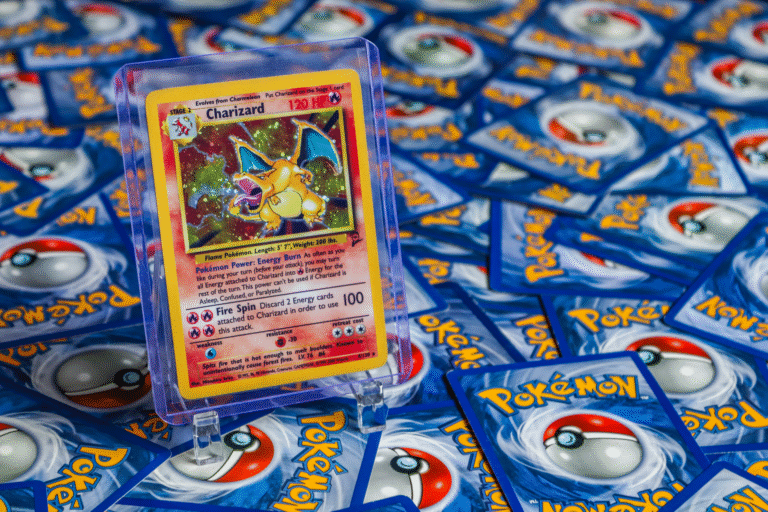
If Pidgeot ex gets reprinted in a new set, the card price drops sharply, sometimes by 50% or more within weeks. Collectors holding copies before the reprint announcement can lose significant value overnight. The Special Rare designation (full-art, alternate-art, secret rares) introduces another layer. These premium versions are functionally identical to regular rares but cost three to ten times more because of visual appeal. A casual collector might buy one Secret Rare Charizard for their collection and never play it, while a competitive player buys the cheapest legal version and never cares what the card looks like. This creates two entirely separate markets for the same card, and understanding which market you’re buying into determines whether you make money or lose it.
Deck Building Freedom For Casual Players Versus Optimization Requirements For Competitors
A casual Pokémon player can build a thematic deck—say, a deck containing only reptile-type Pokémon and water energy—and have a genuine good time with friends. The game won’t punish pure theming if you’re all playing for fun. You can run suboptimal cards like Venomoth because you like it, and nobody hands you a rulebook citation. Competitive players cannot afford this luxury. Every card slot in a tournament-legal deck is contested.
If you’re running a card for sentimental reasons instead of for strategy, you’re giving your opponent better odds. This manifests clearly in deck construction percentages. A casual deck might run 2–3 copies of a good Supporter card because it feels right. A competitive deck runs exactly the number of copies needed to maximize consistency while leaving room for other essential cards—often 4 copies if it’s a draw-support Supporter, 0 copies if a better alternative exists. The mathematics of tournament play is ruthless: if drawing a specific card increases your win rate by 2% in a 200-person tournament, you will lose 4 games you should have won by running fewer copies. Casual players live in a permission-based world where anything goes, while competitive players live in an optimization-based world where every choice is justified by percentage points.

How Price Volatility Differently Impacts Collectors And Players
Casual collectors benefit from stable, accessible pricing. A person who buys ten dollars’ worth of starter decks doesn’t care if Charizard drops from $40 to $25 because they’re not reselling—they’re keeping the cards. Competitive players and investment-minded collectors, however, live with real financial risk. A player who invested $200 in four copies of a meta-relevant card three months ago might watch it crater to $30 per copy when a better alternative prints. The tradeoff is unavoidable: cards that are powerful enough to win tournaments are cards the Pokémon Company will eventually print again, in new art or with new mechanics.
This cycle protects the casual market (prices stay reasonable) but punishes speculation on specific cards. The timing of set releases creates another dynamic. When a new set launches, competitive players immediately shift meta expectations, and cards from the previous set become cheaper almost overnight. Casual players shopping a month after set release find better prices on older powerful cards, essentially buying at a discount. Competitive players shopping immediately after release pay peak prices because they need those cards to practice before the next tournament. Understanding which camp you belong to—are you buying to play now, or to collect over time?—changes your purchasing strategy entirely.
The Role Of Tournament Structure In Reinforcing Both Playstyles
Organized Play divides players into divisions based on age and competitive history, which theoretically allows casual players to compete against others at their level. However, the vast majority of casual players never attend organized tournaments at all; they’re building decks in their homes and backyards. The tournament structure matters most to a small percentage of the player base, yet it’s where the meta shifts happen and where card demand spikes. A player who wants to stay current with competitive Pokémon must follow tournament results, study decks that made top 32, and understand why a card that was staple six months ago got cut from winning lists.
One important limitation: smaller cities and rural areas often have limited organized play options, meaning casual players in those regions never get exposure to competitive metagame shifts. They might be playing with powerfully synergistic decks that stopped being meta-relevant years ago and never realize it. For collectors and players in these regions, owning current meta cards matters less than it does for someone with access to a weekly League or monthly tournament series. This geographic variance is important when evaluating whether to hold or sell cards—regional supply and demand differ significantly from the online meta bubble.

Special Reprints And Limited Editions Complicate The Two-Audience Model
Pokémon occasionally prints special limited editions and premium products that blur the lines between casual and competitive. A “Champion’s Path” collection or exclusive box release might contain older, powerful cards in fresh packaging, aimed at casual gift-buyers but accidentally restocking tournament players’ inventories. These reprints reset value expectations and force competitive players to make timing decisions: do I buy the expensive original version now, or wait and hope for a reprint that drops the price? A concrete example: Charizard VMAX was reprinted multiple times across different set releases.
Players who spent forty dollars on the first printing took losses when later reprints brought the price down to fifteen dollars. Casual collectors who waited for the cheaper versions got the same playable card at a fraction of the cost, but some later reprints became rarer than the originals, inverting the value structure entirely. The lesson for card buyers is that assuming “newer printing equals lower price” is a trap. Check scarcity, not just release date.
Looking Forward: How The Game Evolves To Maintain Dual Appeal
The Pokémon Company continues to design cards with both audiences in mind, but pressure mounts from the competitive side. As tournament play grows more sophisticated, the gap between “cards that are fun” and “cards that win” widens. The company responds by occasionally printing powerful, thematic cards—a beloved Pokémon with a competitive Ability—that reward collector sentiment while serving competitive function.
This balancing act will likely persist because the casual player base vastly outnumbers the competitive base, and alienating casual collectors destroys the game’s cultural value and product sales. The future probably includes more differentiation between tournament-legal and casual-only cards, giving room for powerful fun mechanics that wouldn’t be printed into the competitive format. This would let casual players experience card effects that would break tournament play, while keeping the competitive meta stable. For collectors and card investors, this means the landscape will continue to reward early adoption of competitive cards but offer safer value in cards designed primarily for collector appeal.
Conclusion
Pokémon balances casual and competitive play by keeping the rules simple enough for anyone to learn while embedding enough depth that years of play can’t exhaust the strategy space. The rarity system, deck-building freedom, and organized-play structure all reinforce this balance without forcing anyone into a single way of enjoying the game. A person can spend five dollars on a casual deck, win games against friends, and call that a win.
Another person can spend hundreds on a tournament deck, lose in the first round, and still consider it a worthwhile investment in the competitive scene. As a card buyer, understanding which audience you belong to—casual collector, casual player, competitive player, or investor—determines how you should evaluate card prices and make purchasing decisions. Cards live in multiple markets simultaneously, and the value that matters to you depends entirely on why you’re buying. Watch organized play results if you want to stay ahead of meta shifts, but don’t panic when your collection falls out of competitive favor; casual play and collecting are timeless parts of the game that prices can’t touch.
Frequently Asked Questions
Will my casual deck ever be good enough to win tournaments?
Possibly, but only if you’re lucky about the meta or genuinely skilled at the game. Most casual decks lose to optimized tournament decks because the latter are built to exploit specific weaknesses and leverage consistency multipliers that casual construction ignores. Playing casual and winning tournaments are different skills.
How do I know if a card will hold its value?
Cards with competitive applications hold value better than purely collectible cards because tournament players must buy them repeatedly. However, competitive cards are vulnerable to reprints and meta shifts. Thematic cards and character favorites tend to hold casual appeal value even when they fall out of tournament play.
Is it worth buying expensive competitive cards if I only play casually?
Not usually. Casual play doesn’t require meta cards, and cheaper older versions of powerful Pokémon can accomplish the same gameplay. The premium you pay for a current tournament card is a premium for tournament relevance, not for casual fun.
When should I sell my cards?
Competitive players should sell before meta shifts happen (watch tournament results for early signs). Collectors should sell cards they no longer enjoy or if you need cash. Neither group has perfect timing, so don’t overthink it—the difference between selling at 90% of peak value and 100% is usually smaller than the difference between your buying and selling prices.
Why do some reprints cost less and some cost more than the original printing?
Scarcity and print runs determine cost. A reprint in a popular set might be cheaper because millions were printed. A reprint in a limited or niche set might be rarer than the original. Check actual circulation numbers, not just release dates.
Can casual players ever compete in organized play?
Yes, they are divided into separate divisions and can compete at their own level. However, most casual players never enter organized play at all, and those who do often find the meta-game knowledge gap intimidating. You don’t need to be competitive to enjoy Pokémon, and the game is designed to reward both playstyles without forcing convergence.