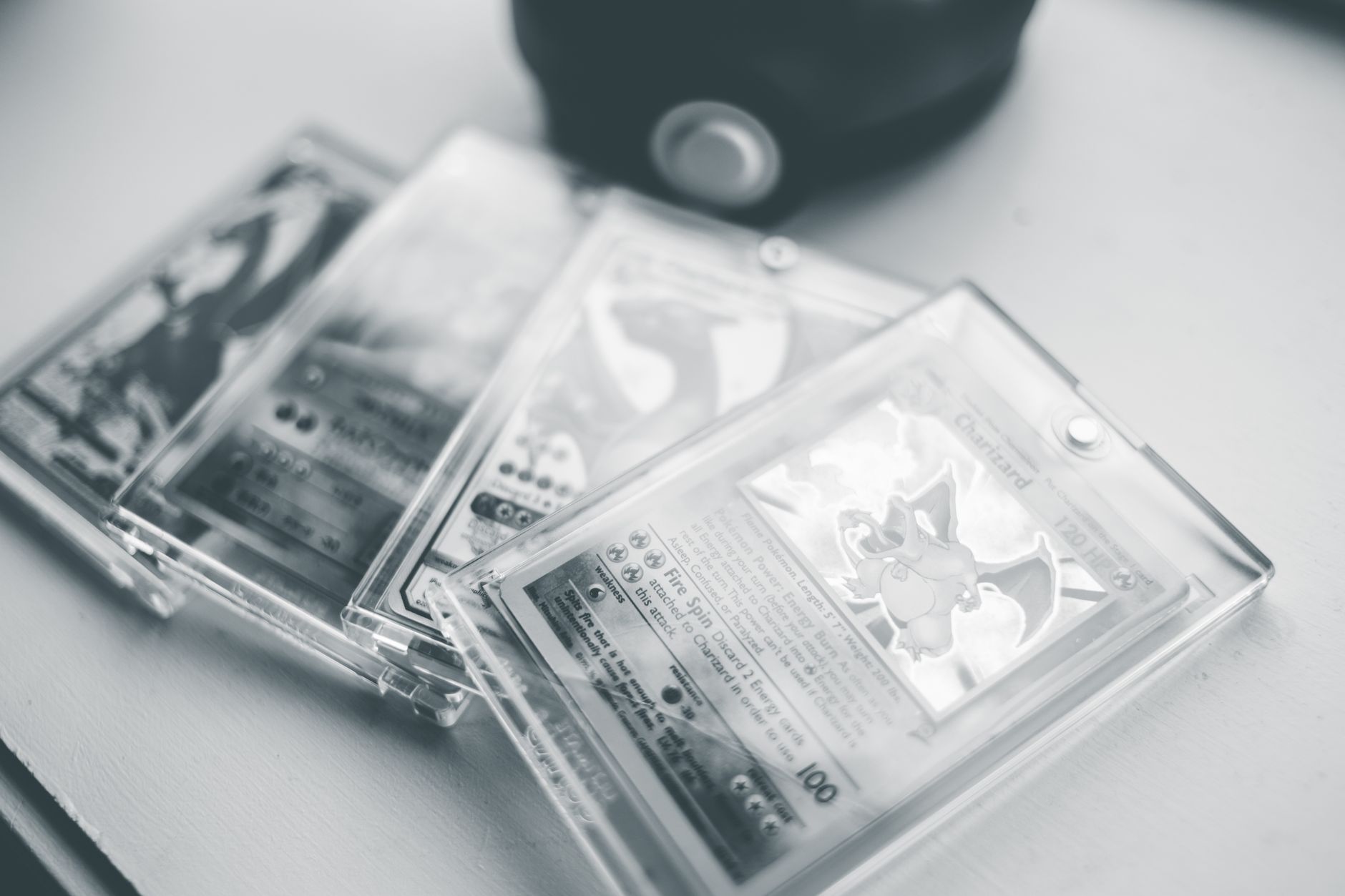
A card-backed fund can move prices meaningfully, but only for the exact card it buys. The one real example on record targets roughly 25% of the PSA 10 population of a single Pikachu card — a withdrawal large enough to reprice that card, and almost irrelevant to the rest of the hobby.
"ETF" here is being used loosely. No US exchange-traded fund holds graded Pokemon cards, and the structure that exists today is a tokenized Hong Kong partnership, not a fund you can buy in a brokerage account. The distinction matters for pricing, because who can buy a vehicle determines how much money ever reaches the cards.
Table of Contents
- What actually exists right now
- Why the price effect is narrow, not hobby-wide
- Supply is growing while the fund buys
- Why a true US ETF is hard
- What the people who build ETFs expect
- How to read this as a collector
- Frequently Asked Questions
What actually exists right now
On 2026-03-02, MemeStrategy (HKEX: 2440) announced "Trading Card Fund I," a Hong Kong open-ended limited partnership run by its subsidiary RWA Labs Limited. According to MemeStrategy's launch announcement, the fund invests exclusively in PSA 10 copies of the "Pikachu with Grey Felt Hat" card, with interests tokenized by SFC-licensed EVIDENT Platform Services and sold to professional investors. The fund's stated objective, per coverage of the same release, is to acquire about 25% of the roughly 47,000 PSA 10 copies in existence.
That is the single most useful number a collector has for modeling this question, because it is a concrete share of a known float rather than a hypothetical. MemeStrategy said on 2026-05-11 that the initial token issuance was oversubscribed and the capital call completed, backed by institutional and professional investors. It did not disclose how much was raised, which means the buying power behind that 25% target is still unknown.
Why the price effect is narrow, not hobby-wide
A fund that buys one card removes supply from one market. Nothing about accumulating Grey Felt Hat Pikachus changes what a PSA 10 Base Set Charizard, a modern alt art, or a sealed box is worth, except through sentiment. That narrowness is structural, not accidental.
A card-backed vehicle needs a card with a large, uniform, independently graded population, because the fund's value has to be measurable and its holdings have to be interchangeable. Most expensive Pokemon cards fail that test — the population is too thin, so buying a meaningful share would move the price against the buyer immediately. So the realistic pricing effect of card funds is a handful of high-population "index cards" getting a new, price-insensitive buyer, while everything else trades on the same collector demand it always did.
Supply is growing while the fund buys
Accumulation programs assume a fixed float. Graded Pokemon cards do not have one. Sports Illustrated reported that PSA graded about 2.5 million cards in June 2026, up 74% year over year, of which roughly 1.78 million were trading-card-game cards — up 95%. That matters directly.
Raw copies sitting in collections are latent PSA 10s, and rising prices pull them into the grading queue. A fund buying 25% of a population is also raising the incentive for everyone else to submit, which refills part of what it withdraws. Population figures already disagree. A third-party population tracker reports 48,748 PSA 10 copies of the target card against the fund's stated ~47,000 — a reminder that the denominator in any "percentage of supply" claim is a moving number, and that the percentage shrinks as grading continues.
Why a true US ETF is hard
The legal structure caps how much money can reach cards. SEC Rule 22e-4 limits illiquid investments to 15% of net assets for registered open-end funds, including ETFs, with closed-end funds exempt. As a summary of the SEC's liquidity rule lays out, that framework is built around funds being able to meet redemptions in days — which graded cards cannot do. A US vehicle holding cards directly would therefore likely be a closed-end fund or a trust, not a conventional ETF.
That changes the collector math: closed-end structures do not create and redeem shares continuously, so they are not a steady, mechanical bid under card prices the way a growing commodity ETF is under its metal. Industry talk is still talk. At an ETFGI conference in New York in October 2026, ETF executives said collectibles-tracking ETFs may be a few years away, and one executive said his firm had considered a Pokemon card fund. No US registration statement for such a fund has surfaced.
What the people who build ETFs expect
Bloomberg Intelligence senior ETF analyst Eric Balchunas told The Daily Upside he would not be surprised if collectibles reach the ETF wrapper, because "most people want their investments accessible in a brokerage account." He also expects the category to stay small: "even if they're a hit, it will be relatively small." Take both halves seriously. The first half is why these products keep getting proposed; the second is why a collector should not price their collection as though institutional money is arriving.
There is also a tax drag that no structure removes. Long-term gains on collectibles are taxed at a maximum 28% rate rather than the lower long-term capital-gains rates, and the IRS confirmed in Notice 2023-27 that the IRC §408(m) definition governs. A fund whose holdings are collectibles carries that rate into its investors' returns, which caps how attractive the wrapper can be.
How to read this as a collector
The practical question is whether a fund is buying your cards, not whether funds exist. One more detail shapes the risk.
MemeStrategy disclosed, in a company announcement on the fund's structure, that the cards are classified as physical collectibles rather than securities under Hong Kong law, that holdings face semi-annual reserve attestation audits by a Big Four firm, and that consolidation under HKFRS will be reassessed as capital and card transactions occur. Attestation twice a year is the verification cadence — the cards are confirmed on a schedule, not continuously.
- Check the exact card and grade. Fund demand is card-specific; a PSA 9 of the targeted card is not what the fund buys.
- Check the PSA population trend, not just the current count. A population growing 90%+ year over year dilutes any accumulation story.
- Treat "percent of supply" claims as estimates. The target card's own count is reported as both ~47,000 and 48,748 depending on the source.
- Be skeptical of market-value totals in press coverage. Reports of the same announcement put the target card's total PSA 10 market value an order of magnitude apart, so the aggregate figures circulating are not reliable inputs.
- Separate structure from access. MemeStrategy's vehicle is open to professional investors in Hong Kong; it is not a ticker a retail collector can buy as a hedge against their own cards.
Frequently Asked Questions
Can I buy the Pokemon card fund that already exists?
Not as a retail collector. MemeStrategy's Trading Card Fund I is a Hong Kong limited partnership whose tokenized interests were issued to professional and institutional investors through an SFC-licensed platform.
Would a card ETF raise prices across all Pokemon cards?
There is no evidence for that. The only live vehicle buys one card in one grade, and the structures being discussed need high-population, uniform cards, so demand concentrates rather than spreads.
Why would a US product be a trust instead of an ETF?
Registered open-end funds, including ETFs, must keep illiquid investments at or below 15% of net assets under SEC Rule 22e-4. Closed-end funds are exempt, which is why a card-holding vehicle would likely use that form.
You Might Also Like
- Opening vs Keeping Vintage Booster Packs Sealed: A Pokemon Collector Framework
- Opening vs Keeping First-Edition Booster Boxes Sealed: A Pokemon Collector Framework
- Alt vs Card Ladder: Which Pokemon Card Price Tracker to Trust in 2026