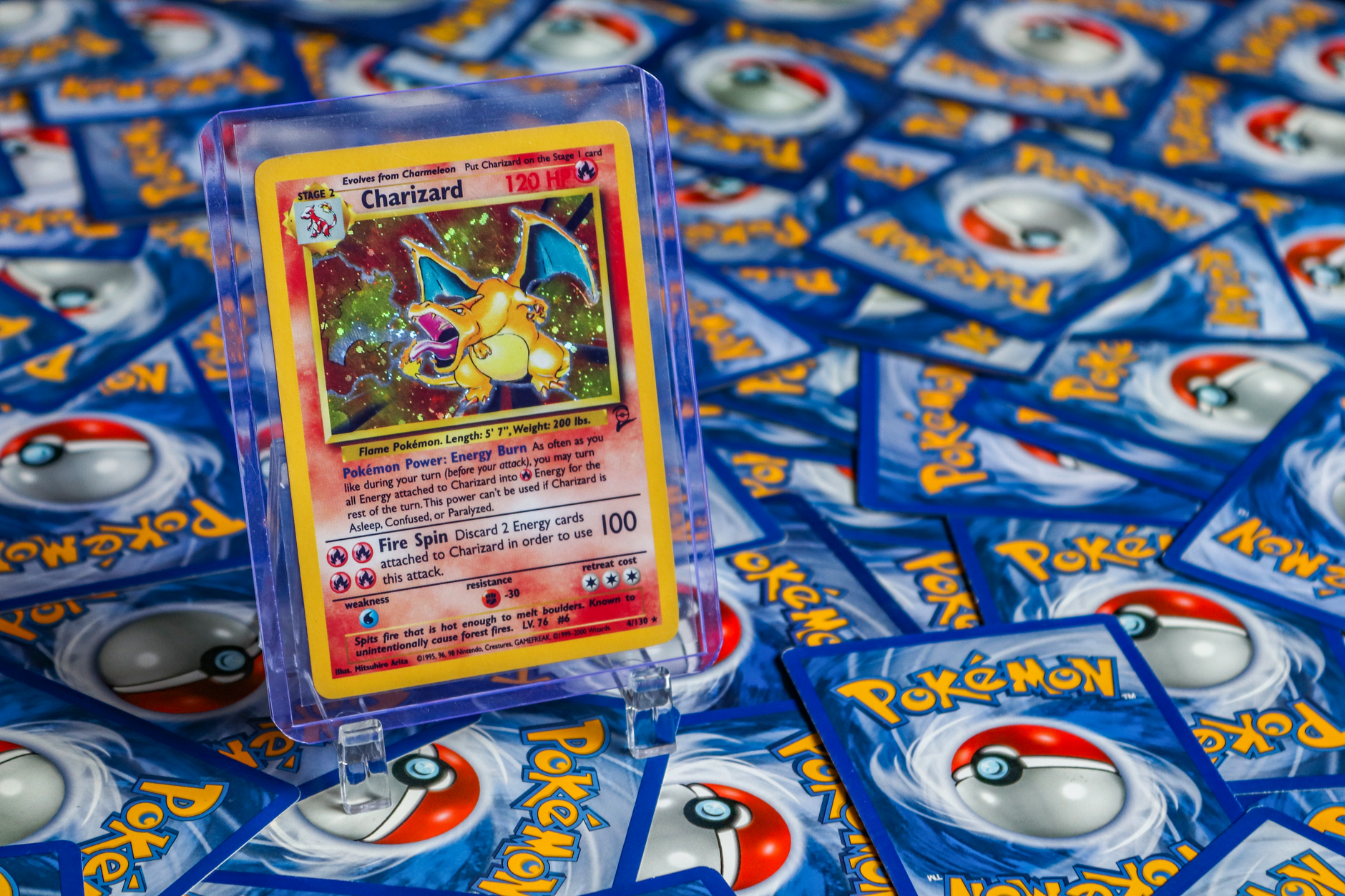
A First Edition stamp that does not match the slab label means the holder calls the card "1st Edition" while the card inside lacks the correct stamp. A graded slab is a sealed plastic holder with a grading company's label describing the card, grade, and certification number. For English Base Set, that mismatch is a red flag. Do not pay the First Edition premium until the card, label, and online certification record all agree.
Table of Contents
- What a correct First Edition match looks like
- Why a mismatch signals a problem card
- How to check the holder before you buy
- What to do when the stamp and label disagree
What a correct First Edition match looks like
An authentic English Base Set 1st Edition card bears a circular "Edition 1" stamp below the lower-left of the art frame. It has no drop shadow around the art box and shows a "©1995, 96, 98, 99" copyright line, according to Folio in Folio's identification guide.
PSA denotes that status in the slab label's Variety/Pedigree field, for example "1999 POKEMON GAME #40 RATICATE 1ST EDITION." A label reading 1ST EDITION must therefore enclose a stamped card, as shown in that PSA certification record. If the stamp is absent, the card is Unlimited unless another named variety applies. Shadow plus stamp together on Base Set is also wrong.
Why a mismatch signals a problem card
Collectors commonly report counterfeit 1st Edition cards with blurry stamps, wrong fonts, or a 1st Edition stamp combined with an Unlimited-style drop shadow. That combination legitimately never coexists on Base Set, according to discussion on the E4 collector forum. A slab that says "1st Edition" around an unstamped or shadowed card points to four possibilities: mislabeling, card swap, alteration, or counterfeit.
The holder does not make an unstamped card First Edition. Treat the premium as unsupported until resolved. The card remains whatever its printing shows.
How to check the holder before you buy
Compare the front label, card stamp, shadow, and copyright line in the same photos. Read the certification number and check it against the grader's online record and holder images. CGC's certification tool confirms the database description and grade and displays CGC-taken holder images, helping buyers detect a swapped card or tampered holder.
PSA also places fugitive-ink labels, holograms, barcodes, and reverse cert data on holders for comparison with the online entry. Look closely for label damage, resealing, scuffs around the seal, or images that differ from the listing. Ask the seller for clear photos of the stamp area, label front and back, and cert number when any image is unclear.
What to do when the stamp and label disagree
Pause the purchase when the enclosed card lacks the stamp or shows a shadow. Verify cert photos, refuse the First Edition premium, and use return, correction, or eBay/PSA authentication review where available. If you already hold the card, PSA directs collectors to file a Label Correction Request through the Customer Request Center when label data looks wrong.
Its grade and authenticity guarantee applies only while the item remains in its tamper-evident case, as stated in that PSA certification record. For an owned card with an intact holder and questionable label, PSA's reholder inspection can check holder and label integrity. Keep the holder sealed during the dispute and save listing photos, messages, and cert screenshots.
You Might Also Like
- Holo Pattern Does Not Match the Pokemon Slab Label: Variant Error or Substitution?
- How to Verify First Edition Pokémon TCG Claims in 2026: Pokemon releases and market data, Evidence, and Red Flags
- First Edition Pokémon TCG Explained for 2026: Who It Affects, Key Evidence, and What to Do Next