The Base Set 2-Player Starter Set remains one of the most affordable sealed Pokémon products from the franchise’s earliest era, with current market prices hovering around $179.99 to $199.95 as of 2026. This affordability is striking when compared to other Base Set products that have appreciated dramatically over the past eight years. The explanation is straightforward: multiple reprints from the original 1999 release through the revised Base Set era flooded the market with sufficient supply to prevent the scarcity-driven price increases that affected booster boxes and individual holographic cards. The set’s accessibility also reflects its original purpose.
Released on January 9, 1999, as an entry-level product containing two 30-card pre-constructed decks, the 2-Player Starter Set was designed for casual players just discovering Pokémon TCG, not collectors. Because it was manufactured in volume and marketed for gameplay rather than investment, a large population of sealed copies still exists today. Collectors who pulled cards from these sets decades ago prioritized the chase cards—holos and rare pulls—leaving countless complete, unplayed sets on shelves. This steady supply flow has anchored pricing even as demand fluctuated.
Table of Contents
- Why Multiple Reprints Keep Base Set Starter Sets Affordable
- Market Comparison—Why Other Base Set Products Appreciated Differently
- Casual Player Demand vs. Collector Demand
- Wide Availability Across Multiple Marketplaces
- Condition, Authenticity, and What Hidden Costs Mean
- Investment Perspective—What The Data Actually Shows
- Forward-Looking Outlook—Will Prices Stay Stable?
- Conclusion
Why Multiple Reprints Keep Base Set Starter Sets Affordable
The 2-Player Starter Set received reprints across both the shadowless and revised base Set print runs, a manufacturing decision that directly suppressed long-term price appreciation. While booster boxes from the shadowless era command four-figure prices today, the starter set’s repeated production runs ensured market saturation from year one. Retailers stocked these sets prominently because they were designed as gateway products for new players, not investment pieces. This contrasts sharply with limited-print products like Base Set booster boxes in sealed condition, which were produced in smaller quantities and became targets for hoarders once the TCG market’s investment potential became apparent in the early 2000s.
The starter set, by design, lacked this scarcity. Every legitimate reprint and run on TCGPlayer, eBay, and Cardmarket traces back to warehoused inventory or personal collections—supply has never dried up enough to trigger the speculative bidding wars seen elsewhere in the Base Set category. The practical consequence: buyer confidence remains high because the set remains attainable. Someone entering the hobby today can purchase a sealed 2-Player Starter Set for roughly the same real-world cost as a casual player could in 2015, even accounting for inflation. This price stability actually discourages speculation, as there’s no compelling narrative of scarcity to attract investors.

Market Comparison—Why Other Base Set Products Appreciated Differently
To understand why the 2-Player Starter Set remained flat, examine what happened to other Base Set sealed products. A shadowless Base Set booster box that sold for $300-$400 in the early 2010s now commands $8,000 to $15,000 or more. A single shadowless holographic Charizard card increased from hundreds to tens of thousands. Yet the 2-Player Starter Set prices have moved incrementally at best, remaining in a narrow $150-$200 band for over a decade. The difference comes down to perceived rarity and collector demand. Booster boxes contain random assortments including the chase cards and holographics that people actually want to own.
Starter set decks contain fixed, common cards with minimal holographic content—specifically one Fighting-focused and one Fire-focused 30-card deck, plus a Chansey coin and damage counters. A collector seeking a holographic Blastoise or Venusaur has zero reason to open a 2-Player Starter Set; they’ll buy a booster box or a specific card. This lack of collectibility limits demand to casual players and completionists documenting their Pokémon TCG purchases. The warning here is important: sealed Pokémon products from 1999-2000 are not a homogeneous asset class. Just because Base Set exists doesn’t mean all products appreciate equally. The 2-Player Starter Set’s affordable price tag should serve as a signal that the market has evaluated it as a stable but non-appreciating collectible—useful for its original purpose, but not a vehicle for profit.
Casual Player Demand vs. Collector Demand
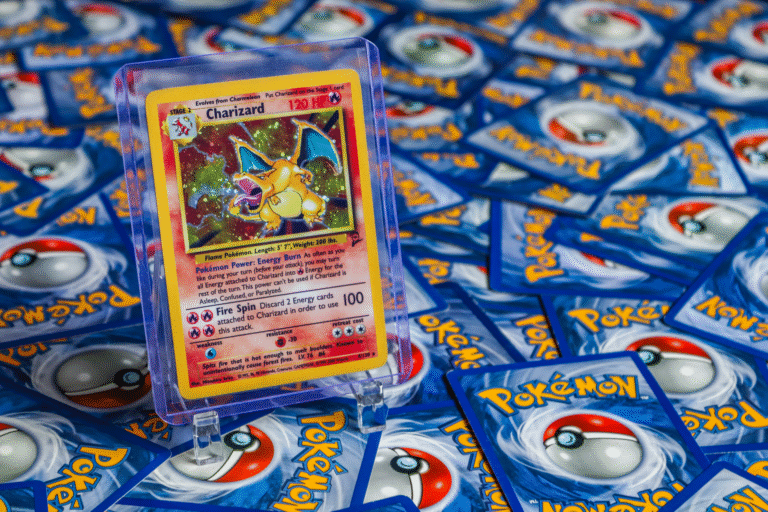
The 2-Player Starter set occupies a unique market position: it appeals almost exclusively to casual players and gift-givers, not hardcore collectors. A parent buying this set in 1999 or 2004 as a gift was purchasing a complete, ready-to-play experience. Decades later, nostalgia buyers and players returning to the hobby seek the same thing—a complete, affordable introduction to the game. This steady baseline demand keeps the set liquid and prevents it from disappearing entirely. Contrast this with a Shadowless Charizard card, which appeals to collectors, investors, graders, and status-conscious buyers. Multiple constituencies compete for the same limited inventory, driving prices upward.
The 2-Player Starter Set has one constituency: people who want to play Pokémon out of the box or own a sealed piece of early Pokémon history without spending premium prices. Once that demand is satisfied, no secondary wave of demand materializes. This also means the set attracts fewer professional resellers and fewer grading submissions. You rarely see a 2-Player Starter Set come through Professional Sports Authenticator (PSA) grading because the set itself isn’t considered investment-grade. It remains in the hands of casual collectors and storage boxes, untouched by the market forces that concentrate high-value items. This invisibility in the grading ecosystem further suppresses price movement.

Wide Availability Across Multiple Marketplaces
The 2-Player Starter Set is distributed across virtually every legitimate Pokémon TCG marketplace: TCGPlayer, eBay, Cardmarket, CardTrader, Troll and Toad, and Collector’s Cache all maintain active listings. This distribution network means a buyer can compare prices across platforms, preventing any single seller from establishing a premium. When supply is this fragmented, individual listings compete directly on price, which naturally suppresses margins. This abundance is a double-edged sword. For buyers, it means the set is genuinely affordable and accessible—no hunting through obscure auctions or paying inflated middleman fees.
For collectors expecting appreciation, it means there’s no artificial scarcity to drive growth. The set exists in what economists call a “perfect market” condition: many sellers, many buyers, transparent pricing, and homogeneous product. Under these conditions, prices gravitate toward production cost plus a modest retail margin, not speculative premiums. The practical takeaway: if you’re buying a 2-Player Starter Set expecting it to appreciate like a booster box or chase card, adjust your expectations. Prices have been remarkably stable for years because supply and demand remain balanced at a low price point. This makes the set an excellent purchase for players or casual collectors, but a poor choice for anyone anticipating ROI.
Condition, Authenticity, and What Hidden Costs Mean
Sealed condition means significantly different things depending on how a 2-Player Starter Set has been stored. A set kept in a climate-controlled environment for 25 years may have pristine shrink-wrap and box condition, while an identical set stored in a garage or basement might show oxidation, fading, or shrink-wrap degradation. The market doesn’t differentiate heavily between these condition tiers, which suppresses the price gradient that normally exists in collectibles. A “near mint” sealed set might list at $199, and a “good” sealed set at $185—a difference of just 7%, compared to condition variances of 50-200% in graded individual cards. Authenticity concerns add another layer. The 2-Player Starter Set is not commonly counterfeited compared to booster boxes, but aged boxes and shrink-wrap can be replicated.
Buying from established retailers like Collector’s Cache or Troll and Toad mitigates this risk, but private sellers on eBay or Facebook carry higher uncertainty. The solution—requiring proof of provenance or demanding unopened factory-sealed packaging—isn’t practical for sets this old, since many legitimate copies have been in personal collections or storage for decades. A critical limitation: once you open a sealed 2-Player Starter Set, any residual value evaporates. The set has no secondary market for loose cards because the card assortment is fixed and largely composed of commons available in bulk. You’re essentially choosing between owning a sealed collectible (which holds modest value) or owning a playable deck (which has no resale value). There’s no middle ground, so the purchase decision is binary: buy to own sealed for nostalgia, or buy to open and play.

Investment Perspective—What The Data Actually Shows
The stability of 2-Player Starter Set pricing over the past eight years tells us something important about Pokémon TCG as an asset class: not all Base Set products appreciate. The most frequently circulated investment thesis in Pokémon TCG is that “everything from Base Set is going up.” The 2-Player Starter Set disproves this. While shadowless booster boxes have appreciated 10-20x over the same period, this set has appreciated maybe 10-20% total, or roughly 1-2% annually. Adjusted for inflation, that’s essentially flat or slightly negative real returns.
If you had purchased a 2-Player Starter Set for $100 in 2016, you would now sell it for approximately $195-200, a gain of $95-100 over ten years. The same $100 invested in a shadowless Base Set booster box would now be worth $8,000-12,000. This isn’t a judgment against the set—it served its purpose perfectly as an affordable sealed collectible. But it illustrates why starter sets have remained accessible: the market has correctly identified them as non-appreciating assets and priced them accordingly.
Forward-Looking Outlook—Will Prices Stay Stable?
The trajectory suggests 2-Player Starter Set prices will remain stable or drift slightly upward with general market inflation, but won’t experience the explosive appreciation seen elsewhere in the hobby. Several factors support this forecast. First, reprints from the revised Base Set era mean supply will likely persist indefinitely—these sets weren’t produced in tiny batches that will suddenly dry up.
Second, the Pokémon TCG market is maturing toward authenticity and grading, which favors chase cards and limited printings over entry-level products. Third, as new players enter the hobby, they increasingly seek current-era products and cheaper reprint booster boxes rather than expensive vintage sealed sets. The set’s affordability and stability actually make it a solid entry point for collectors who want to own sealed Base Set product without taking a $10,000 risk on a booster box. In an uncertain market where vintage Pokémon valuations have proven volatile, the 2-Player Starter Set’s predictable $180-200 price point offers something increasingly rare: a locked, knowable cost with minimal downside risk.
Conclusion
The Base Set 2-Player Starter Set has remained affordable since 2018 primarily because of its broad reprinting history, abundant supply across multiple marketplaces, and limited appeal to serious collectors or investors. With current retail pricing in the $179.99-$199.95 range, the set represents one of the most accessible ways to own sealed Base Set product. Unlike booster boxes or holographic chase cards, which have appreciated dramatically over the past eight years, the 2-Player Starter Set has held essentially flat pricing—a reflection of the market’s accurate assessment that supply is sufficient and collector demand is narrow.
For potential buyers, this affordability is both strength and limitation. The set’s stable, predictable price makes it a low-risk purchase for casual collectors and nostalgic players seeking an authentic piece of early Pokémon history without financial risk. However, anyone expecting appreciation should look elsewhere. The 2-Player Starter Set will likely remain in the $150-200 range indefinitely, valuable primarily for its intended purpose: providing a complete, playable introduction to the Pokémon TCG at a price point that respects both your budget and realistic market conditions.