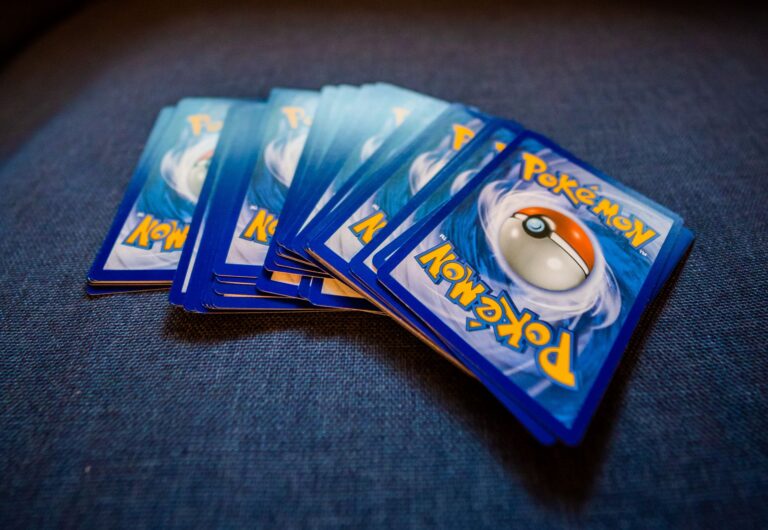
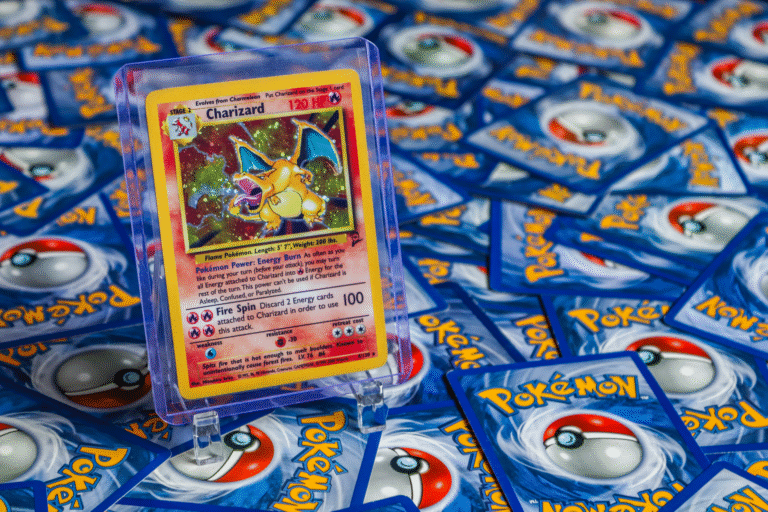
Yes, vintage Pokémon cards are increasingly becoming the defining collectible of millennials, though the evidence is more nuanced than simple nostalgia alone. This generation came of age during the original Pokémon boom of the late 1990s, giving them both emotional connection and disposable income in their 30s and 40s to pursue collecting at serious levels. A 1st Edition Charizard Base Set card, worth roughly $30 in 2010, now commands $100,000 to $400,000 at auction, reflecting a shift where Pokémon cards have moved from childhood toys to investment-grade assets for an entire demographic. What distinguishes vintage Pokémon cards from other millennial collectibles like vinyl records or action figures is their combination of three factors: scarcity by design (1st Edition printings had limited production), authenticated grading systems that enable trust in secondary markets, and a global trading infrastructure that didn’t exist for previous generations of collectors.
The Charizard example matters because it represents how a single card from a $4 starter deck—something millions of millennials literally owned as children—can now represent significant wealth. This transformation has created a self-reinforcing cycle where media coverage drives prices, prices attract serious collectors, and serious collectors fund even higher valuations. However, this is not an inevitable cultural phenomenon. Vintage Pokémon cards represent a specific convergence of childhood nostalgia, financial timing, and market mechanics that may not sustain indefinitely. The defining collectible status depends on whether Pokémon maintains cultural relevance for millennials into their 50s and 60s, and whether younger generations—who grew up with different media—develop the same attachment to cardboard from the 1990s.
Table of Contents
- Are Millennials Actually Treating Pokémon Cards as Serious Collectibles?
- The Scarcity Trap and Market Risks
- Why Millennials Specifically, Not Other Generations
- Building a Vintage Collection Without Chasing the Charizard Dream
- Authentication Fatigue and the Importance of Verification
- Market Cycles and Recent Price Corrections
- The Long-Term Question: Will Today’s Millennials Still Value These Cards in 30 Years?
- Conclusion
- Frequently Asked Questions
Are Millennials Actually Treating Pokémon Cards as Serious Collectibles?
The data suggests yes, with important caveats. PSA (Professional Sports Authenticator) reported grading volume for Pokémon cards increased roughly tenfold between 2019 and 2021, with many of those submissions coming from millennial collectors rather than Gen Z speculators. The market for raw, high-grade vintage cards has stabilized after the pandemic bubble burst in 2022, indicating that serious collectors—not just flippers—form the base of current demand. A PSA 8 or PSA 9 1st edition Base Set Blastoise typically sells for $5,000 to $15,000 today, representing real money that millennials are willing to deploy on childhood nostalgia.
Yet “serious collectible” status differs from “defining collectible” status. Millennials also collect sneakers, video game cartridges, comic books, and trading cards from Magic: The Gathering. Pokémon cards occupy space in this portfolio, but they compete for capital and attention. The rise of PSA’s competitor BGS (Beckett Grading Services) entering the Pokémon market aggressively suggests that serious investors view this as a genuine asset class, but the long-term trajectory remains unclear. A millennial who spent $10,000 on a Charizard five years ago might view it as a defining financial decision, but this is still a relatively small subset of the generation overall.

The Scarcity Trap and Market Risks
The fundamental driver of vintage card prices is scarcity, but this scarcity is partly artificial and subject to external pressures. Pokémon Company’s decision to reprint Base Set cards in the last five years (including the 25th anniversary set released in 2021) was intended to meet collector demand, but it created a market confusion where casual buyers could no longer distinguish 1st Edition from unlimited reprints without expert knowledge. This reprinting strategy, while profitable for the company short-term, directly undermined the scarcity narrative that underpins collector premiums. A more subtle risk involves the assumption that Pokémon nostalgia equals lifetime financial value. Comic book collectors in the 1990s believed rare Marvel #1 issues would appreciate indefinitely; many are worth less today in adjusted dollars than they were twenty years ago, because the collecting generation aged out and new generations didn’t replace their demand.
Vintage Pokémon cards could follow the same trajectory if millennials lose interest as they enter their 60s, or if younger cohorts reject 1990s design and production standards as aesthetically dated. The BGS/PSA competition for grading represents another risk. When BGS entered the Pokémon market with lower submission fees and (many argue) higher standards, it created alternative authenticity tracks. A BGS 8 and PSA 8 of the same card now compete directly, which could fragment the market and reduce confidence in price floors. If collectors fragment into incompatible certification ecosystems, the fungibility that makes Pokémon cards investment-grade evaporates.
Why Millennials Specifically, Not Other Generations
Millennials (born roughly 1981-1996) experienced the perfect storm: they were old enough to have disposable income during Pokémon’s 1999-2001 explosive growth, young enough to form genuine nostalgic attachment, and are now wealthy enough (many earning six figures) to justify spending thousands on childhood nostalgia. Someone born in 1985 was nine years old during the Pokémon North American launch and likely had friends trading cards in middle school. Someone born in 2005 was too young to participate in the original boom and instead grew up with Pokémon as an always-present franchise, not a cultural moment.
Gen X collectors (born 1965-1980) participated in Pokémon’s early years but have demonstrated stronger attachment to their own childhood collectibles—Star Wars figures, comic books, baseball cards. Gen Z (born 1997-2012) grew up with Pokémon as an established IP, not a discovery, and many gravitate toward newer card games like Yu-Gi-Oh or other digital collectibles. This generational window means that vintage Pokémon cards may become the defining millennial collectible precisely because no other generation can claim the same authentic connection to the property’s launch. A 1st Edition Charizard literally cannot appeal to older collectors the way a 1970s baseball card does, and won’t hold the same value for younger collectors who didn’t live through the original cultural moment.

Building a Vintage Collection Without Chasing the Charizard Dream
The practical reality of vintage Pokémon collecting for most millennials is that base-building requires realistic expectations and clear investment goals. Buying a PSA 8 or PSA 9 Charizard is possible only for a small fraction of collectors, and the appreciation pathway for such expensive cards is unclear. Instead, many successful millennial collectors focus on complete or near-complete Base Set accumulation, purchasing lightly played or moderately played versions of commons and uncommons that cost $30 to $200 each, then gradually upgrading grade over years.
A comparison illustrates the difference: spending $50,000 on a single PSA 9 Charizard represents a single point of concentration risk with no income generation. Spending the same $50,000 to acquire a near-complete, modestly graded Base Set (around 100 cards) provides diversification and allows collectors to study the market, understand quality variance, and upgrade selectively. The latter approach also allows for enjoying the physical collection, which the Charizard-chasing approach typically prevents (the card lives in a safe deposit box). Many millennials who have collected successfully over five to ten years report that building depth across multiple sets—Base Set, Jungle, Fossil, and early promos—has yielded better total returns than concentrating on a single marquee card.
Authentication Fatigue and the Importance of Verification
As Pokémon card prices have risen, counterfeiting has become increasingly sophisticated, creating authentication risks that many casual millennial collectors underestimate. A counterfeit PSA 8 Base Set Charizard can exist in the market for months before detection, during which time collectors trade it believing it’s authentic. This risk intensifies because PSA’s authentication has faced criticism for inconsistency—same-condition cards receiving different grades across different submission periods—which makes collectors uncertain about whether a particular grade is defensible.
The practical warning here is that buying ungraded vintage Pokémon cards, even from seemingly reputable sellers, carries authentication risk that most collectors cannot personally assess. A millennial who inherits their childhood Charizard from a bulk lot and attempts to sell it will either need to pay PSA $100 to $500 to grade it (with no guarantee of a high mark), or accept a significant discount from buyers who demand professional authentication. This authentication tax is often overlooked in discussions of Pokémon card investment, but it significantly affects real returns. A card that cost $0 to acquire and $300 to authenticate has a negative cost basis that must be overcome by appreciation.
Market Cycles and Recent Price Corrections
The vintage Pokémon card market experienced a sharp correction in 2022-2023, with PSA 10 1st Edition Base Set commons dropping roughly 40-50% from peak prices reached in early 2021. This correction matters because it shows that even seemingly scarcity-driven assets experience demand cycles. The correction occurred not because card scarcity changed, but because retail demand declined after the pandemic stimulus period ended and macroeconomic uncertainty increased.
A millennial who purchased cards in early 2021 at peak prices may still be underwater in absolute terms, though they may break even by 2026-2027 if price recovery continues. This correction also clarified which collectors were in the market for genuine collecting versus short-term speculation. Serious collectors generally continued purchasing through the downturn, viewing corrections as opportunities to upgrade their holdings. Speculators exited, reducing demand and creating a two-tier market where authenticated, professionally graded vintage cards maintained relative value while raw and poorly stored cards lost significant value.
The Long-Term Question: Will Today’s Millennials Still Value These Cards in 30 Years?
The defining test of whether vintage Pokémon cards become the defining millennial collectible will be what happens in the 2050s and 2060s, when millennials are 60 to 80 years old. Will they view their Charizard collection the way they now view their parents’ baseball card collections—as quaint artifacts from a childhood era—or will they maintain active interest in the market? The answer likely depends on factors currently unknowable: whether Pokémon evolves into a permanent cultural institution (like, say, Superman or Mickey Mouse) or becomes periodically relevant but ultimately nostalgic. Sports cards maintained value across generations because sports itself is generationally continuous.
There’s no guarantee Pokémon will maintain equivalent cultural permanence. The forward-looking reality is that vintage Pokémon cards are currently the dominant collectible obsession for millennials, but “defining collectible” implies permanence and generational passing of value. This will be determined by whether younger generations develop sufficient attachment to late-1990s card design to support prices, or whether they view these cards as museum artifacts—valuable historically but not personally meaningful. The next 10 to 15 years will clarify this trajectory significantly.
Conclusion
Vintage Pokémon cards are arguably the defining millennial collectible as of 2026, given the generation’s clear nostalgic attachment, financial capacity to pursue high-end collecting, and the structural conditions that enable secondary market trading. A 1st Edition Charizard’s journey from childhood deck filler to six-figure asset perfectly encapsulates how this generation’s purchasing power has transformed childhood nostalgia into economic value. However, “defining collectible” status depends on sustained demand that extends beyond financial speculation into genuine, sustained collecting behavior across the entire millennial cohort.
For millennials considering entry into vintage Pokémon collecting, the practical path forward involves realistic expectations: understand that authentication and grading costs reduce net returns, diversify across multiple cards and sets rather than concentrating on single pieces, and collect with an honest assessment of whether you’re buying for personal enjoyment or financial appreciation. The market has matured enough that casual collecting is now difficult; you either need genuine knowledge, significant capital, or both. Whether vintage Pokémon cards remain defining 30 years from now will depend as much on broader cultural forces as on the cards themselves—a reminder that even in collectibles as quantifiable as trading cards, human attachment and cultural momentum matter more than pure scarcity.
Frequently Asked Questions
Are vintage Pokémon cards a good investment compared to the stock market?
Vintage Pokémon cards have historically outpaced inflation significantly, but with higher volatility and liquidity risk than index funds. A 1st Edition Charizard appreciated roughly 800% from 2015 to 2021, then corrected 40-50% in 2022-2023, illustrating concentration risk. Most financial advisors suggest treating them as a collectible pursuit first, investment second, rather than a core portfolio allocation.
What grade of card should a beginner millennial collector purchase?
PSA 6 to PSA 8 cards offer reasonable value without the extreme premiums of PSA 9 or PSA 10, and they’re stable enough to hold value. Avoid ungraded vintage cards unless you have authentication expertise, as the risk of counterfeits or legitimacy disputes outweighs any discount you might receive.
Is the vintage card market still growing, or have millennials already bought most available cards?
The market has stabilized after the pandemic bubble, but acquisitions continue. Many millennials are upgrading from lower grades to higher grades rather than expanding total quantity, suggesting the market is consolidating toward serious collectors rather than expanding toward new participants.
Should I grade my childhood cards, or sell them ungraded?
If a card is worth more than $500, professional grading increases market liquidity and reduces buyer skepticism about authenticity, so grading usually makes financial sense despite the cost. For lower-value cards, grading costs (often $100-$300) will exceed the price premium you receive, so sell ungraded unless you expect the card to appreciate significantly.
How do I know if an expensive graded card I’m considering is authentic?
Verify the PSA or BGS certification number directly on the company’s website before purchase. Request detailed photos of the hologram and certification label from sellers. If the card’s price seems far below market rate, assume authentication problems until proven otherwise.