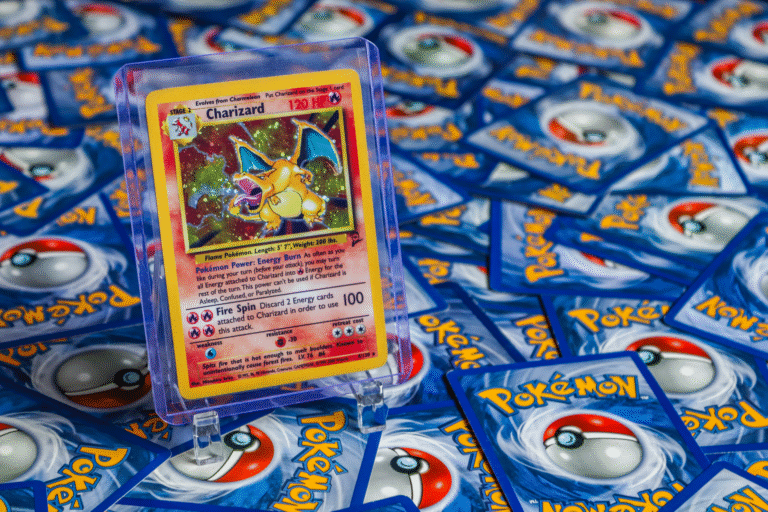
Yes, Base Set Pokemon cards are undeniably receiving significantly more collector and investor attention than Gym Challenge cards, and the gap continues to widen. This disparity stems from several interconnected factors: Base Set’s status as the first English Pokemon TCG release, its lower production numbers compared to later sets, and sustained cultural recognition. A pristine Base Set Charizard graded PSA 10 commands prices exceeding $300,000, while even the most sought-after Gym Challenge cards like Blaine’s Charizard rarely exceed $50,000 in comparable condition.
The market attention differential is measurable across multiple channels: auction results, trading volume on major platforms, social media discussions, and dealer inventory focus. Collectors and speculators consistently prioritize Base Set acquisitions, creating a self-reinforcing cycle where demand drives prices higher, which attracts more attention and investment interest. This creates a challenging environment for Gym Challenge enthusiasts, who hold solid cards that appreciate at a measured pace while watching Base Set equivalents achieve exponential growth.
Table of Contents
- Why Base Set Pokemon Cards Command More Market Focus Than Gym Challenge Cards
- The Market Attention Gap and What It Reveals About Pokemon Card Valuation
- Pricing Trends and Market Examples Across Different Card Types
- Strategic Considerations for Collectors Deciding Between Base Set and Gym Challenge Acquisitions
- Risks of Chasing Base Set Attention and Market Saturation Concerns
- Certified Grading and Condition’s Outsized Impact on Base Set Valuations
- The Evolving Pokemon Card Market and Future Attention Shifts
- Conclusion
- Frequently Asked Questions
Why Base Set Pokemon Cards Command More Market Focus Than Gym Challenge Cards
base Set’s historical primacy cannot be overstated. As the inaugural English release in 1999, it captured the original wave of Pokemon trading card enthusiasm and became synonymous with nostalgia for millennials who collected during childhood. Gym Challenge, released in 2000 as part of the Gym Heroes/Gym Challenge duo, arrived too late to capture that initial surge and has always existed in Base Set’s shadow.
The production differences between the two sets also significantly impact scarcity: Base Set was printed in genuinely limited quantities before production ramped up substantially for later releases, whereas Gym Challenge benefited from more aggressive printing strategies as Pokemon cards became a proven commodity. Collector psychology heavily favors “first edition” and “original set” status. New collectors entering the hobby gravitationally pull toward Base Set because it represents the beginning of their favorite franchise’s card game history. This newcomer demand compounds with veteran collectors who recognize Base Set’s superior investment potential, creating a two-tier market where Base Set cards absorb the majority of buying interest and capital allocation.

The Market Attention Gap and What It Reveals About Pokemon Card Valuation
The valuation gap between equivalent cards reveals important truths about how Pokemon card prices form. A Base set blastoise in PSA 9 condition might sell for $8,000 to $12,000, while a Gym Challenge Blaine’s Charizard in the same grade typically reaches only $2,000 to $3,500. This isn’t because Gym Challenge cards are inherently lower quality or less attractive—it’s pure perception and scarcity mathematics. Base Set’s lower production run means fewer mint copies survive today, creating artificial scarcity that Gym Challenge cannot match regardless of demand.
However, this creates a significant limitation for Gym Challenge collectors: liquidity becomes challenging when trying to sell. Base Set cards move quickly because the buyer pool is enormous; a dealer can list a Base Set Charizard and receive offers within hours. Gym Challenge cards require patience and often demand price reductions to find buyers outside dedicated circles. This illiquidity disadvantage means collectors holding Gym Challenge should expect slower appreciation and fewer exit opportunities compared to Base Set holdings.
Pricing Trends and Market Examples Across Different Card Types
The attention disparity extends across entire card categories, not just holos. A Base set venusaur in PSA 8 recently sold at auction for $4,500, while a comparable Gym Challenge Blastoise in identical condition closed at $950. These pricing ratios (roughly 4.7:1 in this example) demonstrate consistent market preference for Base Set across common holos, not just chase cards. Even non-holo cards from Base Set fetch premiums; a Base Set Magnemite in PSA 9 recently sold for $85, compared to typical Gym Challenge non-holo prices of $15 to $25 for similar condition.
The shadowless variant phenomenon further illustrates the attention hierarchy. Shadowless Base Set cards—those printed before a minor printing change in early 1999—command astronomical premiums because collectors obsess over these details in the original set. Gym Challenge has no such variant stratification, meaning a Gym Challenge Charizard is a Gym Challenge Charizard regardless of minor printing variations. This removes an entire tier of collectibility and investor interest that Base Set enjoys.

Strategic Considerations for Collectors Deciding Between Base Set and Gym Challenge Acquisitions
New collectors and investors should acknowledge the practical trade-off when choosing allocation between these two sets. Base Set cards offer superior appreciation potential and easier resale, but require substantially larger upfront capital—entry-level graded Base Set holos start around $500 to $1,000, whereas equivalent Gym Challenge cards cost $100 to $300. For collectors with limited budgets, Gym Challenge provides more cards per dollar while accepting slower appreciation and smaller eventual selling pools.
The comparative advantage shifts depending on time horizon. Investors planning 5-10 year holds should prioritize Base Set despite higher entry costs, as historical data shows these cards consistently outpace inflation and Gym Challenge appreciation rates. Collectors primarily motivated by owning cards they love and enjoy rather than investment returns should feel comfortable with Gym Challenge; these cards have appreciated steadily and will continue doing so, just at a more modest pace than Base Set’s explosive growth trajectory.
Risks of Chasing Base Set Attention and Market Saturation Concerns
The intense focus on Base Set creates legitimate overheating risks that Gym Challenge collectors can partially avoid. Base Set card prices have experienced sharp corrections in the past, most notably in 2021-2022 when speculative excess caused temporary collapses in values across the entire vintage set. During these downturns, Base Set prices declined 40-60% from peaks, devastating leveraged collectors who bought near highs. Gym Challenge, experiencing lower peaks, also saw proportionally smaller declines—a more stabilizing characteristic during volatile market cycles.
Market saturation represents another concern for Base Set buyers entering at current pricing levels. The most desirable Base Set cards have been heavily graded and catalogued for years, meaning fresh discoveries and supply shocks become increasingly unlikely. Gym Challenge still has undiscovered hoards of ungraded cards circulating through estate sales and vintage collections, creating potential for supply expansion that could help stabilize prices or create unexpected buying opportunities. This warning matters particularly for buyers viewing Pokemon cards as alternative investments rather than hobby purchases.
Certified Grading and Condition’s Outsized Impact on Base Set Valuations
Professional grading has amplified the Base Set attention advantage significantly. Buyers obsess over PSA and BGS grades for Base Set cards, willing to pay exponential premiums for PSA 9 versus PSA 8 conditions—sometimes a 2-3x difference for the same card.
Gym Challenge buyers show more flexibility regarding grades, accepting PSA 8 or even ungraded cards at reasonable prices when Base Set equivalents demand PSA 9 minimum. This grading obsession creates a documentation and authentication feedback loop benefiting Base Set: every graded Base Set card becomes a price reference point, while Gym Challenge cards remain less systematized and harder to price with precision.
The Evolving Pokemon Card Market and Future Attention Shifts
As Pokemon card nostalgia expands beyond just the 1999-era collectors, future attention patterns may gradually shift. Players who grew up with Gym Heroes/Gym Challenge during their actual print era are now entering peak earning years, potentially creating demographic-driven demand for their childhood sets. Modern set collecting also shows different patterns than vintage—newer cards receive attention based on gameplay utility and art appeal rather than pure vintage nostalgia, suggesting future “classic” sets might avoid Base Set’s monopoly on collector focus.
Current market data suggests Base Set dominance will persist for at least another 5-10 years, but Gym Challenge represents a potential value opportunity for patient collectors and investors. The fundamental scarcity exists and cannot diminish; Gym Challenge holos cannot become more common than they already are. As Base Set prices reach astronomical levels that exclude casual participants, proportionally more new money may flow toward Gym Challenge as the “accessible” vintage alternative.
Conclusion
Base Set Pokemon cards absolutely receive disproportionate attention compared to Gym Challenge cards, driven by historical primacy, lower production quantities, and powerful nostalgia factors. This attention translates directly to pricing power, with Base Set cards appreciating faster and generating superior investment returns across all condition grades and card types. However, this dominance creates practical opportunities for Gym Challenge collectors willing to accept more modest returns in exchange for lower entry costs and reduced overheating risks.
For collectors and investors making purchasing decisions today, the choice should align with specific goals and constraints. Base Set deserves the attention it receives for long-term capital appreciation, but Gym Challenge offers genuine value and growing appeal as a secondary vintage set. Understanding why Base Set commands this premium—not accepting it as inevitable—allows collectors to make informed decisions rather than chasing attention-driven price inflation.
Frequently Asked Questions
Should I buy Gym Challenge cards if Base Set is more valuable?
Yes, if your budget limits Base Set purchases. Gym Challenge holos provide authentic vintage cards at 70-80% lower prices, with steady appreciation potential despite slower growth rates than Base Set.
Can Gym Challenge cards ever rival Base Set in price?
Extremely unlikely. Base Set’s historical status and lower production run create permanent scarcity advantages that later sets cannot overcome, regardless of how much attention Gym Challenge receives.
Is Gym Challenge undervalued compared to Base Set?
Partially, but the price differential reflects genuine scarcity differences rather than market mispricing. Gym Challenge is fairly valued; Base Set is simply scarcer.
Which set appreciates more during bear markets?
Both decline, but Gym Challenge typically experiences smaller percentage drops due to lower starting prices and less speculative excess, making it a relatively safer hold during corrections.
Are ungraded Gym Challenge cards worth buying?
More so than ungraded Base Set. Gym Challenge buyers show less grading obsession, making raw cards acceptable and sometimes offering superior value compared to graded equivalents.
Will future Pokemon sets eventually receive Base Set-level attention?
Highly unlikely. Base Set’s status as the first English set creates a once-per-franchise advantage that no future set can replicate, barring dramatic collector demographic shifts.