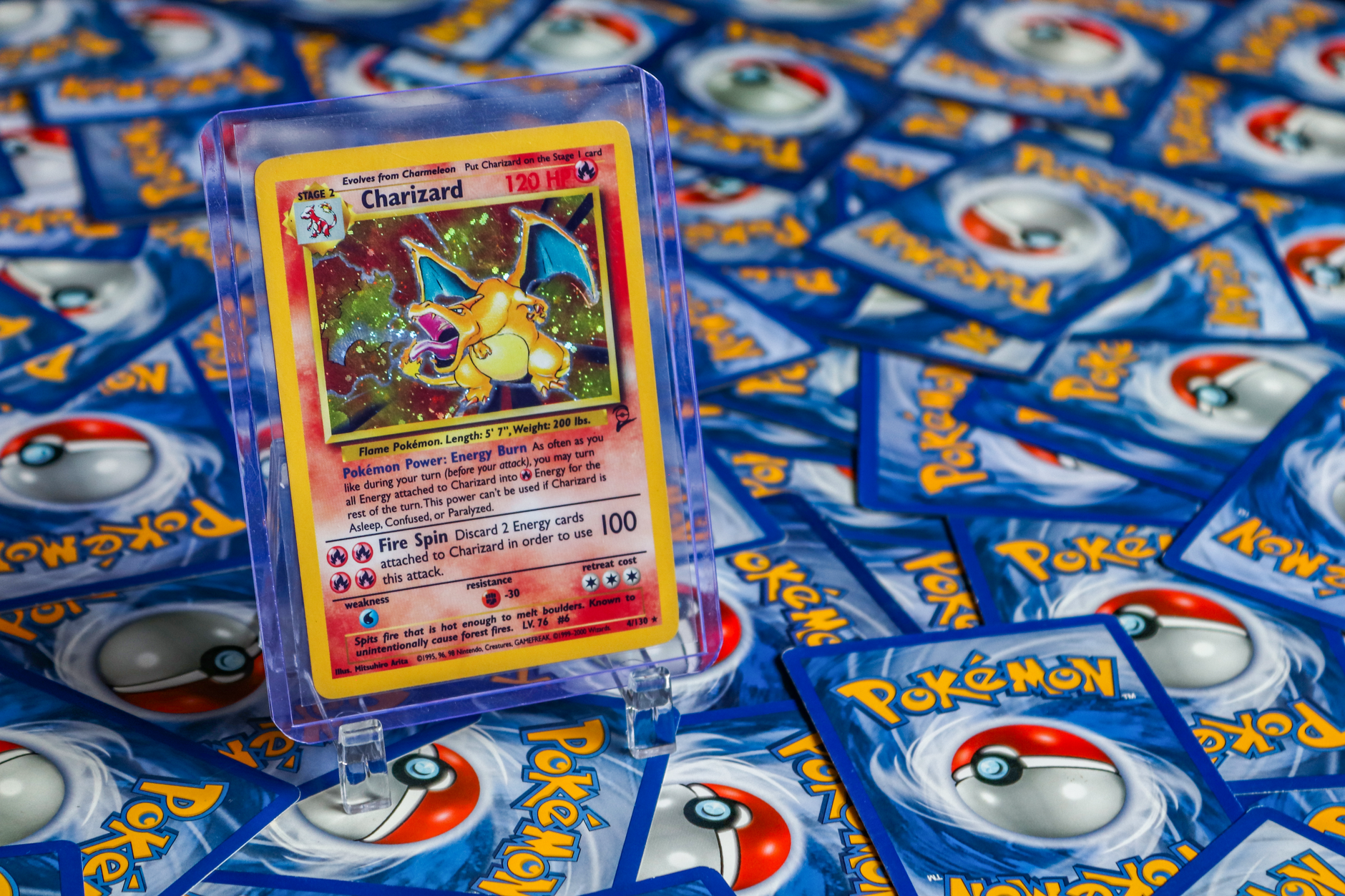
Only a handful of EX Emerald cards reliably justify grading fees: Rayquaza 9/106 above all, then Milotic ex 96/106 and Deoxys ex 93/106 when the raw copy looks flawless, plus any scarce reverse-holo or "Stamped Emerald" parallel. Everything else in the set is worth grading only in bulk batches, because a single submission now costs more than most EX Emerald cards are worth ungraded. EX Emerald is the ninth EX-Series expansion, released May 9, 2005, with 106 numbered cards plus one secret card. Bulbapedia's EX Emerald entry confirms the whole set comes from that one 2005 print run, so every "9/106" or "96/106" copy you handle is the same twenty-year-old cardstock with the same wear problems.
Table of Contents
- Rayquaza 9/106 is the one clear yes
- What the population data says about your odds
- The 2026 fee math changed what qualifies
- Parallels can outrank the Pokémon on the card
- Submit to PSA, not a rival grader
- Frequently Asked Questions
Rayquaza 9/106 is the one clear yes
Rayquaza 9/106 is the set's headline chase card and the default grading candidate ahead of the ex cards. TCGScreener ranks it #1 in EX Emerald by estimated market cap, which is why it drives most of the set's submission volume. The money case is straightforward. PriceCharting puts a PSA 10 Rayquaza 9/106 near $3,700 against roughly $750 raw — about a 5x spread.
That gap swallows any current grading fee several times over, which is not true of anything else in the set. The catch is that you only capture that spread with a 10. A PSA 9 sits far below it, so the decision is really a bet on whether your specific copy is centered, sharp-cornered and free of surface print lines.
What the population data says about your odds
Gem rate — PSA 10s divided by total graded — is the number that decides whether grading is worth it. PokeInvest defines it that way: a low gem rate means surviving 10s are genuinely scarce and command a premium over a 9, while a high gem rate means a 10 is ordinary. The EX Emerald numbers are brutal.
Pikawiz's population report shows Rayquaza 9/106 at 60 PSA 10s from 916 graded, Milotic ex 96/106 at 30 from 816, and Deoxys ex 93/106 at 28 from 610. Those are gem rates around 4–7 percent. Read that plainly: for every card that comes back a 10, roughly fifteen to twenty come back 8 or 9. Unless your raw copy is visibly better than the average 2005 survivor, the expected outcome of a submission is a PSA 9, and you should price the decision on what a 9 is worth — not on the 10 headline.
The 2026 fee math changed what qualifies
Grading economics shifted sharply this year. AllVintageCards reports that PSA paused all Value tiers under $50 on June 2, 2026, citing a 14-million-card backlog, which made Regular at $79.99 per card — max declared value $1,500 — the cheapest single-card option, up from $21.99. That single change disqualifies most of EX Emerald.
A card has to be worth meaningfully more than $80 graded for a one-off submission to make sense, and outside the top few chase cards, EX Emerald singles are not. Value Bulk at $24.99 per card is still active, but the same source notes it requires a $149-a-year Collectors Club membership, a 20-card minimum, and roughly 95 business days. So commons and mid-tier ex cards only pencil out if you hold enough of them to fill a batch and can wait about five months.
- Raw value above roughly $250 and a clean copy: Regular tier, single submission
- Raw value $40–$250: hold for a 20-card bulk batch
- Raw value under $40: not worth grading unless it is a scarce parallel
- Any visible whitening, off-centering or surface scratch: assume a 9, and recheck the math
Parallels can outrank the Pokémon on the card
EX Emerald's reverse-holo and "Stamped Emerald" parallels are tracked by PSA as separate specs with their own tiny populations. That matters more than most collectors expect: PSA CardFacts data for the set shows a single PSA 10 stamped reverse-holo Taillow 68/106 — an otherwise unremarkable common — listed at $900. The lesson is that parallel status, not the Pokémon, can carry the value.
Before you write off a common, check which parallel you have and whether anyone has graded it. Before projecting any return, confirm the exact spec. TCGScreener reports only 5 PSA 10s from 486 reports — about a 1.0 percent gem rate — for its Rayquaza 9/106 listing, against Pikawiz's 60 from 916. The two are tracking different parallels under the same card number, so a population figure pulled from the wrong spec will mislead you by an order of magnitude.
Submit to PSA, not a rival grader
For EX Emerald, the grader choice is not close. A CGC 10 Rayquaza 9/106 sells around $375 according to a Double Infinity Gaming listing, against roughly $3,700 for the PSA 10 — about a tenth. That spread reflects the Pokémon market's entrenched PSA preference rather than any difference in how the card was assessed.
A cheaper or faster alternative grader does not save you money here; it costs you most of the reason you graded the card. The practical consequence is that PSA's 2026 backlog is a constraint you plan around, not one you route past. If Regular-tier pricing makes a card marginal, the answer is to wait and bulk it — not to send it somewhere the graded copy will sell for a fraction.
Frequently Asked Questions
Is a PSA 9 Rayquaza 9/106 still worth submitting for?
Only if you accept a 9 as the likely outcome. With a gem rate near 6.5 percent on Pikawiz's figures, most submissions return 8 or 9, so run the math on the 9 price before paying $79.99.
Why do two price sites show different populations for the same card number?
They are tracking different parallels. TCGScreener's Rayquaza 9/106 listing shows 5 PSA 10s from 486 reports while Pikawiz shows 60 from 916 — confirm which spec your copy is before comparing.
How many EX Emerald cards do I need before bulk grading makes sense?
Twenty, per PSA's Value Bulk minimum, plus a $149 annual Collectors Club membership and patience for roughly 95 business days.
You Might Also Like
- Which EX Team Magma vs Team Aqua Pokemon Cards Are Worth Grading?
- Which EX Sandstorm Pokemon Cards Are Worth Grading?
- Which EX Ruby & Sapphire Pokemon Cards Are Worth Grading?