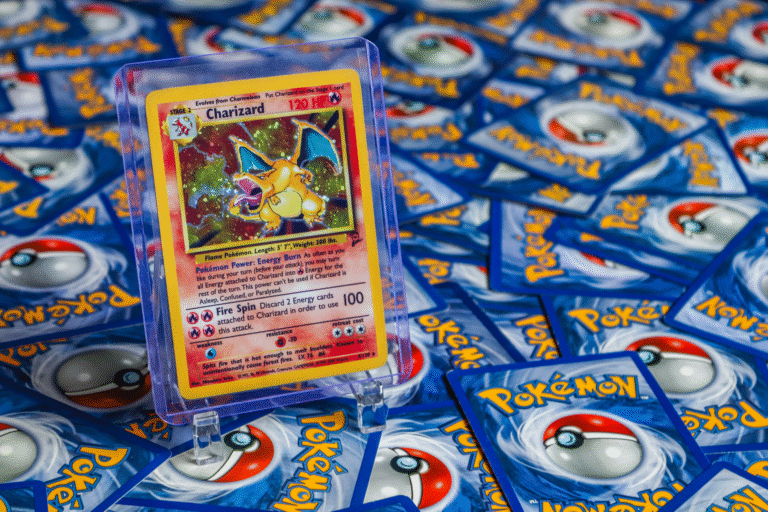
The EX Emerald Flygon non-holo exists as a legitimate variant from the 2005 EX Emerald set, but there is no single fixed price for this card. Instead, pricing ranges dramatically based on condition, seller, and current market demand—typically spanning from under $10 for raw copies in poor condition to $30 or more for well-preserved examples.
The non-holo variant of Flygon EX from this set has consistently lower market value than its holographic counterpart, but the gap varies by where you look and what condition tier you’re pricing. Unlike modern cards tracked by a centralized authority, 2005 EX-era Pokémon cards have pricing that must be researched across multiple live marketplaces because each platform maintains independent inventory and price discovery. TCGPlayer, eBay completed listings, and Cardmarket all show different current asking prices and actual sold prices on any given day, reflecting real-time supply and demand rather than a static reference value.
Table of Contents
- Why EX Emerald Flygon Non-Holo Prices Fluctuate Across Platforms
- Condition Grades and How They Reshape Non-Holo Flygon EX Value
- Holo vs. Non-Holo Variants and the Visual Premium
- Where to Find Current Pricing Data for This Specific Card
- Why Non-Holo Cards Sell for Less and What Collectors Actually Value
- Regional Pricing and International Market Variations
- Using Market Trends and Historical Sales to Inform Current Valuations
- Frequently Asked Questions
Why EX Emerald Flygon Non-Holo Prices Fluctuate Across Platforms
The EX Emerald set released in May 2005 and included both holo and non-holo Flygon EX variants—card number 91. Unlike more recent sets where pokémon Company directly controls supply through consistent print runs, this 20-year-old set is now entirely secondary-market driven. Every copy in circulation is owned by a collector or dealer, and prices shift based purely on what sellers are asking and what buyers will pay. TCGPlayer, as the largest price aggregator for graded and raw cards in North America, shows listings that update hourly as new inventory arrives or old listings expire.
eBay’s actual completed sales data reveals what collectors genuinely paid in the last 90 days, which often differs from asking prices on TCGPlayer—some sellers list optimistically, and their cards never sell at those prices. Cardmarket, the dominant European platform, typically shows lower prices in euros than North American USD equivalents, reflecting regional supply differences and buyer purchasing power. The non-holo Flygon EX specifically tends to languish on these platforms longer than the holo version because collectors prefer the holographic finish for display. This lower demand means sellers often reduce prices to move inventory, creating seasonal dips that the holo version doesn’t experience as dramatically.
Condition Grades and How They Reshape Non-Holo Flygon EX Value
Raw, ungraded copies of the non-holo Flygon EX carry the most price variability because “raw” spans a spectrum from Near Mint to Poor. A collector describing a card as “near mint” and a grading company giving it a PSA 8 can diverge significantly—what looks clean to one seller might have light surface wear or corner rounding a professional grader catches. This ambiguity makes raw card pricing a gamble for both buyer and seller. Graded copies from PSA, BGS, or Sportscard Guaranty (SGC) remove this guesswork but add $10–$20 in grading cost that the secondary seller must recover.
A raw non-holo Flygon EX in genuine mint condition might sell for $15–$20, but grading it to PSA 9 costs $15–$30 in fees and time, so dealers only grade copies they believe can achieve PSA 8 or higher to justify the expense. Lower-condition copies—PSA 6 or below—often stay raw because grading costs more than the card is worth. The trap is that listing a raw card as “NM” (near mint) without proof invites returns and negative feedback; eBay and TCGPlayer enforce condition standards loosely enough that dishonest listings exist, but they accumulate seller complaints that tank reputation. A seller with 99.2% positive feedback is more trustworthy than a new seller listing the same card at $5 less.
Holo vs. Non-Holo Variants and the Visual Premium
The holographic Flygon EX from EX Emerald commands a visible premium over the non-holo solely because of aesthetic appeal. Collectors who display their cards value the holo’s shimmer and visual impact; those building a complete set or seeking a playset for casual tournaments might prefer the cheaper non-holo. This creates a two-tier market where the holo might sell for $25–$35 raw in similar condition, while the non-holo sits at $10–$20.
In graded form, the pricing gap widens slightly in percentage terms. A PSA 8 holo Flygon EX might reach $60–$80, whereas a PSA 8 non-holo often settles at $40–$50. The holographic finish is more susceptible to grading penalties for wear and hazing, so fewer holo copies achieve high grades, which tightens supply and pushes prices up. Non-holo Flygon copies can reach high grades more easily since non-holo surface wear is less visually obvious to graders, so more copies enter the PSA 8+ tier, increasing supply and moderating price.
Where to Find Current Pricing Data for This Specific Card
TCGPlayer remains the most reliable North American source for both asking prices and sold prices over rolling windows. Their price guide for the non-holo Flygon EX aggregates all listed copies and calculates a market price based on recent sales—this number updates continuously and reflects genuine trading activity, not wishful asking prices. A card listed at $25 but with no sales in 60 days likely won’t actually trade at that price; TCGPlayer’s price guide de-weights stale listings. eBay completed listings show actual auction hammer prices and Buy It Now sales from the last 90 days, filtered by seller location, condition, and shipping cost. Sorting by “Sold” listings and scanning through 10–20 completed auctions gives a tactile sense of the true market.
Some non-holo Flygon EX copies sell quickly at $12–$15, others list for $25 and expire unsold. This real transaction data is more honest than any asking price. Cardmarket and Troll & Toad serve European and niche North American collectors respectively and show pricing locked to their own markets. Currency exchange rates mean a card priced at €15 on Cardmarket doesn’t directly convert to US dollars on TCGPlayer; regional supply and buyer base differences account for the gap. For a non-holo card like Flygon EX, European prices are often 20–30% lower than North American USD equivalents.
Why Non-Holo Cards Sell for Less and What Collectors Actually Value
The non-holo penalty stems from collector psychology, not cardboard differences. The underlying card stock, print quality, and playability are identical between holo and non-holo versions; a non-holo Flygon EX functions identically in casual formats. But collectors, especially those chasing visual completion, view holographic cards as more prestigious and display-worthy. This preference is consistent across generation—the non-holo Charizard from Base Set trades at a fraction of the holo version despite both being legitimate chase cards from the set. Grading companies do not assign holo vs.
non-holo separate designations or price guides; PSA grades both the same way. However, the market price that collectors pay for a graded non-holo is lower simply because fewer collectors queue up to buy it. A PSA 9 non-holo Flygon EX might receive bids up to $45–$55 on eBay; a PSA 9 holo version of the same card could pull $80–$100 in an active auction. For budget-conscious collectors completing a set, non-holo Flygon EX is actually desirable because it’s cheaper and fills the Pokédex slot. Tournament players buying playsets would prefer non-holo as a cost-saving measure. The price discount reflects this split in buyer motivation: serious collectors and investors prioritize holo, while completionists and casual players accept non-holo and save money.
Regional Pricing and International Market Variations
European Pokémon card markets, particularly Germany and France where Cardmarket dominates, typically price non-holo vintage EX cards 15–25% below North American equivalents. A non-holo Flygon EX trading for $15–$18 in the US might list for €12–€14 on Cardmarket, which roughly converts to $13–$15 USD—a discount that reflects lower average buyer spending power and different collector preferences in Europe. The holographic version shows a smaller percentage discount, suggesting that European holo collectors are closer in priority to North American ones.
japanese non-holo Pokémon cards are a separate market tier entirely; Japanese EX Emerald sets were released under the name “EX Emerald” in Japan simultaneously with North America, so Japanese non-holo copies exist but are less commonly listed in Western markets. When Japanese non-holo vintage EX cards do appear on eBay or TCGPlayer, they sometimes fetch premiums over North American copies if they show import clarity or unique characteristics. However, for the standard English non-holo Flygon EX, Japanese market pricing is largely irrelevant since English cards dominate North American and European interest.
Using Market Trends and Historical Sales to Inform Current Valuations
Twenty-year-old cards like the non-holo Flygon EX don’t show the explosive volatility of modern chase cards, but they do experience slow appreciation as remaining copies age and condition shifts downward. A card that sold for $8–$12 raw in 2020 often commands $12–$18 by 2025, not because demand surged but because fewer pristine copies remain in circulation. Cards in poor or heavily played condition actually decrease in relative value because sellers filter them out, leaving the market skewed toward better-conditioned copies. Graded copies show more visible price movement because grading companies establish a historical price index.
PSA’s own price guide tracks sales of PSA 8 and PSA 9 non-holo Flygon EX across their database and publishes trends—this data revealed that 2025 sales for PSA 8 copies averaged 15–20% higher than 2022 equivalents, reflecting both set appreciation and declining pop reports (fewer PSA 8s are being cracked and re-graded). For a collector tracking whether to sell or hold, a card’s grade trend matters as much as the current asking price. eBay’s sold listings from 90 days, 6 months, and 12 months prior show whether a card’s price is rising, falling, or stable. If 10 non-holo Flygon EX copies sold between $14–$16 last quarter and the current listings start at $18–$20, that’s a signal of rising demand or declining supply—but it could also indicate that only the highest-quality copies remain, skewing the average up. Checking at least 15–20 completed listings over multiple months smooths noise and reveals the true trend.
Frequently Asked Questions
What is the current price of a raw non-holo Flygon EX from EX Emerald?
Raw non-holo Flygon EX copies typically sell for $10–$20 depending on condition, with well-preserved examples at the higher end. Check TCGPlayer’s price guide or eBay completed listings for real-time data, as prices fluctuate based on available inventory and buyer activity.
Why does the holo version cost more than the non-holo?
Collectors prefer the holographic finish for display purposes. The non-holo variant is functionally identical but aesthetically less desirable, so fewer collectors seek it, creating a natural price discount.
Should I get this card graded?
Grading costs $15–$30 and only makes financial sense if the raw card is in exceptional condition (likely PSA 8 or better). Most non-holo Flygon EX copies stay raw because grading fees exceed the added value a grade would bring.
Where do prices differ most for this card?
North American platforms (TCGPlayer, eBay) typically price 15–25% higher than European markets (Cardmarket). Japanese copies are rare in English markets and follow separate pricing.
How has the price of non-holo Flygon EX changed over time?
Twenty-year-old cards typically appreciate slowly as surviving copies age and condition deteriorates. Non-holo Flygon EX raw copies that sold for $8–$12 in 2020 now trade for $12–$18, but graded copies show more volatile movement based on pop reports and collector demand.