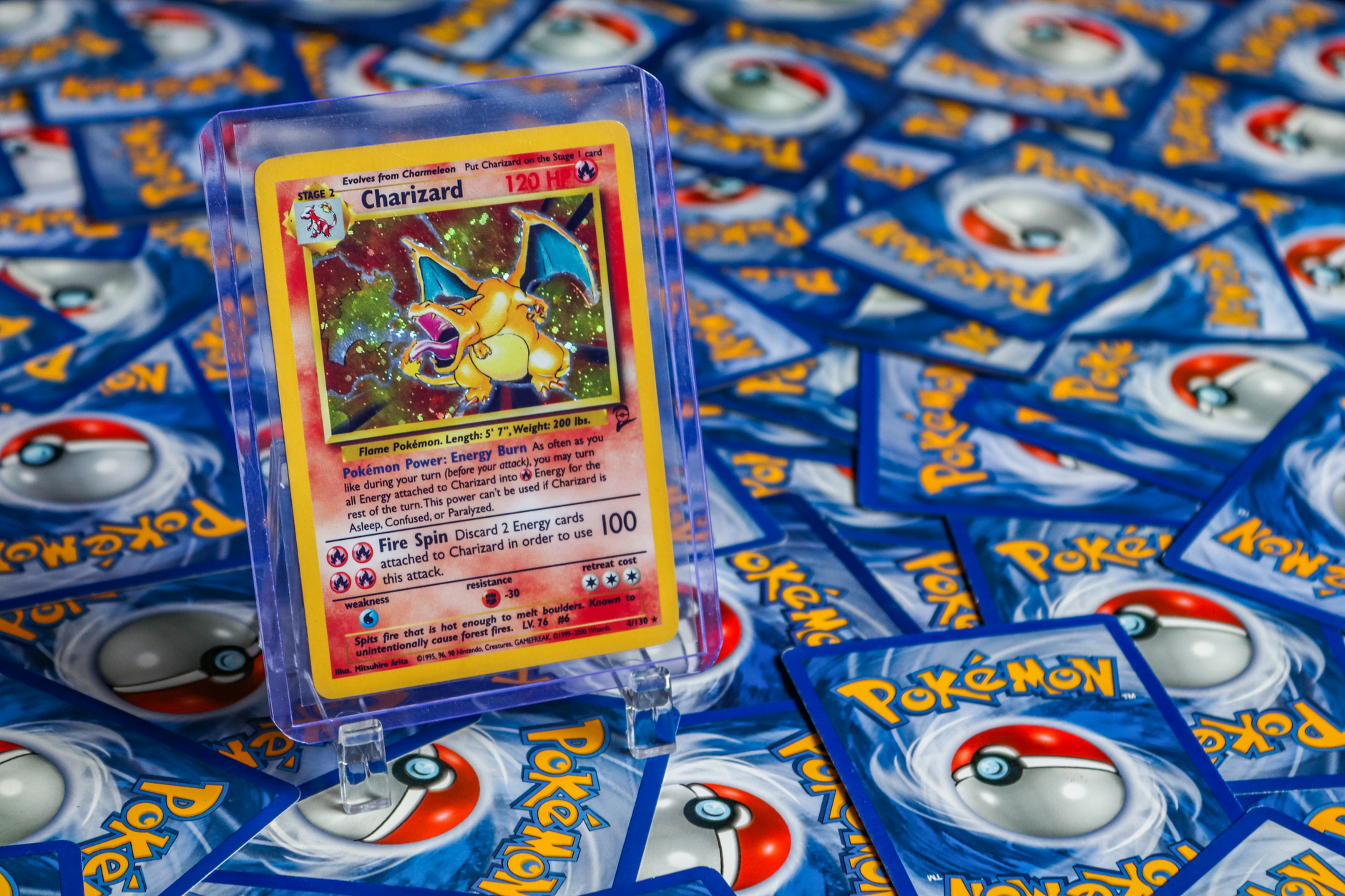
The EX Crystal Guardians Charizard non-holo (card #4/100, also known as Charizard Delta Species) is a mid-tier collectible in the Pokemon TCG market, with prices typically ranging from $40 to $250 or more depending on condition and grading. As of July 2026, this card commands solid demand among collectors due to its age (the Crystal Guardians set released in 2004) and the inherent appeal of Charizard as a franchise icon. A raw near-mint copy without professional grading generally sells in the $80–$150 range on TCGPlayer and eBay, while heavily played copies may fetch $30–$60.
The card’s market value is heavily condition-dependent, making it sensitive to grading outcomes. Unlike modern printings, Crystal Guardians cards are now over two decades old, so finding examples in gem-mint condition (PSA 9 or higher) is genuinely rare. A PSA 8 graded copy can easily double or triple the price of an ungraded near-mint example, illustrating why serious collectors treat condition assessment as the primary driver of value for this particular release.
Table of Contents
- What Determines the Value of EX Crystal Guardians Charizard Non-Holo?
- Condition Grading and Its Impact on Pricing
- The Role of Professional Grading Certification
- Where to Find Accurate Current Pricing
- Regional Price Differences and Market Dynamics
- Investment Considerations vs. Collecting for Play
- Common Pricing Mistakes and Market Traps
- Frequently Asked Questions
What Determines the Value of EX Crystal Guardians Charizard Non-Holo?
Rarity within the set plays a role, but the non-holo Charizard is not the scarcest version of this card—the set includes both a non-holo and a holographic foil version, and the holo typically commands 3–5 times the price of the non-holo. The non-holo exists in higher supply, which keeps prices accessible for collectors building budget-friendly collections. Set rarity and print run matter less for this card than for true short-prints or secret-rare variants, so the non-holo remains a solid entry point for those interested in Crystal Guardians without spending on premium versions. Age and historical significance contribute meaningfully. Crystal Guardians (set 17) represents a mid-era release in the Pokemon TCG timeline, released during a period when circulation was solid but nowhere near the volumes of modern modern sets.
Charizard’s cultural prominence as a starter evolution ensures sustained collector interest across price tiers. A played-condition copy serves functional collectors; a gem-mint graded copy appeals to investors and completionists building high-grade collections of era-defining sets. The non-holo finish itself is a consideration. Non-holos from this era often show wear patterns differently than holos—creasing and edge wear may be more visible on non-foil surfaces, and some collectors actively prefer the unfoiled aesthetic for display, while others view non-holos as less desirable than their holographic counterparts. This aesthetic preference affects demand and pricing in subtle ways; a non-holo in excellent condition may appeal strongly to budget collectors and those who specifically appreciate the card’s design without foil distraction.
Condition Grading and Its Impact on Pricing
Condition assessment is not standardized outside of professional grading, creating real pricing friction. A seller might describe a card as “near mint” while a buyer sees visible wear, centering issues, or corner softness that would result in a psa 6 or 7 if graded. For the Charizard non-holo, this gap between perceived and actual condition regularly causes disputes in ungraded sales, particularly on platforms like eBay where return policies may not favor either party. Professional grading through services like PSA, BGS (Beckett Grading Services), or CGC can resolve this ambiguity—and doing so carries real costs. A PSA grading submission runs $20–$100+ depending on turnaround time and the declared value of the card, plus shipping and insurance.
For a card worth $80–$150 ungraded, paying $50 to grade it might push the total investment above what a PSA 7 or 8 actually sells for, making the economics of grading marginal for mid-range cards. However, a PSA 9 can shift the value equation entirely, potentially justifying the grading investment if the card grades that high. Be cautious of heavily manipulated or cleaned cards marketed as near-mint. Charizard’s popularity has made it a target for restoration—old cards may have been cleaned, trimmed, or otherwise treated to improve appearance. Professional grading services flag these interventions, but ungraded sales cannot guarantee the card’s authenticity of condition. Buying from reputable sellers with return policies and detailed photos from multiple angles reduces this risk substantially.
The Role of Professional Grading Certification
PSA and BGS grades add significant premiums to Crystal Guardians Charizard non-holos. A PSA 8 (near mint-mint) example of this card typically sells for $200–$400, while a PSA 9 (mint) can reach $400–$600 or beyond. The grade acts as a third-party guarantee of condition, eliminating negotiation friction and attracting serious collectors and investors who rely on grading as a uniform standard. The practical downside: graded cards are locked in slabs (plastic cases) that prevent hands-on inspection and display.
Some collectors dislike the aesthetic of slabbed cards or prefer to examine cards freely before purchase. Additionally, grading can sometimes reveal flaws invisible to naked-eye inspection, resulting in lower grades than expected and negating the investment in grading. A card that looks near-mint to an amateur eye might slab as PSA 6 or 7 due to subtle centering issues or micro-scratches, disappointing collectors betting on higher outcomes. Older grading services (PSA grades from the early 2000s, for example) are sometimes considered more stringent than modern standards, meaning a vintage PSA 8 may be genuinely more impressive than a recent PSA 8 from the same service. When comparing graded copies across platforms like TCGPlayer or Cardmarket, understanding the grading service and the era of the grade matters; a 20-year-old PSA 8 carries different market implications than a freshly graded 8.
Where to Find Accurate Current Pricing
TCGPlayer remains the primary U.S. pricing authority for Pokemon singles, including the Crystal Guardians Charizard non-holo. The site aggregates sold listings and current asking prices from hundreds of vendors, providing transparent price ranges for each condition tier and grading status. Checking TCGPlayer’s price guide for this card shows real-time market data and historical trend lines, allowing collectors to spot overpriced or underpriced listings on other platforms. Cardmarket dominates European pricing and is the go-to reference for collectors outside North America.
The platform shows significantly different pricing—European listings for the non-holo typically range €40–€200+ depending on condition—due to regional supply and demand differences. If sourcing internationally, comparing TCGPlayer and Cardmarket prices before committing prevents overpaying based on regional market anomalies. eBay’s completed sales data provides ground-truth transaction prices; filtering by “sold listings” shows what collectors actually paid for specific copies, bypassing asking prices that may not reflect real-world demand. A PSA 8 Charizard non-holo that sold last week on eBay is more reliable market data than an asking price on a vendor site. Mavin.io offers automated valuation tracking based on comparable sales, though its accuracy depends on recent trading volume—during slow periods, valuations may lag behind active market movement.
Regional Price Differences and Market Dynamics
U.S. and European pricing for this card can diverge by 30–50%, driven by supply chain differences and regional collecting preferences. The Charizard non-holo is sought globally, but European supply may be tighter than North American supply due to historical distribution and collector base density. A $100 USD card might list for €120–€150 on Cardmarket, partly due to VAT and shipping costs baked into European pricing, but also because of genuine scarcity differences. Shipping costs inflate international transactions substantially. Importing a card from Europe to the U.S.
can add $15–$30 in postage and insurance, eroding any price advantage found abroad. Conversely, U.S. collectors with bulk inventory sometimes export cards to Europe during high-demand periods, creating temporary price spikes in either direction. Timing matters: following major Pokemon TCG news (set releases, reprints, competitive format changes) can shift pricing within weeks as collector attention shifts. Currency fluctuations also affect cross-border pricing for collectors buying in one region and selling in another. A favorable EUR/USD rate can create arbitrage opportunities on Cardmarket listings, but transaction fees (platform fees, payment processing, shipping) often eliminate small margins. For casual collectors, sticking to your home region’s primary market (TCGPlayer for U.S., Cardmarket for EU) avoids unnecessary complexity.
Investment Considerations vs. Collecting for Play
The Crystal Guardians Charizard non-holo has appreciated modestly since the set’s release, but it is not a high-growth investment card like rare holos or first-edition printings. Collectors treating this card as an investment should expect low single-digit annual appreciation, making it unsuitable as a primary investment vehicle. Cards from this era that maintain value tend to be those with severe scarcity or cultural significance; the non-holo Charizard sits in the middle tier—desirable but not rare enough to guarantee strong returns.
Storage and preservation become important if holding cards long-term. Temperature fluctuations, humidity, and light exposure degrade card condition over years, potentially shifting a near-mint card down a grading tier through no fault of the owner. Serious collectors invest in archival-quality sleeves, binder pages, and storage boxes rated for acid-free preservation. These costs are real and should factor into the total cost of ownership for long-term holdings.
Common Pricing Mistakes and Market Traps
Do not confuse the non-holo with other Charizard variants from Crystal Guardians or other sets. PriceCharting-style databases sometimes aggregate multiple card versions under similar names, leading to accidental comparisons between the non-holo, the holographic foil, or even Charizard cards from completely different sets. Always verify the card number (4/100) and set symbol before trusting a price comparison. A mismatched comparison can lead to significantly overpaying or undervaluing a purchase.
Sellers sometimes list this card at asking prices 50–100% above market rate, banking on uninformed buyers or hoping for a lucky whale purchase. Checking multiple sources—TCGPlayer, Cardmarket, and recent eBay sold listings—prevents falling into this trap. A card listed at $200 ungraded might have sold three times in the past month for $90–$120; the outlier asking price reflects the seller’s hope, not the market’s reality. Set reasonable purchase limits based on recent transaction data and walk away from overpriced listings.
Frequently Asked Questions
Is the non-holo Charizard from Crystal Guardians worth grading?
Only if the card is in exceptional condition (appears PSA 8 or higher to your eye). Grading costs $20–$100, and mid-range cards (PSA 6–7) may not appreciate enough to justify the expense. Reserve grading for standout examples.
Why is the European price so much higher than the U.S. price?
Shipping costs, VAT, and regional supply differences account for the gap. European rarity may be genuinely higher, but factor in shipping before attempting arbitrage.
What is the difference between the non-holo and holographic Charizard from this set?
The holo foil version typically sells for 3–5 times the non-holo price. The non-holo is more affordable but less sought-after by collectors prioritizing premium aesthetics.
Should I buy ungraded or wait to find a graded copy?
Ungraded copies offer better value if you’re comfortable assessing condition yourself. Graded copies command premiums but eliminate condition ambiguity; the choice depends on your risk tolerance and budget.
How has the price of this card changed over the past five years?
The non-holo has appreciated modestly (low single digits annually). It is not a high-growth investment card; buy for collecting enjoyment, not speculative returns.
Where should I source this card to avoid fakes or restored copies?
TCGPlayer, Cardmarket, and reputable eBay sellers with detailed photos and return policies are safest. Avoid unknown sellers or listings with vague condition descriptions.
You Might Also Like
- Price Charting for EX Crystal Guardians Charizard Holo
- Price Charting for EX Crystal Guardians Cacturne Non-Holo
- Price Charting for EX Crystal Guardians Blastoise Non-Holo