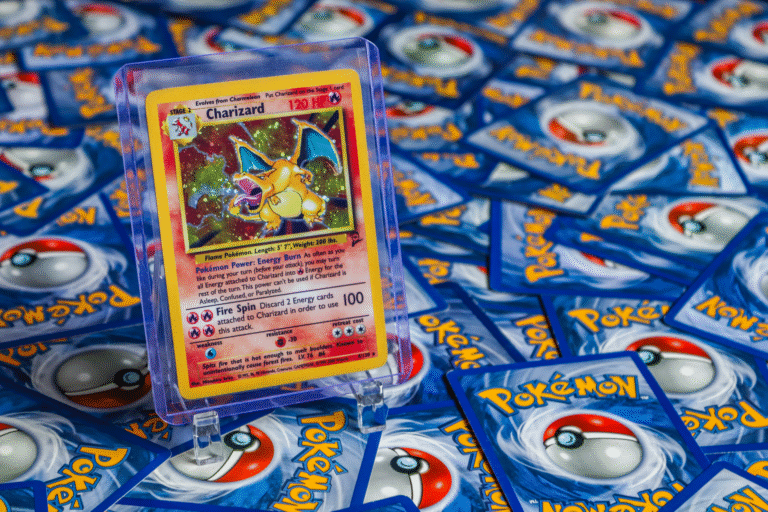
Shrouded Fable singles cannot keep up with vintage Pokémon cards in terms of established value and long-term appreciation. A first-edition Base Set Charizard that sold for $15,000 in 2021 has only increased in value since then, while even the most desirable Shrouded Fable holos like the alternate-art Lugia typically sell between $50 and $150. The fundamental gap comes down to scarcity, grading history, and decades of market validation that vintage cards have already achieved. Vintage cards benefit from nostalgia, limited print runs, and decades of accumulated collectibility that a set released in 2024 simply cannot replicate overnight.
However, this doesn’t mean Shrouded Fable singles are without value or collecting merit. The question isn’t whether they’ll match vintage prices—it’s whether they’re competing in the same market category at all. Modern singles from Shrouded Fable serve different collectors: players who want playable cards, newer hobbyists with smaller budgets, and speculators betting on future appreciation. Understanding the distinction between these two card markets is essential for anyone building a collection.
Table of Contents
- What Makes Vintage Pokémon Cards More Valuable Than Modern Singles?
- The Condition and Grading Problem for Modern Versus Vintage Cards
- Collector Psychology and Market Demand Differences
- Practical Investment and Collecting Strategy for Modern Versus Vintage Cards
- The Risk of Reprints, Market Saturation, and Scarcity Concerns
- Grading Population Reports and Rarity Metrics for Modern Cards
- The Future Outlook for Shrouded Fable Singles and Modern Card Values
- Conclusion
- Frequently Asked Questions
What Makes Vintage Pokémon Cards More Valuable Than Modern Singles?
The value gap between vintage and modern Pokémon cards stems from supply, demand mechanics, and historical scarcity. Base Set and Jungle set cards from 1999-2000 were printed in far smaller quantities than modern sets. When the Pokémon Company reprinted Base Set in 2016, collectors could immediately see the difference—original Base Set cards maintained their value while reprints offered accessibility at a fraction of the cost. shrouded Fable was printed with modern production capacity, meaning millions of packs entered the market. A PSA 9 first-edition Base Set Charizard commands respect; a PSA 9 Shrouded Fable Lukami does not, despite both being high-grade copies of chase cards from their respective sets.
Vintage cards also benefit from the “closed supply” principle. The Pokémon Company will never print more Base Set cards, which tightens supply further as cards are lost, damaged, or removed from circulation. Modern cards like Shrouded Fable could theoretically receive reprints, announcements of special editions, or new printings of similar cards that dilute the value of current copies. This uncertainty alone makes collectors willing to pay premiums for vintage cards with guaranteed scarcity. Additionally, vintage cards have had 25 years to prove their staying power, whereas modern cards are unproven assets in the long term.

The Condition and Grading Problem for Modern Versus Vintage Cards
Grading standards have evolved significantly since Pokémon cards first entered the market, and this creates an important caveat when comparing modern and vintage singles. A PSA 8 vintage Blastoise might be considered spectacular given the manufacturing quirks and age of Base Set printing, while a PSA 8 modern card is simply a standard high-grade copy of a card produced with tighter tolerances. However, raw (ungraded) Shrouded Fable cards in near-mint condition often sell for pennies compared to their graded counterparts—a sign that modern collectors are increasingly demanding official authentication, which can flip the value equation. The real concern for Shrouded Fable collectors is that grading services are swamped with modern cards.
When you submit a Shrouded Fable card to PSA, BGS, or CGC today, you’re waiting months for a return, during which time the card market may shift. Vintage cards submitted now likely spent years or decades ungraded, meaning their rarity in high grades is partially a function of collector behavior from the 1990s and early 2000s. A PSA 8 Shrouded Fable Lugia released today will compete against all future high-grade copies of the same card, which will inevitably exist as grading backlogs clear and more collectors pursue slabbing. This means raw Shrouded Fable singles may retain value longer than graded copies as the market stabilizes.
Collector Psychology and Market Demand Differences
Vintage and modern Pokémon cards appeal to fundamentally different buyer demographics, and this shapes their market trajectories in meaningful ways. Vintage collectors tend to be players from the original era who have disposable income and nostalgia-driven motivation. They’re willing to pay thousands for a card they remember from their youth. Shrouded Fable collectors, by contrast, are a mix of younger players, casual hobbyists, and investors speculating on the set’s future. This creates a ceiling on modern card prices—the nostalgia factor that propels a Base Set Charizard to $10,000+ simply doesn’t exist for cards that came out last year.
The secondary market behavior also differs dramatically. Vintage Pokémon card communities include dealers, auction houses, and serious collectors with long-term holding periods. Shrouded Fable’s secondary market is flooded with casual sellers offloading extras from their pulls, creating constant supply pressure that keeps prices moderate. When a vintage Pokémon card appreciates, it’s often reported in hobby news and auctions, reinforcing its status as a legitimate collectible. Shrouded Fable singles achieve none of this press coverage or cultural weight, which limits their ability to attract new demand from outside the immediate collector base.

Practical Investment and Collecting Strategy for Modern Versus Vintage Cards
If your goal is long-term value appreciation, vintage cards offer a more proven path, but Shrouded Fable singles shouldn’t be dismissed outright—they serve different investment horizons. Buying a $100 vintage Pokémon card today might yield a 30-50% return in five years if the market tightens further and nostalgia drives new demand. Buying a $50 Shrouded Fable alternate-art requires betting that the set will develop a legacy comparable to Modern-era staples like Hidden fates or Evolutions. Some modern sets have achieved this, but it’s not guaranteed and took five to seven years of patience.
The smarter practical approach is portfolio diversification. Collectors should prioritize vintage cards for proven value and stability while allocating a smaller portion of their budget to Shrouded Fable singles with strong artwork, low population counts in high grades, or first-edition status. Graded PSA 9-10 copies of rare Shrouded Fable cards will likely outperform raw copies as demand for authentication grows, but the absolute value ceiling remains significantly lower than equivalent vintage cards. Additionally, vintage cards don’t require you to sit on inventory for a decade hoping for appreciation—you can enjoy collecting them while knowing their value is anchored by historical precedent.
The Risk of Reprints, Market Saturation, and Scarcity Concerns
A critical limitation of Shrouded Fable singles compared to vintage cards is reprint risk. The Pokémon Company has shown a willingness to reprint popular recent sets through special releases, anniversary products, or premium collections. If Lugia becomes a cultural icon in Pokémon marketing, the company might include a reprint in a future product, instantly flooding the market with additional high-grade copies and tanking Shrouded Fable single prices. Vintage cards face no such risk—Base Set will never be reprinted, which acts as a permanent safety net on value. Market saturation presents another warning.
Shrouded Fable was a popular set, and millions of packs were opened. Casual players and speculators still have bulk binders full of cards from the set sitting in collections. As these cards gradually enter the secondary market through sales or cleanups, supply remains elevated for years. Vintage cards experienced a similar dynamic in the 1990s, but that was 25+ years ago. Today’s Shrouded Fable cards are still in the active supply phase, where new cards constantly trickle into the market from dormant collections. This structural difference makes it harder for Shrouded Fable prices to appreciate meaningfully—supply is fighting against demand growth.

Grading Population Reports and Rarity Metrics for Modern Cards
Understanding population reports is crucial for assessing whether a Shrouded Fable single has potential. If a particular card has only 50 PSA 9 copies graded while thousands of PSA 8s exist, that card might appreciate more slowly than a vintage card with similar population metrics. Shrouded Fable cards graded by PSA now likely represent less than 5% of all copies ever pulled, meaning population reports are still incomplete. A PSA 9 Shrouded Fable Lugia with 200 known copies might seem rare until grading backlogs clear and 1,000 additional copies receive grades within the next three years.
Vintage population reports, by contrast, are relatively stable. Most Base Set cards that will ever be graded have already been graded, making their population numbers a reliable indicator of true rarity. When a PSA 10 Base Set Charizard has only 15 known copies, that number is unlikely to increase dramatically. This certainty makes vintage cards more predictable as collectibles and explains why serious investors prefer them over modern speculations.
The Future Outlook for Shrouded Fable Singles and Modern Card Values
Shrouded Fable singles will likely follow the trajectory of other successful Modern-era sets like Hidden Fates or Shining Legends—they’ll appreciate modestly over the next 5-10 years as the initial rush of pulls concludes and collectors begin seeking complete sets or high-grade copies. However, the appreciation will be gradual and limited compared to vintage cards. A $50 Shrouded Fable Lugia might become a $75-100 card in five years, a respectable 50-100% return, but nothing approaching the multibagger returns vintage cards regularly achieve.
The wider context is that as Pokémon trading cards continue to exist and grow, vintage cards will only become more scarce and desirable relative to modern production. Shrouded Fable cards, while collectible today, will eventually face competition from future sets. Modern collectors should view Shrouded Fable singles as part of a layered portfolio strategy rather than as investment vehicles competing directly with vintage cards.
Conclusion
Shrouded Fable singles cannot keep up with vintage Pokémon cards in terms of established value, rarity, or long-term appreciation potential. The gap is fundamental—vintage cards are closed-supply assets from the 1990s, while Shrouded Fable is a modern set with millions in circulation and no scarcity guarantee. However, both card categories serve legitimate roles in different collecting strategies. Vintage cards are for collectors seeking proven value and historical significance, while Shrouded Fable singles attract newer collectors, players, and speculators willing to accept lower ceiling prices in exchange for lower entry points.
If you’re building a collection, prioritize vintage cards for stability and long-term appreciation, but don’t ignore Shrouded Fable entirely. Focus on high-grade examples, rare artwork variants, or first-edition printings that might appreciate as the set ages. Understand that you’re making different bets—vintage is about owning a piece of Pokémon history, while modern singles are about participating in a living, evolving hobby. Both have value, but they exist in different markets competing on different timelines.
Frequently Asked Questions
Will Shrouded Fable cards ever be worth as much as vintage Base Set cards?
Unlikely. A PSA 9 Base Set Charizard commands $5,000+, while even premium Shrouded Fable holos top out around $300. The scarcity gap is too large, and Shrouded Fable lacks the nostalgia and historical significance that drive vintage card premiums.
Should I grade my Shrouded Fable cards, or keep them raw?
Graded copies currently command minimal premiums over raw near-mint cards, so grading isn’t essential unless you plan to sell soon or want authentication. However, graded high-populations will likely become the market standard over time, so PSA 9-10s have more long-term potential than PSA 8s.
What Shrouded Fable cards have the best investment potential?
Alternate-art holos with strong visual appeal, first-edition printings, and cards with low population grades (PSA 9-10) currently offer the most potential for future appreciation. Popular characters like Lugia and Pikachu variant cards historically hold value better than more obscure Pokémon.
How long should I hold Shrouded Fable cards before selling?
Most Modern-era sets take 5-10 years to stabilize in value. Holding for at least three years gives you a reasonable chance of modest appreciation, while holding longer reduces the risk that reprints will flood the market and destroy value.
Can Shrouded Fable cards ever compete with vintage in terms of collectibility?
Collectibility is subjective, but from a market value perspective, no. Vintage cards will always have the age, scarcity, and historical pedigree that modern cards cannot replicate regardless of future appreciation.
Is it better to invest in vintage cards or Shrouded Fable singles?
Vintage cards offer proven stability and larger appreciation potential, but they require more capital upfront. Shrouded Fable singles are accessible to newer collectors but offer limited upside. Ideally, build a balanced portfolio with both.