Pokémon dominates because it has built an unstoppable feedback loop across four separate entertainment industries—games, cards, anime, and merchandise—each feeding demand for the others. When a new card set launches, anime episodes drive interest in collecting. When a video game releases 5.8 million copies in a single week, merchandise stocks empty and card prices surge. With $150.3 billion in lifetime revenue across all categories, Pokémon has surpassed every entertainment franchise in history, including Star Wars ($105.4 billion) and Marvel ($98.7 billion), because it doesn’t rely on any single format. If one sector softens, three others are generating revenue and keeping the brand alive in the public consciousness.
This dominance isn’t accidental. The Pokémon Company has spent 30 years perfecting the art of sustained cultural relevance, and the numbers prove it works. In fiscal year 2025 alone, the company posted record revenue of ¥410.932 billion (approximately $2.9 billion USD), representing a 38.1 percent increase year-over-year—achieved without releasing a major new mainline game. Operating profit exceeded 100 billion yen for the first time, a milestone that reflects the franchise’s ability to monetize across all channels simultaneously. For collectors and investors in the trading card space, this steady, multi-billion-dollar machine means card values remain anchored to fundamentals: nostalgia, playability, investment appeal, and cultural staying power.
Table of Contents
- How Did Pokémon Become the Highest-Grossing Franchise of All Time?
- Video Game Dominance in a Landscape Crowded with Billion-Dollar Franchises
- The Trading Card Game’s Unprecedented Production and Market Dominance
- The Anime’s Role in Sustaining Cultural Relevance and Expanding Audience
- The Merchandise Empire: Toys, Apparel, and Licensed Products
- The Record Financial Performance of Fiscal Year 2025
- What’s Driving Pokémon’s Future Dominance?
- Conclusion
How Did Pokémon Become the Highest-Grossing Franchise of All Time?
Revenue concentration tells the story of pokémon‘s dominance. Seventy-three percent of the franchise’s $150.3 billion lifetime revenue comes from non-game sources—primarily merchandise, licensing agreements, and trading cards. This distribution is crucial because it means the franchise doesn’t live or die by any single product category. A competitor that relies heavily on video games (like Final Fantasy with 182.5 million units sold) is vulnerable when gaming trends shift. Pokémon, by contrast, generates roughly $109 billion from toys, collectibles, and branded goods alone, creating an revenue base so broad that no single market downturn can threaten the whole.
The merchandise arm alone showcases this diversity. Pokémon Center, the official online retail hub, generated $275 million in revenue in 2025, with projected growth of 5-10 percent entering 2026. Pokémon holds the position of the number-one-selling toy brand globally as of 2024, and in markets like France maintains a market share nearly three times that of the second-ranked toy property. This isn’t just nostalgia-driven spending on old IP—Pokémon consistently releases new designs, limited editions, and collaborations that keep the merchandise category fresh and relevant. For a trading card collector, understanding this merchandise dominance matters because it signals that Pokémon is not a fading brand propped up by legacy fans; it is actively acquiring new audiences through toys, plushes, apparel, and collectibles.

Video Game Dominance in a Landscape Crowded with Billion-Dollar Franchises
Pokémon video games have sold 482.7 million lifetime units as of March 31, 2026, making it the best-selling franchise in video game history—ahead of Mario at 468.3 million units and Final Fantasy at 182.5 million. This lead, while seemingly narrow against Mario, becomes more meaningful when you consider that Pokémon achieved it while competing in a fundamentally different landscape. The last major mainline Pokémon game released before October 2025 was Scarlet and Violet in 2022, yet the franchise continued to generate record revenue. The reason: mobile games and complementary titles kept players engaged.
Pokémon Legends: Z-A, released in October 2025, sold 5.8 million copies globally in its first week, proving the franchise’s ongoing pull. But the real growth engine in the mobile space has been Pokémon TCG Pocket, which reached 100 million downloads in just four months and generated over $1 billion USD in gross player spending within seven months. Meanwhile, Pokémon GO—a game that launched in 2016—still generated $544 million in in-app purchase revenue in 2024, with 2025 revenue up 29 percent year-over-year. The limitation here is important: these mobile and live-service games have higher lifetime player churn than traditional console releases, and retention becomes increasingly difficult as new competitors enter the space. For traders, this means video game revenue remains strong but increasingly dependent on seasonal events and new content releases rather than one-time purchases.
The Trading Card Game’s Unprecedented Production and Market Dominance
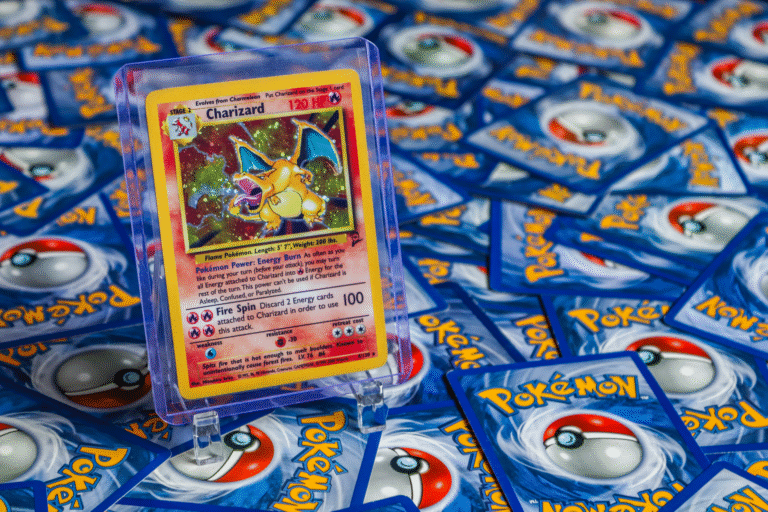
The Pokémon Trading Card Game produces cards at a scale that dwarfs competitors. In fiscal year 2024-25, the Pokémon Company manufactured 10.2 billion cards—a production volume that demonstrates the sheer demand for physical product. Over the franchise’s entire history, more than 75 billion Pokémon Trading Cards have been sold, making it the best-selling trading card game of all time by an enormous margin. This production capacity creates a supply-demand dynamic that collectors must understand: while vintage cards (first edition, shadowless, sealed products) remain scarce and valuable, modern cards are printed in quantities measured in billions. Pokémon holds approximately 12-21 percent of the global trading card games market share as of 2025-2026, according to market analysis.
Walmart reported a 200 percent surge in overall trading card game sales from February 2024 to June 2025, with Pokémon card sales increasing tenfold year-over-year during that period. This explosive growth has two consequences for the collecting community. On one hand, it validates Pokémon as a collector asset with real, measurable demand. On the other hand, it has attracted large-scale speculative investors and resellers who treat cards purely as financial instruments, increasing volatility in secondary markets. A card’s value depends on scarcity, condition, and demand—factors that shift when speculative buying bubbles form and burst.

The Anime’s Role in Sustaining Cultural Relevance and Expanding Audience
The Pokémon animated series has now produced over 1,322 episodes as of 2025, providing continuous media content that keeps the franchise visible to new generations. The show’s longevity is itself remarkable—most animated series fade after 5-10 seasons, yet Pokémon has sustained production for nearly three decades. The franchise didn’t rest on this legacy, however. A new era began in April 2025 with Pokémon Horizons: Rising Hope, which premiered in Japan and was distributed globally on Netflix starting January 6, 2026. Part 2 arrives on Netflix March 20, 2026, with subsequent parts scheduled for June-August and September-November 2026.
The Netflix distribution strategy represents a significant shift in how Pokémon reaches global audiences. Rather than relying on traditional broadcast schedules, the franchise now uses one of the world’s largest streaming platforms to reach viewers in 190+ countries simultaneously. This expanded reach drives merchandise sales, increases trading card demand, and creates water-cooler moments that drive engagement. For collectors, the anime’s continued cultural relevance matters because it translates directly into new set releases, promotional cards, and themed products. When a new anime season launches, associated trading card sets often see increased demand from viewers seeking to own physical representations of characters they see on screen.
The Merchandise Empire: Toys, Apparel, and Licensed Products
Pokémon merchandise extends far beyond toys. The brand appears on apparel, home goods, food packaging, automotive accessories, and countless other product categories. The Pokémon Center website alone sells thousands of items, from plush toys costing $15 to premium collectibles selling for hundreds of dollars. Pokémon maintains the position of number-one toy brand globally, and in competitive markets like France, the brand maintains a 9 percent year-on-year growth rate while holding a market share nearly three times that of the second-ranked toy property.
The merchandise category’s resilience and growth highlight why Pokémon’s revenue dominance appears unshakeable. Even when a new video game doesn’t release or a trading card set underperforms, Pokémon Center continues to move inventory, licensing deals continue to generate royalties, and toy retailers continue to stock Pokémon products. The warning for collectors is that this merchandise saturation can sometimes cheapen the brand’s perception. When Pokémon appears on everything from pet food to fast food promotions, some collectors perceive a loss of exclusivity. Understanding which products hold genuine collectible value versus which are mass-market throwaways is essential for anyone treating Pokémon cards or products as investments rather than casual toys.

The Record Financial Performance of Fiscal Year 2025
The Pokémon Company’s fiscal year 2025 results crystallize why the franchise’s dominance is structural rather than cyclical. The company posted sales of ¥410.932 billion (approximately $2.9 billion USD), representing a 38.1 percent increase year-over-year. Operating profit reached 100,749 million yen, a 13.6 percent increase that marks the first time the company exceeded 100 billion yen in operating profit. These weren’t achievements driven by a blockbuster new game—Pokémon Legends: Z-A didn’t release until October 2025, arriving late in the fiscal year. Instead, the record revenue came from sustained sales across all categories: cards, merchandise, mobile games, and licensing.
This diversified revenue approach insulates Pokémon from the boom-and-bust cycles that plague single-category franchises. For card collectors and investors, these financial results matter because they demonstrate the franchise’s underlying health. A company posting record profits isn’t cutting costs, reducing product quality, or preparing to phase out a product line. Instead, it’s likely to increase investment in new sets, premium products, and global distribution. The trading card game benefits directly from this financial strength through larger print runs, more competitive set designs, and expanded marketing support.
What’s Driving Pokémon’s Future Dominance?
Pokémon’s next growth phase appears to rely on three vectors: continued expansion in emerging markets, the normalization of digital collectibles alongside physical cards, and the deepening integration between gaming, anime, and merchandise. The Netflix distribution deal for new anime content represents a strategic bet on global reach. Rather than relying on traditional broadcast networks with geographic limitations, Pokémon can now reach billions of potential new fans simultaneously.
Each anime episode released on Netflix creates opportunities for associated card sales, merchandise purchases, and renewed interest in the video games. The mobile gaming space, particularly through titles like Pokémon TCG Pocket, offers sustained revenue with lower barriers to entry than console games or collecting physical cards. As The Pokémon Company continues to release new digital experiences, the franchise can capture monetization from players who may not be interested in $60 console games or $4 trading card packs, but will spend money on cosmetics, battle passes, and digital card acquisitions in a mobile environment. This multi-layered approach—digital and physical, premium and accessible, nostalgia-driven and innovation-focused—explains why Pokémon’s dominance feels inevitable rather than temporary.
Conclusion
Pokémon’s dominance across games, cards, anime, and merchandise reflects a franchise that learned long ago that diversification across multiple media formats is more resilient than dominance in a single category. With $150.3 billion in lifetime revenue, 482.7 million video games sold, 75+ billion trading cards printed, 1,322+ anime episodes produced, and $275 million in Pokémon Center merchandise revenue, the franchise operates at a scale that few entertainment properties have ever achieved. The 38.1 percent year-over-year revenue growth in fiscal 2025 and the achievement of 100+ billion yen in operating profit demonstrate that this dominance is expanding, not contracting. For collectors and investors in the Pokémon Trading Card Game, these realities matter.
They mean that Pokémon cards are anchored to one of the most financially stable and culturally relevant franchises in history. The franchise’s continued investment in new sets, premium products, and expanded global distribution suggests that the trading card game will remain central to Pokémon’s strategy for years to come. Understanding the franchise’s strength across all four pillars—games, cards, anime, and merchandise—provides confidence that your investment in Pokémon cards is tied to something more enduring than a fleeting collector’s trend. It is tied to an engine of cultural relevance and financial performance that has proven nearly impossible to slow down.