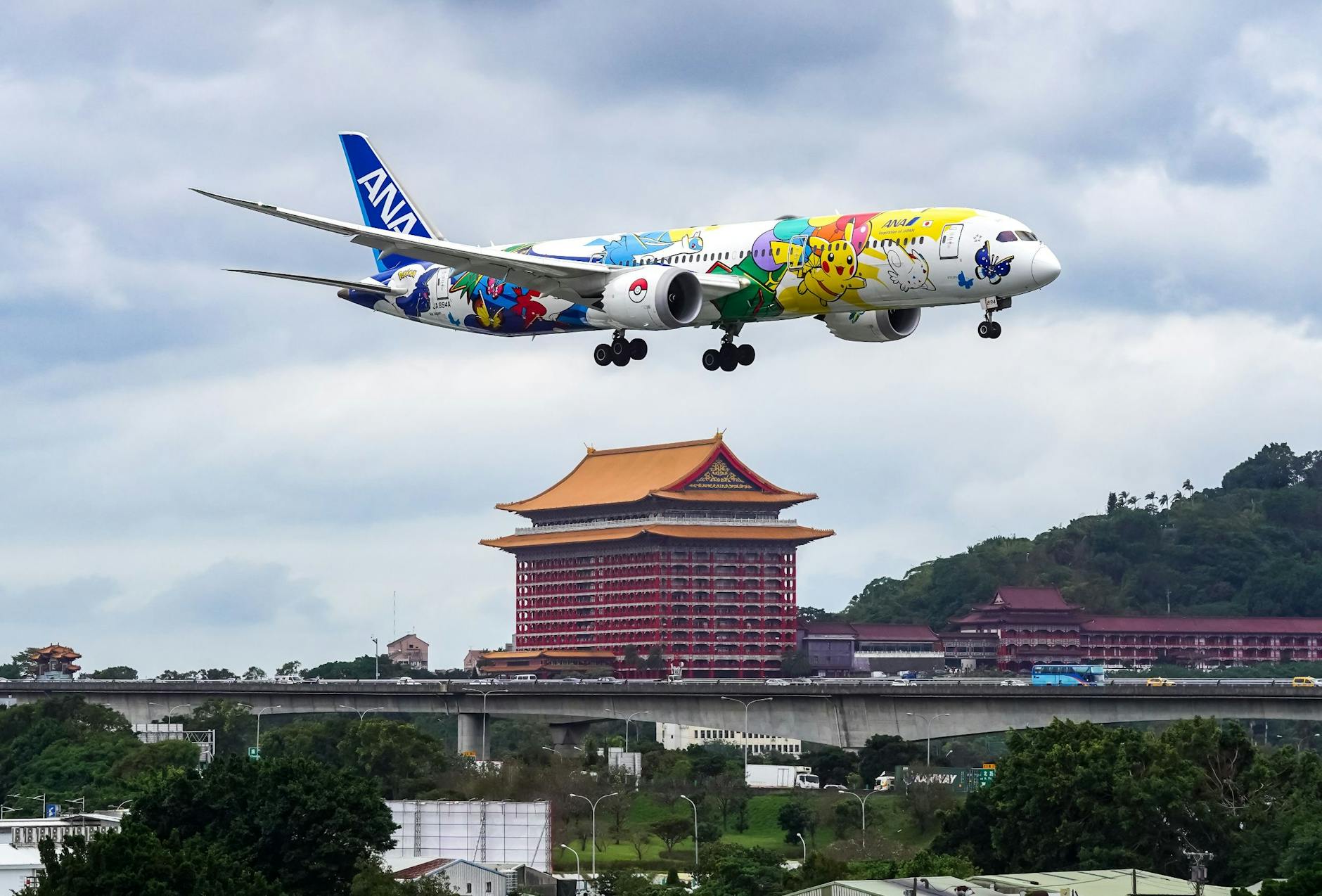
Pokémon’s decision to put its characters on three new aircraft operated by All Nippon Airways signals something fundamental about the franchise’s reach: it has transcended being a niche product for collectors and become a global infrastructure asset. When a major international airline commits aircraft, international routes, and cabin redesigns to a brand’s 30th anniversary, it’s betting that the licensing arrangement will drive revenue across multiple markets simultaneously.
The Pokémon Jet program—including a Boeing 787-8 launching domestic routes by July 2026 and a Boeing 787-9 for international service—represents a $20+ million partnership commitment that wouldn’t exist if ANA believed the brand’s appeal was narrowing or aging out. This partnership reveals three overlapping aspects of Pokémon’s modern distribution: it still commands premium placement in a major Asian market (Japan accounts for roughly 20% of global Pokémon merchandise revenue), it’s expanding into lifestyle touchpoints beyond cards and games, and it has leverage to reshape physical infrastructure—an airport in Japan is being rebranded entirely to accommodate the brand. For card collectors, this expansion matters because it signals confidence from a major corporate partner that Pokémon will remain culturally relevant and integrated into mainstream consumer experiences for years to come.
Table of Contents
- How a 30-Year-Old Franchise Commands Aviation Industry Partnerships
- The International Expansion Strategy Behind Themed Aircraft Deployment
- The Anuvu Partnership – How In-Flight Entertainment Extends Pokémon’s Global Reach
- Noto Satoyama Airport and the Ground Infrastructure Play
- The Reality Check – Celebrity Branding Limits in Aviation
- What the Airlines Partnership Signals for Card Collectors and Enthusiasts
- The Broader Strategic Picture – Pokémon Beyond Trading Cards
- Conclusion
How a 30-Year-Old Franchise Commands Aviation Industry Partnerships
Few entertainment properties can convince a carrier to redesign multiple aircraft cabins or negotiate in-flight entertainment rights across global routes. pokémon achieved this by maintaining what other franchises lose over time: multi-generational consumer appeal that extends beyond core collectors into casual audiences. ANA’s commitment of three Boeing 787s—aircraft worth approximately $270 million combined at list price—reflects confidence that passengers will choose flights partially based on Pokémon branding, or at minimum, that the partnership generates positive brand association worth the operational complexity and cost. The scale is telling.
ANA isn’t launching a single limited-run aircraft as a promotional stunt; it’s rolling out a fleet with staggered launch windows (Red by July 2026, Green on an unannounced date, Blue sometime in the future). This suggests demand forecasting that extends years out, not months. For comparison, when other entertainment brands have partnered with airlines—Hello Kitty with EVA Air, Star Wars with various carriers—these have typically been single aircraft or limited-run programs. Pokémon’s three-aircraft, multi-route commitment indicates either ANA’s confidence in sustained Pokémon merchandise demand or Pokémon Company International’s willingness to subsidize the partnership to ensure its visibility at scale.

The International Expansion Strategy Behind Themed Aircraft Deployment
The breakdown of ANA’s three Pokémon aircraft reveals a calculated geographic strategy. The Pokémon Jet Red (Boeing 787-8) is designated for domestic Japanese routes, while the Pokémon Jet Green (Boeing 787-9, a larger variant designed for long-haul international service) will operate international routes with launch timing still unconfirmed. This isn’t random—the 787-8 has a typical range of 7,600 nautical miles (sufficient for Tokyo to most regional Asia-Pacific hubs), while the 787-9 extends to 8,000+ nautical miles and carries more passengers, making it suited for transcontinental routes to North America or Europe where Pokémon card markets are substantial. However, a key limitation exists: ANA hasn’t announced which international routes the 787-9 will serve.
This matters for Pokémon’s distribution strategy because it determines which markets receive the most visible brand placement. If the aircraft primarily fly Japan-to-USA routes, they’ll reach North America’s collector community and casual Pokémon consumers. If they’re allocated to regional Asia-Pacific routes, they’ll reinforce Pokémon’s dominance in growing markets like Southeast Asia and India. The lack of specificity suggests either negotiations are ongoing or ANA is deferring route assignments based on demand, which is a limitation compared to other brand partnerships where routes are locked in advance for marketing clarity.
The Anuvu Partnership – How In-Flight Entertainment Extends Pokémon’s Global Reach
Beyond the aircraft themselves, Pokémon’s distribution strategy includes a critical layer most casual observers miss: Anuvu, the in-flight entertainment platform, has been designated as the global aviation distributor for Pokémon films and TV series beginning in 2026. This isn’t as visible as a painted fuselage, but it’s arguably more consequential for brand penetration. Anuvu operates in-flight systems for airlines across North America, Europe, Asia, and the Middle East—meaning a single licensing deal gives Pokémon content access to millions of airline passengers annually who may never see an ana aircraft but will see Pokémon entertainment on their flights.
The content library spans multiple seasons of the original animated series and feature films, which suggests the partnership is designed to reach both existing fans seeking nostalgia and younger passengers discovering the franchise for the first time. A limitation here: in-flight entertainment is a secondary entertainment option, competing with personal devices, sleep, and other cabin entertainment. Passengers with streaming subscriptions to Netflix, Hulu, or other services can already access Pokémon content on demand; in-flight availability doesn’t fundamentally change consumer behavior. However, the partnership does ensure Pokémon maintains presence during a high-captivity moment (six to fourteen hours of flight time) where active entertainment seeking occurs, which is valuable for brand reinforcement.

Noto Satoyama Airport and the Ground Infrastructure Play
Perhaps the most revealing element of Pokémon’s global reach expansion is the rebranding of a regional Japanese airport. Starting July 7, 2026, Noto Satoyama Airport will officially become Noto Satoyama Pokémon With You Airport—a branding decision that extends Pokémon visibility beyond aircraft cabins into the pre-flight and post-flight customer journey. Passengers traveling through the airport will encounter Pokémon signage, branded facilities, and the psychological reinforcement of Pokémon as an assumed part of everyday infrastructure. This is significant because it demonstrates Pokémon’s negotiating position with government entities.
Airport rebranding isn’t decided lightly; it requires coordination between municipal authorities, commercial operators, and potentially national transportation agencies. For Pokémon Company International to secure such a commitment indicates either a substantial licensing fee or a revenue-sharing arrangement that makes the partnership valuable enough for local governments to formally associate their infrastructure with the brand. The tradeoff is accessibility: Noto Satoyama serves a regional area (the Noto Peninsula in Ishikawa Prefecture), not a major metropolitan hub like Haneda or Kansai. The global reach impact is moderate, though the willingness of regional authorities to make the partnership suggests Pokémon’s relevance extends beyond major urban collector communities into smaller markets.
The Reality Check – Celebrity Branding Limits in Aviation
Not all Pokémon brand placements translate to consumer impact. Aircraft liveries are visually striking, but a passenger flying on a Pokémon Jet is primarily concerned with punctuality, seat comfort, and baggage handling—not cabin aesthetics. Research on airline brand partnerships shows that themed liveries generate moderate PR value and some passenger preference, but don’t significantly shift market share or revenue unless paired with price changes or route advantages. A traveler booking a flight on Pokémon Jet Red likely chose it because the route or price worked for their itinerary, not because Pikachu is on the fuselage.
Additionally, there’s a saturation risk. If Pokémon branding appears on aircraft, airports, in-flight entertainment, cabin amenities (headrests, napkins, cups), and baggage, the cumulative effect may desensitize rather than delight. Frequent flyers who encounter Pokémon imagery across multiple touchpoints may experience brand fatigue rather than reinforcement. For card collectors specifically, the proliferation of Pokémon in non-collectible contexts (airline napkins, disposable amenities) potentially dilutes the brand’s premium positioning in the collector community, where scarcity and exclusivity traditionally drive value. This is a subtle but real tradeoff in Pokémon’s global expansion strategy.

What the Airlines Partnership Signals for Card Collectors and Enthusiasts
For the collecting community, Pokémon’s aviation expansion is a confidence signal. Airlines don’t enter multi-year, multi-aircraft partnerships with entertainment brands they believe are temporary or declining. ANA’s commitment to three aircraft, international routes, and branded airport facilities is essentially a institutional vote of confidence that Pokémon will remain culturally relevant and commercially viable through the next five to ten years. This matters for collectors who buy modern Pokémon cards as long-term investments; the strength of institutional partnerships like this one (alongside investments in video games, streaming, and retail expansion) suggests the franchise isn’t experiencing the decline some older collector communities worry about.
Conversely, there’s a caveat: this partnership is built on casual consumer appeal and brand visibility, not on the collector market specifically. ANA’s aircraft are designed to reach general passengers, not Pokémon TCG enthusiasts. This means the partnership strengthens the franchise’s mainstream positioning—which ultimately benefits card values through broader cultural relevance—but it doesn’t directly benefit collectors in tangible ways (exclusive cards, priority merchandise, etc.). The expansion is about making Pokémon omnipresent in consumer culture, not about deepening the collector experience.
The Broader Strategic Picture – Pokémon Beyond Trading Cards
The ANA partnership is part of a larger pattern: Pokémon Company International is systematically integrating the franchise into infrastructure, logistics, and lifestyle categories where it traditionally had limited presence. Thirty years ago, Pokémon was primarily a card game and Game Boy software. Today, it’s a trading card investment vehicle, a video game platform, an animated streaming property, an airline partner, an airport brand, and an in-flight entertainment distributor.
Each channel reinforces the others—passengers flying ANA encounter Pokémon in-flight, then return home to Pokémon video games and card collections. Looking forward, this model suggests Pokémon’s next expansion phase will continue targeting high-visibility infrastructure partnerships: mass transit systems (subway branding similar to airport programs), hospitality properties (hotels, resorts), and potentially financial services (branded payment systems, investment products). The franchise’s willingness to participate in 30th anniversary commitments with major carriers indicates confidence in reaching its 40th, 50th, and beyond. For card collectors, this long-term institutional confidence is arguably more important than the specific details of any single partnership.
Conclusion
Pokémon’s airline push isn’t primarily about selling Pokémon cards or even merchandise—it’s about maintaining and deepening the franchise’s integration into mainstream consumer infrastructure. By securing three aircraft, international routes, a global in-flight entertainment partnership, and an airport rebranding, Pokémon has demonstrated that it retains significant negotiating power with institutional partners who bet billions on consumer behavior. For a franchise entering its fourth decade, this is notable: many entertainment properties decline in their 30s, but Pokémon is expanding its footprint into physical infrastructure and lifestyle contexts.
Card collectors should interpret this as positive signal for long-term franchise stability. The institutional confidence embedded in multi-year aviation partnerships, airport agreements, and global distribution deals suggests Pokémon will remain culturally embedded and commercially viable for years ahead—the foundation that makes modern Pokémon cards worth collecting and holding as investments. The franchise has moved beyond being dependent on any single distribution channel; it now operates across gaming, merchandise, streaming, trading cards, and aviation simultaneously, which is precisely the kind of diversification that sustains brands across generational shifts.
You Might Also Like
- What the New ANA Pokémon Jets Say About the 30th Anniversary Push
- What the Latest Pokémon Anime Update Says About the Brand’s Direction
- What Pokémon’s 30th Anniversary Ranking Says About the Franchise