Pokémon Red and Blue’s nostalgia isn’t just keeping old memories alive—it’s actively generating entirely new stories that drive content across multiple media formats and markets. Three decades after the Game Boy originals launched in 1996, the franchise continues to expand the Red and Blue narrative through major releases like the upcoming Pokémon Adventures: Red and Blue Deluxe Edition Vol. 1, arriving October 27, 2026, while merchandise like Game Boy jukeboxes priced at $70 sell out within days. This isn’t a case of backward-looking sentiment; it’s a demonstrable pattern where nostalgia serves as the engine for contemporary storytelling, new collector engagement, and sustained revenue growth that shows no signs of slowing.
The numbers tell the story. Red and Blue remain the foundational sales benchmark with 31.38 million units sold on Game Boy—a record that has stood untouched for three decades and serves as the baseline against which all subsequent Pokémon releases are measured. When The Pokémon Company introduces FireRed and LeafGreen remakes on Nintendo Switch, those titles move over 4 million copies by May 2026, demonstrating that modern players actively seek out Kanto region stories alongside original collectors. The franchise as a whole has shipped 515 million games lifetime, yet Red and Blue’s cultural footprint remains disproportionately large relative to its age—a phenomenon directly tied to how Nintendo and Game Freak leverage nostalgia to justify new narrative investments.
Table of Contents
- Why Red and Blue Remain the Nostalgic Anchor for Pokémon Storytelling
- How Nostalgia Converts to Tangible Revenue Across Multiple Markets
- The Role of Anniversary Moments in Driving New Narrative Content
- Using Red and Blue Nostalgia to Bridge Generational Player Gaps
- The Risk of Nostalgia Fatigue and Market Saturation
- Cross-Media Storytelling and the Pokémon Adventures Example
- The Future of Red and Blue Nostalgia in a 35+ Year-Old Franchise
- Conclusion
Why Red and Blue Remain the Nostalgic Anchor for Pokémon Storytelling
red and Blue occupy a unique position in franchise history: they were the entry point for an entire generation of players now in their 30s and 40s, while simultaneously introducing younger audiences to the Kanto region through remakes and current media. The original games created a specific narrative template—a young trainer’s journey from incompetence to championship—that continues to generate variations across manga, merchandise, and gaming platforms. pokémon Adventures, the manga series now being repackaged as a premium hardcover, has serialized Red’s story arc continuously since 1997, but the October 2026 Deluxe Edition represents an explicit decision to market that nostalgia directly to collectors and dedicated readers willing to pay for quality production.
The limitation here is that nostalgia-driven content walks a fine line. New stories based on Red and Blue must simultaneously appeal to original players seeking familiar settings and mechanics, while introducing fresh narrative elements that justify their existence to younger audiences who didn’t experience the original games. The FireRed and LeafGreen Switch remakes sold 4 million copies partly because they preserved the original experience while modernizing graphics and quality-of-life features—a formula that can’t be endlessly repeated without dilution. There’s a risk that excessive reliance on Kanto-region storytelling eventually fatigues collectors and players, particularly as other regions (Sinnoh, Unova, Galar, Paldea) develop their own nostalgic audiences over the coming decades.

How Nostalgia Converts to Tangible Revenue Across Multiple Markets
Pokémon’s lifetime revenue exceeds $150 billion, making it the highest-grossing media franchise in history, yet the Red and Blue narrative continues to be a reliable revenue driver within that ecosystem. The Game Boy jukeboxes priced at $70 sold out rapidly upon release, indicating that collectors and enthusiasts are willing to pay premium prices for nostalgic products tied to specific games and eras. These aren’t accidental purchases; they represent intentional collectible acquisitions by players who experienced Red and Blue, want to own a piece of that history, and see value in merchandise that preserves that era in tangible form. However, there’s a limitation to how far this strategy can extend.
Jukebox merchandise is inherently limited in production and appeal—it targets a narrow collector demographic with disposable income and attachment to 30-year-old gaming nostalgia. Compare this to broader merchandise like Pokémon Trading Cards, which generate revenue from both nostalgic collectors returning to the hobby and new players attracted by games like Pokémon Sword and Shield or the current trading card meta. The Red and Blue-specific merchandise sells through its immediate appeal, but it lacks the ongoing generational refresh that trading cards achieve. A jukebox from 2026 will likely become a static collectible; a trading card from a current set maintains liquidity and resale value because of active player engagement.
The Role of Anniversary Moments in Driving New Narrative Content
The Pokémon franchise is currently in its 30th anniversary window (Red and Blue originally released in japan in February 1996), and this anniversary is functioning as a justification and marketing hook for multiple simultaneous releases: the Pokémon Adventures hardcover, merchandise like jukeboxes, and likely other announcements beyond what’s currently public. Anniversary moments are narratively convenient—they provide cultural legitimacy for releasing products tied to older intellectual property and give existing collectors permission to re-engage with their childhood experiences as something culturally significant rather than merely nostalgic. The trade-off is that anniversary cycles are temporary.
A 30th anniversary generates marketing momentum and consumer attention in 2026, but by 2027, that narrative hook loses relevance until the franchise reaches another milestone (35th anniversary in 2031, 40th in 2036). This means nostalgia-driven content strategies are most effective when concentrated around major anniversary years, after which franchises must find other justifications for continuing the same storytelling. Pokémon manages this through continuous game releases in multiple regions and console generations, but smaller franchises or less-active intellectual properties can’t rely on anniversaries as their primary content engine. Red and Blue benefit from being the franchise’s foundation, so anniversary releases feel organic rather than forced.

Using Red and Blue Nostalgia to Bridge Generational Player Gaps
Among 18-25 year-olds, Pokémon ranks as a top 3 recognized pop culture brand according to 2024 Ipsos survey data, which is remarkable considering that Red and Blue launched 30 years ago—before most of that demographic was born. This generational bridge works because of media adaptation and remake strategies. Younger players encountered Red and Blue through animated series, trading cards, or modern remakes rather than the original Game Boy cartridges, yet they recognize the same Pikachu, Charizard, and Blastoise imagery that nostalgic collectors revere. New stories set in Kanto attract both audiences simultaneously.
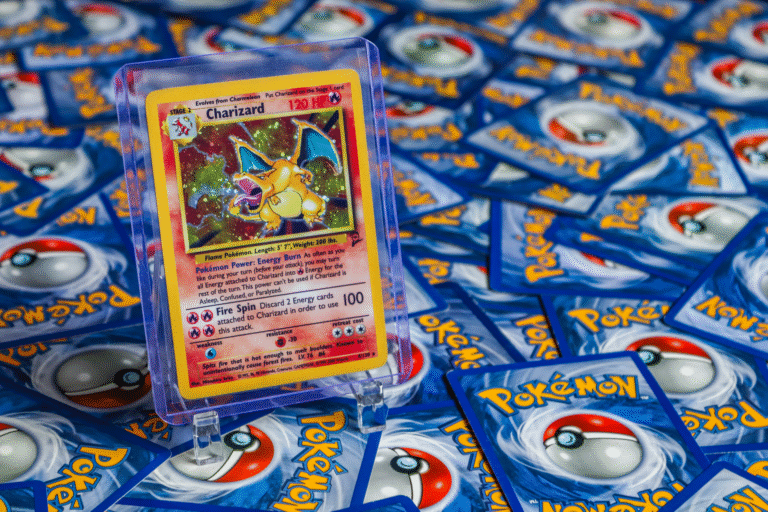
The practical application for collectors and players is understanding how this cross-generational appeal affects card values and rarity. Original Red and Blue cards from 1999-2000 maintain collector premiums partly because older players seek them for nostalgia, but also because younger players view them as foundational to franchise history. When new stories reintroduce Red and Blue characters in modern media (manga, animations, merchandise), they reinforce the legitimacy of older cards as foundational pieces rather than outdated relics. This sustained narrative investment in Red and Blue storytelling supports the long-term value proposition of original cards—they’re not just nostalgic artifacts, they’re connected to an ongoing franchise narrative. However, the limitation is that card value depends on multiple factors beyond nostalgia, including print run, condition, specific artwork, and market supply/demand cycles independent of new releases.
The Risk of Nostalgia Fatigue and Market Saturation
As the franchise continues releasing Red and Blue-adjacent content—remakes, manga collections, merchandise, potential animated adaptations—there’s an inherent risk that the constant return to Kanto region storytelling eventually dampens its novelty appeal. The original 31.38 million-unit sales benchmark for Red and Blue remains untouched 30 years later, partly because those sales represent a moment in time when the games were new and culturally dominant. Subsequent remakes like FireRed and LeafGreen (2004) and the Nintendo Switch remakes (2021) sold millions but didn’t exceed the originals, suggesting that returning to the same story via different platforms experiences diminishing returns after the first remake cycle.
New stories set in Kanto can avoid this trap by genuinely advancing the narrative rather than repeating established beats. The Pokémon Adventures manga has succeeded by evolving Red’s character across decades of serialization, giving readers new story developments beyond “defeat eight gym leaders and win the league.” The October 2026 hardcover edition succeeds commercially because it packages this evolved narrative with premium production values, not because it rehashes the original Game Boy plot. For collectors and card investors, this means that purely nostalgic products (like the $70 jukeboxes) will eventually saturate their target market, while products that offer substantive new content tied to Red and Blue history (like quality manga collections) maintain longer-term engagement potential.

Cross-Media Storytelling and the Pokémon Adventures Example
Pokémon Adventures has serialized continuously since 1997, making it the longest-running narrative expansion of the Red and Blue story. The manga format allowed writers to develop characters and plot threads that the games couldn’t accommodate, creating an alternative Red and Blue narrative that coexists with game canon. This serialization across three decades means the manga itself has become a form of nostalgia—readers who started with early volumes in the 1990s can now revisit those stories through the 2026 hardcover edition, while introducing the narrative to collectors and players who encountered Pokémon through other media.
The October 27, 2026 Pokémon Adventures: Red and Blue Deluxe Edition Vol. 1 launch represents a deliberate decision to repackage this nostalgia with premium production: 476 pages of hardcover content, published through Viz Media and Simon & Schuster distribution. This format targets adult collectors and readers willing to pay higher prices for quality physical editions, paralleling the market for expensive trading card grades and vintage collectibles. The success of this edition depends on whether it reaches both original manga readers seeking a comprehensive collection and new audiences discovering the narrative through prestigious publishing channels.
The Future of Red and Blue Nostalgia in a 35+ Year-Old Franchise
As Pokémon enters its fourth decade, Red and Blue nostalgia will likely intensify rather than diminish, particularly as original players age and seek meaning in their childhood experiences through collecting and media consumption. The franchise’s ability to generate new stories within Kanto’s narrative space—through manga reboots, potential anime remakes, interactive games, and merchandise—suggests that Red and Blue won’t become a static historical artifact but rather a continuously updated foundation. Each new story tied to Red and Blue adds layers to the original narrative without requiring players to return to 1996-era technology. The challenge ahead is maintaining authenticity in these stories.
Pokémon’s sustained cultural dominance among 18-25 year-olds proves that nostalgia-driven content can engage younger audiences when the stories feel essential rather than exploitative. New Red and Blue narratives that advance character development, explore unused regions, or offer fresh perspectives on the original journey will continue driving engagement and collector interest. Those that simply repackage familiar beats without narrative substance will eventually fade. For card collectors and investors specifically, the continuation of Red and Blue storytelling in legitimate, high-quality formats (premium manga editions, potential narrative games, major anime productions) maintains the cultural framework that supports trading card values and collector premiums.
Conclusion
Pokémon Red and Blue’s nostalgia drives new stories because the original games created a narrative template so foundational that subsequent generations can continuously expand it. The 31.38 million-unit benchmark, the ongoing success of remakes, and the launch of premium manga collections all demonstrate that nostalgia isn’t a backward-looking force—it’s an engine for contemporary content creation. As long as The Pokémon Company invests in meaningful new stories set within the Red and Blue universe, that nostalgia will continue converting to tangible revenue across trading cards, merchandise, manga, and gaming platforms.
For collectors and players, understanding this cycle means recognizing that Red and Blue-related products and cards occupy a unique position: they’re simultaneously artifacts of 30-year-old nostalgia and foundational pieces within an actively evolving franchise narrative. The continuation of Red and Blue storytelling through October 2026 releases and beyond reinforces the long-term collectibility and cultural significance of original cards and memorabilia, while premium reissues ensure that the original narrative remains accessible to new audiences. The next five years will likely see further announcements tied to the franchise’s 30th and 35th anniversaries, each providing new entry points for collectors and players to engage with a story that refuses to become merely historical.