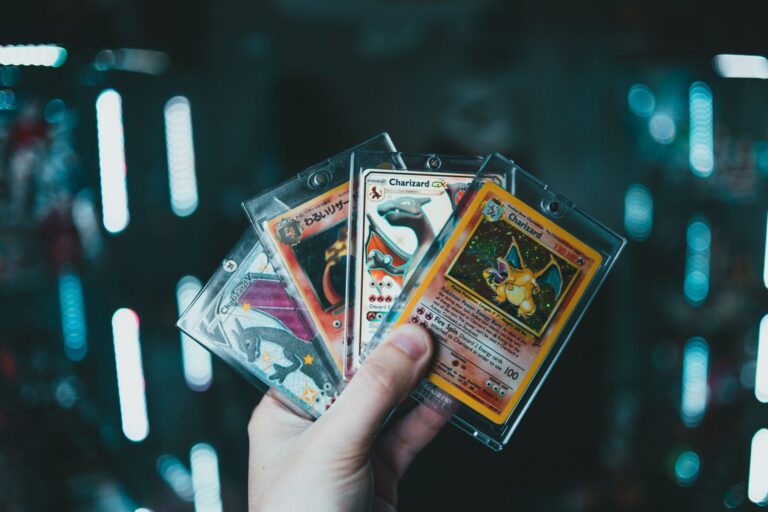
Pokemon Base Set cards are exploding in value in 2026 because of a perfect convergence of factors: the franchise’s 30th anniversary, an extremely limited and fixed supply of original first-edition cards from the 1990s, growing investment interest from both collectors and financial speculators, and unprecedented auction results that are reshaping market perception. In January 2026 alone, average Pokemon cards rose 46 percent year-over-year, with the global trading card market forecast to reach USD 52.1 billion by the end of 2026 and grow to USD 90.2 billion by 2034 at a 7.1 percent compound annual growth rate. The most dramatic proof of this surge came in early 2026 when a PSA 10 1st Edition Charizard sold for $954,800—an all-time record that shattered previous expectations and signaled to the market that these pieces of cardboard from the mid-1990s are now viewed as legitimate assets.
The value explosion matters for the next 30 years because Base Set cards are becoming scarcer, not more abundant. Unlike modern production runs, Pokemon printed Base Set in limited quantities in 1999 and 2000, and the number of well-preserved, professionally graded examples shrinks every year as copies are damaged, lost, or removed from circulation by long-term holders. If current trends continue, high-grade Base Set cards could appreciate significantly over the next three decades, but this scenario depends entirely on sustained collector interest, the health of the broader card market, and whether these cards maintain their status as alternative investments.
Table of Contents
- What’s Driving the 46-Percent Year-Over-Year Surge in Pokemon Base Set Values?
- The Record-Breaking Auction Sales Reshaping the Market
- How Fixed Supply and Scarcity Are Creating Unprecedented Demand
- Investing in Base Set Cards: Grading, Condition, and Strategic Positioning
- The Risks and Volatility Every Collector Should Understand
- The 30th Anniversary Effect and Its Long-Term Impact
- What the Next 30 Years Hold for Base Set Collectors and Investors
- Conclusion
What’s Driving the 46-Percent Year-Over-Year Surge in Pokemon Base Set Values?
The primary driver is the combination of fixed supply and anniversary-driven demand. The pokemon Company announced the franchise’s 30th anniversary in 2026, triggering renewed interest from both nostalgic collectors and newer investors who see Base Set cards as a scarce, tangible asset with historical significance. High-grade WOTC holos—specifically PSA 9 and PSA 10 examples—are experiencing renewed appreciation because the number of copies graded at these levels is microscopically small. A PSA 10 1st Edition Charizard, for instance, exists in fewer than a few hundred copies worldwide, while even PSA 9 examples number in the low thousands. When supply is that constrained and demand increases even modestly, prices move dramatically. A second factor is the visibility effect from record auction sales.
When a Logan Paul-sourced PSA 10 1st Edition Charizard sold for $954,800 in early 2026, that news traveled across social media, mainstream finance outlets, and collector communities. Suddenly, Base Set cards were no longer just nostalgic collectibles—they were financial headlines. This visibility effect cascades: collectors want to own pieces of the same set, investors conduct market research and decide the assets look attractive, and dealers and auction houses increase their focus on sourcing high-grade examples. Each of these groups competes for a shrinking pool of cards, pushing prices upward. Japanese Exclusive Promos from the Base Set era are seeing 30-100 percent increases in some cases, partly because they were printed in even smaller quantities than English-language cards and partly because international collectors are now discovering these versions as distinct investment categories. This diversification of interest—spreading demand across Base Set variants, not just the most famous cards like Charizard—helps sustain the broader market surge.

The Record-Breaking Auction Sales Reshaping the Market
The numbers are staggering and worth examining in detail. In late 2025, a PSA 10 1st Edition Charizard reached $550,000 at Heritage Auctions, setting a record at that time. Then in early 2026, a PSA 10 1st Edition Charizard from the Logan Paul collection sold for $954,800, shattering the previous record by more than 70 percent. Around the same period, a PSA 10 1st Edition Venusaur sold twice in the $55,000 range in February 2026, demonstrating that record prices are not limited to Charizard alone—even supporting cast cards from the set are commanding five-figure sums when they achieve top grades. However, there is a critical limitation buyers must understand: auction records represent outliers at the top of the market, not typical transaction prices.
A PSA 10 1st Edition Charizard might sell for nearly $1 million in a high-stakes auction with international bidders, but the average shadowless Charizard on the secondary market ranges from $2,000 to $50,000 depending on condition and whether it is 1st Edition or shadowless. Blastoise typically ranges from $300 to $3,000, and Venusaur from $200 to $2,000. These are significant sums, but they reflect a reality where condition is everything. A PSA 8 copy of the same card might sell for one-tenth the price of a PSA 9, and the difference between a PSA 9 and a PSA 10 can be a 200-300 percent premium. Sellers and buyers often discover—sometimes painfully—that owning a Base set card worth $1,000 does not mean you can sell it for $1,000 in a timely manner, especially if the card is in subpremium condition or if market liquidity tightens.
How Fixed Supply and Scarcity Are Creating Unprecedented Demand
The mathematics of scarcity work in favor of Base Set cards. Pokemon printed approximately 300,000 to 400,000 Base Set booster boxes in the United States in 1999 and 2000, and print runs in other regions were similarly constrained. Compare this to modern sets, where a single recent release might see tens of millions of cards produced globally. After more than 25 years, many original Base Set cards have been played with, damaged, lost, or stored in poor conditions.
Grading services estimate that perhaps 1-3 percent of all Base Set cards ever printed exist in PSA 9 or PSA 10 condition—that is a handful of copies per thousand original cards. For 1st Edition cards with shadowless borders (the most valuable variant), the percentages are even lower. A striking example of how demand pressure affects even mid-tier cards occurred in October 2025, when reportedly 47 copies of Machamp were purchased as part of a coordinated effort to capitalize on 30th anniversary demand and reduce the number of listings on the marketplace. While 47 copies is a small absolute number, Machamp is not Charizard; it is a secondary card that would normally trade in triple digits. This purchasing activity reportedly caused a price spike in that card despite lower overall sales volume, demonstrating that serious investors are now thinking strategically about accumulation and scarcity at all levels of the Base Set market, not just the iconic holos.

Investing in Base Set Cards: Grading, Condition, and Strategic Positioning
For anyone considering Base Set cards as an investment or collectible, condition and professional grading are non-negotiable. An ungraded Base Set Charizard, even if it is genuinely in near-mint condition, is worth significantly less than the same card graded PSA 9 or PSA 10 because buyers cannot verify the condition and chain of custody is unclear. Professional grading by Pokémon Grading Authority (PGA), PSA, or Beckett provides a transparent label and market clarity. A PSA 9 1st Edition Shadowless Charizard might sell for $15,000-$30,000, while the same card graded PSA 10 could command $40,000-$100,000 or more, depending on market conditions and buyer appetite.
The difference between a 7 and an 8 is also substantial—moving from a well-played card to a moderately played one can triple the value. A practical comparison: shadowless cards (no drop shadow behind the Pokemon art, printed in 1999 before PSA implemented this design change) command the highest premiums because they were printed first and in smaller quantities. 1st Edition cards with shadowless borders represent the rarest subset. However, unlimited shadowless or 1st Edition cards with a small shadow behind the artwork are far more affordable entry points into high-grade Base Set collecting and can still appreciate if the overall market grows. A collector with a $5,000-$10,000 budget might choose a PSA 9 Blastoise or Venusaur in 1st Edition rather than chasing an incomplete Charizard, and this strategy diversifies exposure across the set while maintaining grade and edition quality.
The Risks and Volatility Every Collector Should Understand
The Base Set market is not a guaranteed appreciation machine. Collectible markets are cyclical, and Pokemon card values have experienced two major crashes in the past two decades—once in the early 2000s when the bubble from the late 1990s popped, and again in late 2022 when overheated pandemic-era valuations corrected sharply. While the current market sentiment is bullish, there is no certainty that prices will continue rising. A global recession, a decline in collector enthusiasm, a flood of previously unknown high-grade cards entering the market, or a shift in investor interest to other collectible categories could all trigger significant downward pressure.
Another risk is authentication and counterfeiting. While counterfeit 1st Edition Base Set cards are less common than counterfeits of later sets, they exist, and a buyer who acquires an expensive card outside of professional grading channels faces real exposure. Even professional grading is not infallible—grading standards can shift, and historically graded cards sometimes receive lower grades if resubmitted to current standards. Additionally, the liquidity of the Base Set market, while strong at the top end (a $100,000+ card will find a buyer), becomes thinner lower down. If a collector needs to sell a PSA 7 Machamp quickly, the buyer pool is smaller, and achieving market-rate pricing might require discounting or waiting weeks for the right buyer.
The 30th Anniversary Effect and Its Long-Term Impact
The Pokemon franchise’s 30th anniversary in 2026 is creating a cultural moment that is magnifying collector interest and investment activity. The Pokemon Company has released special anniversary sets, promoted nostalgia through marketing campaigns, and celebrity purchases (such as the Logan Paul break) have generated mainstream media coverage. This anniversary window creates a window of peak demand and visibility—precisely the conditions that drive price spikes. However, it is worth noting that anniversaries are temporary cultural events. The 25th anniversary in 2021 drove interest but did not sustain the same level of mania long-term.
If the 30th anniversary spike proves similar, prices may normalize as the calendar turns and media attention shifts elsewhere. Historical precedent suggests that Base Set cards will retain significant value even after anniversary fervor cools, simply because the absolute scarcity of high-grade examples will remain unchanged. A PSA 10 1st Edition Charizard in 2030 will still be one of a few hundred copies worldwide, and the card’s cultural significance as the face of the original Pokemon set will endure. However, the specific price might not follow the trajectory of continued explosive growth. The most likely scenario over the next 30 years is that Base Set cards continue to appreciate at a steady, moderate rate aligned with wealth growth and collector demand, rather than the 46 percent year-over-year surges currently being observed.
What the Next 30 Years Hold for Base Set Collectors and Investors
If the global trading card market grows from USD 52.1 billion in 2026 to USD 90.2 billion by 2034—a 73 percent increase—then Base Set cards, as the most premium segment of that market, could experience similar or even stronger gains. Rarity only compounds over time. Every year, a small percentage of existing Base Set cards are lost, damaged beyond repair, or removed from potential circulation by long-term collectors who are unlikely to ever sell. This means the effective supply of high-grade cards shrinks even if the total number of cards in existence remains constant.
Demand from an aging millennial collector base with disposable income, combined with younger investors discovering the set for the first time, could support valuations far higher than current levels. The institutional investor class is slowly entering the collectibles market through trading platforms, graded card funds, and alternative investment vehicles that package collectibles for broader portfolios. Over the next 30 years, this professionalization of collectibles could drive sustained interest in the most scarce and liquid assets—exactly where high-grade Base Set cards sit. A collector who acquires a PSA 9 or PSA 10 1st Edition holofoil in 2026 might reasonably expect that card to appreciate 3-5 fold or more over three decades, assuming market conditions remain favorable and grading standards do not change drastically.
Conclusion
Pokemon Base Set cards are exploding in value in 2026 because of a convergence of supply scarcity, anniversary-driven demand, investment interest, and record-breaking auction sales that have captured mainstream attention. Average cards have risen 46 percent year-over-year, and the global trading card market is expected to grow substantially over the next eight years. High-grade examples—particularly PSA 9 and PSA 10 1st Edition cards—represent genuinely scarce assets that are unlikely to become more plentiful, which creates a mathematical case for long-term appreciation.
For the next 30 years, Base Set cards will likely remain a strong alternative investment and collectible category, assuming the broader card market and collector demand persist. However, buyers should approach the market with realistic expectations: condition is everything, prices can be volatile, and record auction sales represent outliers rather than typical transaction values. The window between now and the end of 2026 may represent peak demand during the 30th anniversary cycle, making this a strategic time to acquire cards, but success requires careful grading verification, reasonable pricing discipline, and acceptance that short-term market downturns are possible and even likely.