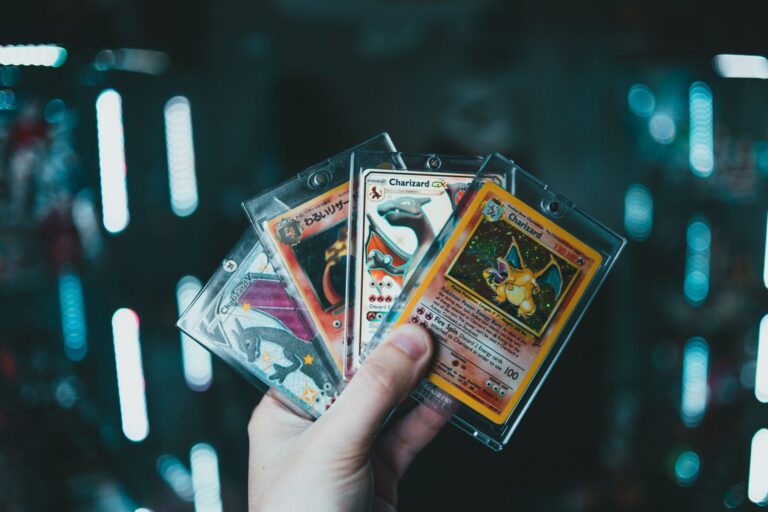
Pokemon Base Set cards are experiencing unprecedented value growth in May 2026, driven by record-breaking sales, severe supply scarcity, and the franchise’s 30th anniversary milestone. A perfect-graded shadowless Charizard sold for $1.7 million in March 2026, while even standard unlimited Base Set Charizards have climbed from hundreds to tens of thousands of dollars in PSA 10 condition. This surge isn’t isolated to a single card—the entire Pokemon card market has grown 46 percent year-over-year, with chase cards like Charizard experiencing 200 to 500 percent gains.
The explosion reflects a fundamental market shift. There are only 122 PSA 10 Charizards in existence, making them functionally irreplaceable assets. When supply is truly finite and demand continues to climb, prices follow a predictable trajectory. What’s changed in May 2026 is that mainstream awareness of this scarcity has reached collectors and investors simultaneously, compressing a multi-year appreciation into months.
Table of Contents
- What’s Driving the Astronomical Price Increases for Base Set Cards?
- Understanding Market-Wide Growth and Long-Term Appreciation Trends
- The Charizard Effect and Other Standout Base Set Cards
- Practical Investment Considerations and Purchasing Strategy
- The Risks and Limitations of the Base Set Market Boom
- Japanese Market Expansion and International Price Correlation
- 30th Anniversary Tailwinds and 2026 Price Outlook
- Conclusion
- Frequently Asked Questions
What’s Driving the Astronomical Price Increases for Base Set Cards?
The core driver is extreme supply scarcity meeting sustained demand. The Pokemon base Set was printed in 1999 and 2000, with the majority of cards discarded, water-damaged, or preserved in poor condition. First Edition and shadowless variants are even rarer. Grading companies have certified only a handful of cards in Gem Mint condition across 27 years, creating a bottleneck that no modern printing can alleviate.
A secondary driver is the 30th anniversary of Pokemon, which falls in 2026. This milestone has triggered both nostalgic re-entry by lapsed collectors and new interest from younger investors aware of the cards’ cultural significance. When you combine scarcity with temporal significance and media attention, prices accelerate. The Charizard specifically benefits from being the franchise’s most iconic card—it appeared on booster box covers, in the original anime, and in every major Pokemon game. That cultural weight justifies premium valuations that other Base Set cards cannot command.
Understanding Market-Wide Growth and Long-Term Appreciation Trends
Pokemon card prices have risen 1,350 percent since 2020, which compounds at roughly 100 percent annually on average. However, this growth is not evenly distributed. vintage sealed products have appreciated 15 to 25 percent recently, while modern singles corrected downward 20 to 30 percent. This divergence reveals the true mechanism: scarcity and age are appreciating assets, while abundance and novelty are depreciating.
Base Set cards benefit from both characteristics—they are old, sealed supplies are finite, and graded specimens in high condition are irreplaceable. The limitation of this growth is that it depends on sustained demand from a relatively small pool of ultra-wealthy collectors and institutional investors. A shift in collector preferences, economic downturn, or the emergence of higher-graded specimens could correct prices downward. For instance, if PSA or Beckett suddenly graded previously unknown high-grade Charizards from original collections, the $15,000-plus valuation for PSA 10 unlimited cards could face pressure.
The Charizard Effect and Other Standout Base Set Cards
Charizard dominates the market conversation, but other Base Set cards are also appreciating meaningfully. A PSA 10 Chansey sells for approximately $55,000, with only about 48 copies in Gem Mint condition. Blastoise and Venusaur, the other starter holos, command $8,000 to $12,000 in PSA 10. Even non-holo rares like Machamp and Dragonite have climbed into four figures for pristine graded copies.
The complete 1st Edition Base Set of 102 cards in Mint condition costs roughly $3,000, while an unlimited set averages $325. This pricing structure reveals how scarcity layers. A single PSA 10 Charizard from a 1st Edition set is worth more than the entire unlimited set, which is worth ten times the cost of a raw 1st Edition set. Collectors must understand that they’re purchasing scarcity as much as condition—a raw 1st Edition Charizard ungraded might cost $500, but grading to PSA 10 can multiply that value twentyfold.

Practical Investment Considerations and Purchasing Strategy
If you’re considering entry into the market, timing and condition grade are everything. A PSA 10 unlimited Charizard at $15,000 to $20,000 is substantially more expensive than a PSA 8 at $4,000 to $6,000, but the PSA 10 will likely appreciate faster due to scarcity in higher grades. The trade-off is capital requirement versus upside potential.
A $6,000 investment in PSA 8 Charizard offers moderate downside protection and meaningful upside if the card reaches PSA 9 equivalency, whereas a $20,000 PSA 10 purchase requires deeper pockets but offers greater scarcity premium. Japanese price movements in May 2026 provide a helpful indicator of international demand. Booster packs increased from ¥180 to ¥200 (an 11.1 percent increase), and booster boxes from ¥5,400 to ¥6,000. These price increases suggest Japanese publishers view the market as strong enough to sustain higher pricing, which typically signals confidence in sustained collector demand globally.
The Risks and Limitations of the Base Set Market Boom
The biggest risk is illiquidity at high price points. A PSA 10 Charizard at $15,000 or $20,000 has limited buyers. If you need to liquidate quickly, you may face significant haircuts. Auction houses like Heritage Auctions move record-breaking cards, but more modest specimens can sit for months. This is fundamentally different from stocks or bonds, where you can sell instantly at market price.
A second risk is grading company reliability. PSA’s reputation has faced scrutiny in recent years regarding consistency and potential for security issues in historic cards. If confidence in PSA 10 authentication eroded, cards graded by that company could face valuation pressure. Additionally, the existence of raw cards graded by now-defunct authenticators creates uncertainty about vintage specimens. A card that appears to be PSA 10 condition but was authenticated 20 years ago may not hold value equivalent to modern PSA 10 cards.
Japanese Market Expansion and International Price Correlation
The May 2026 Japanese booster box price increase to ¥6,000 (approximately $45 USD) represents a shift in how publishers view Pokemon card value globally. When Japanese manufacturers raise prices, it signals that Western secondary market demand has created sustainable high pricing. This creates a feedback loop: higher Japanese prices support higher secondary market prices for vintage cards, which justifies continued collector investment.
Team Rocket’s Mimikyu recently led Pokemon card trading activity with 22 sales averaging $30.72 each, indicating that trading volume remains healthy across modern releases. This sustained modern trading activity provides a healthy market ecosystem that supports vintage card appreciation. When people are actively buying modern products, they’re more likely to upgrade vintage collections, fueling demand for Base Set cards.
30th Anniversary Tailwinds and 2026 Price Outlook
Experts predict 30 to 50 percent appreciation for high-grade Base Set specimens throughout the remainder of 2026, driven by the franchise’s 30th anniversary milestone and continued institutional investor interest. This forecast assumes sustained collector demand and no major market disruptions. The anniversary provides a natural marketing peg for both Pokemon Company and auction houses, which will likely drive media attention and new collector entry.
The question for 2026 is whether this appreciation slows, accelerates, or corrects. Historical precedent from other vintage collectibles suggests that major anniversaries can accelerate appreciation in the months leading up to them, followed by modest consolidation. Base Set cards face the additional benefit that their absolute scarcity continues to increase as more vintage cards are damaged, discarded, or lost. Unlike stocks or cryptocurrency, the supply ceiling for perfect-grade Base Set Charizards cannot increase.
Conclusion
Pokemon Base Set cards are exploding in value in May 2026 because they represent the intersection of extreme supply scarcity, sustained demand from collectors and institutions, cultural significance (30th anniversary), and price momentum that attracts new investors. A perfect-graded shadowless Charizard at $1.7 million represents the outer bound of the market, but even more modest specimens in PSA 10 condition command $15,000 or more due to the existence of only 122 such cards in the world. Before entering the market, understand that you’re purchasing scarcity and condition premium, not the card itself.
Liquidity challenges exist at all price points above $5,000. The 30 to 50 percent appreciation expected through 2026 assumes economic stability and sustained institutional interest—a reasonable forecast given current momentum, but not guaranteed. For collectors seeking to participate, focus on graded PSA 8 to PSA 9 cards as the optimal risk-reward balance, where meaningful upside exists without the extreme capital requirements or liquidity challenges of PSA 10 specimens.
Frequently Asked Questions
What makes a Base Set Charizard worth $15,000 when unlimited print runs still exist?
Only 122 PSA 10 Charizards have been certified in the 27 years since printing. The gap between “card exists” and “card exists in Gem Mint condition” is the entire valuation. An unlimited Charizard in PSA 6 costs under $500; the same card in PSA 10 costs $15,000. Scarcity of condition, not the card itself, drives price.
Should I buy a PSA 10 Charizard as an investment?
Only if you have capital to hold for years and can afford illiquidity. PSA 10 specimens move slowly and with significant haircuts if sold outside auction houses. PSA 8 cards offer better liquidity and moderate appreciation with lower capital requirements. Your risk tolerance and timeline matter more than the card grade.
Could the market crash if new high-grade Base Set cards are discovered?
Yes, significantly. If PSA certified previously unknown PSA 10 Charizards from sealed original collections, supply would increase and valuations would compress. This is why condition census data and grading authenticity matter—they determine the true scarcity floor.
Are Japanese price increases in May 2026 good news for vintage card prices?
Yes, indirectly. When modern booster boxes increase from ¥5,400 to ¥6,000, it signals sustained demand and allows publishers to maintain price floors. This healthy modern market drives collectors to upgrade with vintage cards, supporting secondary market demand.
Which other Base Set cards should I watch besides Charizard?
Chansey PSA 10 ($55,000), Blastoise ($8,000–$12,000), and Venusaur ($8,000–$12,000) appreciate steadily. These cards have fewer eyes on them than Charizard, which may mean better entry prices and less efficient pricing. Non-holo rares like Machamp and Dragonite offer entry points under $2,000 with similar appreciation drivers.
Is a raw (ungraded) 1st Edition Charizard a good investment?
Only if you plan to grade it. A raw 1st Edition Charizard might cost $500–$1,000, but grading costs $100–$300 and could result in a PSA 8 ($4,000) or PSA 9 ($8,000+). The variance is high, so this strategy only works if you’re comfortable with that uncertainty or have expertise in condition evaluation.