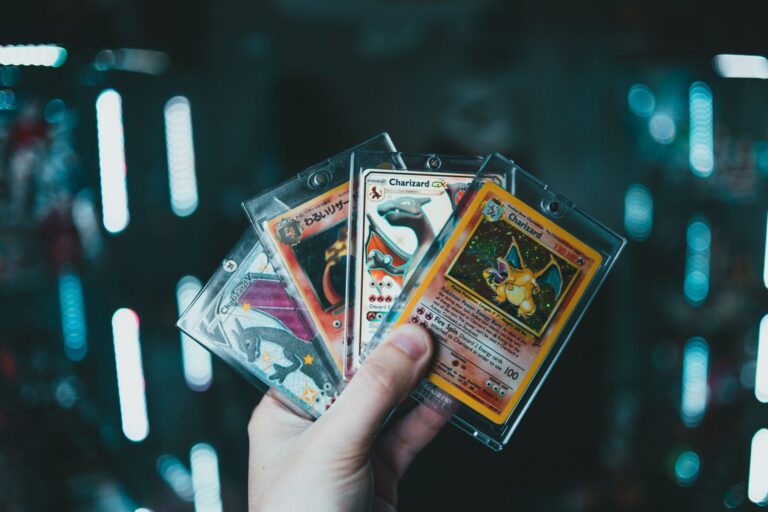
Pokemon Base Set cards are experiencing unprecedented price growth due to a perfect convergence of supply scarcity, collector demand, and the franchise’s 30th anniversary milestone in 2026. In December 2025, a first edition Charizard #4 graded PSA 10 sold at Heritage Auctions for $550,000—a new all-time public auction record that demonstrates just how valuable these early cards have become. This isn’t speculation or hype; it’s the inevitable result of a closed supply (Base Set production ended decades ago) meeting explosive demand from both longtime collectors and new investors entering the market.
The surge is particularly dramatic when you examine price movements across the entire Base Set. Cards that sold for hundreds of dollars just a few years ago now command tens of thousands. First edition Charizards that once fetched $3,000 to $6,000 are now regularly exceeding that range, while Blastoise Base Set PSA 10 first editions have jumped into the $40,000 to $60,000 range—with recent sales hitting $88,000 to $138,000. The momentum behind these cards shows no signs of slowing, especially with the 30th anniversary drawing near.
Table of Contents
- What’s Driving the Explosive Demand for Base Set Cards?
- The Premium Structure: Why Grading Changes Everything
- The Charizard Effect and Secondary Holo Opportunities
- Grading ROI vs. Raw Card Appreciation—Which Strategy Wins?
- Availability and Counterfeits—Real Risks in the Base Set Market
- The Anniversary Effect—What History Tells Us
- What This Means for the Future of Base Set Valuations
- Conclusion
What’s Driving the Explosive Demand for Base Set Cards?
The primary driver is simple economics: there will never be more Base Set cards produced. When pokemon TCG began printing in 1999, no one anticipated that those original cards would become historically significant collectibles worth six figures. Production was massive by today’s standards, but time has worked against remaining inventory. Cards have been lost, damaged, played with, or simply disappeared into storage that will never be recovered. Meanwhile, demand continues to climb as the hobby grows globally and institutional collectors recognize Pokemon cards as a legitimate alternative asset.
The 2026 Pokemon 30th anniversary adds another powerful element to the equation. Historical anniversaries have driven price surges in collectibles across industries—think baseball cards, comic books, and memorabilia. Pokemon’s anniversary is expected to trigger significant media coverage, nostalgia-driven buying, and promotional events that will introduce new collectors to the hobby. Collectors who remember 1996 when Pokemon launched are now financially established adults with disposable income, and many are returning to the hobby they loved as kids. This combination of nostalgia, scarcity, and institutional recognition has transformed Base Set cards from children’s trading cards into serious investments.
The Premium Structure: Why Grading Changes Everything
One of the most important—and most misunderstood—aspects of Base Set card valuation is the grading premium. Raw, ungraded cards sell for a fraction of what their graded counterparts command. A first edition Base set charizard in near-mint condition might fetch $1,900 ungraded. The same card, if graded PSA 10, could sell for $16,270—an 8.5x multiple. This isn’t inflated; grading provides authentication, a permanent record of condition, and certification that appeals to both serious collectors and investors. However, the grading premium carries a hidden cost that many collectors overlook.
Grading services charge $25 to $100 or more per card depending on turnaround time and card value. If you’re sending in a card worth $75 ungraded, spending $75 to grade it doesn’t make financial sense. The ROI threshold for grading is generally cards valued at $75 or higher in ungraded condition. Below that, the grading cost eats into profit. Additionally, the supply of graded high-end cards is severely limited. PSA 10 first edition Charizards are extraordinarily rare—the combination of original print quality, pristine condition preservation, and PSA’s strict grading standards means very few cards achieve this tier. This rarity within the scarcity is what drives the astronomical prices.
The Charizard Effect and Secondary Holo Opportunities
Charizard dominates Base Set price discussions because it’s the most valuable and recognizable card from the set. The $550,000 Heritage Auctions sale overshadows everything else, but understanding the broader price structure reveals strategic collecting opportunities. Charizard ranges from $300 to $500 for unlimited copies, $3,000 to $6,000 for first editions, and $15,000 or more for PSA 10 grades. These increments tell a story: condition and edition matter enormously. But Charizard isn’t the only valuable Base Set card.
Blastoise has emerged as a secondary opportunity with serious growth potential. PSA 10 first edition Blastoise cards command $40,000 to $60,000, though recent sales have climbed into the $88,000 to $138,000 range, suggesting strong momentum. Ungraded Blastoise holos typically range from $80 to $200 depending on condition. For collectors with smaller budgets, pursuing graded copies of secondary Base Set holos offers better entry points than attempting to acquire a Charizard at any grade level. The risk is that secondary cards may not appreciate as quickly if the market cools, but the upside remains significant if the Base Set rally continues.

Grading ROI vs. Raw Card Appreciation—Which Strategy Wins?
The decision to grade or hold cards raw represents a fundamental strategic choice that collectors face. If you own an ungraded Base Set Charizard worth $1,900, grading it to PSA 10 could increase its value to $16,270—a theoretical 8.5x return. But this assumes the card grades at PSA 10, which requires exceptional condition across all parameters: centering, corners, edges, and surface. Many cards that appear near-mint fail to reach PSA 10 because graders identify subtle flaws invisible to casual inspection. The gamble is real, and grading fees represent sunk cost if your card grades lower than expected.
Alternatively, holding cards raw and simply benefiting from market appreciation is a lower-friction strategy. Raw Base Set holos are appreciating 15 to 30 percent annually according to TCGPlayer trend data, driven purely by market dynamics. You avoid grading costs, turnaround delays, and the risk of underperformance. The tradeoff is that you sacrifice the authentication premium and the ability to sell into institutional or serious collector markets that prefer graded inventory. High-end dealers and museums will only purchase PSA or BGS graded cards with authenticated pedigrees. For mid-tier collections, the raw approach is simpler; for aspirational high-end acquisitions, grading becomes non-negotiable.
Availability and Counterfeits—Real Risks in the Base Set Market
As Base Set prices climb, counterfeiting has become an increasingly serious concern. The hobby has attracted bad actors specifically because the profit margins on fake high-end cards are enormous. A convincing counterfeit Charizard PSA 10 could sell for a small fraction of legitimate prices, and some counterfeiters have become frighteningly sophisticated. Ungraded purchasing requires expertise that most collectors don’t possess—examining print lines, paper quality, ink saturation, and holo patterns requires hands-on experience or expert guidance. This risk is precisely why professional grading has become so valuable.
PSA authentication represents a guarantee that the card is legitimate, not just a high-quality counterfeit. When you purchase a PSA 10 card from a reputable dealer, you’re paying for the assurance of authenticity as much as condition. The flipside is that prices for graded cards reflect this premium, which creates a barrier to entry for budget-conscious collectors. Many new collectors unknowingly purchase raw cards online through marketplace listings, only to discover later that they’ve acquired counterfeits. Stick with established dealers, request detailed photos of print patterns, and consider authentication services if you’re purchasing high-value raw cards without grading.

The Anniversary Effect—What History Tells Us
Pokemon’s 30th anniversary in 2026 provides a historical parallel worth examining. In 2021, the 25th anniversary triggered a massive price surge driven by celebratory product releases, media coverage, and renewed interest from collectors who grew up with the franchise. Base Set cards that were trading at reasonable prices suddenly became investment-grade assets. The 30th anniversary promises to repeat this pattern on a larger scale because the fanbase is older, wealthier, and more serious about collecting than it was five years ago.
Anniversary-driven rallies typically peak during the anniversary year and then stabilize at elevated levels unless underlying fundamentals continue to support growth. For Base Set cards, the underlying fundamental is supply scarcity combined with global franchise expansion, so the post-anniversary environment should remain bullish. However, smart collectors are already positioning now rather than waiting for anniversary announcements. By the time 2026 officially arrives, smart money will have already accumulated positions, and late arrivals will face significantly higher entry prices.
What This Means for the Future of Base Set Valuations
If the present trajectory continues, expect Base Set card prices to move further into blue-chip collectible territory alongside vintage sports cards and fine art. Museums and institutional collectors have already begun acquiring high-grade Base Set cards as part of diversified cultural collections. This institutional entry point legitimizes Pokemon as an alternative investment asset class, which typically drives sustained price appreciation regardless of retail market volatility. First edition Charizards could realistically breach $1 million in private sales within the next five to ten years if institutional demand continues accelerating.
For everyday collectors, this shift means the window to acquire quality Base Set cards at reasonable prices is rapidly closing. Unlimited copies and lower-grade first editions still represent accessible entry points, but expecting to find deals is increasingly unrealistic. The market has been discovered and is being repriced accordingly. Those who acquire thoughtfully now—whether graded or raw, whether pursuing Charizard or secondary holos—will be positioned advantageously if and when the market continues its appreciation trajectory.
Conclusion
Pokemon Base Set cards are exploding in value because the conditions that create collectible appreciation have aligned perfectly: zero future supply, growing global demand, authentic cultural significance, and increasing institutional recognition. The December 2025 Heritage Auctions $550,000 Charizard sale isn’t an anomaly; it’s a price discovery moment that confirms what the broader market has already recognized—these cards represent real value backed by real scarcity.
Whether you’re a collector seeking quality pieces or an investor exploring the market, understand the grading premium, verify authenticity through professional services, and recognize that Base Set cards are transitioning from hobby collectibles to institutional-grade assets. The next decade will reveal whether this appreciation continues or corrects, but the current momentum suggests the former. Position accordingly, do your research, and remember that even in a bull market, overpaying for condition grades you can’t verify remains the fastest way to lose money.