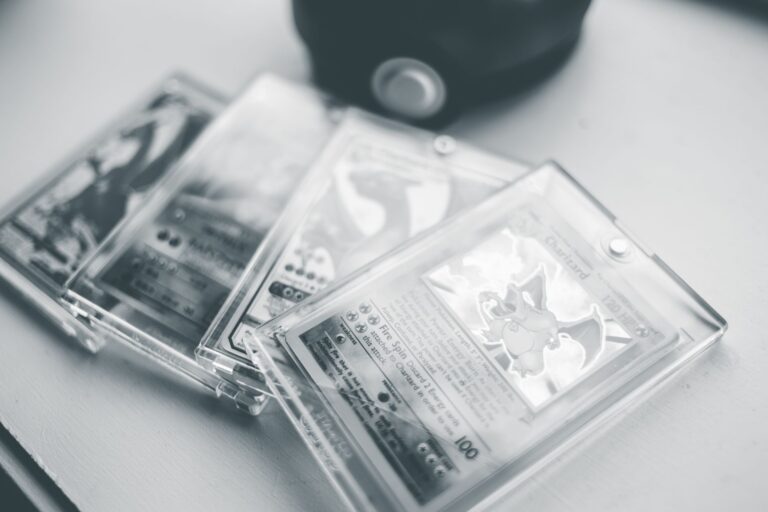
The short answer is that there is no official, publicly available estimate of how many Sandshrew Base Set 2 Pokémon cards were printed. The Pokémon Company, Nintendo, and Wizards of the Coast have never released specific production numbers for individual cards or even complete print run quantities for Base Set 2 as a whole. Despite decades of collector speculation and research, the exact number of Sandshrew cards produced remains one of the industry’s unsolved mysteries, making it impossible to provide a definitive figure.
For example, collectors attempting to estimate print runs for the entire Base Set 2 set release in February 2000 can point to grading population data from services like PSA and BGS, but these numbers only represent cards that were professionally graded—likely a tiny fraction of all cards produced. The lack of transparent production data has become a defining characteristic of early Pokémon TCG history. Sandshrew, classified as a Common card numbered #91 in Base Set 2, was likely printed in higher quantities than rare cards simply due to its rarity classification, but the actual multiplier—whether commons were printed 5 times, 10 times, or 50 times more than rares—remains unknown. This information gap frustrates collectors, investors, and researchers who would otherwise have clearer insights into the relative scarcity of cards from this era.
Table of Contents
- Why Official Print Numbers for Base Set 2 Sandshrew Don’t Exist
- The Challenge of Reverse-Engineering Print Quantities from Available Data
- How Collectors Estimate Print Quantities Without Official Data
- Using Grading Population Data as an Imperfect Proxy
- Common Misconceptions About Base Set 2 Print Runs
- Comparing Sandshrew to Other Base Set 2 Commons and Rares
- Future Prospects for Print Run Disclosure and Ongoing Research
- Conclusion
Why Official Print Numbers for Base Set 2 Sandshrew Don’t Exist
The primary reason exact print quantities are unavailable stems from non-disclosure agreements between Wizards of the Coast, The Pokémon Company, and Nintendo. These agreements, established during the early years of the trading card game in 1999-2000, explicitly prevented the release of production data to the public. At that time, the Pokémon Company prioritized competitive advantage and market strategy over transparency, choosing not to disclose how many cards were manufactured for fear it would affect pricing decisions, secondary market dynamics, or future print run strategies.
Additionally, record-keeping during the Wizards of the Coast era (1999-2003) was less rigorous than modern manufacturing standards. The rapid growth of the Pokémon TCG meant that WOTC was scaling production faster than typical trading card games, and meticulous documentation of individual card quantities was not treated as a priority. Unlike modern manufacturing where supply chain data is tracked digitally and extensively archived, early Pokémon production relied on more analog processes. Even if detailed records existed internally, they have not been declassified or made publicly accessible, and The Pokémon Company shows no signs of changing this policy.

The Challenge of Reverse-Engineering Print Quantities from Available Data
Collectors and researchers have attempted to estimate Base Set 2 print runs by working backward from available grading populations and surviving cards in circulation. The primary data source is the number of cards submitted for professional grading through services like PSA (Professional Sports Authenticator) and BGS (Beckett Grading Services). If, for example, 1,500 copies of Sandshrew Base Set 2 have been graded by PSA, this represents perhaps 0.1% to 2% of all cards ever printed—but that percentage is pure speculation. Without knowing the submission rate or what percentage of surviving cards collectors choose to grade, it’s mathematically impossible to work backward to a reliable total print number. A critical limitation of this approach is selection bias.
Collectors are far more likely to submit rare cards for grading than commons, and they’re more likely to submit cards in excellent condition. A heavily played Sandshrew from 1999 that’s still in someone’s childhood collection will never be graded and will never appear in any population statistics. Similarly, cards that were lost, destroyed, or discarded over the past 25 years are invisible to all estimation methods. This creates a situation where collector estimates based on grading data might represent anywhere from 5% to 50% of actual production, depending on variables that cannot be measured. Comparing Sandshrew to other commons from the era provides no help, because each card’s circulation pattern, collector interest, and grading submission rates differ significantly.
How Collectors Estimate Print Quantities Without Official Data
In the absence of official numbers, the Pokémon collecting community has developed several estimation methodologies. The most widely used approach compares known print run information from other TCGs and applies proportional models to the Pokémon TCG. Since The Pokémon Company eventually released approximate print run figures for certain later sets (measured in the hundreds of millions of cards), researchers attempt to extrapolate backward to Base Set 2’s production levels. These estimates typically fall in the range of 5 to 50 million cards printed for the entire Base Set 2 set, with common cards like Sandshrew representing a significant portion of that total volume. Another methodology involves examining market supply and price stability.
If a card was massively overprinted, survivor quantity would remain high, prices would stay low, and supply would seem nearly infinite. Conversely, if a card was underprinted, scarcity would drive up prices and make the card harder to acquire. Sandshrew Base Set 2 is relatively affordable and available on the secondary market, suggesting it was printed in sufficient quantity to still have decent supply decades later. However, this method is entirely qualitative and subject to market cycles, speculation, and changing collector preferences. A card might seem abundant because recent speculators dumped inventory, not because it was originally overprinted.

Using Grading Population Data as an Imperfect Proxy
Professional grading populations offer the most concrete data available for individual cards, though they remain a limited proxy for total print quantities. For Sandshrew Base Set 2, PSA’s population reports show how many copies have passed through their authentication and grading service. Similarly, BGS (now Beckett Grading Services), CGC Cards, and other third-party graders maintain population statistics. These numbers are publicly accessible and provide a floor for how many cards definitely survived to the modern era in collectable condition. However, they tell you almost nothing about the original print quantity.
Consider a practical example: if PSA reports 2,000 graded copies of Sandshrew Base Set 2 across all grades, this might seem like low circulation. But if the card was originally printed in 20 million copies, a 0.01% submission rate would be entirely consistent with widespread overproduction. Alternatively, if only 100,000 copies were printed, a 2% submission rate would suggest the card is actually quite scarce. The problem is you cannot know which scenario is true without the original print data. Many collectors mistakenly assume that low population numbers indicate low print quantities, but this confuses post-production circulation with original manufacturing volume. A card can be heavily printed but still appear scarce today if most copies were lost or destroyed.
Common Misconceptions About Base Set 2 Print Runs
One widespread misconception is that Base Set 2, being released later than Base Set or Base Set 1, was printed in lower quantities due to waning interest. In reality, the opposite is likely true. By 2000, the Pokémon TCG was at peak mainstream popularity, and manufacturers significantly increased production. Base Set 2 likely had one of the largest print runs of any Wizards of the Coast-era set, making cards like Sandshrew relatively common in aggregate, even if they’re harder to find today. However, this is still an educated guess rather than confirmed fact, which underscores the broader challenge of discussing Base Set 2 rarity without official data. Another misconception is that cards surviving 25+ years in good condition represent a significant percentage of originally printed cards.
The reality is far more harsh: the vast majority of cards printed in 1999-2000 were destroyed, lost, or damaged beyond recognition. Children who received these cards as gifts or from booster packs used them in games, bent them, faded them in sunlight, or threw them away as they grew older. Cards stored in basements suffered moisture damage. Cards left in attics warped from temperature fluctuations. The percentage of Sandshrew Base Set 2 cards that survive in near-mint condition is likely less than 1% of the original print run, making population statistics a highly misleading proxy for rarity. A warning to collectors: just because a card has low grading populations does not mean it was scarce when printed—it may simply mean most copies did not survive in collectable condition.

Comparing Sandshrew to Other Base Set 2 Commons and Rares
While exact print comparisons are impossible, understanding relative rarity within Base Set 2 provides some context. Common-class cards like Sandshrew were almost certainly printed in higher volumes than uncommon or rare cards, following standard TCG production practices. This has been true of virtually every major trading card game, including Magic: The Gathering, Yu-Gi-Oh, and other Pokémon sets where print ratios eventually became public. A reasonable assumption, though unconfirmed, is that commons were printed at roughly 3-5 times the volume of uncommons, and 10-20 times the volume of rares.
Applying this logic to Base Set 2 suggests Sandshrew was produced in very high volume, though the actual multiples remain speculative. In comparison, rare Pokémon from Base Set 2, such as Blastoise or Venusaur, command significantly higher prices and have lower population numbers on grading sites. This price differential almost certainly reflects genuine scarcity differences, but the magnitude of that difference—whether Blastoise was printed at 1/10th the volume of Sandshrew or 1/100th—cannot be determined without production data. For collectors, this means Sandshrew Base Set 2 should be valued primarily on condition and demand rather than on theoretical scarcity, since no authoritative scarcity metric exists.
Future Prospects for Print Run Disclosure and Ongoing Research
As the Pokémon TCG market has matured and became dominated by adult collectors and investors rather than children, there has been increased pressure on The Pokémon Company to release historical production data. Some privacy-related documentation has become public through freedom of information requests, regulatory filings, and corporate transparency reports, but Pokémon has not capitulated on early TCG production numbers. It’s possible that as the original NDAs expire or as institutional interest in Pokémon TCG as a collectible asset class grows, this information could eventually be released. However, The Pokémon Company has shown little inclination to do so, and there is no official timeline or commitment to transparency on this issue.
In the meantime, community research continues to produce increasingly sophisticated estimates. Academic papers on TCG production, supply chain analysis, and comparative grading data are being published by collector researchers. Organizations like the Pokémon Collectors and researchers online maintain databases of print run estimates based on available evidence. While these sources remain unofficial and sometimes contradictory, they represent the closest thing to an authoritative answer available today. For anyone seeking to understand Sandshrew Base Set 2’s rarity, consulting multiple collector-research sources and understanding their methodologies is more valuable than seeking a single definitive number that does not exist.
Conclusion
The definitive answer to how many Sandshrew Base Set 2 Pokémon cards were printed is that this information has never been publicly disclosed by The Pokémon Company, Nintendo, or Wizards of the Coast. The original non-disclosure agreements between these entities, combined with less rigorous record-keeping practices of the early 2000s, mean that exact production numbers are likely unknown even within company archives. Collectors must rely on imperfect proxies—grading population data, market supply analysis, and comparative estimates based on other TCG products—but all of these methods carry significant limitations and uncertainties.
For collectors and investors evaluating Sandshrew Base Set 2, the practical takeaway is clear: focus on condition, demand, and long-term market trends rather than theoretical print run estimates. While the card was almost certainly printed in high volume (being a common), its actual scarcity cannot be determined with precision. As the collecting community continues to mature and historical research advances, more sophisticated estimates may emerge, but until The Pokémon Company releases official data, any print quantity figure remains educated speculation rather than established fact.