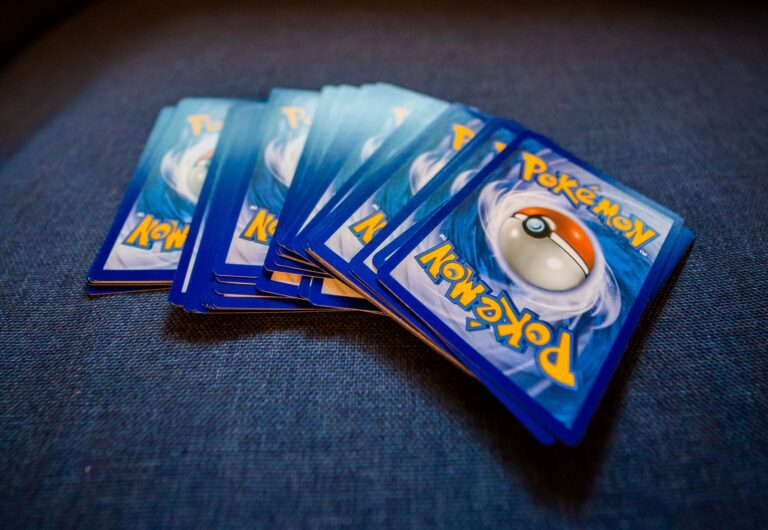
Vintage Pokemon holos feel cheap right now because the market has bifurcated into two distinct tiers: record-breaking sales at the absolute top have created psychological anchoring that makes mid-range vintage cards seem undervalued by comparison, while broader softness in the 2024-2025 market has left accessible vintage holos depressed relative to their underlying scarcity. A PSA 10 Unlimited base set Charizard in December 2025 sold for $550,000, and an Illustrator Pikachu reached $16.4 million in February 2026—numbers so divorced from reality that a player finding a Near Mint Jungle holo in a binder can’t help but feel like they’re sitting on pocket change. The real story isn’t that vintage holos are worthless.
It’s that the Pokemon 30th anniversary in late February 2026 triggered genuine nostalgia-driven buying pressure that briefly lifted the entire market, then receded unevenly. Sets that should have benefited—Gym Heroes, Gym Challenge, and early Neo series—have quietly appreciated in PSA 10 condition, but they’re still trading at prices that feel like a bargain for cards that are 25+ years old, one-per-pack pulls, and increasingly difficult to find in high condition. An Unlimited base set holo in good condition still ranges from $50 to $500 depending on the specific card, and European collectors are picking up solid Jungle and Fossil holos for €30 to €200. These prices feel cheap because they are cheap relative to both the scarcity and the psychological ceiling set by the record sales.
Table of Contents
- Why Record Sales Create a Misleading Baseline for Vintage Holo Pricing
- The Quiet Appreciation of Overlooked WOTC-Era Sets
- The Accessibility Paradox—High-End Records vs. Ground-Level Pricing
- Condition Grading and the Cost of Authentication—Where Real Value Gets Obscured
- Market Softness in Modern Special Illustration Rares—A Warning About Current Pricing
- The Sealed Product vs. Loose Card Divergence
- The 30th Anniversary Bounce and What It Means for Future Pricing
- Conclusion
Why Record Sales Create a Misleading Baseline for Vintage Holo Pricing
The $16.4 million Illustrator Pikachu and the $550,000 Charizard aren’t aberrations—they’re the market’s north star, and they’ve warped collector expectations across the board. When the highest-tier vintage cards are selling for seven and eight figures, a PSA 8 Jungle Blastoise at $1,200 starts to feel like it’s being given away. But here’s the catch: those record sales are for cards that are genuinely one-of-a-kind or so rare that only a handful exist. The Illustrator Pikachu has fewer than 50 in existence.
A First Edition Shadowless Charizard has maybe a few thousand graded PSA 10 copies worldwide. A mid-grade vintage holo from a mainstream set like Base Set or Jungle has thousands upon thousands of copies circulating, and that supply matters more than most collectors want to admit. The psychological anchor created by these record sales has made normal vintage holos feel underpriced even when they’re actually performing well. Sealed vintage product—the kind that comes in factory packs or boxes—has maintained a “remarkably consistent upward trend” through 2025 and into 2026 according to market tracking, which suggests that the underlying value is still being recognized by serious investors. But loose vintage holos trading on secondary markets haven’t benefited equally from that momentum, creating an illusion of cheapness when what’s really happened is a reallocation of capital toward sealed product and the absolute top tier of graded cards.
The Quiet Appreciation of Overlooked WOTC-Era Sets
While casual collectors have been fixated on base Set and Charizard variants, PSA 10 holos from Gym Heroes, Gym Challenge, and the Neo series have been appreciating without much fanfare. These sets hit the market in the mid-1990s and early 2000s, so their supply is genuinely constrained compared to the massive print runs of Base Set. A Neo Genesis holo in PSA 10 condition—a card that sold for $80 in 2020—might fetch $200 to $400 today. That’s real appreciation, and it’s happening because fewer people are chasing these sets compared to the mainstream options.
The limitation here is condition-dependent. A Neo Genesis holo in PSA 8 or PSA 9 might still be relatively cheap because the jump in scarcity between an 8 and a 10 is enormous in these older sets. Many of these cards were not handled carefully in the 1990s and early 2000s, so finding high-grade copies is genuinely difficult. A holo that grades a 6 or 7 might sell for $30 to $100, while the same card in a 9 could be $800 to $1,500. That spread is where a lot of “cheap” vintage holos are actually located—they’re not cheap because the market doesn’t value them, but because they haven’t been professionally graded or because they don’t meet the condition threshold that serious collectors are willing to pay for.
The Accessibility Paradox—High-End Records vs. Ground-Level Pricing
The current vintage holo market reveals a strange paradox: the most expensive Pokemon cards in history are being sold in 2026, while accessible vintage holos are at prices that would have seemed like steals five years ago. An Unlimited base set holo like a Venusaur or Blastoise in Excellent condition (roughly PSA 7 equivalent) is trading for $300 to $600. Compare that to 2019 or 2020, when those same cards commanded $800 to $1,200, and it’s easy to see why they feel cheap. But compare them to the actual inflation of the Pokemon card market—where sealed boxes of Scarlet & Violet are $150 and modern booster packs are $4.50 each—and suddenly $400 for a 25-year-old guaranteed holo doesn’t seem like pocket change.
The real accessibility play is in the €30-€200 range for solid Jungle and Fossil holos coming out of European inventories. These are genuine vintage cards, pulled from packs in 2000 and held for a quarter century, now finding their way to market as estates liquidate or European collectors age out. For collectors who care about owning a piece of Pokemon history without the premium grading cost, this is genuinely cheap. A Jungle Magneton in Near Mint condition for €80 is an artifact that’s 25 years old and will never be printed again. It’s only cheap if you’ve anchored to the Charizard record or if you’re comparing it to inflated prices from 2021-2022.

Condition Grading and the Cost of Authentication—Where Real Value Gets Obscured
One reason vintage holos feel cheap is that the easiest cards to find are the ones in lower grades. A raw, ungraded Fossil holo might sell for $15 to $40 depending on the specific card and visible condition. That same card, if it grades PSA 8 or higher, could be $200 to $500. The gap between a raw card and a graded 8 isn’t just about condition—it’s about authentication, investor confidence, and the ability to resell in the secondary market. Many collectors don’t factor in the $20 to $50 PSA submission fee when they see a cheap raw card, which means they’re comparing apples to oranges. For budget-conscious collectors, this is actually an opportunity.
Raw vintage holos in good (not excellent) condition are genuinely cheap because the grading market has created a two-tier system. A raw Blastoise from Unlimited base set might be listed at $150, while a PSA 6 version of the same card costs $400. The $150 card might have a 30-40% chance of grading a 6 if sent in, which would make it break-even economically after the grading fee. It might grade a 5 or lower, in which case you’ve spent money to downgrade your investment. It might grade a 7 or 8, in which case you’ve beaten the market. The variance is why raw cards feel cheap—the grading system has priced in the risk, and most collectors aren’t willing to take it.
Market Softness in Modern Special Illustration Rares—A Warning About Current Pricing
Not all vintage holos feel cheap—some actually feel overpriced or are actively declining. Special Illustration Rare Jellicent ex and Mega Evolution cards have experienced noticeable price softness since April 2026, as the initial hype around those releases has faded and supply has normalized. This is a warning to collectors who think all Pokemon cards from the 2020s and beyond should be held as long-term investments. The market can be selective: sealed vintage product appreciates steadily, record-breaking rare cards hold value indefinitely, but mid-tier and novelty cards from recent years can depreciate quickly when the initial collector euphoria passes.
The lesson for vintage holo pricing is that softness is real and it’s not just a perception. The market is making genuine judgments about what has lasting value. Gym Heroes PSA 10 holos are appreciating because there’s limited supply, high demand from collectors of that era, and a clear historical significance. A Mega Evolution card from 2014-2018 is softening because those products had higher print runs and less nostalgic weight for the core collecting community. If vintage holos feel cheap right now, part of the reason is that the market is correctly pricing them lower than the record sales would suggest, because the record sales aren’t representative of what will happen to the mid-tier market going forward.

The Sealed Product vs. Loose Card Divergence
One of the clearest signals that vintage holos are being mispriced is the disparity between sealed vintage product and loose graded cards. A sealed Jungle booster box has appreciated from roughly $15,000 in 2020 to $25,000 to $35,000 in 2026. That’s consistent, predictable growth driven by scarcity and investor confidence. A loose PSA 10 Jungle holo from that same booster box hasn’t appreciated proportionally—it might have gone from $400 to $700 in the same timeframe.
The sealed product is clearly capturing more of the value creation, which means the loose cards are relatively cheap by comparison. This divergence matters because it reveals where market confidence actually is. Investors are betting on scarcity and unopened status. Collectors are accepting lower prices for loose cards because authentication, condition variation, and market saturation are real factors. A vintage holo feels cheap because loose vintage holos are in fact being discounted relative to sealed product—not because the market is irrational, but because the two products serve different buyer psychology and have different risk profiles.
The 30th Anniversary Bounce and What It Means for Future Pricing
The Pokemon 30th anniversary in late February 2026 was supposed to be a sustained catalyst for vintage holo demand. It did create real buying pressure: nostalgia-driven collectors re-entered the market, new players were attracted to the brand’s history, and there was a genuine moment where vintage inventory moved and prices held firm. But the bounce wasn’t uniform. High-end cards and sealed product benefited more than loose mid-tier holos.
By April 2026, some segments of the market—particularly the Special Illustration Rare cards that had peaked in early 2025—were already showing weakness again. What this suggests for the future is that vintage holos may continue to feel cheap until a new cohort of collectors matures into a position where they have both capital and nostalgia for cards from the 1990s and early 2000s. The current market is still anchored to 2020-2021 FOMO pricing and 2025-2026 record sales. In another three to five years, when Gen Z players and early-2000s collectors have more disposable income, those quiet appreciations in Gym Heroes and Neo series cards could accelerate, making today’s prices look genuinely cheap in retrospect. But there’s no guarantee, and the market is correctly pricing in that uncertainty by keeping mid-tier vintage holos depressed relative to the record-breaking exceptions.
Conclusion
Vintage holos feel cheap right now because the market has created a bifurcated pricing structure where record-breaking sales anchor collector psychology at unrealistic levels, while the bulk of vintage holos trade at prices that reflect genuine uncertainty about long-term demand. A $550,000 Charizard or a $16.4 million Illustrator Pikachu makes a $400 Jungle Blastoise seem undervalued, even though both reflect rational market decisions about scarcity and desirability. The reality is more nuanced: sealed vintage product is appreciating steadily, WOTC-era sets in high grades are quietly gaining value, and accessible vintage holos in good condition are legitimately cheap—not because the market is wrong, but because there’s real supply and real uncertainty about who will want these cards in five or ten years. For collectors deciding whether to buy right now, the answer depends on your timeline and expectations.
If you’re looking for speculative growth, Gym Heroes and Neo series PSA 10 holos are quietly appreciating and represent real value compared to the record sales. If you’re looking for cards to hold long-term as a collection, raw vintage holos in good condition at €30 to €200 (or $50 to $500 in the US) are genuinely cheap—you’re just not going to see exponential returns. The market’s selective pricing isn’t a sign of dysfunction. It’s a sign that vintage holos are being correctly valued relative to their real scarcity, historical significance, and the actual size of the collector base willing to pay for them.