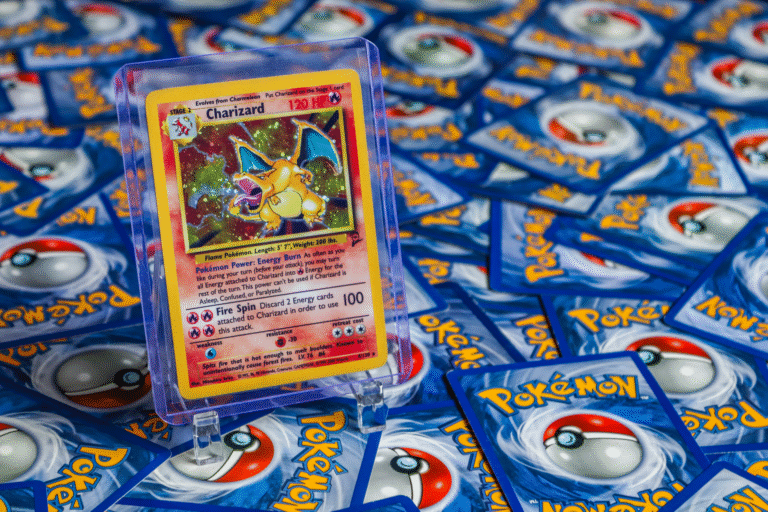
Veteran collectors increasingly view vintage Pokémon cards as safer holdings than the modern booster box flipping and speculative investment culture that has dominated the hobby since 2020. Unlike the volatile modern market driven by hype cycles, chase cards, and artificial scarcity schemes, cards from the late 1990s and early 2000s have demonstrated stable long-term price floors based on actual rarity, condition, and demand from players and serious collectors. A 1st Edition Shadowless Charizard, for example, has maintained consistent value over decades because its scarcity is genuine and its desirability transcends trends.
The shift toward vintage as a safer alternative reflects broader skepticism about whether modern cards represent real collectibles or speculative assets. Modern sealed products have experienced dramatic price drops as the market corrected from pandemic-era peaks, with many booster boxes worth significantly less than their release prices. Graders have faced backlogs and authentication concerns that compound modern card risks, while vintage cards benefit from established grading standards, clear price histories, and a collector base that values use and nostalgia over short-term profit.
Table of Contents
- Why Vintage Pokémon Cards Offer More Stability Than Modern Speculation
- The Risks of Treating Modern Cards as Investment Products
- Comparing Real Price Trajectories of Vintage and Modern Cards
- How to Evaluate Safety When Building a Pokémon Card Collection
- Common Pitfalls in Modern Card Speculation
- Grading and Authentication as Stabilizing or Destabilizing Factors
- The Future of Pokémon Card Collecting and Market Trends
- Conclusion
- Frequently Asked Questions
Why Vintage Pokémon Cards Offer More Stability Than Modern Speculation
Vintage cards carry inherent scarcity that cannot be artificially increased. The original base Set, released in 1999 and 2000, has finite print quantities that have been thoroughly catalogued over 25+ years. No new copies enter the market from warehouse stock or surprise reprints. Modern products, by contrast, face the constant threat of reprinting—Pokémon Company has printed billions of cards in recent years, eroding the scarcity premise that attracted investors in 2020-2021.
A sealed Pokemon Go booster box that sold for $200 in 2022 might trade for $40 today, yet a near-mint Shadowless Squirtle from Base Set remains valued in proportion to its actual rarity. Collectors who treat vintage cards as collectibles rather than financial instruments report more stable satisfaction because value isn’t dependent on the next product release or influencer hype. The demographic collecting vintage cards tends to be older, established collectors with long-term investment horizons and fewer expectations of quick returns. Modern card speculation, by contrast, attracts newer entrants expecting investment-grade returns within months, creating a buyer’s remorse cycle when price corrections occur. A collector who bought a first-edition Pikachu promotional card in 2000 for $20 has a 25-year validation of that decision; a collector who bought a hidden fates booster box at $160 in 2021 may be holding inventory worth less than half that.

The Risks of Treating Modern Cards as Investment Products
Modern Pokémon cards carry classification risks that investors often overlook. The hobby lacks the regulatory clarity of traditional collectible markets; cards marketed as “investments” fall into gray areas regarding disclosure standards and market manipulation. Booster box flipping, group breaks, and early product access programs have created structures that resemble securities trading without the transparency requirements. When major grading companies faced authentication scandals or service slowdowns, investors holding high-value modern raw cards couldn’t liquidate quickly or verify condition, trapping capital in ways vintage collections don’t.
The supply-side risk in modern cards is substantial and ongoing. Pokémon Company has publicly stated its goal of increasing global card production capacity, meaning the scarcity that justified $300+ booster boxes is unlikely to return. Reprints and new set releases continuously introduce cheaper alternatives to older products, accelerating price drops. A collector holding 200 Sword and Shield era booster boxes faces the prospect that Pokémon Company could announce a reprinting or format rotation that eliminates demand entirely. Vintage cards, having already survived market indifference for a decade or more, carry lower risk of sudden demand collapse.
Comparing Real Price Trajectories of Vintage and Modern Cards
The price histories tell a clear story. A mint condition 1st Edition Blastoise from Base Set sold for roughly $500 in 2015, $1,200 in 2021, and $800-$1,200 today—volatile in percentage terms but stable relative to purchasing power and grounded in established collector demand. By contrast, a PSA 10 Shining Fates Charizard VMAX, one of the most hyped modern cards, reached $350-$500 at the market peak in 2021, declined to $100-$200 by 2024, and continues to trend downward as newer cards replace it in collector attention. The vintage card’s value fluctuates around an anchor point; the modern card’s value reflects a collapsing speculative peak.
This divergence accelerates when comparing complete sets or collections. A collection of fifty vintage cards from the Jungle era, assuming average condition, maintains recognizable value because each card has a documented price floor from multiple sales. A hoarder’s collection of 500 modern booster packs has no comparable floor price—liquidation typically occurs at substantial discounts because supply vastly exceeds buyer demand. Longtime collectors report that selling vintage inventory, even in bulk, is viable at reasonable prices; selling modern inventory often requires accepting 50-70% losses or holding indefinitely.

How to Evaluate Safety When Building a Pokémon Card Collection
The most practical safety distinction is between collecting and speculation. Collectors who buy cards they intend to keep, enjoy, or display experience minimal risk regardless of market price because their satisfaction isn’t dependent on resale value. Collectors of vintage cards report that even if market prices decline, the physical goods remain culturally meaningful and durable. A Charizard from Base Set is still the Charizard from Base Set, regardless of whether a PSA grade shifted or the market reassessed pricing.
For those treating card collections as investments, vintage cards require lower monitoring and carry lower liquidity risk. A buyer willing to pay $800 for a genuine 1st Edition Charizard exists in most markets and at most times; buyers for modern sealed product are far more mercurial and dependent on current hype. Authentication and grading are simpler for vintage cards because market conventions are established—a PSA 8 vintage card has a stable meaning. Modern cards face the ongoing risk of grading service recalibration, which has happened multiple times and created situations where previously graded cards became worth significantly less after rescoring or authentication concerns.
Common Pitfalls in Modern Card Speculation
The primary trap is overestimating the permanence of modern scarcity. Investors who believed that the Sword and Shield era would retain value because of limited print runs learned otherwise when Pokémon Company ramped production and newer sets replaced earlier sets in collector focus. Modern set rotations, card legality changes in competitive formats, and generational preference shifts (newer players prefer newer art and mechanics) all create demand risk that vintage cards largely avoid. A 15-year-old Pokémon player in 2024 collects modern cards; a 40-year-old nostalgic collector often prefers vintage.
The aging demographic of the latter is more stable than the ephemeral preferences of the former. Grading-related risks in modern cards are substantial and easily underestimated. PSA, Beckett, and CGC have all adjusted grading standards or disclosed authentication concerns over the past five years, and individuals holding graded modern cards have faced situations where resellers questioned grades or refused to buy without regrading. This friction cost doesn’t exist to the same degree in vintage cards, where decades of known examples and standards have stabilized interpretation. A collector holding a raw PSA 10 modern card faces more downside if authentication standards tighten; a collector holding a raw vintage card can always submit it to a trusted grader as a backup plan.

Grading and Authentication as Stabilizing or Destabilizing Factors
The role of third-party grading differs significantly between vintage and modern cards. Vintage cards benefit from long-established grading history—a PSA 7 Base Set Charizard has tens of thousands of comparable examples, and the grade is widely understood. Modern cards issued five to ten years ago have far fewer reference points, and grading companies are still refining standards based on emerging data. A card graded in 2019 might have received a higher or lower grade under current standards, creating uncertainty for buyers and sellers.
This uncertainty tax applies almost exclusively to modern cards. Authentication fraud poses a greater practical risk to modern cards despite popular misconceptions. Counterfeiters now produce convincing modern reprints, and distinguishing genuine modern cards from high-quality fakes requires expertise that not all buyers possess. Vintage cards, due to their higher individual value and aging paper stock, are easier for sophisticated collectors to authenticate through feel, printing quality, and cardstock characteristics. A collector buying a vintage lot from a reputable source has relatively low authentication risk; a buyer of modern sealed product faces constant risk of unopened but counterfeit boxes entering the market, a phenomenon that has occurred multiple times since 2020.
The Future of Pokémon Card Collecting and Market Trends
Market dynamics suggest that the vintage-versus-modern gap will widen over the next decade. Pokémon Company’s stated commitment to continuous production and global expansion means modern cards will never recreate the artificial scarcity of the pandemic era. Simultaneously, aging of millennial and Gen X collectors means that nostalgia-driven demand for vintage cards, particularly Base Set and early expansion sets, is likely to remain stable or increase. The 40-year-old who played Pokémon in 1999 is the core demographic for vintage collecting, and that cohort’s relative wealth and hobby commitment suggest sustained demand.
New collectors entering the hobby today face different incentives than those who entered in 2020-2021. They have witnessed corrections and failed speculations; many are returning to collecting-based motivations rather than investment-based ones. This shift, combined with the transparency of price history now available online, means that newer entrants have better information and are less likely to repeat the booster box hoarding mistakes of five years ago. The hobby is likely to stabilize around a bifurcated market: vintage cards held by established collectors for durability and nostalgia, and modern cards produced in large quantities and appreciated primarily by players and casual fans rather than investors.
Conclusion
Veteran collectors’ preference for vintage Pokémon cards reflects genuine structural differences between genuine scarcity and artificial scarcity, established collector demand and speculative demand, and stable price anchors versus collapsing speculative peaks. The cards that feel safer are safer because they are backed by a quarter-century of price history, unchangeable supply constraints, and a demographic willing to hold them through market cycles rather than chase quick returns. Modern cards are not inherently worthless—they serve their function for current players and casual collectors—but they lack the safety characteristics that make vintage cards viable long-term holdings. If you’re building a collection, clarity of intent matters more than choosing vintage over modern.
Collectors who treat cards as items to enjoy, display, or use in gameplay can be satisfied with modern or vintage without risk. Those seeking to minimize downside and maintain liquidity should prioritize vintage, established cards from sets with clear scarcity. Starting with small quantities of genuinely scarce vintage cards and building knowledge before investing significantly is the path that most experienced collectors recommend. The market will continue differentiating between cards with real collectibility and cards with speculation-driven premiums—the ones that last are the ones backed by reasons beyond the next buyer’s purchase price.
Frequently Asked Questions
Are vintage Pokémon cards a better investment than modern cards?
For long-term value retention, yes. Vintage cards from 1999-2005 have demonstrated stable or appreciating prices over 20+ years. Modern cards have experienced significant corrections and face ongoing supply risks. However, “investment” should not be the primary motivation; treating cards as collectibles rather than financial instruments provides more sustainable satisfaction.
What vintage Pokémon cards are safest to collect?
Base Set, Jungle, and Fossils era cards (1999-2001) have the most established collector demand and price history. 1st Edition versions carry consistent premiums. Charizard, Blastoise, and Venusaur are the most reliable in demand, but rare cards from any early set are safer than comparable modern alternatives.
Should I sell modern Pokémon cards I bought in 2021?
If you purchased modern booster boxes or sealed product as an investment and prices have declined, holding longer is unlikely to recover losses. Modern supply chains are designed for continuous production. Selling at current market rates and reallocating to vintage, graded cards or exiting the investment entirely are more rational paths than hoping for recovery.
How do I authenticate vintage Pokémon cards?
Reputable third-party graders (PSA, BGS/Beckett, CGC) provide authentication and grading. For cards you already own, learning to assess cardstock quality, printing characteristics, and aging patterns helps verify authenticity. Purchasing from established dealers with return guarantees reduces authentication risk substantially.
Why are some modern cards worth less than original release prices?
Modern cards suffer from oversupply, declining hype cycles, and reprinting by Pokémon Company. Sets printed in massive quantities have billions of cards in circulation, creating a buyer’s market. Additionally, competitive player demand is finite, so casual demand alone cannot support the production volumes being manufactured.
Can I still collect modern Pokémon cards safely?
Yes, if your motivation is enjoyment rather than investment. Collecting modern cards for play, art appreciation, or casual accumulation carries no inherent risk—you’re paying for a product you use. Treating modern sealed products as financial assets, however, carries significant risk of losses.