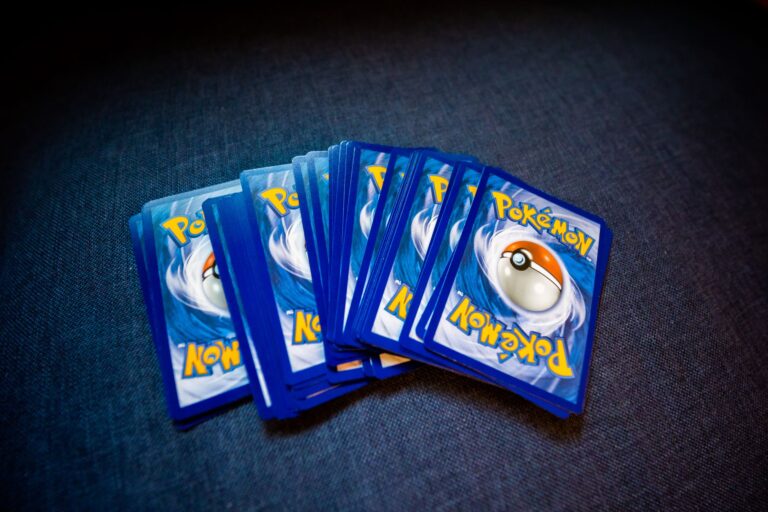
Pokemon cards have become a genuinely compelling investment compared to short-term rentals, delivering dramatically higher returns with lower operational complexity. Since 2004, Pokemon cards have appreciated 3,800 percent in value—far outpacing the S&P 500’s 483 percent growth over the same 20-year period. While short-term rentals generate steady 6 to 12 percent annual yields, they demand constant management, tenant issues, and maintenance headaches that most casual investors never account for when calculating their returns. The comparison isn’t theoretical anymore.
In January 2026 alone, average Pokemon cards rose 46 percent in value, with the Card Ladder Pokemon Index up 116 percent year-over-year. A property investor would celebrate 7 percent annual returns. A card collector who invested even modestly in contemporary sets is looking at returns that completely dwarf what vacation rental platforms can promise. The choice becomes clearer when you examine not just the numbers, but the effort required to achieve them.
Table of Contents
- How Do Pokemon Card Returns Compare to Short-Term Rental Income?
- Why Is the Short-Term Rental Market Slowing Down?
- What Makes Pokemon Cards a Superior Store of Value?
- What Are the Practical Differences in Time and Effort Required?
- What Market Risks Threaten Pokemon Card Valuations?
- How Accessible Are Pokemon Cards Compared to Real Estate Investment?
- What Does the Future Hold for Card Investing Versus Rental Properties?
- Conclusion
How Do Pokemon Card Returns Compare to Short-Term Rental Income?
The performance gap between these two investment classes has widened substantially in 2026. pokemon cards averaged 46 percent appreciation in January alone, part of a broader 116 percent year-over-year surge indexed by leading market trackers. By contrast, the short-term rental market is projecting revenue-per-available-rental growth of only 0.6 percent in 2026, with average daily rates climbing just 1.5 percent. Even the best-performing short-term rental market—Rockford—barely manages 7.16 percent annual returns.
The trajectory diverges further when you examine long-term projections. The global trading card market is forecast to reach $90.2 billion by 2034, expanding at a 7.1 percent compound annual growth rate from a 2026 base of $52.1 billion. The short-term rental market, despite growth forecasts, is facing oversupply concerns with listings projected to increase to 1.77 million units in 2026 while demand grows only 4.1 percent—a supply-demand imbalance that pressures pricing power and returns. The record sale of a Pikachu Illustrator card for $16.5 million demonstrates the extreme upside potential within the card market that short-term rentals simply cannot match. While this represents a high-end outlier, even mainstream contemporary sets like Ascended Heroes are projected to deliver 200 to 500 percent appreciation over 12 to 18 months—returns that a short-term rental investor would need decades to accumulate.

Why Is the Short-Term Rental Market Slowing Down?
The short-term rental market is hitting a maturity wall that fundamentally limits future returns. After years of explosive growth, the 2026 projections reveal the market’s harsh reality: supply is expanding faster than demand can absorb it. With listings set to increase from 1.69 million to 1.77 million while guest demand grows only 4.1 percent, increasing oversupply is forcing price competition and eroding profit margins. Property owners are discovering that more units in the market means lower nightly rates and more vacant nights, a dynamic that compounds over time. This oversupply directly impacts returns. Revenue-per-available-rental projections for 2026 show growth of only 0.6 percent—essentially stagnation. While the U.S.
short-term rental market is projected at $76.46 billion overall, that headline number obscures the reality facing new investors: the easy money has been made. Early investors who bought properties in emerging markets before saturation enjoyed double-digit returns. Today’s investors face a crowded field where property management costs, cleaning expenses, platform fees, and vacancy periods eat into the promised 6 to 12 percent yields. Many investors discover their actual net returns fall below what they originally projected. The warning here is stark: your return projections are only as good as your ability to maintain occupancy and pricing power. A property in a saturated market with 200 competing listings doesn’t care about national growth statistics. Pokemon cards, by contrast, derive value from global demand for a finite supply of graded, authenticated collectibles—a fundamentally different economic dynamic.
What Makes Pokemon Cards a Superior Store of Value?
Pokemon cards have captured the attention of institutional investors, hedge funds, and collectors worldwide, creating genuine scarcity dynamics that support valuations. The authentication and grading ecosystem—overseen by companies like PSA and Beckett—creates a transparent marketplace where provenance matters and quality commands premiums. A first-edition base set Charizard has gone from a $50 card in the 1990s to an asset that can fetch hundreds of thousands of dollars, depending on condition. This isn’t speculative hype; it’s driven by measurable scarcity and demonstrated demand. The modern Pokemon card sets are following a similar trajectory. The Card Ladder Pokemon Index’s 116 percent year-over-year appreciation reflects actual trading activity in secondary markets where cards are actively bought and sold.
When collectors and investors evaluate contemporary sets like Ascended Heroes with 200 to 500 percent upside projections over 12 to 18 months, they’re basing those estimates on supply constraints and growing collector bases globally. Unlike short-term rental markets where new units can be created indefinitely by anyone with capital, new Pokemon cards only become available through official releases—and The Pokemon Company controls that supply carefully. Historical performance provides the most compelling argument. A collector who invested $1,000 in Pokemon cards in 2004 would have seen that investment grow to $39,000 by 2024 (before the 2025-2026 appreciation surge). A property investor deploying $1,000 in a short-term rental market in 2004 would have generated accumulated returns that didn’t come close to matching that figure. The card investor achieved higher returns with dramatically less effort and capital deployment.

What Are the Practical Differences in Time and Effort Required?
Short-term rental ownership demands constant attention. You must manage tenant communication, coordinate cleanings between bookings, handle maintenance emergencies that arise at inconvenient times, monitor competitors’ pricing to stay competitive, and deal with occasional difficult guests or damage disputes. Many “passive” rental investors discover they’re spending 10-15 hours per week managing properties, or paying property managers 20-30 percent of their revenue to handle it. These management costs directly reduce your net returns and don’t appear in the simple 6-12 percent yield projections. Pokemon card investing operates on a completely different timeline. You research cards, execute purchases during secondary market windows, have them professionally graded, and then hold. Beyond occasional portfolio reviews, the investment requires minimal attention.
There’s no equivalent to a 2 AM tenant complaint or a cleaning crew cancellation forcing you to handle turnover. You don’t wake up to find that a competitor has dropped prices and is now capturing your bookings. The investment essentially works while you sleep. The tradeoff involves liquidity and accessibility. Short-term rental properties are tangible assets—you can enter and exit the market, though selling a property takes months. Pokemon cards, while liquid in modern sets, require the grading and authentication process that adds 2-4 weeks to the selling cycle for premium examples. Neither is instant liquidity, but the time investment during ownership dramatically favors cards. This practical advantage becomes underrated by investors focused solely on return percentages.
What Market Risks Threaten Pokemon Card Valuations?
The Pokemon card market isn’t without serious risks, and potential investors must acknowledge them directly. In response to demand spikes and collector interest, The Pokemon Company and its manufacturers produced 9.7 billion cards, creating significant market saturation. When supply becomes that abundant, price pressure inevitably follows—even collectible items lose value when they’re everywhere. Overproduction in certain eras has already created ceiling effects where even quality cards from oversupplied sets struggle to appreciate significantly. Grading inflation and authentication questions present another vulnerability. As more cards enter the professional grading system, the benchmark for “high quality” evolves. A card graded 8.5 in 2022 might represent different quality standards than a card graded 8.5 in 2026. Additionally, the authentication business itself is under scrutiny, with occasional concerns about grading consistency and even counterfeit concerns in certain market segments.
These structural issues are far less prevalent in short-term rental markets, where you own unmistakable real estate. The warning: Pokemon card appreciation isn’t guaranteed and isn’t linear. Markets correct. Collector enthusiasm fluctuates. New sets compete for investor capital with established ones. While historical growth has been compelling, past performance provides only an indication of future potential, not a guarantee. Diversification matters. An investor should not put their entire portfolio into Pokemon cards any more than they should into short-term rentals. The advantage of cards over rentals involves returns, effort, and market dynamics—not elimination of risk.

How Accessible Are Pokemon Cards Compared to Real Estate Investment?
One underappreciated advantage of card investing is the accessibility threshold. You can enter the Pokemon card market with modest capital—hundreds or thousands of dollars—and participate meaningfully. Short-term rental investing typically requires $50,000 to $150,000 in down payment plus the ability to secure financing, making it inaccessible to most retail investors. With cards, a $5,000 investment can be meaningfully deployed across multiple contemporary sets and graded examples, creating a diversified collection that works in your favor if even one holding appreciates significantly.
The geographic arbitrage available in short-term rentals—buying in emerging markets before saturation—has mostly disappeared. The pandemic and post-pandemic booking boom already moved capital into most viable markets. Pokemon cards, by contrast, trade on a global secondary market where geographic location doesn’t matter. You compete on research quality and timing, not on property location luck or local market knowledge.
What Does the Future Hold for Card Investing Versus Rental Properties?
The structural factors supporting Pokemon card appreciation are strengthening rather than weakening. Global interest in trading cards continues expanding, particularly in Asian markets where collecting tradition runs deep. The $90.2 billion market projection by 2034 reflects genuine demand expansion, not speculative bubble thinking. Meanwhile, short-term rental market forecasts—showing only 7.3 percent compound annual growth through 2033 against a backdrop of rising supply and regulatory pressures—suggest maturation and stabilization rather than explosive upside.
Looking forward, Pokemon cards benefit from inelastic supply while short-term rentals face elastic supply. That fundamental economic distinction matters for long-term wealth building. The Pokemon Company will not suddenly manufacture 50 billion additional base set Charizards; the supply remains constrained. Property developers, by contrast, will continue adding short-term rental units wherever regulations permit, continuously pressuring returns downward. For investors seeking capital appreciation combined with minimal operational overhead, cards present a genuinely superior risk-adjusted opportunity in 2026 and beyond.
Conclusion
Pokemon cards have emerged as a superior investment compared to short-term rentals based on three fundamental advantages: historical returns that dwarf both real estate and equities, significantly lower operational complexity and time investment, and favorable market dynamics driven by constrained supply meeting expanding global demand. While short-term rentals offer steady but declining yields in an increasingly saturated market, Pokemon cards deliver exponential appreciation potential with virtually no management overhead. The decision shouldn’t be framed as rentals versus cards for everyone—capital allocation depends on individual risk tolerance and expertise.
However, for investors seeking higher returns with lower effort, Pokemon cards present a compelling alternative to the conventional real estate wisdom that dominates investment podcasts. The market data from 2025-2026 makes this clear: the age of easy short-term rental returns is ending, while the Pokemon card market is accelerating. Sophisticated investors are already recognizing this shift.