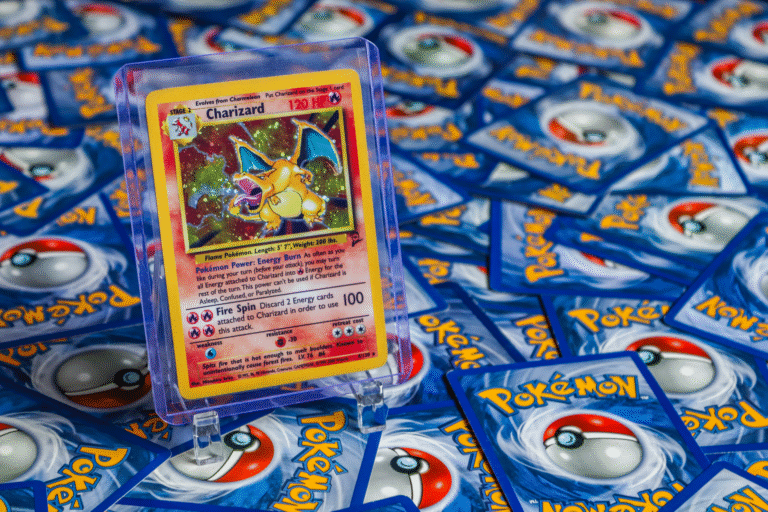
In 2025, Pokémon cards are outpacing sports cards in growth rate and collector enthusiasm, but sports cards still dominate in absolute market size. Pokémon card sales reached $1 billion in the U.S. last year—a historic milestone making it the first toy brand to achieve this—while sports cards maintain an $11.8 billion market valuation. The crucial distinction is momentum. Pokémon sales on StockX surged 367% year-over-year, while sports cards (measured by Topps) grew 208% in the same period.
This faster acceleration reflects a fundamental shift in which collectors are entering the market and what they’re choosing to buy. The gap between the two markets matters less than the trajectory. On Walmart Marketplace, Pokémon card sales jumped more than tenfold from February 2024 to June 2025, riding a 200% overall surge in trading card purchases. Target reported trading card sales up nearly 70% year-to-date in 2025. For Pokémon specifically, this explosive growth is driven by Gen-Z and millennial collectors re-entering the hobby after years away, while sports card demand has begun to normalize after years of pandemic-fueled speculation. Understanding which segment is growing fastest helps collectors and investors decide where to focus their attention and capital.
Table of Contents
- Why Are Pokémon Cards Growing Faster Than Sports Cards?
- Market Size: Why Sports Cards Still Dominate in Absolute Value
- Investment Returns: Which Cards Actually Make Better Investments?
- Grading and Collector Activity Trends Show a Market Divide
- Why Basketball Cards Are Now More Popular Than Baseball Cards
- Retail Distribution and Where Collectors Are Actually Buying Cards
- What’s Next for Pokémon and Sports Cards?
- Conclusion
Why Are Pokémon Cards Growing Faster Than Sports Cards?
pokémon cards have captured the moment in a way sports cards haven’t maintained. The 367% year-over-year growth on StockX reflects renewed cultural interest in Pokémon nostalgia combined with younger collectors discovering the hobby for the first time. The tenfold increase in sales at Walmart Marketplace between February 2024 and June 2025 signals that Pokémon cards are moving from hobby item to mainstream collectible. Sports cards, by comparison, grew 208% on StockX during the same period—a respectable number that still trails Pokémon significantly.
Several factors explain this divergence. Pokémon cards benefit from pop culture momentum, ongoing media releases, new set launches, and a fanbase that spans both casual collectors and serious investors. Sports cards, meanwhile, faced years of inflated prices during the 2020-2022 bubble, which cooled collector demand as prices normalized. Basketball cards have begun to recover with a 29% index gain in 2025, but baseball cards, historically the center of the sports card market, are up only 17% for the year. The sports card market is healing from speculation-driven excesses, while Pokémon cards are riding genuine demand growth.

Market Size: Why Sports Cards Still Dominate in Absolute Value
Despite Pokémon’s faster growth rate, sports cards remain vastly larger in total market size. The sports trading card market was valued at approximately $11.8 billion USD in 2025 and is projected to reach $28.47 billion by 2033, assuming a compound annual growth rate of 10.8%. Pokémon’s $1 billion annual U.S. sales figure is significant—historically huge for a toy brand—but represents less than a tenth of the sports card market. This size difference has important implications for investors and collectors.
The larger sports card market means more available inventory, broader distribution through retail channels, and more established grading infrastructure. However, the slower growth rate also suggests the market is more mature and potentially closer to saturation. Pokémon’s smaller absolute size masks its explosive growth trajectory, which could eventually narrow the gap if current trends continue. A critical limitation to consider: market projections can be unreliable in collecting markets, which are vulnerable to sentiment shifts and speculation cycles. The $28.47 billion projection for sports cards assumes continued adoption and stable interest, neither guaranteed.
Investment Returns: Which Cards Actually Make Better Investments?
Raw numbers tell a striking story about investment performance. The average Pokémon card is increasing at 46% annually, significantly outpacing the S&P 500’s average 12% annual return. This comparison gets collectors’ attention because it suggests pokémon cards are a better investment vehicle than traditional stocks. However, this metric requires context. The 46% average annual increase likely reflects the overall market recovery and growth rather than performance of individual cards, many of which lose value. Graded high-value Pokémon cards and first editions do perform strongly, but bulk collections and lower-tier cards often stagnate or depreciate.
Sports cards show a different investment profile, with exceptional high-end cards producing outsized returns. A 2007 Upper Deck Exquisite Michael Jordan-Kobe Bryant 1/1 card sold at Heritage auction in August 2025 for $12.93 million, one of the most expensive sports cards ever sold. The top ten athlete cards on eBay generated nearly $175 million in sales during the first seven months of 2025. These numbers represent a small segment of the sports card market, but they demonstrate that elite sports cards can hold or appreciate in value far beyond any Pokémon card. The warning here is important: investment returns are wildly inconsistent within both markets. Most cards—whether Pokémon or sports—do not perform like investments at all. They depreciate or stagnate.

Grading and Collector Activity Trends Show a Market Divide
Grading volume is one of the clearest indicators of where collectors are actually spending time and money. In 2025, TCG and non-sports cards grading increased 97% year-over-year, with over 26 million cards graded total. This explosive growth in Pokémon and other TCG grading reflects the influx of new collectors entering the market. Simultaneously, sports card grading volumes trended down 12% during the same period, a reversal that signals collectors are moving away from sports cards at scale.
This divergence suggests that the perceived boom in sports cards—driven by record-breaking sales numbers and retail growth—is concentrated among elite cards and veteran collectors. Meanwhile, the bulk of collector activity has shifted to Pokémon and other TCGs. Grading volume is a reliable proxy for hobby engagement because it requires investment of time and money; collectors only grade cards they intend to preserve or resell. The 97% increase in TCG grading compared to a 12% decline in sports card grading indicates that new money and new collectors are fundamentally choosing Pokémon over sports cards right now.
Why Basketball Cards Are Now More Popular Than Baseball Cards
A subtle but significant shift occurred in the sports card market during 2025: basketball dethroned baseball as the dominant segment. Basketball cards represented more than half of the top 50 sales in 2025, with only 13 sales from baseball cards. The Basketball Index gained 29% in 2025, while the Baseball Index grew just 17%. This reversal upends decades of baseball card dominance rooted in nostalgia and historical prestige. Several factors drive this shift.
Basketball players appeal to younger collectors more directly than baseball players, whose fanbase skews older. The NBA’s global reach and younger average fan age make basketball cards more accessible to Gen-Z collectors. Younger athletes like LeBron James, Stephen Curry, and Luka Dončić also have sustained or increasing relevance, unlike aging baseball players from the steroid era who defined sports card collecting in earlier decades. However, a warning: this reversal could be temporary. Shifts in sports card popularity often follow athlete performance, endorsement deals, and retirement cycles. A decline in basketball scoring, a major injury to a key player, or demographic shifts could reverse basketball’s dominance just as quickly.

Retail Distribution and Where Collectors Are Actually Buying Cards
Retail spending on trading cards reached record levels in 2025, with online card spending hitting $400 million in August 2025—the highest single month on record. Walmart Marketplace reported the 200% jump in trading card sales from February 2024 to June 2025. Target’s trading card sales were up nearly 70% year-to-date in 2025. These numbers reflect a shift in purchasing behavior: collectors are buying more cards through major retailers than ever before, with inventory increasingly available on marketplace platforms.
This distribution shift matters because it indicates accessibility and mainstream acceptance. Pokémon cards are now stocked prominently in mass-market retailers, making them easier for casual collectors and newcomers to purchase. Sports cards remain available through specialty retailers, but their presence in mainstream retail has become more selective. The barrier to entry for Pokémon cards is lower, partly because of availability and partly because sealed Pokémon products tend to be more affordable than high-end graded sports cards.
What’s Next for Pokémon and Sports Cards?
The sports card market’s projected growth to $28.47 billion by 2033 assumes recovery from speculation and a return to sustainable collector interest. If this projection holds, sports cards will eventually overtake Pokémon in absolute growth dollars, but Pokémon will likely remain the faster-growing segment by percentage. The key variable is whether Pokémon’s explosive growth continues or moderates as the market matures.
New set releases, cultural moments, and nostalgia cycles will determine how long Pokémon momentum sustains. One plausible scenario is specialization rather than one market “winning.” Pokémon and sports cards could serve different collector bases: Pokémon appeals to younger collectors, casual fans, and investors seeking growth; sports cards appeal to long-term collectors, sports fans, and investors in premium rare cards. The $175 million in top athlete sales and the $12.93 million single-card record suggest elite sports cards will always occupy a prestige tier that Pokémon hasn’t yet challenged. Both markets could coexist healthily at different scales and price points.
Conclusion
Pokémon cards are growing faster than sports cards in 2025, with 367% year-over-year sales increases, 97% growth in grading volume, and expansion into mainstream retail. Sports cards remain significantly larger in absolute market size at $11.8 billion, but growth has slowed to 10.8% annually. The average Pokémon card appreciates at 46% annually, outpacing the S&P 500, while elite sports cards can command record-breaking prices that Pokémon has yet to replicate. For collectors and investors, the choice depends on priorities: faster growth momentum and easier retail access favor Pokémon, while established prestige, rarity potential, and extreme high-end value favor sports cards.
The trading card market of 2025 reveals two distinct audiences making different choices. Younger collectors and newcomers are choosing Pokémon; veteran collectors and serious sports fans are choosing sports cards. Rather than one market defeating the other, specialization seems more likely, with Pokémon dominating growth and collector count while sports cards maintain leadership in absolute market value and premium card valuations. Both markets are healthy, growing, and attracting investment, but they’re serving different needs within the broader collectibles ecosystem.