The 2021 Pokemon card market bubble was unlike any other collectible surge in history because it was simultaneously driven by three unprecedented forces: explosive social media amplification, a grading services bottleneck that artificially constrained supply, and an influx of new buyers with no collectibles experience who treated cards as financial assets rather than collectibles. While previous bubbles—from baseball cards in the 1980s to Beanie Babies in the 1990s—grew through word-of-mouth and magazine coverage, the 2021 surge traveled at the speed of TikTok and YouTube, with unboxing videos generating millions of views in hours and literally crashing websites from demand. A first-edition Charizard that sold for $5,000 in 2019 was fetching $350,000 by mid-2021, driven not primarily by scarcity or nostalgia, but by a perfect storm of retail scarcity, grading company delays, and algorithmic promotion on social platforms.
What separated 2021 from earlier cycles was the role of Professional Sports Authenticator (PSA) grading delays and the emergence of card flipping as a speculative trading strategy. In previous bubbles, the market eventually corrected when enthusiasm waned. In 2021, the correction was complicated by the fact that millions of cards were stuck in PSA’s grading queue—some for over a year—creating artificial scarcity even as prices collapsed. Collectors who paid $1,000 for a Shadowless Base Set card in 2021 couldn’t sell it for $400 in 2022, even with a PSA 8 grade, because market sentiment had fundamentally shifted from “I want this card” to “I overpaid for this card.” The 2021 bubble was historically unique because the underlying infrastructure—the grading system that enabled price discovery—became the mechanism that prevented the bubble from deflating smoothly.
Table of Contents
- What Made the 2021 Card Market Explosion Different from Previous Collectible Booms?
- The Role of PSA Grading Backlogs in Amplifying Price Volatility
- Social Media Amplification and the Weaponization of Unboxing Videos
- The Grading Obsession and Slabbing as a Market Distortion
- Supply Chain Disruption and Retail Scarcity as a Bubble Accelerant
- New Money and the Psychology of Financial Asset Thinking
- The Market’s New Normal and What 2021 Changed Permanently
- Conclusion
- Frequently Asked Questions
What Made the 2021 Card Market Explosion Different from Previous Collectible Booms?
Previous collectible bubbles followed predictable trajectories: limited awareness, gradual price appreciation, media attention, speculative buying, and eventual crash. The 1989 baseball card bubble took years to inflate and deflate across regional markets. The Beanie Baby frenzy of the late 1990s relied on print catalogs, collector conventions, and word-of-mouth to spread. In contrast, the 2021 Pokemon surge compressed this entire cycle into 18 months and reached a global audience instantaneously. A teenager in rural Michigan could watch a YouTuber open a $5,000 PSA 10 Charizard, screenshot the moment a rare card appeared, and have that same card listed on eBay within an hour, competing with collectors worldwide. The speed of information asymmetry collapse was something no previous market had experienced.
The demographic shift was equally unprecedented. Earlier bubbles were driven by existing collectors—people who had previously bought Beanie Babies, comic books, or baseball cards. The 2021 Pokemon bubble attracted first-time collectibles buyers who arrived purely because of financial FOMO (fear of missing out) and social proof. Many had never held a vintage card before purchasing their first $500 item. This created a market dynamic where price appreciation wasn’t driven by genuine demand from established collectors, but by pure speculation from newcomers who didn’t understand card conditions, grading standards, or historical price floors. When these first-time speculators exited the market in late 2021 and early 2022, there were fewer experienced collectors underneath to provide price support.

The Role of PSA Grading Backlogs in Amplifying Price Volatility
The PSA grading backlog created a unique supply constraint that didn’t exist in previous collectible bubbles. In early 2021, PSA had roughly a 4-6 week turnaround for modern card submissions. By mid-2021, with demand exceeding capacity by a factor of five, turnaround extended to 6-9 months, then eventually over a year. This meant that someone could submit a card in June 2021 expecting to receive a graded, slabbed copy by August, but the card wouldn’t return until August 2022—after the market had already corrected by 60-80%. The psychological impact was severe: collectors held graded cards they could sell for $1,200 in November 2021, submitted identical raw copies at the peak, and received them back a year later when the same grade was worth $300. This created a perverse incentive structure.
Cards already graded by PSA at the peak of the bubble became artificial scarcity—not because of market demand, but because the grading queue prevented new copies from reaching the market. A PSA 8 Shadowless Charizard certified in October 2021 could sell for $15,000 because there were only so many graded copies in circulation. A month later, identical cards sat on the market unsold at $8,000. The limitation here is critical: the grading industry, by attempting to create standardized value, actually became a mechanism for price manipulation and market distortion. Collectors learned the hard way that a grade is only as valuable as the buyer willing to pay the current market rate, and PSA’s certification doesn’t protect against broad market downturns. This is fundamentally different from baseball cards or other previous bubbles, where grading was less central to the entire trading ecosystem.
Social Media Amplification and the Weaponization of Unboxing Videos
YouTube’s algorithm and TikTok’s For You Page transformed Pokemon card unboxing from a niche hobby into a viral entertainment category. A single video of someone pulling a Charizard from a vintage booster box could generate 5 million views in a week, leading to 10,000 new people suddenly wanting to buy the same product. This had never happened before in collectibles. In the 1980s baseball card boom, awareness spread through local card shops and dealer networks over months. In 2021, awareness spread to millions of teenagers globally in days. The algorithmic amplification was so powerful that certain products became impossible to find—not because supply was actually limited, but because demand artificially spiked after a viral video, and retailers couldn’t restock fast enough.
This algorithmic effect also created celebrity investment interest that previous bubbles lacked. Celebrities like Logan Paul, post Malone, and others with millions of followers began publicly buying and displaying high-value cards. This created a feedback loop: their purchases went viral, more people wanted cards, prices spiked, their cards became worth more, they talked about it more, prices spiked further. A warning here: this celebrity-driven price surge is almost entirely detached from the actual condition, rarity, or utility of the cards themselves. It’s purely financial sentiment. When celebrity interest shifted to other investments in late 2021—NFTs, alternative cryptocurrencies, etc.—that hype dried up immediately, and card prices followed. Collectors who relied on celebrity endorsement to justify their valuations learned that celebrity attention is as volatile as the market itself.
The Grading Obsession and Slabbing as a Market Distortion
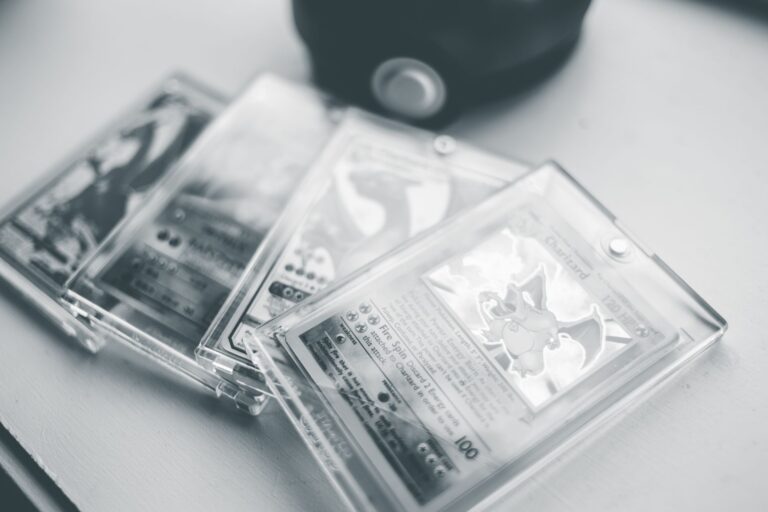
Before 2021, most Pokemon card collectors kept cards in binders or sleeves. Grading and slabbing were viewed as necessary only for truly rare, high-value cards—think of cards worth $500+. In 2021, collectors began slabbing common cards with minimal value increase potential, driven by the belief that a PSA grade was mandatory for resale. A moderately played Base Set Gyarados might have sold for $20 in 2019. In 2021, the same card in a PSA 6 holder sold for $200, not because the card became rarer or more desirable, but because the slab created the psychological impression of authenticity and grade standardization. This completely changed the market structure.
The comparison here is critical: slabbing used to be a tool for authenticity and condition documentation. In 2021, slabbing became a speculative strategy—submit cards to PSA, hold them, hope the grade increases in perceived value, list them high, and offload them to a greater fool. When the market corrected, all those slabbed common cards became deadweight. Someone who paid $150 for a PSA 6 Farfetch’d couldn’t give it away for $30 in 2022. The tradeoff is that while slabbing provided temporary price support through psychological confidence and limited visibility (since graded cards are more trackable on the secondary market), it also created massive inventory of cards that were worth far more slabbed than their actual collectibility justified. Collectors should understand that a slab doesn’t make a card valuable—the card’s actual scarcity and demand make it valuable, and the slab just makes that value easier to discover.
Supply Chain Disruption and Retail Scarcity as a Bubble Accelerant
The 2021 bubble coincided with unprecedented global supply chain disruption from COVID-19, which accidentally restricted Pokemon product availability to artificially low levels. The Pokemon Company couldn’t produce enough booster boxes to meet demand, not because of market economics but because of manufacturing and logistics constraints. Retailers that previously kept shelves stocked with Base Set and Shadowless reprints suddenly had empty shelves, creating genuine scarcity. This is where the bubble became self-reinforcing: people couldn’t buy new booster boxes, so they turned to the secondary market to complete sets, which drove up vintage card prices, which attracted speculators, which pushed prices higher, which convinced even more people that cards were an investment. A critical warning: supply chain constraints created artificial scarcity that masked the underlying reality—there were millions of Pokemon cards in existence, and production was going to resume.
The 2021 shortage wasn’t a permanent feature of the market; it was a temporary bottleneck. Collectors who bought vintage cards at peak prices based on the belief that new product would remain scarce were proven wrong within 18 months. By late 2022, Pokemon product was back on shelves, grading backlogs were clearing, and prices had collapsed. The limitation here is that temporary supply constraints can inflate a bubble far beyond what fundamental demand justifies. A card that should have been worth $200 based on actual scarcity and collector demand was worth $1,000 during the supply crunch. The two prices couldn’t both be “right”—one of them was a bubble.
New Money and the Psychology of Financial Asset Thinking
The 2021 bubble attracted billions of dollars of new capital from people who didn’t see cards as collectibles to be enjoyed, but as financial instruments to be flipped for profit. Someone buying a Pokemon card in 2019 was probably a collector who wanted it for their collection. Someone buying in 2021 was probably a speculator betting on resale. This fundamentally changed market behavior. Collectors hold cards long-term and are price-inelastic—they’ll keep a card they love even if prices drop. Speculators are hyper-elastic—they exit as soon as conditions look uncertain.
The moment momentum shifted in late 2021, the speculators left en masse, and the market crashed without any cushion of long-term collectors to provide support. An example: PSA submitted cards cratered in value from November 2021 to March 2022. Raw cards held their value better because actual collectors were still buying them to keep. The difference revealed the composition of the market—the slab buyers were speculators, the raw card buyers were collectors. Once speculators realized prices weren’t appreciating, they had no reason to stay. Previous bubbles were driven more evenly by speculators and collectors, creating a more stable floor during corrections. The 2021 bubble was probably 70-80% speculators at its peak, which meant the price collapse was swift and severe.
The Market’s New Normal and What 2021 Changed Permanently
Despite the crash, 2021 permanently altered Pokemon card market structure. Grading and slabbing became normalized for mid-tier cards, not just high-end collectibles. The secondary market infrastructure—eBay, TCGPlayer, specialized Pokemon retailers—became more efficient and transparent. Prices are now discoverable in real-time, which would have been impossible before social media and smartphones. The market is also larger and more liquid than it was before the bubble, even after the correction. There are more casual collectors, more serious investors, and more retail infrastructure than existed in 2019.
The forward-looking insight is that the market will likely face smaller, more manageable cycles instead of another mega-bubble. The conditions that created 2021—algorithmic amplification, supply chain chaos, celebrity endorsement, grading backlogs, and first-time money—are either temporary or have already been priced in. Collectors today are more sophisticated, and the market is more transparent. Future price increases will be driven by genuine demand shifts, not pure speculation. The 2021 bubble was a one-time event created by unrepeatable circumstances. The market learned painful lessons about the difference between price and value, and the collectible landscape is more rational as a result.
Conclusion
The 2021 Pokemon card bubble was historically unprecedented because it combined rapid social media amplification, grading infrastructure constraints, celebrity influence, and supply chain scarcity into a perfect storm that no previous collectible bubble had experienced. The speed of the surge, the composition of new speculators entering the market, and the role of PSA grading delays in creating artificial scarcity created a bubble that was both more explosive and more fragile than earlier cycles. When the fundamental conditions changed—speculators exited, supply chains normalized, and social media hype shifted elsewhere—the bubble didn’t just deflate; it collapsed.
For collectors today, the 2021 bubble is a reminder that price and value are fundamentally different. A card’s current market price reflects what the last buyer paid, but that doesn’t make it the price you should pay or the price it will fetch next year. Buy cards you genuinely want to own for your collection, understand that grading is a tool for authenticity and condition documentation (not a price multiplier), and be skeptical of any narrative claiming that card values always go up. The 2021 bubble proved that even in a bull market driven by unprecedented circumstances, corrections can be swift and severe for those who treated collectibles as speculative assets rather than objects worth collecting for their own sake.
Frequently Asked Questions
Why did PSA grading backlogs make the 2021 bubble worse?
PSA backlogs created artificial scarcity of graded cards—if your card was stuck in the queue for a year, that prevented new supply from reaching the market. This kept prices artificially elevated for already-graded copies even as raw card prices and market sentiment collapsed. Collectors who submitted cards at peak prices got them back a year later when the market had fallen 60-80%.
Could another bubble like 2021 happen again?
Possibly smaller ones, but probably not as extreme. The conditions of 2021—supply chain chaos, algorithmic amplification to new audiences, celebrity attention, and grading bottlenecks—were largely unique circumstances. The market is now more transparent and sophisticated, and collectors are more aware of the risks. Future price spikes will be driven more by genuine scarcity and demand than pure speculation.
What’s the difference between a card’s “2021 peak price” and its actual value?
The peak price was what speculators paid during the bubble, which was disconnected from fundamental scarcity and demand. The actual value is what a card sells for when the market returns to normal. Many cards that peaked at $500-$1,000 now sell for $100-$300 because the speculative premium has evaporated.
Should I get my old Pokemon cards graded?
Only if they’re genuinely rare, in excellent condition, or worth enough to justify grading fees. Grading adds 10-30% premium for high-end cards that collectors actually want. For common cards, it’s usually a money-losing proposition because the grading cost exceeds the premium the slab provides.
Why did celebrities selling cards during the bubble matter so much?
Celebrity purchases went viral on social media, which created FOMO and attracted new buyers. Celebrity interest is fickle—when they moved on to other investments, their followers did too, and card prices lost that price support. This revealed that celebrity hype can drive bubbles, but it’s not a stable foundation for long-term value.
What did long-term collectors who held cards through 2021 learn?
That patience matters more than timing. Collectors who held cards through the bubble and the crash saw their portfolios recover somewhat because they weren’t forced to sell at the worst moment. Speculators who needed to exit for financial reasons locked in massive losses.