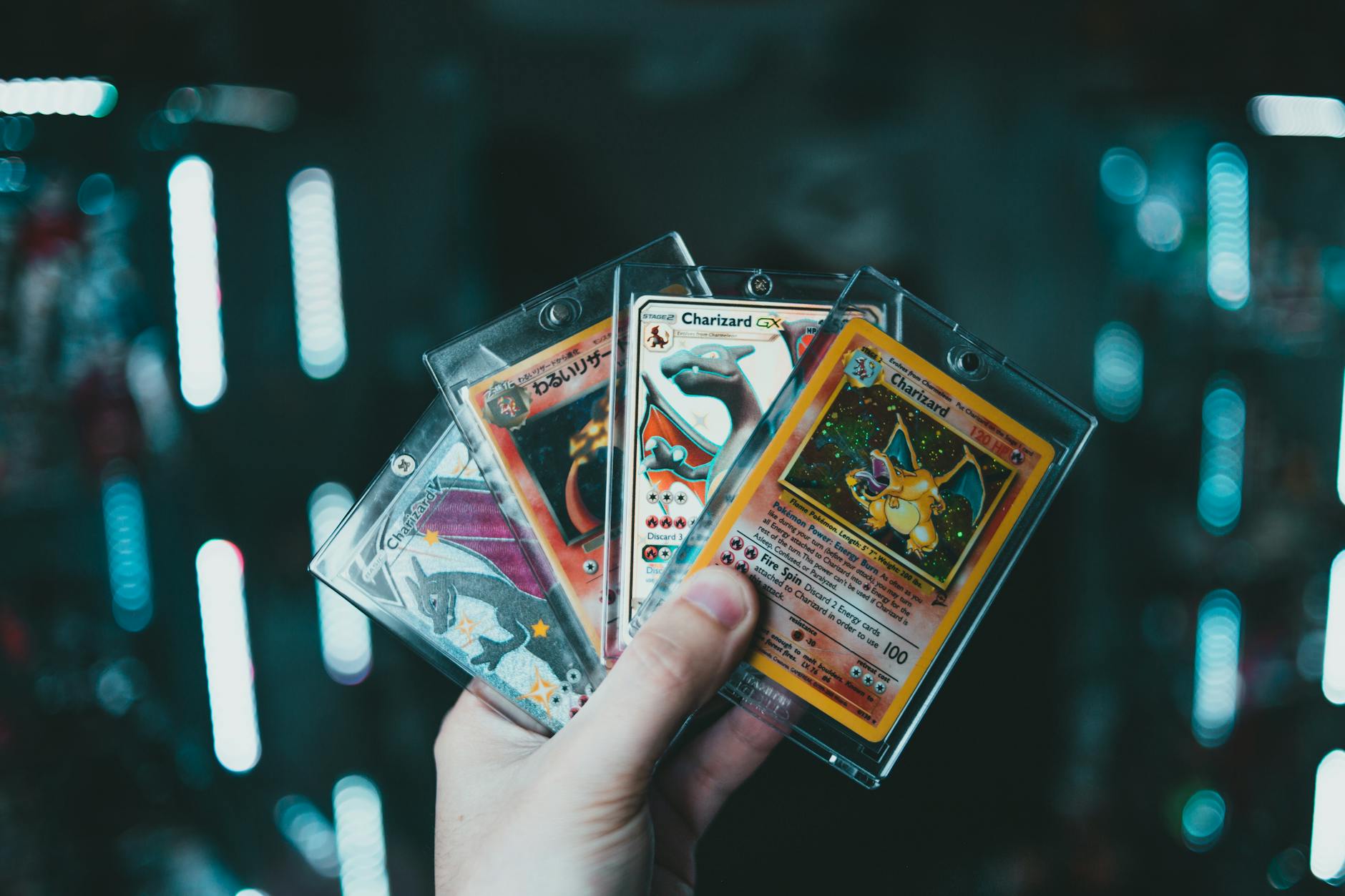
Pokemon cards have emerged as a significantly stronger investment vehicle than baseball cards, delivering returns that substantially outpace traditional sports collectibles and most traditional investments. A Pokemon card purchased in 2004 would have appreciated approximately 3,800 percent by 2025, fundamentally outperforming the baseball card market, which has actually declined 8.35 percent in value over the last year alone. To put this in perspective, a $100 investment in Pokemon cards two decades ago would have grown to roughly $3,900 today, while a similar baseball card investment would now be worth approximately $92.
The divergence becomes even more pronounced in recent performance metrics. Pokemon cards have appreciated at an average rate of nearly 46 percent annually over the past year, crushing the S&P 500’s historical average annual return of 12 percent. Even more impressive are specific examples like Evolving Skies booster boxes, which now command over $2,000—representing a staggering 1,900 percent increase in value since 2021. This isn’t historical nostalgia inflating older cards; these are modern products delivering contemporary returns that far exceed what baseball cards can offer collectors today.
Table of Contents
- Why Has Pokemon Card Investment Performance Outpaced Baseball Cards?
- Market Size and Growth Potential Ahead
- Global Reach and Collector Demographics
- Grading, Condition, and Investment Quality
- Recognizing Real Risks and Market Saturation Concerns
- Vintage Baseball Cards Still Show Value for Specific Collectors
- Market Outlook and Investment Positioning
- Conclusion
Why Has Pokemon Card Investment Performance Outpaced Baseball Cards?
The performance gap between pokemon and baseball cards reflects fundamental differences in market demand, collector demographics, and supply dynamics. Pokemon cards benefit from a global franchise with relevance across multiple generations and regions where baseball has minimal cultural penetration. A Pokemon card collector in Japan, South Korea, Europe, or Southeast Asia is pursuing the same hobby as collectors in North America, creating a genuinely worldwide addressable market. Baseball cards, by contrast, remain primarily concentrated in North America, limiting the total addressable audience for collectors and investors seeking exposure to the market.
The production numbers further explain the investment divergence. The Pokemon Trading Card Game produced 10.2 billion cards during the 2024-25 fiscal year and generated approximately $2 billion in global card sales in 2024 alone. This scale has created unprecedented collector interest and investment activity. Meanwhile, the vintage baseball card market—which has shown genuine strength in 2025 despite weakness in modern baseball card values—remains a smaller, more niche segment compared to the explosive growth Pokemon cards have sustained. Individual Pokemon card values rose 42 percent in the most recent measurement period, with sealed products appreciating 27 percent on average, indicating sustained investor confidence in both the primary and secondary markets.

Market Size and Growth Potential Ahead
The global trading card games market was valued at $8.99 billion in 2024 and is projected to reach $18.6 billion by 2034, representing more than a doubling of the entire market over the next decade. Pokemon’s dominant position within this expanding market—commanding 40 percent of all cards sent to PSA for professional grading as of 2023, surpassing baseball cards and all other individual sports—positions Pokemon collectors and investors to benefit disproportionately from this projected growth. However, investors should recognize a critical supply-side challenge.
The Pokemon Company produced 9.7 billion cards in the previous fiscal year (2023-24), creating significant oversupply that is putting downward pressure on prices across certain products and conditions. This production volume demonstrates the company’s aggressive approach to market expansion, but it also introduces real risk that excessive supply could undermine price appreciation if collector demand doesn’t continue accelerating at historical rates. The speculative nature of modern Pokemon card values—driven largely by FOMO (fear of missing out) rather than organic demand—creates genuine vulnerability if market sentiment shifts even temporarily.
Global Reach and Collector Demographics
Pokemon cards possess an inherent advantage that baseball cards cannot replicate: the Pokemon franchise transcends geographic and cultural boundaries in ways that baseball simply does not. Where baseball cards have primarily appealed to collectors in regions with established baseball fanbases, Pokemon cards attract collectors in countries where baseball is barely known or played. This geographic diversification expands the total pool of potential investors and collectors, creating structural demand support that baseball cards lack.
This global reach becomes evident when examining collector behavior patterns. A limited edition Umbreon VMAX alternate art card commands approximately $1,400 in the secondary market, reflecting demand from collectors across multiple continents and demographics. The youngest generation of collectors growing up with Pokemon as their primary entertainment property is now entering their prime spending and investing years, providing long-term structural support for card valuations. Baseball cards, while still valuable in specific vintage segments, are primarily appreciated by collectors aged 35 and older, creating potential demographic headwinds as the collector base ages without proportional younger generation replacement.

Grading, Condition, and Investment Quality
Professional grading through services like PSA has become central to Pokemon card valuation, with the trading card company’s grading volume breakdown revealing that Pokemon cards constitute 40 percent of all submissions—a commanding market share that reflects investor sophistication and the infrastructure supporting Pokemon card investing. This grading ecosystem creates objective valuation frameworks that benefit serious investors, though it also introduces costs that reduce net returns on smaller-value acquisitions. Condition and rarity remain paramount in Pokemon card investing, just as with baseball cards, but the growth trajectory has been fundamentally different.
A near-mint Evolving Skies booster box has appreciated 1,900 percent since 2021, but an equivalent condition vintage baseball card from the same period would have declined in value. Serious Pokemon card investors must balance the costs of professional grading and storage against potential appreciation, particularly for cards valued under $200 where grading fees become proportionally significant. The secondary market liquidity for graded Pokemon cards far exceeds that of equivalent baseball cards, making exit strategies more efficient for investors seeking to convert positions to cash.
Recognizing Real Risks and Market Saturation Concerns
Any serious Pokemon card investment conversation must directly address genuine risks that could undermine future price appreciation. The production of 10.2 billion cards in 2024-25 represents an industry operating at maximum output capacity, flooding the market with inventory and creating structural price pressure that wasn’t present during earlier periods of stronger appreciation. Previous production of 9.7 billion cards during 2023-24 already indicated the company’s commitment to aggressive supply growth, and current levels suggest this isn’t a temporary phenomenon—it’s the new normal for Pokemon TCG manufacturing. The speculative bubble concern warrants serious consideration.
Rapid growth rates in modern Pokemon cards are explicitly described by market analysts as driven by “FOMO and speculative hype rather than organic demand.” This distinction matters significantly for long-term investors. If collector interest in modern products suddenly cools—a realistic possibility given the psychological nature of speculative markets—price declines could be sharp and swift. Unlike vintage baseball cards, which demonstrated resilience and strength in 2025, modern Pokemon cards lack the decades of historical valuation stability that would protect against speculative market corrections. Investors should approach modern Pokemon card investment with realistic expectations about volatility and the potential for significant drawdowns if market sentiment shifts.

Vintage Baseball Cards Still Show Value for Specific Collectors
While modern Pokemon cards have dramatically outperformed modern baseball cards, the picture becomes more nuanced when examining vintage baseball card segments. Vintage baseball cards showed genuine strength in 2025 despite broader weakness in modern baseball card valuations, suggesting that certain established collectibles do possess durability and investor appeal. This distinction is important for diversified collectors considering how to allocate resources between market segments.
A collector comparing investment options shouldn’t view this as a simple choice between Pokemon cards and baseball cards generally. Instead, the analysis should focus on specific product categories and conditions. Modern Pokemon cards have demonstrably superior short-to-medium term returns, while vintage baseball cards—particularly rare cards from the pre-1970 era—may offer longer-term stability that modern Pokemon cards simply haven’t had time to establish. Serious investors might consider balanced approaches rather than all-in positioning in any single segment.
Market Outlook and Investment Positioning
The Pokemon Trading Card Game market remains in a distinct phase of expansion and maturation that baseball cards completed decades ago. With the global trading card market projected to reach $18.6 billion by 2034—more than double its 2024 valuation—Pokemon’s 40 percent share of professional grading volume positions the category to capture significant value creation if collector interest sustains. The franchise’s cross-generational appeal and global reach create structural advantages that suggest continued appreciation potential, though at potentially moderated rates compared to recent exceptional years.
Looking forward, Pokemon card investors should prepare for a market that likely experiences both continued growth and increased volatility. The aggressive production numbers signal a company confident in sustained demand but also a market that will become increasingly crowded and competitive. The distinction between investment-grade Pokemon cards (high-rarity, high-condition cards) and bulk modern sealed products will likely become more pronounced as the market matures. Savvy investors will focus on identifying which Pokemon products and conditions are most likely to appreciate as the market evolves, rather than assuming all Pokemon cards share identical investment potential.
Conclusion
Pokemon cards have conclusively proven themselves to be superior investments compared to baseball cards when evaluated on return metrics, market growth, and forward-looking potential. The 3,800 percent appreciation over two decades, the 46 percent annual returns surpassing the S&P 500, and the dominating 40 percent share of professional grading volume all point to a market that has captured collector enthusiasm and investor capital in unprecedented ways. The global appeal of the Pokemon franchise extends the addressable market far beyond traditional sports card demographics, creating structural demand advantages that baseball cards cannot replicate.
However, superior historical performance does not guarantee future returns, and serious investors must acknowledge the genuine risks present in a market driven partly by speculative hype, facing production volume challenges, and lacking the decades of valuation stability that vintage segments possess. For collectors and investors evaluating entry points today, the evidence supports allocating resources toward Pokemon cards, but with realistic expectations about volatility and a clear understanding that past returns do not predict future results. Success in Pokemon card investing requires distinguishing between quality investment-grade products and speculative modern sealed products, monitoring production volumes and collector sentiment, and maintaining discipline around valuation rather than chasing recent price appreciation.
You Might Also Like
- Why Pokemon Cards Are a Better Investment Than YouTube Channels
- Why Pokemon Cards Are a Better Investment Than Wheat Futures
- Why Pokemon Cards Are a Better Investment Than Websites