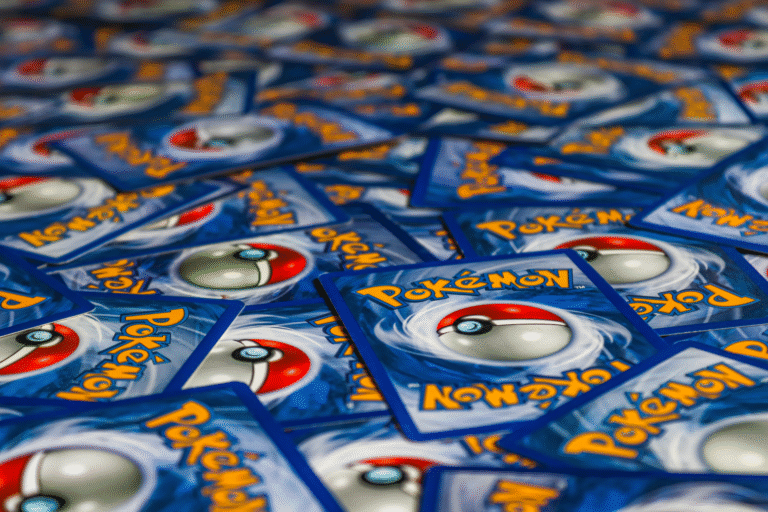
Pokémon card shelves are now experiencing the same retail chaos that defined sneaker culture over the past decade—empty stock within hours of arrival, lines forming before store opening, and systematic exclusion of casual buyers in favor of organized reselling networks. What was once a niche hobby has transformed into a supply-constrained retail phenomenon where a single booster box drop can cause the same logistical strain that limited Nike releases created at Foot Locker. This shift happened faster than almost anyone anticipated, driven by a convergence of supply scarcity, social media hype, and genuine investment returns that now outpace the stock market. The numbers behind this shift are staggering.
Despite 10.2 billion Pokémon cards being printed in the 12 months preceding March 2025, retailer shelves remain unable to maintain stock for even a single day after new releases arrive. Walmart, Target, and GameStop locations nationwide report empty shelves within hours of stock placement. The scale of demand is so severe that GameStop reported collectibles—including Pokémon cards—made up 29% of the company’s total sales in Q1 2025, outselling video game software itself. This isn’t speculation or trend-chasing; it’s a fundamental restructuring of how physical retail prioritizes and distributes a single product category.
Table of Contents
- How Pokémon Card Releases Adopted the Sneaker Drop Model
- The Supply Paradox That Keeps Shelves Empty
- The Investment Case: How Pokémon Cards Now Beat the Stock Market
- The Reseller Network: Bots, Cook Groups, and Organized Chaos
- How Retailers Are Rationing Access: Queues, Raffles, and Lockouts
- Overnight Camping and Access Inequality
- Sustainability: Will the Pokémon Card Boom Last?
- Conclusion
How Pokémon Card Releases Adopted the Sneaker Drop Model
The parallel between pokémon card launches and sneaker releases is not accidental—it’s structural. Both involve limited production, unpredictable supply, predetermined release dates, and rabid consumer demand that vastly exceeds stock. When the Prismatic Evolutions expansion launched in January 2025, fans camped overnight outside stores in Tokyo, Toronto, and major US cities, a behavior that would have seemed absurd for trading cards just five years ago. The release triggered the same queuing systems, online crashes, and reseller coordination that sneaker heads have perfected over two decades. What amplifies the comparison is the explicit adoption of sneaker-culture tactics by Pokémon resellers.
Cook groups—organized networks that pool information and resources to secure drops—now have dedicated channels for Pokémon TCG releases alongside their sneaker operations. The Pokémon Center operates a queue system when new card releases go live online, and Amazon employs an invitation-based purchase model for popular sets currently in production. These aren’t natural retail responses; they’re defensive measures against systematic bot deployment and coordinated buying, borrowed directly from the sneaker playbook. The resellers fueling this shift are often literally the same people. Veteran sneaker flippers have migrated to pokémon cards because the profit margins are comparable to sneaker releases, but with less competition from established market infrastructure. This cross-pollination has accelerated the adoption of professional reselling techniques—automation, group coordination, timing optimization—that sneaker culture took years to develop.

The Supply Paradox That Keeps Shelves Empty
Here’s the contradiction at the heart of the current Pokémon boom: The Pokémon Company International is printing cards at unprecedented scale, yet shelves remain chronically understocked. Ten billion cards annually should theoretically satisfy demand, but the market is so massive that this volume still falls short. The issue isn’t production capacity—it’s the mismatch between wholesale distribution, retail floor space, and consumer demand that’s suddenly concentrated and volatile rather than steady. This supply crisis creates a vicious cycle. Scarcity drives hype. Hype drives resellers to use bots and organized tactics. Those tactics accelerate stock depletion.
Each cycle tightens the window for casual collectors to purchase at retail price. The limitation here is critical: unlike sneakers, which have multiple colorways and sizes distributing demand across variations, Pokémon booster boxes are largely fungible. Every consumer wants the same product, creating a zero-sum competition for the same finite stock. A store receiving 50 booster boxes can serve 50 casual buyers, or 5 resellers who buy 10 boxes each—but the infrastructure treats both transactions identically. Retailers are caught between satisfying genuine collectors and maximizing throughput for organized resellers. Since both spend the same amount of money, the economics don’t distinguish between them. This creates a situation where retail profit margins remain stable while consumer experience deteriorates for the majority of buyers who lack reselling infrastructure.
The Investment Case: How Pokémon Cards Now Beat the Stock Market
The financial performance of Pokémon cards has crossed from hobby territory into asset-class legitimacy. Pokémon cards are increasing in average value at nearly 46% annually—significantly outpacing Nvidia stock and the S&P 500’s average 12% return rate for 2025. This gap is not a rounding error or a cherry-picked timeframe; it reflects sustained value appreciation across the broader market, not just high-end sealed products. This performance has triggered a psychological shift in how consumers perceive Pokémon cards. They’re no longer purchased primarily for play or nostalgia—they’re acquired as speculative investments with tangible resale markets.
Services like TCGPlayer and psa grading have created transparent pricing mechanisms that mimic stock-trading behavior. A collector who buys a booster box for $120 in January might legitimately expect it to appreciate to $175 by July, creating the same investment mentality that drives sneaker reselling. The warning here is essential: past performance does not guarantee future returns. The current 46% appreciation rate depends on sustained demand and continued scarcity. If the Pokémon Company significantly increases production, or if consumer interest pivots to another collectible, returns could reverse sharply. Early investors chasing the trend without understanding the underlying volatility are vulnerable to corrections.

The Reseller Network: Bots, Cook Groups, and Organized Chaos
The infrastructure supporting Pokémon card reselling has become remarkably sophisticated. Cook groups operate private Discord servers where members share drop alerts, coordinate purchasing across multiple platforms, and execute synchronized buying across Pokémon Center, Target, Walmart, Amazon, and GameStop. These aren’t individuals hunting drops casually—they’re organized teams running multiple accounts, rotating payment methods, and deploying bot automation designed to bypass queue systems and purchase limits. Bot deployment for Pokémon cards is now directly comparable to sneaker reselling bots. Former sneaker resellers have migrated their technical infrastructure to Pokémon TCG, using scripts that monitor retailer stock levels in real-time and execute bulk purchases faster than human buyers can complete a single transaction.
The profitability justifies the investment: a $200 bot subscription pays for itself by securing a single profitable drop before stock depletes. The tradeoff here is visibility. Sneaker reselling infrastructure evolved gradually over 10+ years, during which retail and brand response mechanisms developed in parallel. Pokémon card reselling arrived compressed into 18 months, meaning retailer defenses and consumer expectations haven’t fully adapted. This creates a window where bot operators face minimal friction, but also increases the likelihood of aggressive retail and brand countermeasures in the near term.
How Retailers Are Rationing Access: Queues, Raffles, and Lockouts
Major retailers have adopted anti-scalping measures borrowed directly from sneaker culture. The Pokémon Center queue system doesn’t prioritize high-value customers—it randomizes access by placing users in a holding queue with random selection for available stock. Amazon’s invitation-based system for Pokémon releases restricts purchase eligibility to accounts meeting specific criteria, attempting to filter out bulk-buying behavior. GameStop has implemented purchase limits tied to customer loyalty programs, restricting individuals to one or two booster boxes per release. These measures represent a significant shift from traditional retail philosophy. Retailers are explicitly acknowledging that stock depletion is now a feature of the release, not a bug.
The goal isn’t to stock enough for all potential customers—it’s to distribute scarcity in a way that minimizes public outrage. A queue system creates the psychological impression of fairness, even though 90% of customers still leave empty-handed. The limitation is crucial: These restrictions only apply to official channels. Secondary markets—Facebook groups, Discord communities, local card shops—remain unrestricted. A bot operator who secures inventory through the Pokémon Center can immediately relist the same stock on TCGPlayer or eBay with no queue system in place. Retailer rationing systems slow the access problem but don’t eliminate it; they redistribute friction toward the small percentage of buyers willing to hunt the secondary market.

Overnight Camping and Access Inequality
The behavioral shift toward overnight camping outside Target and Walmart locations marks a critical difference from online-native sneaker reselling. Pokémon card drops now motivate people to arrive at retail locations at 3 AM to queue for doors opening at 6 AM—a retail behavior that essentially disappeared after 2010. Documented instances show lines of 50+ people assembling before sunrise for a single store’s Pokémon card allocation, many traveling significant distances based on online tips about stock arriving at specific locations. This creates access barriers that go beyond economics.
Not everyone can take time off work to camp overnight. Parents with young children, elderly collectors, and people in rural areas face structural disadvantages in competing for retail stock that’s designed for in-person pickup. The geographic arbitrage of travel costs further limits access to collectors living near major urban retail centers. This represents a regressive shift from the illusion of online fairness—where a queue system theoretically treats all participants equally—to explicit advantage for people with flexible schedules and proximity to retail clusters.
Sustainability: Will the Pokémon Card Boom Last?
The current boom demonstrates real structural underpinnings rather than pure hype. Investment returns, collectibility factors, and Pokémon Company’s controlled supply strategy all support sustained demand rather than a cyclical fad. However, the boom also faces tangible headwinds. Increased print volumes, competitive collectible launches from Yu-Gi-Oh and Magic: The Gathering, and potential regulatory scrutiny of reseller bot infrastructure could all compress the 46% annual value appreciation that’s driving current investment demand.
The Prismatic Evolutions release in January 2025 demonstrated that hype cycles remain potent and capable of driving coordinated retail chaos. But each successive release also teaches retailers and manufacturers about scalping infrastructure, leading to increasingly sophisticated anti-bot measures. The next 12-24 months will likely determine whether Pokémon card shelves remain in a perpetual state of scarcity—sustaining the sneaker comparison—or whether supply-side improvements and demand normalization create more balanced retail conditions. The precedent established by sneaker culture suggests scarcity is profitable and sustainable, but Pokémon’s higher production flexibility gives the Pokémon Company meaningful levers for altering market dynamics if they choose.
Conclusion
Pokémon card shelves have become the new sneaker drop line because the underlying conditions are structurally identical: limited supply, massive demand, transparent resale markets, and organized reseller infrastructure. The 10.2 billion cards printed annually couldn’t satisfy demand in the 12 months preceding March 2025, shelves empty within hours of stock arrival, and investment returns of 46% annually now exceed traditional market benchmarks. What once seemed like a peripheral aspect of Pokémon culture—collecting and trading—has become a central retail battleground where casual buyers compete against organized bot networks and cook groups using infrastructure perfected by a decade of sneaker reselling.
The practical implication for serious collectors is clear: obtaining retail Pokémon cards now requires the same strategic approach that sneaker enthusiasts developed over the past 15 years. This includes joining legitimate community groups for drop alerts, understanding queue systems, accepting that some releases will be inaccessible, and recognizing that secondary market purchases may offer better value than hunting retail drops. The Pokémon card market will likely maintain this scarcity-driven structure as long as investment returns remain positive and Pokémon Company maintains controlled production. Understanding this shift from a collecting hobby to an asset class with retail chaos is essential for anyone participating in the market beyond casual purchases.