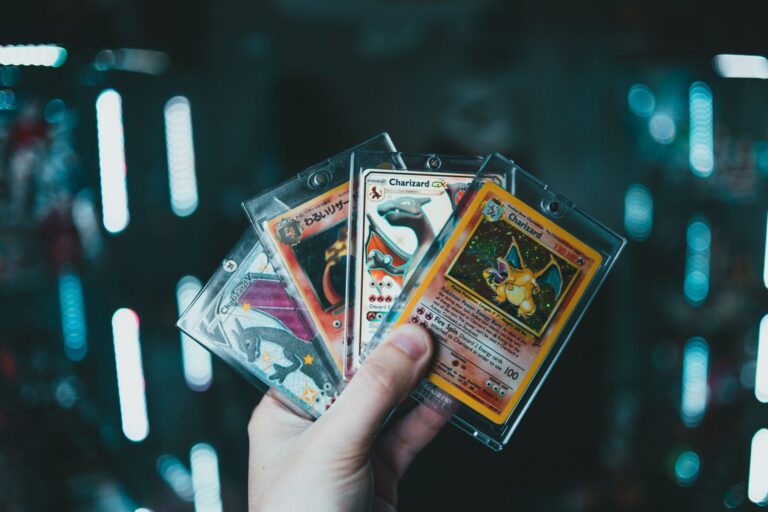
Pokemon Base Set cards are experiencing explosive value growth in 2026 primarily due to three converging forces: the franchise’s 30th anniversary milestone in February 2026, which sparked a 30-50% surge in vintage card demand; the broader trading card market’s consistent outperformance of traditional investments; and sustained investor interest in tangible assets with limited supply. The market data is striking: since 2004, Pokemon trading cards have appreciated 3,821%, vastly outpacing the S&P 500’s 483% growth over the same period. What was once dismissed as a children’s hobby has become a serious alternative asset class, with vintage Base Set cards leading the charge.
This explosion has real implications for collectors, investors, and the hobby itself over the next decade. A first edition Base Set Charizard that sold for under $1,000 just five years ago now commands $3,000-$6,000 in standard condition, with graded PSA 10 copies exceeding $15,000. In February 2026, a single 1st Edition PSA 10 Charizard from Logan Paul’s break sold for $954,800, a price point that would have seemed impossible three years ago. These aren’t outlier anomalies—they’re the visible peak of a sustained market trend affecting thousands of cards across multiple conditions and grades.
Table of Contents
- What’s Driving the 30th Anniversary Boom in 2026?
- The Market Growth Story Behind the Headlines
- Base Set Charizard as the Market’s North Star
- What This Means for the Next Decade
- Production Limits and Market Saturation Concerns
- How Grading and Condition Determine Real-World Value
- The Broader TCG Market Picture and Long-Term Outlook
- Conclusion
What’s Driving the 30th Anniversary Boom in 2026?
pokemon‘s 30th anniversary, officially celebrated on February 27, 2026, became the single dominant force reshaping the vintage card market. Anniversary years trigger waves of nostalgia from collectors who grew up with the franchise in the mid-1990s and early 2000s, and many of these individuals now have disposable income. The timing mattered: price data from March 2026 showed vintage and special sets had already climbed 30-50% from their January baseline, with this surge concentrated in the months leading into and immediately following the anniversary date.
The anniversary effect creates a self-reinforcing cycle. As prices rise, media coverage intensifies, drawing new money into the market from casual buyers who want to participate in what feels like a cultural moment. This continued pressure through Q1 2026, with average Pokemon card prices rising 46% year-over-year and specific chase cards—particularly Base Set holos—seeing gains between 200-500%. The booster pack and starter box market hit its highest average sales volume in January 2026, with over 1,000 units sold on average, suggesting both new product demand and restocking from collectors expecting further price appreciation.

The Market Growth Story Behind the Headlines
The explosion in Base Set valuations isn’t happening in isolation. The global trading card market is forecast to reach $90.2 billion by 2034, growing at a consistent 7.1% compound annual growth rate from its 2026 valuation of $52.1 billion. This means the market is expected to nearly double in size over the next eight years, providing a strong tailwind for all vintage products, particularly iconic sets like Base Set. This isn’t speculative growth—it’s backed by measurable increases in collector participation, international expansion, and the establishment of grading and authentication standards that have transformed TCGs from commodities into investable assets.
However, a critical limitation exists: the Pokémon Company produced 9.7 billion cards in the previous fiscal year, an all-time production record that creates potential downward pressure on newer products entering the secondary market. This massive supply means future printings—unless artificially restricted—will struggle to achieve the premium valuations that Base Set commands due to sheer scarcity. The market dynamic favors vintage, limited-supply products while creating genuine risks for modern collectors hoping for future price appreciation. The surge we’re seeing in 2026 is partially a flight to quality and scarcity, not universal card price inflation.
Base Set Charizard as the Market’s North Star
If Pokemon Base Set is the foundation of vintage card investing, then Charizard is the cornerstone. The card’s scarcity (it was printed in the original 102-card Base Set but represents only a fraction of production), iconic status, and tournament significance created natural demand that transformed it into the market’s most-watched barometer. In 2026, an unlimited edition Charizard trades between $300-$500, a 1st edition between $3,000-$6,000, and professionally graded PSA 10 copies above $15,000. A PSA 9 copy shows an average appreciation rate of 37.5% annually, a pace that would double the investment roughly every two years if sustained.
The February 2026 sale of a 1st Edition PSA 10 Charizard for $954,800 serves as both a milestone and a cautionary tale. While this represents an all-time record, it also reflects the involvement of high-profile buyers with deep pockets and media appetite for headlines. The broader market for Charizard PSA 10 copies trades between $15,000-$50,000 depending on exact subgrades and provenance. This creates a real problem for investors: the most desirable cards have reached price points where liquidity becomes questionable. A $300,000 card isn’t easy to sell quickly without accepting substantial discounts, and finding a buyer willing to pay $954,800 requires either a celebrity buyer, a break-event environment, or an extremely patient seller.

What This Means for the Next Decade
If the current trajectory holds, Base Set cards will likely continue appreciating, though perhaps not at the explosive 200-500% rates we’ve seen for chase cards in Q1 2026. The broader market fundamentals support this: the trading card market is expanding, vintage scarcity is fixed, and investor money continues flowing into the space. A first edition Charizard that costs $4,000 today could reasonably reach $8,000-$12,000 by 2036 if market growth continues at historical rates and no major market shock occurs. Compared to traditional investments, even moderate appreciation (7-10% annually) would substantially outpace bond returns while offering tangible ownership of a physical, authenticated asset. However, the decade-long outlook contains meaningful risks often overlooked in discussions of explosive value.
Authentication standards could shift—PSA’s grading criteria have changed before, and a regrade of significant portions of the market could destabilize pricing. Regulatory scrutiny of speculation around collectibles could increase if tax authorities begin treating trading cards as securities. Digital Pokemon and NFTs could cannibalize collector interest, though this appears unlikely given physical card resilience through the NFT bubble. The most prudent outlook: Base Set cards remain strong long-term holds, but investors should avoid extrapolating 2026’s anniversary-driven surge across the entire decade. Boom years are followed by consolidation.
Production Limits and Market Saturation Concerns
The same scarcity that makes Base Set valuable also highlights a structural limitation in the market. The original 1999 Base Set had finite production—approximately 5-10 billion cards, depending on estimates—meaning the population of genuine cards is essentially fixed. Printing more Base Set is impossible; the set is closed. This creates genuine scarcity and supports the 3,821% value increase since 2004. However, modern sets face the opposite problem: the Pokémon Company printed 9.7 billion cards in the previous fiscal year alone, suggesting either record-breaking growth in new product demand or inventory buildup that could depress future secondary market prices.
For new collectors entering in 2026, this reality is sobering. Modern Pokémon sets, even current special releases and reprints, lack the same scarcity premium as vintage. If you purchase a 2026 booster box at today’s prices, hoping to resell it in 2036, you’re betting on increased collector demand outpacing supply growth—a favorable bet historically, but not guaranteed. The warning here is straightforward: scarcity-driven value and supply-driven value are not the same thing. Base Set’s value is anchored in fixed, irreplaceable scarcity. Modern sets’ future values depend entirely on demand outpacing supply, a less certain proposition when the company controls production and has recently proven willing to print aggressively.
How Grading and Condition Determine Real-World Value
The difference between a Base Set Charizard and a Base Set Charizard PSA 10 is not merely aesthetic—it’s the difference between a $4,000 investment and a $50,000+ asset. Grading by Professional Sports Authenticator (PSA) or similar services determines liquidity and valuation. A PSA 10 (Gem Mint condition) Charizard trades regularly at auction, with established comparables and buyer interest. The same card in PSA 7 (Near Mint) condition might sell for $1,500-$2,500, a 75% valuation haircut for a card that looks almost identical to the untrained eye.
This creates a practical trap for collectors: the cards experiencing the most explosive appreciation in 2026 are already graded PSA 9-10, meaning the value has already been captured by previous owners or early investors. A collector discovering a base set Charizard in their closet in 2026 likely owns it in lower condition (PSA 5-7 range), which means their upside is more modest. Additionally, grading costs $15-$100+ per card depending on turnaround time, and graded cards can rarely be sold back into grading—you’re locked into whichever grade you received. A card certified PSA 8 that you believe is a 9 cannot be resubmitted without significant cost.
The Broader TCG Market Picture and Long-Term Outlook
Pokemon’s dominance masks a healthier reality: the entire trading card market is growing. Magic: The Gathering vintage cards, Yu-Gi-Oh, and even sports cards are experiencing strong appreciation as collectors diversify across multiple game systems. The projected $90.2 billion market size by 2034 reflects this breadth, not speculation in Pokemon alone. What this means for Base Set: it’s not riding a single franchise’s wave but rather participating in a genuine shift in how people view collectibles and alternative assets.
International expansion, particularly in Asia, is driving new demand for vintage English-language cards as status symbols and stores of value. Looking ahead to 2030 and beyond, the most realistic scenario is a market that maintains the gains achieved in 2026 while growing more gradually. The 30th anniversary spike will fade, replaced by steady appreciation driven by limited supply and growing collector participation. The days of 200-500% annual gains are almost certainly behind us; 10-20% annual appreciation is a more likely baseline for well-graded, iconic cards. The market will likely split into two tiers: ultra-premium cards (PSA 9-10 Charizards, rare holos) that maintain strong liquidity and pricing power, and everything else, which may struggle to outpace inflation depending on condition and demand.
Conclusion
Pokemon Base Set cards are exploding in value in 2026 due to the convergence of the franchise’s 30th anniversary, a massive global market expansion in trading cards, and the fixed scarcity of original vintage cards. The data is unambiguous: the market has grown 3,821% since 2004, specific chase cards have seen 200-500% gains in Q1 2026, and a 1st Edition PSA 10 Charizard reached $954,800 in February. These are real market movements backed by measurable collector demand and investment interest, not speculation.
For the next decade, Base Set cards are likely to remain strong assets, appreciating 7-15% annually under baseline conditions and potentially faster if new collector generations drive demand. However, investors should temper expectations: massive production volumes of modern cards, evolving authentication standards, and regulatory risks create headwinds that will eventually slow the explosive gains of 2026. The market has moved from hobby to asset class, but like all asset classes, it matures, stabilizes, and eventually prices in growth expectations. The best time to buy vintage Pokemon was five years ago; the second-best time is now, but only for cards already graded and liquid, and only with realistic expectations about future returns.