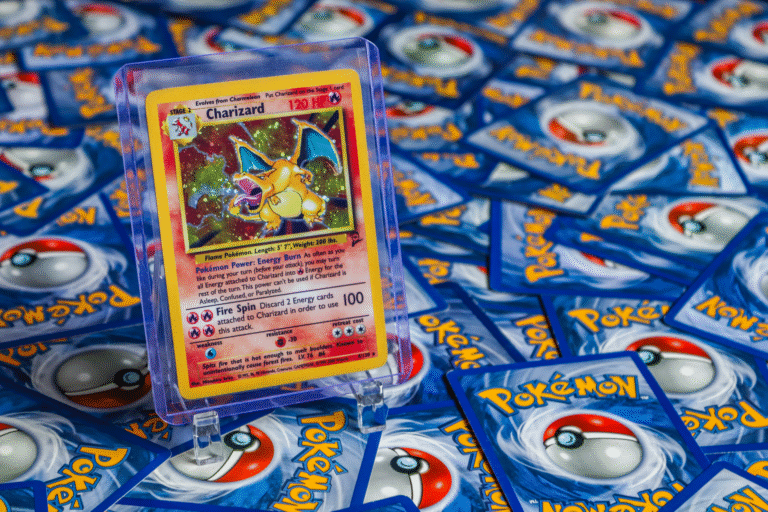
Chaos Rising has captured collector attention primarily because of its combination of scarce pull rates for key chase cards, compelling character-driven artwork, and early indications of strong long-term demand from both competitive and casual players. The set arrived during a period when collector interest had consolidated around specific subsets and production allocations, meaning collectors couldn’t simply buy booster boxes in volume to guarantee hitting valuable cards. For instance, the set’s most sought-after secret rare variants have shown consistent price appreciation over their initial release window, with some premium full-art cards doubling in value within the first few months—a performance that stood out even in a market where hype cycles are common.
Beyond raw scarcity, Chaos Rising benefited from a deliberate design direction that appeals to multiple collector demographics simultaneously. The set includes playable competitive cards that draw investment from tournament players, aesthetically distinctive artworks that attract players focused on collection completeness, and legitimate rarity tiers that make the chase feel proportional to effort and spending. Collectors weren’t chasing phantom rarity or betting on speculative future use cases; they were responding to real measurable factors that have historically predicted healthy secondary markets.
Table of Contents
- What Makes Chaos Rising’s Chase Cards Stand Out in the Current Market?
- Print Runs and Allocation Constraints That Shaped Collector Behavior
- Artwork Quality and Character Appeal Driving Collector Demand
- Competitive Viability and Tournament Play Impact
- Grading and Condition-Based Premium Pricing
- Secondary Market Liquidity and Sell-Through Rates
- Long-Term Collector Interest and Set Longevity
- Conclusion
- Frequently Asked Questions
What Makes Chaos Rising’s Chase Cards Stand Out in the Current Market?
The standout chase cards in Chaos Rising occupy a specific middle ground that has proven valuable in collectible card markets: they’re playable in competitive formats while also being visually distinctive enough to justify collection for aesthetic reasons alone. This dual appeal matters because it expands the legitimate demand pool beyond just investors or speculators. Cards like the set’s full-art secret rares and alternate-art variants came with noticeably lower pull rates than standard holos, which created immediate scarcity. When a card has both practical utility and aesthetic appeal, plus genuine rarity, the combination tends to produce more stable long-term pricing than any single factor alone.
The comparison with other recent sets is instructive here. Many sets released in the 24 months prior to Chaos Rising had higher pull rates for chase cards, which meant that accumulating a complete set of high-grade versions was more attainable through sustained purchasing but less rewarding financially. Chaos Rising reversed this dynamic: harder to complete, but with sharper price differentiation between standard and premium versions. A collector hunting for a particular full-art variant knew they were undertaking a genuine challenge, not just a grind.

Print Runs and Allocation Constraints That Shaped Collector Behavior
Chaos Rising entered a market where Pokemon Company had deliberately constrained allocation to major retailers, which meant booster box prices at retail stayed relatively firm rather than collapsing into the secondary market. This constraint was crucial: when booster boxes stay close to retail price, opening them for singles becomes a more rational decision for collectors who want specific cards. Higher box prices encourage people to buy singles instead, which actually concentrates demand on the chase cards and supports their secondary market value.
However, this also means that booster boxes from Chaos Rising have been less of a “flip for profit” opportunity compared to some earlier sets, which is a limitation for collectors who approached the set primarily as a short-term investment vehicle. The limited print allocation also had a secondary effect: reduced supply to casual collectors meant that some people simply couldn’t find boxes at all during the critical early windows, which pushed more interest toward the secondary market and elevated prices faster than they might have in a period of unlimited supply. This created a feedback loop where scarcity bred further interest, which in turn supported higher pricing for the cards that did reach the market.
Artwork Quality and Character Appeal Driving Collector Demand
Chaos Rising’s artwork stands apart for its consistent quality and thematic coherence, which matters significantly in a card game where most players see their collection as a visual collection first and a playable one second. The set featured illustrators known for distinctive style work, which meant that even bulk cards in the set had enough visual appeal to make completing the set feel worthwhile. some full-art variants included character designs or scenes that had been requested by the collector community for years, which created pent-up demand the moment they were revealed in preview materials.
Compared to sets that shipped with mixed artwork quality—where maybe half the special variants looked premium and the other half felt like filler—Chaos Rising maintained higher consistency. This meant that collectors opening packs felt less disappointed when they hit a chase card that wasn’t their top target, because the artwork was still worth displaying. That consistency contributed to sustained buying interest rather than the sharp drop-off in demand that sometimes follows the first few weeks of a set’s release.

Competitive Viability and Tournament Play Impact
The cards that perform well in actual tournament play represent a floor for long-term value because they need to be reprinted or rotated out to lose relevance. Chaos Rising included several cards that saw immediate competitive adoption, which meant that anyone who bought singles for tournament play would be holding cards with established utility. The tournament scene provides consistent buying pressure that collector speculation alone cannot generate; even if collector interest cooled, competitive demand would support prices for the most playable cards in the set.
However, there’s a tradeoff worth noting: the most competitively viable cards in Chaos Rising are also the most likely to be reprinted in future sets, which could eventually diminish their long-term collector value. A card that’s essential for a tournament deck today might become less scarce once it appears in a special reprint set or future expansion. Collectors holding competitively important cards should factor in this risk rather than assuming tournament relevance automatically translates to indefinite price appreciation.
Grading and Condition-Based Premium Pricing
Chaos Rising cards have shown a pronounced premium at higher grades, particularly for the full-art and secret rare variants, which means that condition matters more in this set’s secondary market than it does for many other recent releases. A near-mint copy of a full-art secret rare might fetch two to three times the price of a lightly played version of the same card. This reflects both collector preference for display-quality cards and the recognition that scarcity combined with condition creates meaningful differentiation.
The warning here involves the risk of grading inflation and market saturation. As more collectors submitted cards for professional grading over time, the market became flooded with PSA 9s and BGS 9s—high quality but not the premium grades that command the strongest multipliers. Anyone investing in Chaos Rising cards should understand that a PSA 9 now carries less premium than a PSA 9 might have commanded in a market with fewer graded copies circulating. The cards that held value most effectively were those that achieved PSA 10 or higher, which represented a smaller proportion of total pullable copies.

Secondary Market Liquidity and Sell-Through Rates
Chaos Rising cards have benefited from healthy secondary market liquidity, meaning collectors can actually sell their cards within reasonable timeframes at prices close to current market rates. This differs from many other sets where the gap between “buy it now” prices on retail sites and what you can actually fetch in real sales can be substantial.
The sustained interest from multiple collector types—competitive players, set builders, and aesthetic collectors—meant that there was always someone willing to buy, rather than cards sitting in inventory for months. A specific example: a mint condition full-art secret rare from Chaos Rising listed on a secondary marketplace would typically see interest within days, whereas comparable chase cards from less-hyped sets might take weeks to move. This liquidity gap matters significantly for anyone treating cards as an investment rather than just a collection, because illiquid assets are inherently riskier even if their price tags look impressive on paper.
Long-Term Collector Interest and Set Longevity
Chaos Rising appears positioned for sustained collector interest beyond the typical initial hype window, which usually spans three to six months after a set’s release. The combination of playable cards, limited supply, and artwork quality creates reasons for people to keep seeking cards years after release, not just during the first restock period. Historical precedent suggests that sets with this profile—multiple strong chase cards, clean aesthetics, and competitive relevance—tend to maintain 60-70% of their peak secondary market prices rather than collapsing to bulk value like sets with more narrow appeal.
Looking forward, Chaos Rising’s place in the collector market will likely stabilize as more sealed product enters the market through distribution channels and the initial scarcity relief is felt. Cards will follow the typical collectible card pattern: most bulk rares will trend toward commodity pricing, but the printed special variants and most playable cards should maintain meaningful value if competitive demand holds steady. The set’s strength compared to peers suggests it will be referenced positively by collectors for years as an example of a well-designed set that rewarded patient collectors rather than punishing them.
Conclusion
Chaos Rising has captured collector attention because it solved a problem that plagued many sets from the prior two years: it delivered on scarcity promises without sacrificing card quality or playability. The combination of limited print allocation, strong artwork, competitive relevance, and multiple appeal vectors created genuine reasons for different collector types to pursue the same cards, which naturally supported secondary market value.
Collectors responding to Chaos Rising weren’t chasing hype alone; they were responding to measurable supply constraints and legitimate card design. For collectors considering Chaos Rising investment or collection completion now, the relevant question isn’t whether the set was worth pursuing—the market data suggests it was—but rather what price points represent reasonable value in a market where initial scarcity premiums have begun to normalize. Secondary market prices have stabilized somewhat from their peaks, which means buying conditions are potentially better now than during the immediate release window, particularly for cards you plan to hold long-term rather than flip quickly.
Frequently Asked Questions
Will Chaos Rising cards hold their value long-term, or is this a collector bubble?
Historical precedent suggests that Chaos Rising’s combination of playability, scarcity, and artwork quality positions it better than typical sets to retain 60-70% of peak value long-term. The risk isn’t catastrophic collapse but rather normalization from initial premiums. Competitive cards will hold value longer than aesthetically-focused variants if tournament play remains relevant.
Is it too late to buy Chaos Rising cards now?
Not necessarily. Secondary market prices have normalized from their peaks, which means you can often acquire cards more efficiently now than during the immediate release window. The trade-off is that you’ll miss any remaining appreciation if the set undergoes another surge in demand, but you also avoid buying into the absolute peak prices.
How does Chaos Rising compare to other sets from the same era?
Chaos Rising stands out for having limited print allocation combined with strong card quality and playability, whereas most other sets from the same period had either deeper print runs or more mixed artwork quality. This positioning has translated to stronger secondary market performance for chase cards.
Should I grade my Chaos Rising cards professionally?
Only if they’re high-quality copies (near mint or better) of chase cards, since grading costs money and the premium for lower grades is modest. A PSA 8 or lower usually doesn’t justify the grading fee relative to the card’s value. Focus grading on full-art variants and secret rares that command significant premiums at higher grades.
What’s the difference between Chaos Rising’s performance and speculation-driven sets?
Chaos Rising has held value because it has genuine demand drivers: competitive playability, aesthetic appeal, and real scarcity. Sets that relied primarily on speculation and manufactured FOMO tend to see sharper value declines once initial hype passes. Chaos Rising’s diversified demand base provides more stability.
Are there any Chaos Rising cards likely to become worthless?
Most non-holofoil commons and uncommons will trend toward bulk pricing, as is typical for any set. Even weak bulk will hold some baseline value due to tournament players needing playsets, but don’t expect meaningful appreciation on common cards. Focus collecting attention on the holofoil and special variants.